“I am the Man from Manila, Kami ang tinig na kayumanggi
I am the Man from Manila, Buhayin natin ang himig ng lahi.”
– Francis M., “Man From Manila“
Last month, my professor tasked me to conduct a short tour of Manila. The tour was for a Japanese associate professor and our laboratory secretary. And all I can say to myself is, “What?!”. I have lived in Manila for the most part of my life. Yet, I am not so sure if there will be interesting places to visit there. Aside from those big malls popping out everywhere, I don’t know of other attractions. Knowing Manila, I am also worried about the very bad traffic and the safety and security in this urban jungle.
After much thinking and reflecting (lol!), I came up with this itinerary:
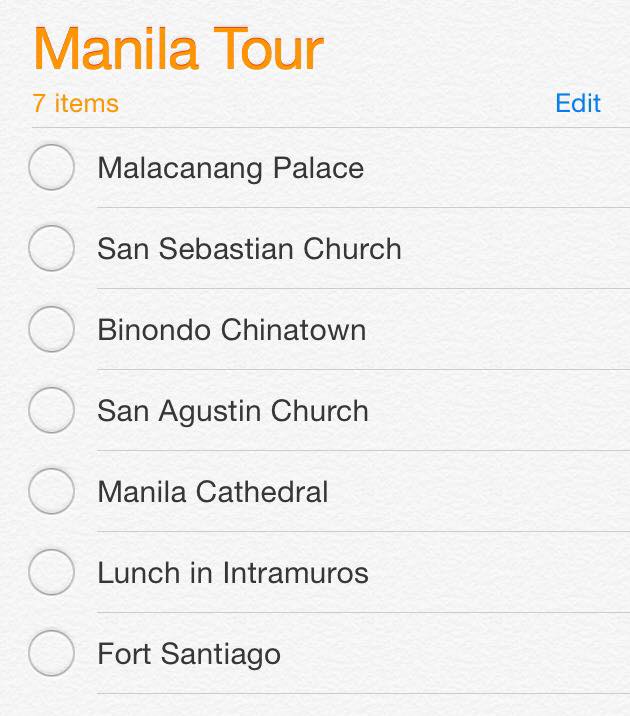
I even did some research on trivial things about those different locations; for me to sound like a professional tour guide (Thank you, Wikipedia! Haha!). For the tour, we started at 10 AM and should finish at around 2:30 PM,
First stop: Malacañang Palace. Actually, it is not a stop, as we are just allowed to see the gates inside the car. Malacañan was originally built in 1750 as a summer house for Spanish aristocrat Don Luis Rocha. It served as the official residence of the Spanish Governor-General. Later, it housed the American Governors and eventually the President of the Philippines. The word “Malacañan” comes from the Tagalog phrase “May lakán diyán.” This translates to “there is a nobleman there.” It was originally the home of a wealthy Spanish aristocrat. I wish I had known about this tour beforehand. I would have made an appointment to enter the “Malacañan” Presidential Museum and Library. Still, one should make the appointment two weeks in advance. Disappointed, we just had a glimpse of the gates.
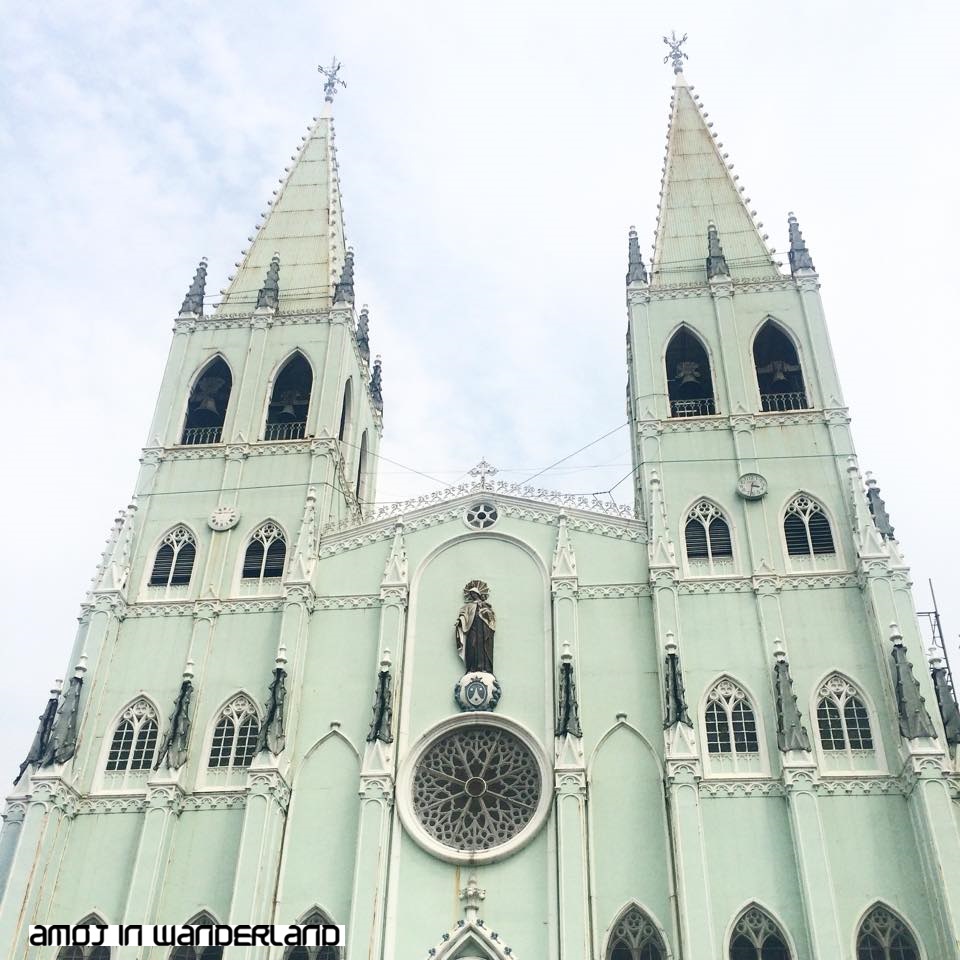
Second Stop: San Sebastian Church officially known as Basílica Menor de San Sebastián. Completed in 1891, San Sebastian Church is the only all-steel temple in the Philippines. It is also the only pre-fabricated steel church in the world. It was just included in the tentative list of possible World Heritage Sites. Nevertheless, it was already designated as a National Historical Landmark by the Philippine government in 1973.

Third Stop: Chinatown. Binondo in Manila is home to the world’s oldest Chinatown. The Spaniards established it in 1594 as a settlement for the Catholic Chinese. Still, it was already considered a hub of Chinese commerce even before the Spanish colonial period. Just recently, a new Chinatown arch was built, considered the world’s biggest. Standing 63.8 feet high and 74 feet wide, this arch is taller than the earlier titleholder. The earlier one is a 60-foot Chinese friendship arch found in Washington, D.C. The arch costs 28 million Philippine Pesos (~$600,000). The current Manila Mayor constructed it to ease the tension between the Filipinos and the Chinese. This was amid the disputes over the South China Sea or the West Philippine Sea.
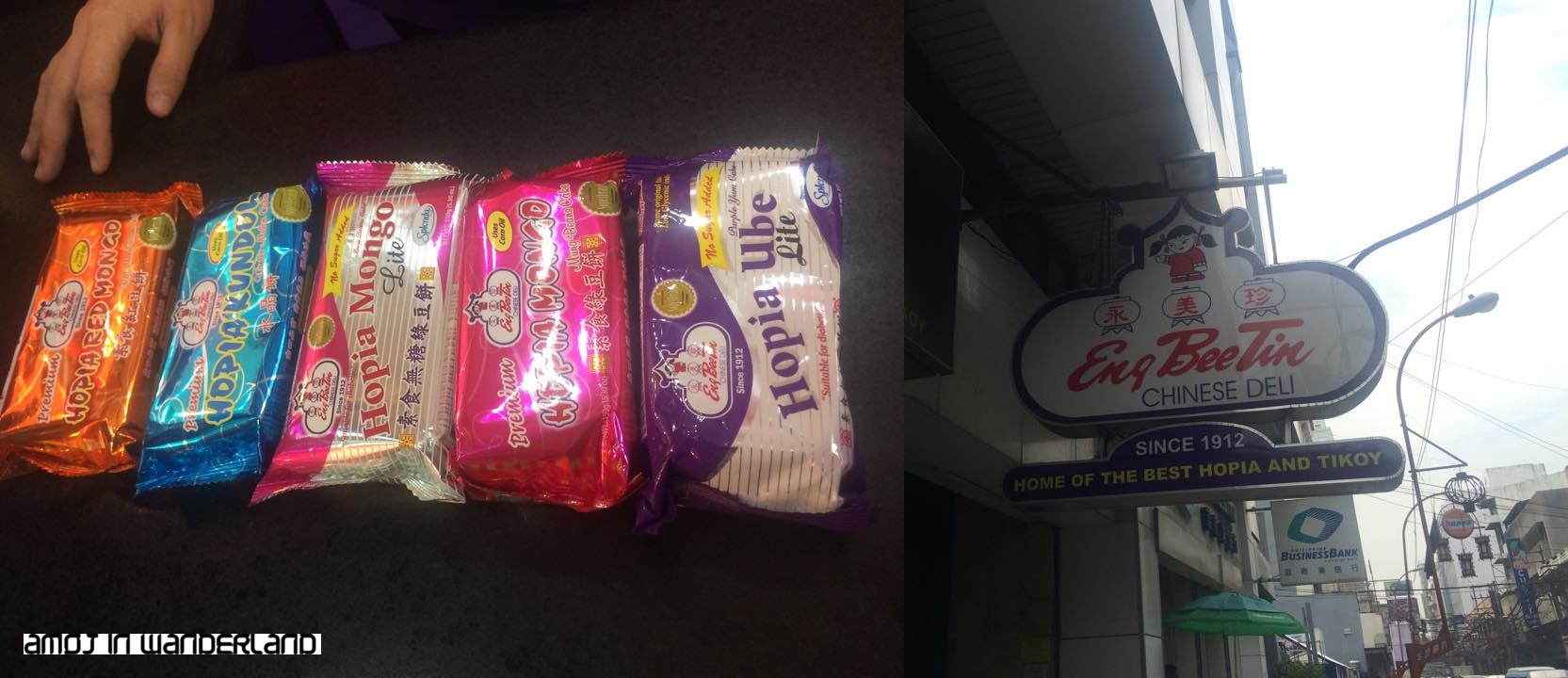
Our trip to Chinatown will not be completed without visiting Manila’s most famous Chinese pastry shop. This shop is Eng Bee Tin. This shop is famous for its “hopia,” made in different flavors, as well as “tikoy” and glutinous peanut balls. “hopia” is a popular Filipino pastry. It was originally filled with bean paste and introduced by the Fujian Chinese during the American occupation. The name came from the Chinese word “ho-pian” meaning “good biscuit”. This pastry is somehow like moon cake. According to the Eng Bee Tin website, the pastry shop was established in 1912 by Mr. Chua Chiu Hong as a simple stall in the heart of Ongpin Street, Binondo, Manila.

Inside Chinatown, we went to the Binondo Church or officially known as Minor Basilica of St. Lorenzo Ruiz. It was named after the first Catholic Filipino saint who used to live in Chinatown and trained in this church. He was martyred in 1637 during their Catholic missions in Japan and was canonized to sainthood in 1987. The church was built by a Dominican priest in 1596 for the Chinese Catholics. The red linings in the exteriors of the church stood out to me. I wondered if this color was added to acknowledge the Chinese culture.
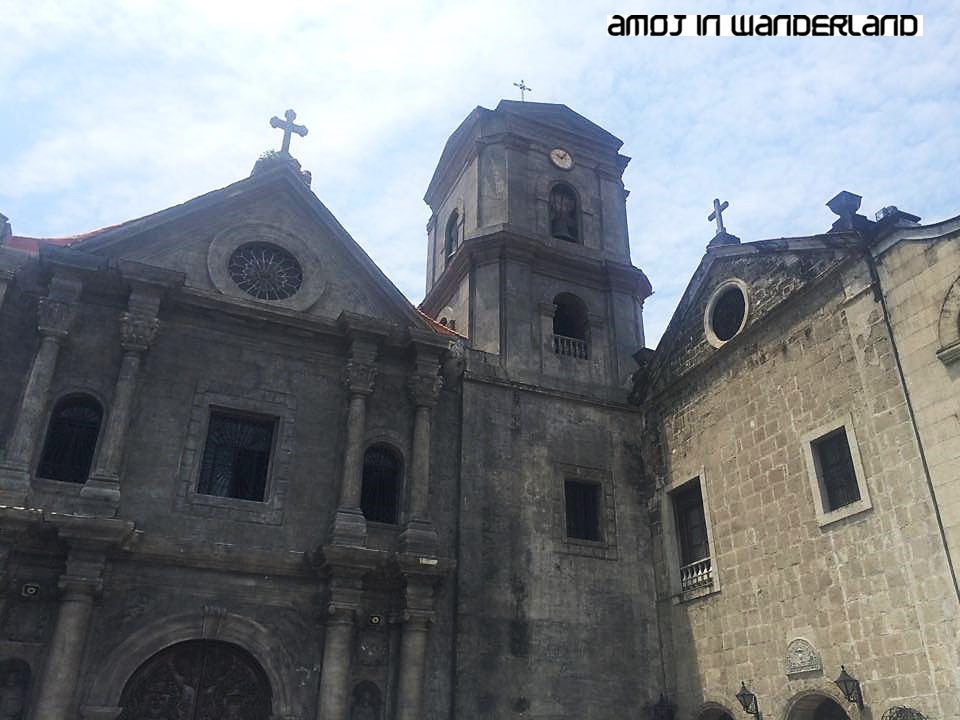
Fourth Stop: San Agustin Church. We continued our trip with the Intramuros area of Manila. Intramuros is a Spanish word for “within the walls.” The historic area was located inside the defensive walls constructed in the 16th century. The walls, though, were heavily damaged during World War II. San Agustin Church is located inside the Intramuros. It was one of the four Baroque churches in the Philippines. These churches were collectively designated as a World Heritage Site by UNESCO in 1993. Built originally with flammable materials in 1571, it was destroyed twice by fire in 1574 and 1583. It was rebuilt using stone under the auspices of the Order of St. Augustine in 1586 and was declared finished in 1607. The massive structure of the church was impressive. The splendid interiors made it a majestic symbol of the Spanish golden era.
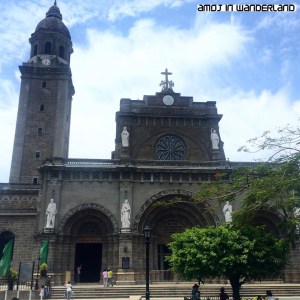
Fifth Stop: Manila Cathedral, officially known as the Cathedral-Basilica of the Immaculate Conception. There is a church a few blocks from the San Agustin Church. It served as the site of the Archbishop of Manila. The Manila Cathedral just reopened in 2014. It underwent two years of repair for earthquake retrofitting and subsidence prevention. It was originally established as the “church of Manila” in 1571 by a secular priest, Juan de Vivero. Like the San Agustin Church, the building was destroyed and rebuilt several times due to fire and earthquakes. To date, the basilica has merited a papal endorsement from Pope Gregory XIII. It has also received three apostolic visits from Pope Paul VI, Pope John Paul II, and Pope Francis.

Sixth Stop: Lunch at Intramuros. The best way to finish the tour is to eat Filipino food. And through the magic of internet, our stomach has landed in a restaurant called “Ilustrado”. The word “Ilustrado” refers to the educated, well-traveled Filipinos from the “enlightened” elite class during the Spanish era. Located in the heart of Intramuros, the restaurant offers exotic, cosmopolitan, and neo-classic flavors of international and Filipino cuisine. For nearly two decades, it has hosted visiting heads of state. They include the King and Queen of Spain. Other notable guests included the President of Peru and the President of Czechoslovakia. There were also the King and Queen of Malaysia and Princess of Thailand, among others.

For our lunch, we savored the rich taste of “Paella Ilustrado.” We enjoy “Kalderetang Kambing” (mutton). We also had “Rellenong Bangus” (stuffed milkfish) and a dessert that I forgot the name of. I can’t describe the taste of the food in detail. All I know is that our lunch was very delicious. Surely, it was the flavor of Manila that I had missed.

Seventh Stop: Fort Santiago. After the sumptuous lunch, we went to Fort Santiago. This citadel was the premiere defense fortress in the walled city of Manila known as Intramuros. The Spanish conquistador, Miguel López de Legazpi, built it in 1590. As a prison, it has observed many lives lost during the Spanish Colonial Period and World War II. The Philippine national hero, José Rizal, was imprisoned at Fort Santiago before his execution in 1896. Today, the historical park houses the Rizal Shrine Museum. It is a replica of Rizal’s house in Laguna. The museum holds different memorabilia of the hero.
Guess who we saw there while we were wandering around the park? Apl.De.Ap, a Filipino-American rapper and member of the famous international group Black Eyed Peas, was making a music video. But, his security was tight, and we were hurrying up for our afternoon appointment at the university. So, we finished our park tour and went to the last part of our itinerary.
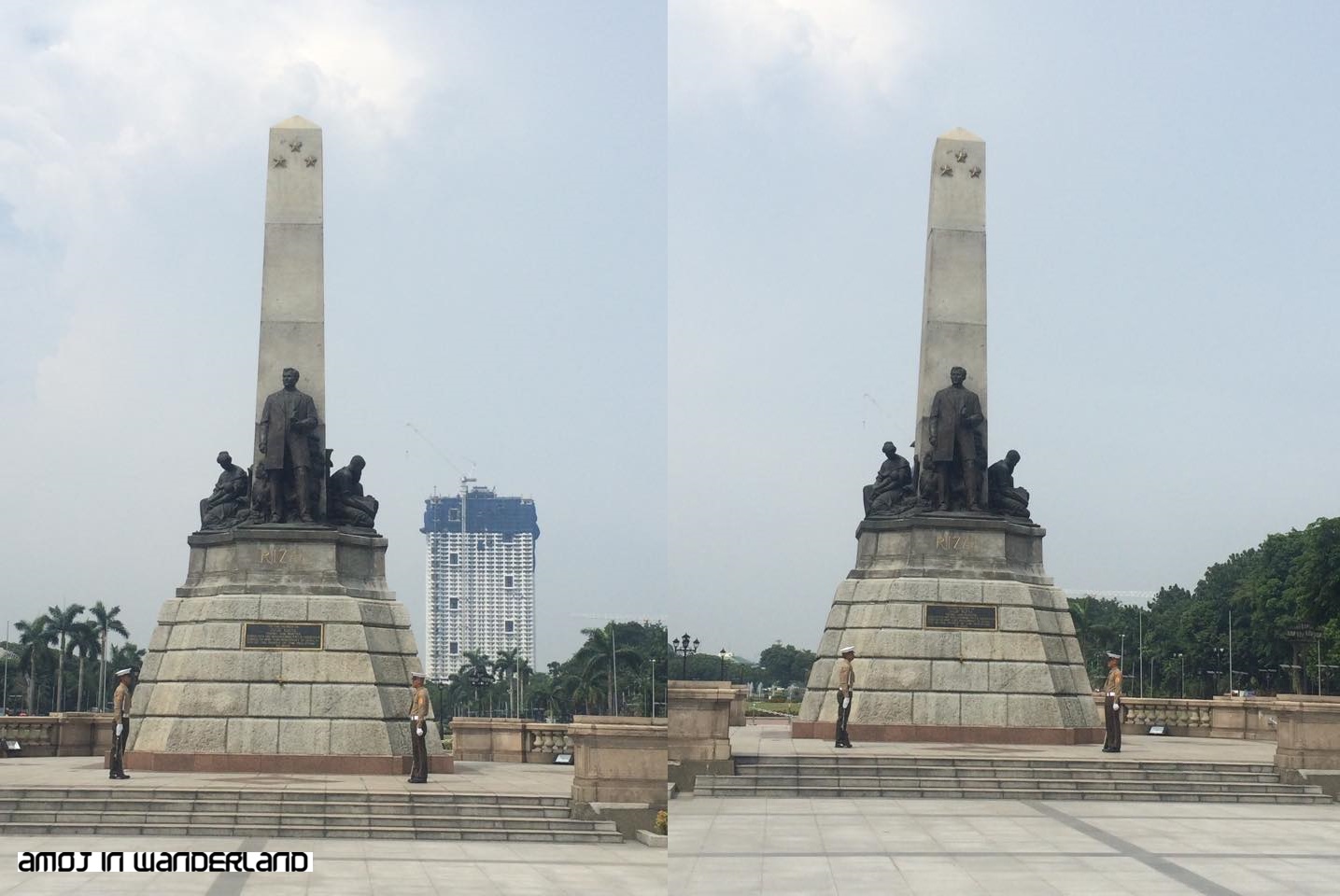
Last Stop: Luneta or Rizal Park. We went to the place where Rizal was imprisoned. Our next destination was the place where he was executed and martyred. It is considered one of the major tourist attractions in Manila. It is also one of the largest urban parks in Asia. The bronze and granite Rizal monument enshrining his love for the country serves as the park’s symbolic focal point. But, this was at the center of news recently. The former Manila Mayor allowed the construction of a residential 46-floor condominium, ruining the sight-line of the Rizal monument. The building will be finished by 2017 despite the fact that it was heavily opposed by many, including heritage conservationists. It earned the nickname “national photobomber of the country”. It remains a topic of oral arguments in the Supreme Court. This debate continues to this day.
Time checked: it was already 3PM, and we were 30 minutes late for our appointment. So, we ended our short trip around Manila with your humble tour guide.
 Amoj In Wanderland
One Comment Add yours