“On the 28th of August, 1749, at mid-day, as the clock struck twelve, I came into the world, at Frankfurt-am-Main. My horoscope was propitious: the sun stood in the sign of the Virgin, and had culminated for the day; Jupiter and Venus looked on him with a friendly eye, and Mercury not adversely; while Saturn and Mars kept themselves indifferent; the moon alone, just full, exerted the power of her reflection all the more, as she had then reached her planetary hour.
She opposed herself, therefore, to my birth, which could not be accomplished until this hour was passed.”
– Johann Wolfgang von Goethe, Aus Meinem Leben: Dichtung und Wahrheit (his autobiography)
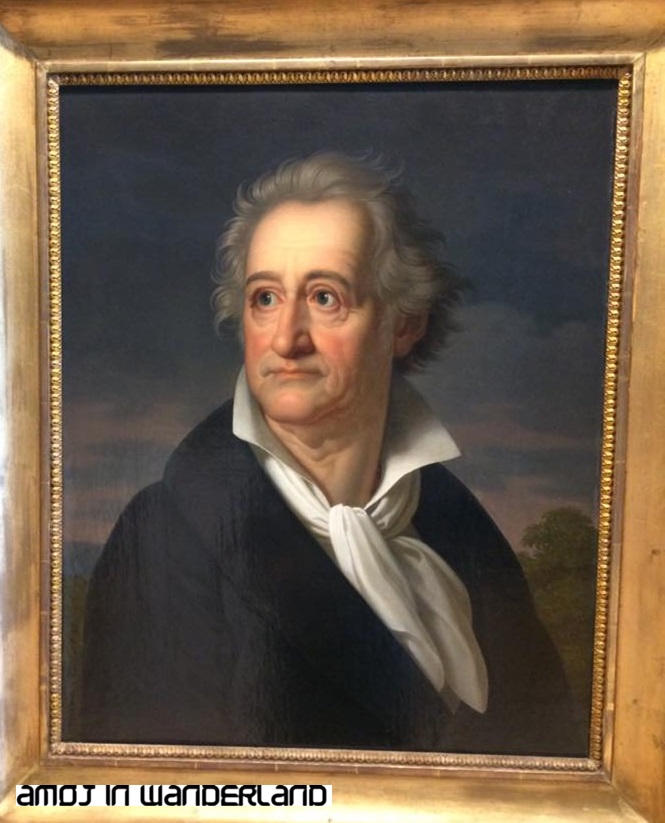 Portrait of Johann Wolfgang von Goethe, famous German writer and politician.
I just knew a little about the German writer and politician Johann Wolfgang von Goethe from my literature class in high school. I have just read a part of his most relevant work, Faust. It is a retelling of a classic German legend about a dissatisfied intellectual man who made a pact with the Devil exchanging his soul with unlimited knowledge and worldly pleasures. This literary gem was published in two parts, the first in 1808 and the second posthumously in 1832. Considered as one of Western culture’s most renowned thinkers, Goethe’s influence spread across Europe with his works being a major source of inspiration in music, drama, poetry and philosophy even a century after.
 Goethe Haus serves now as a memoirs of the life of Goethe during his younger years in Frankfurt.
To possibly know more about this German literary figure, a visit to his birthplace was a part of my itinerary during my one day tour in Frankfurt. Goethe was born on the 28th of August 1749 at a house located at the Innenstadt district of Frankfurt am Main. He has lived at this house until 1795 with his sister Cornelia. It was nice for me to see the house that served as a haven for the young Goethe.
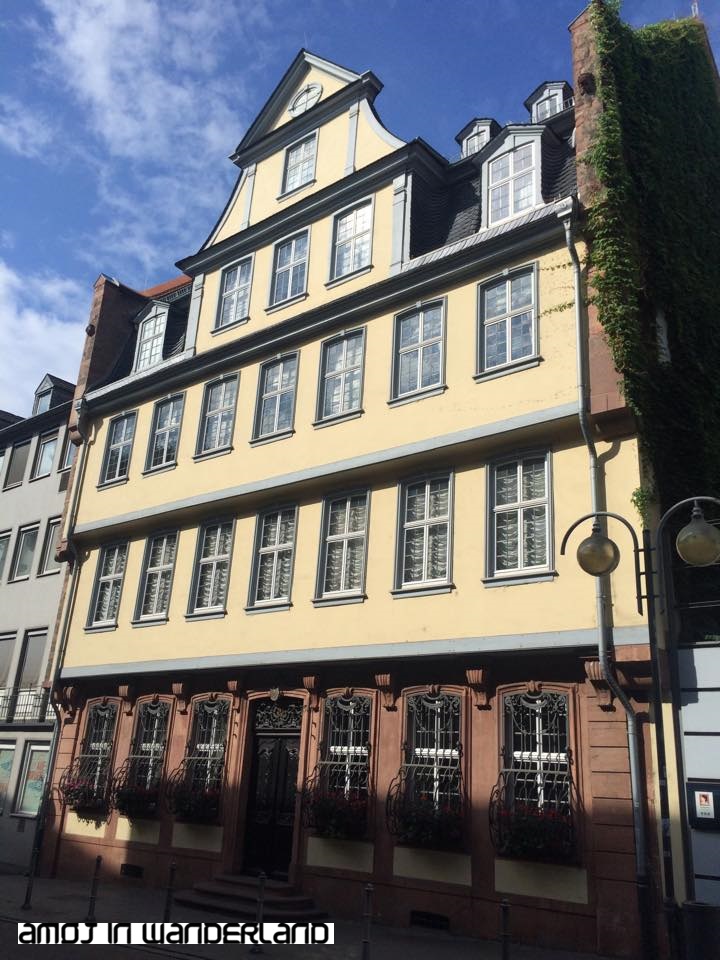 The Goethe Haus stands at the Innenstadt district of Frankfurt am Main, Germany.
After paying 7€, I entered the famous Goethehaus. The house was actually two neighboring half-timbered houses joined to form a high-Baroque house with two medieval-style overhangs. The house was bought in 1863 by a German geologist Otto Volger who realized the historical significance of the house. He restored it to its original condition to serve as a monument to Goethe. It was destroyed however during World War II and reconstructed to look as closely as possible to the original one. Today, it gives an insight to the 18th century life of the wealthy in Frankfurt.
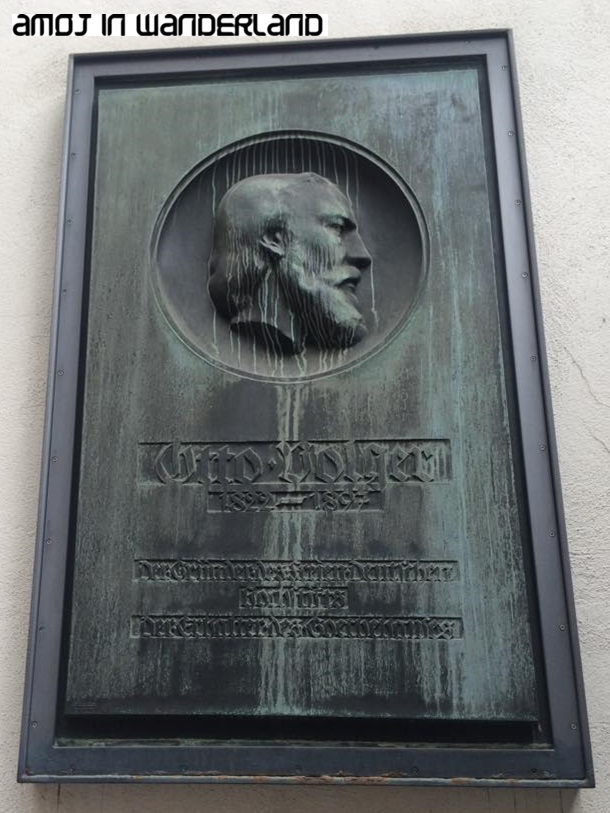 Geologist Otto Volger bought the house and restored it to serve as a monument to its famous inhabitant.
The house is consists of four floors. On the ground floor was the reception room, dining room and kitchen. The reception room called the yellow room is where young Goethe’s portrait can be seen hanging in the center.
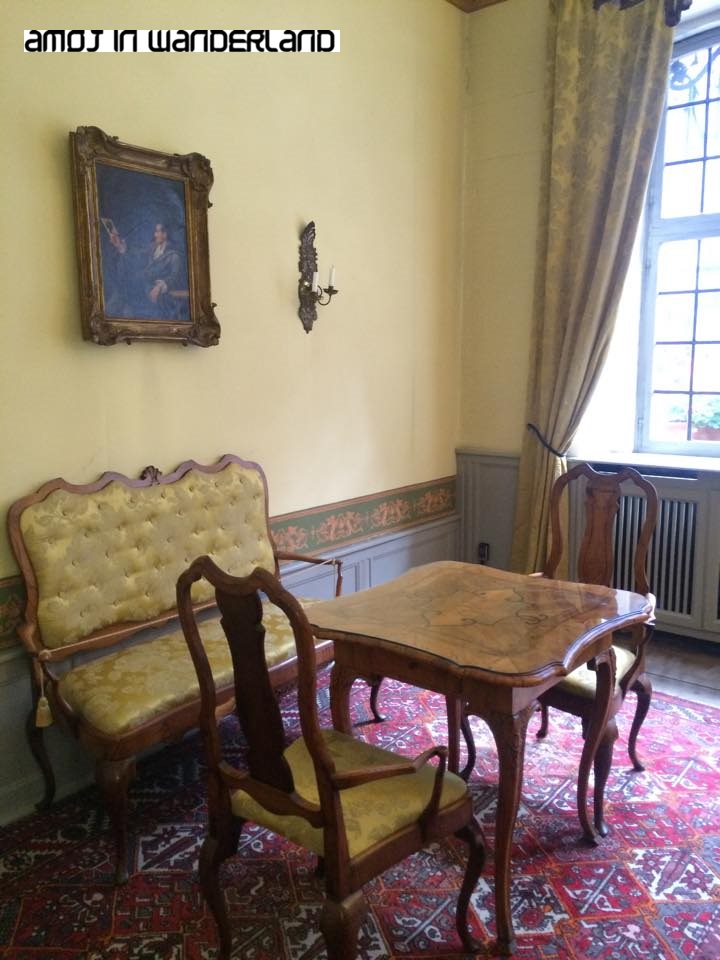 The yellow room served as the reception area where the portrait of the young Goethe with a silhouette can be seen.
The first floor was stylishly designed for family celebrations and important visits. The red room called “Peking” due to the crimson silk fabric wallpaper is a reflection of the 18th century fashion for Chinoiserie. On the same floor is the music room where the family members have performed for their guests.
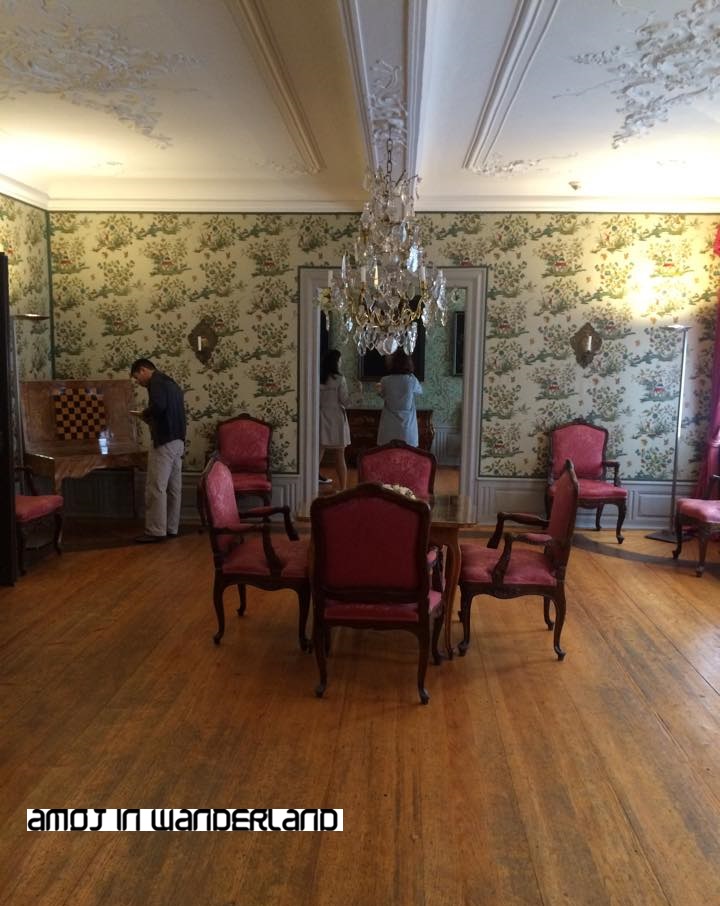 The “Peking” room served as the center of family parties and celebrations for the Goethe family.
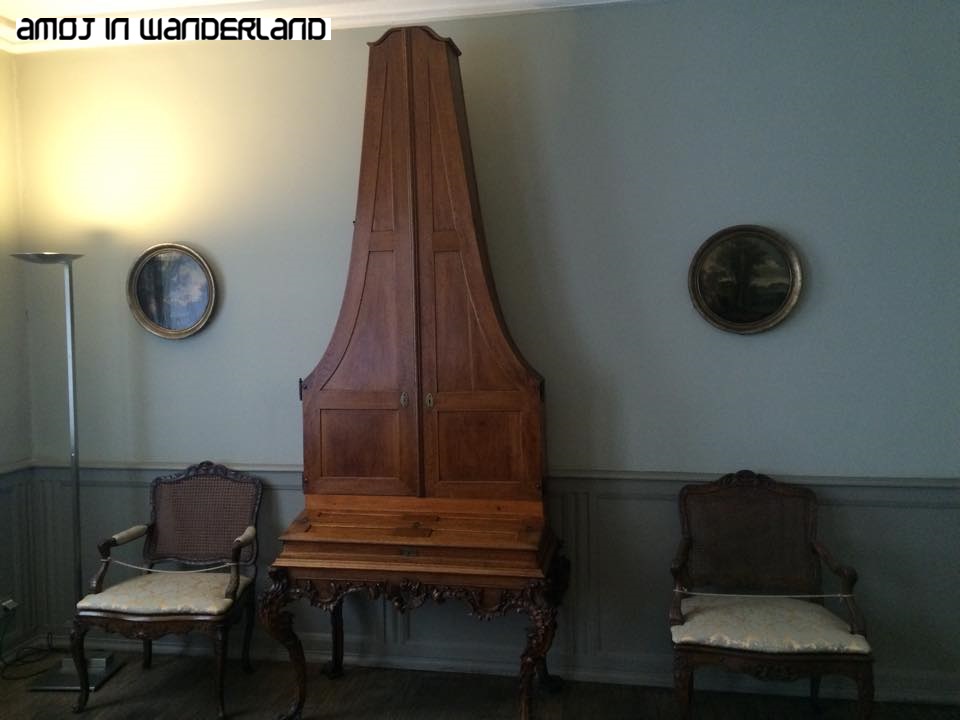 A vertically-set pianoforte known as a pyramid piano designed by Christian Ernst Friderici can be seen dominating the music room.
The second floor housed Goethe’s birthroom, Cornelia’s room and the library. In the room that is what supposed to be known as his birthroom hangs the portrait of Goethe’s matriarch. The library holds 2,000 volumes of books on every field of knowledge collected by Goethe’s father, Councillor Johann Caspar Goethe.
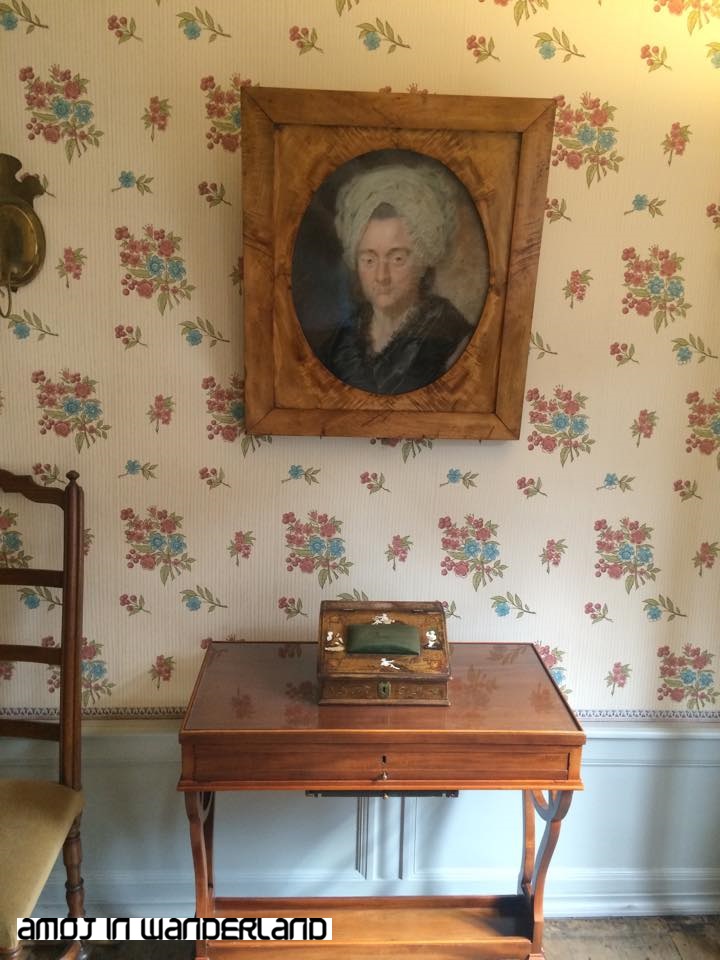 Portrait of Catharina Elizabeth Textor, Goethe’s mother.
The third floor was Goethe’s domain. The famous desk – where he wrote his successful first novel “The Sorrows of Young Werther” – can be seen on this floor. A toy theater is located in the middle of the room where puppet shows were held as described in the novel “Wilhelm Meister’s Theatrical Mission”. This was given to him as a gift when he was four years old.
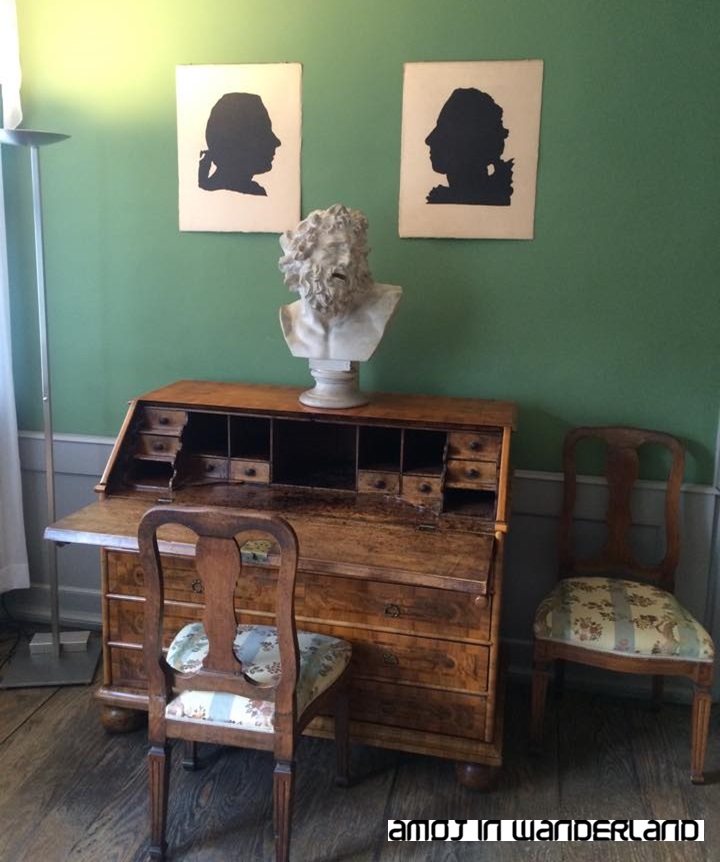 The desk where he wrote his early literary pieces including his first novel “Die Leiden des jungen Werthers”.
Adjacent to the Goethehaus is the Goethe museum consisting of 14 rooms with collections of paintings and documents related to Goethe. What I find most interesting at the museum is a bizarre painting by the Anglo-Swiss painter Johann Heinrich Füssli. Füssli and Goethe actually never met. His work I am describing is called “Nightmare”. It shows a sleeping girl tormented with her nightmare in the presence of an incubus and a horse head. It has been interpreted by scholars as anticipating Freudian ideas on the unconscious.
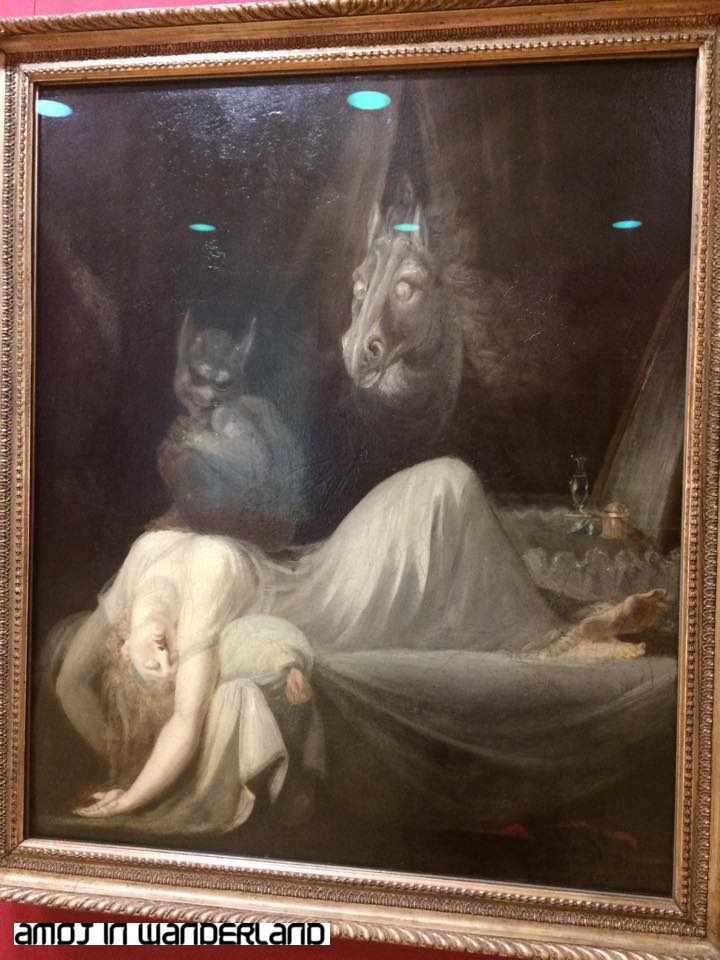 The oil-painting “Nightmare” by Johann Heinrich Füssli (1781).
Nevertheless, I found it very interesting how Goethe had lived his younger years in Frankfurt. It will be a must for me then to visit next time his house during his later years located in Weimar, Germany.
 Amoj In Wanderland
One Comment Add yours