“This is not an African disease. This is a virus that is a threat to all humanity.”
– Gayle Smith, National Security Council Senior Director
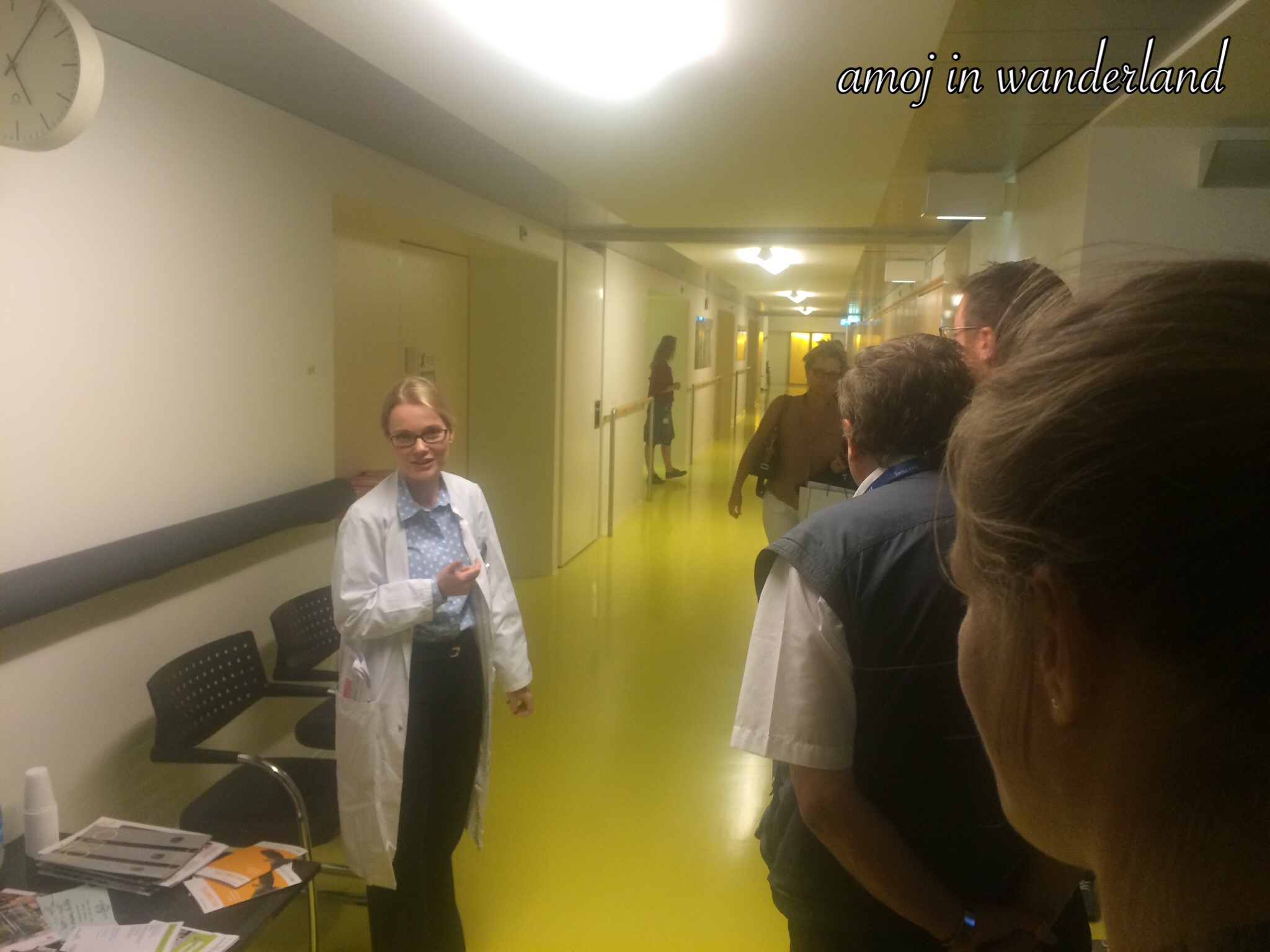
It is not everyday that I will have the chance of visiting a hospital ward designed to accommodate possible Ebola patients. So when the European Congress of Tropical Medicine and International Health offered a trip to an Ebola station as a side trip of the conference, I chose it over the various tours around Basel and the swimming at the Rhine river.
The Ebola epidemic in 2014 is the largest in history affecting the West Africa. Different countries in the world get ready by having well-equipped facilities to handle ebola cases. For Switzerland, the government requires each canton to have one ebola station. This means that there are 26 Ebola stations all throughout Switzerland. For the canton of Basel-Stadt, it is located at the Universitätspital Basel (University of Basel Hospital). It was therefore a privilege for me to visit this ebola station.
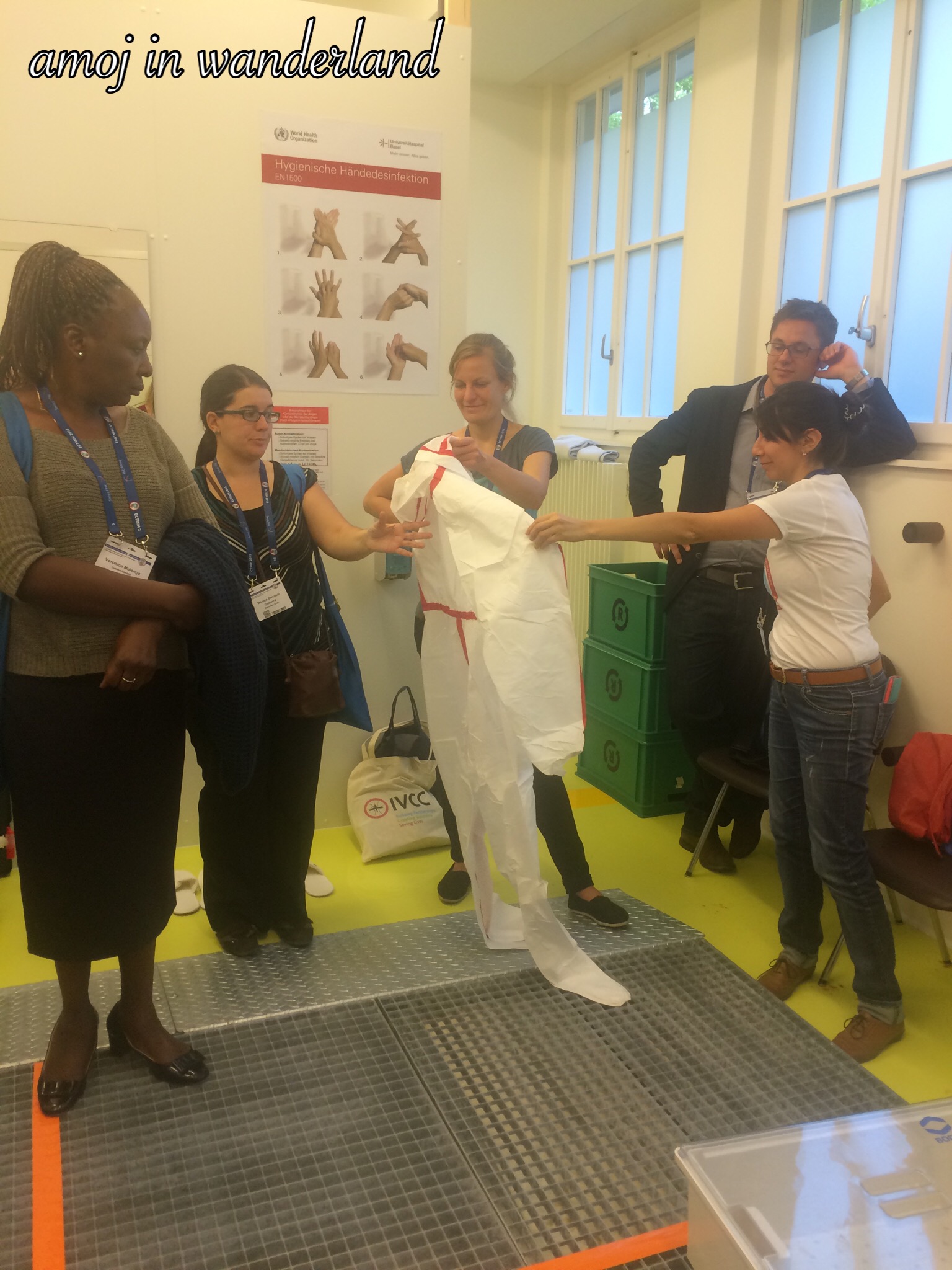
The medical doctor assigned at the Ebola station kindly showed us the supplies and the rooms that will be used if a patient suspected of having the virus arrived at the hospital, She also welcomed questions from our group.
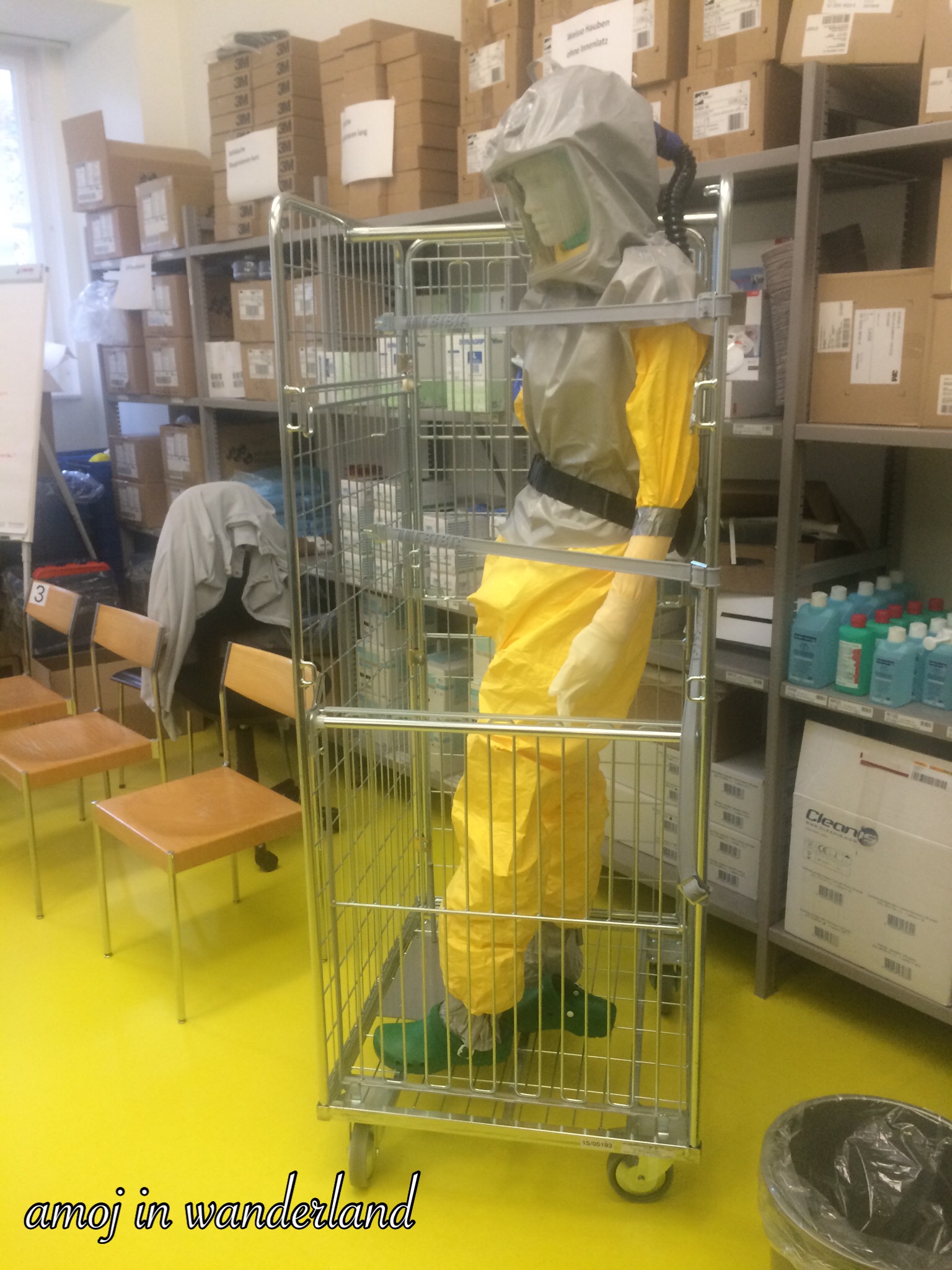
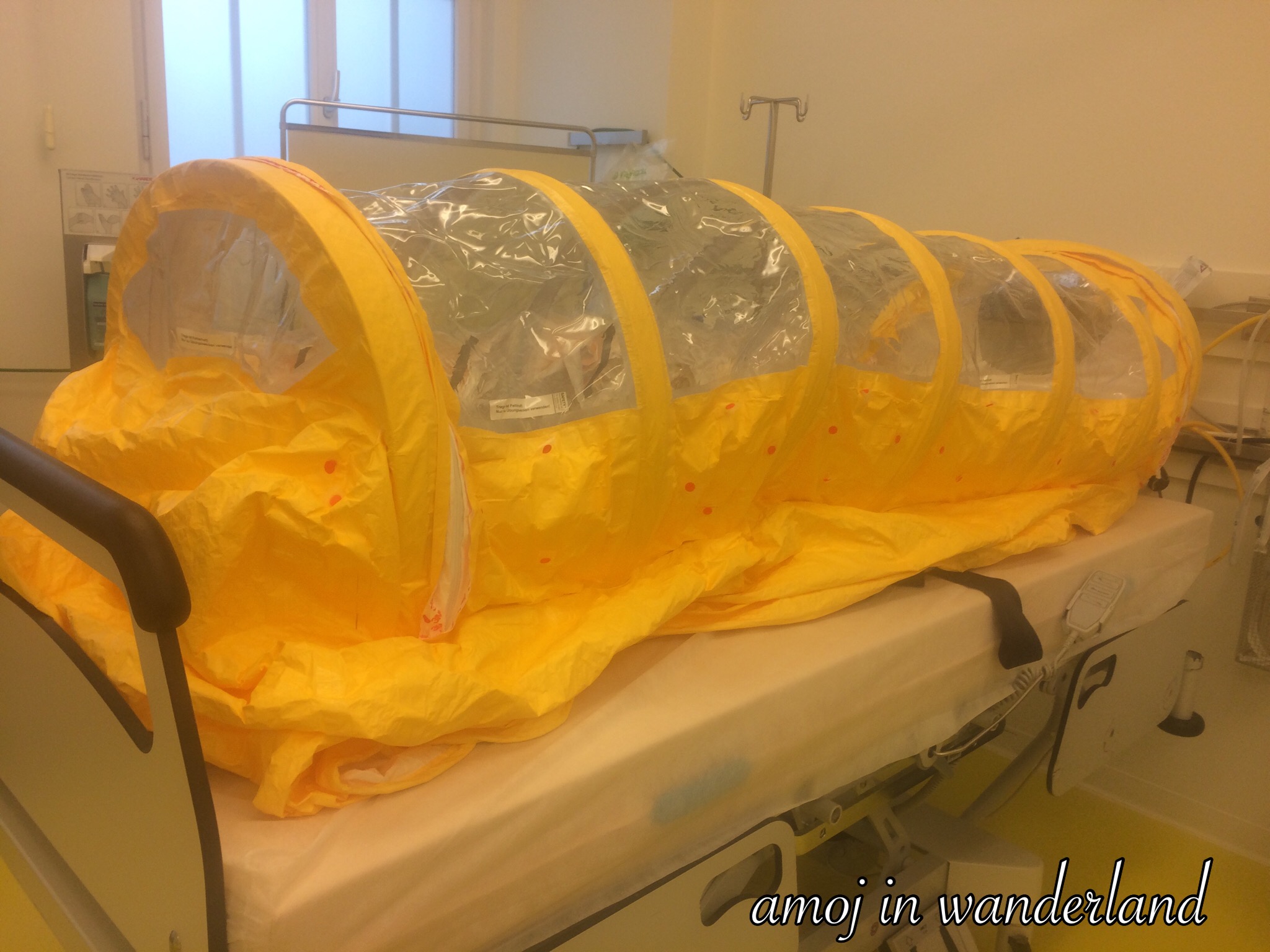
During the tour, she told us that their assignment for this highly infectious ward is voluntary. Interestingly, there are enough number of volunteer doctors and health workers to be there in case a suspected patient comes. They have undergone tedious trainings on the protocols of handling the patient.
The Ebola station at the Universitätspital Basel is just composed of 4 rooms, a supply room where the health workers will dress up, a mini-laboratory, an isolation room where the patient will be managed and a decontamination room.
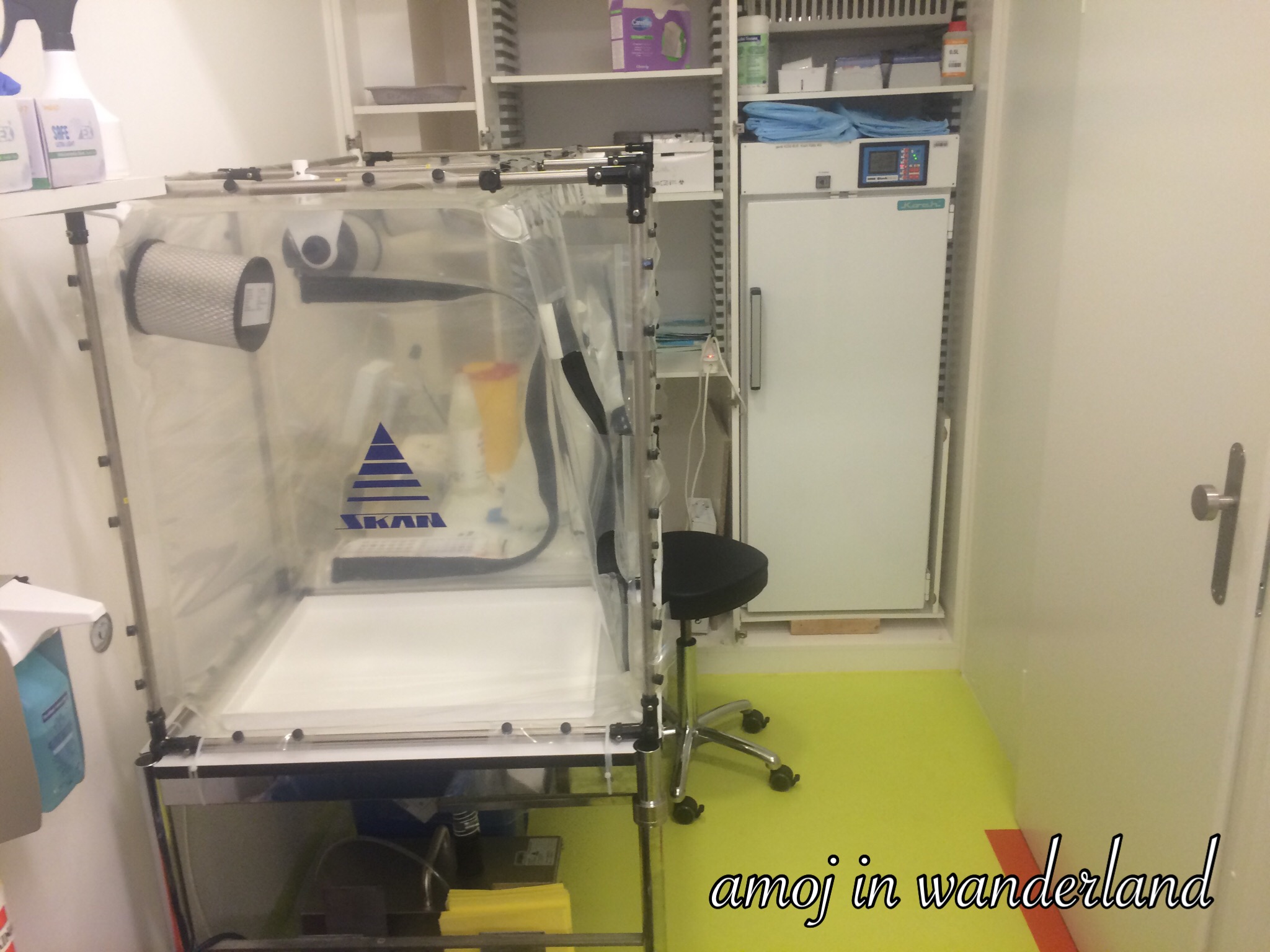
There will be three people assigned for every shift with one person tasked of looking from outside the isolation room whenever a medical team enters to manage the patient directly. The person will also be the one to decontaminate the medical team once they exit from the isolation room.
The last question from the group came from me asking what will they do if an Ebola patient dies. She replied to me by answering that although there is no clear protocol about this yet, they will do the same thing as what the hospital has been doing for patients who have died due to highly infectious diseases.
The short tour ended with myself being satisfied of what I have learned about the Ebola station. Then comes the conference dinner which surprisingly was held at the hospital cafeteria, lol.
 Amoj In Wanderland