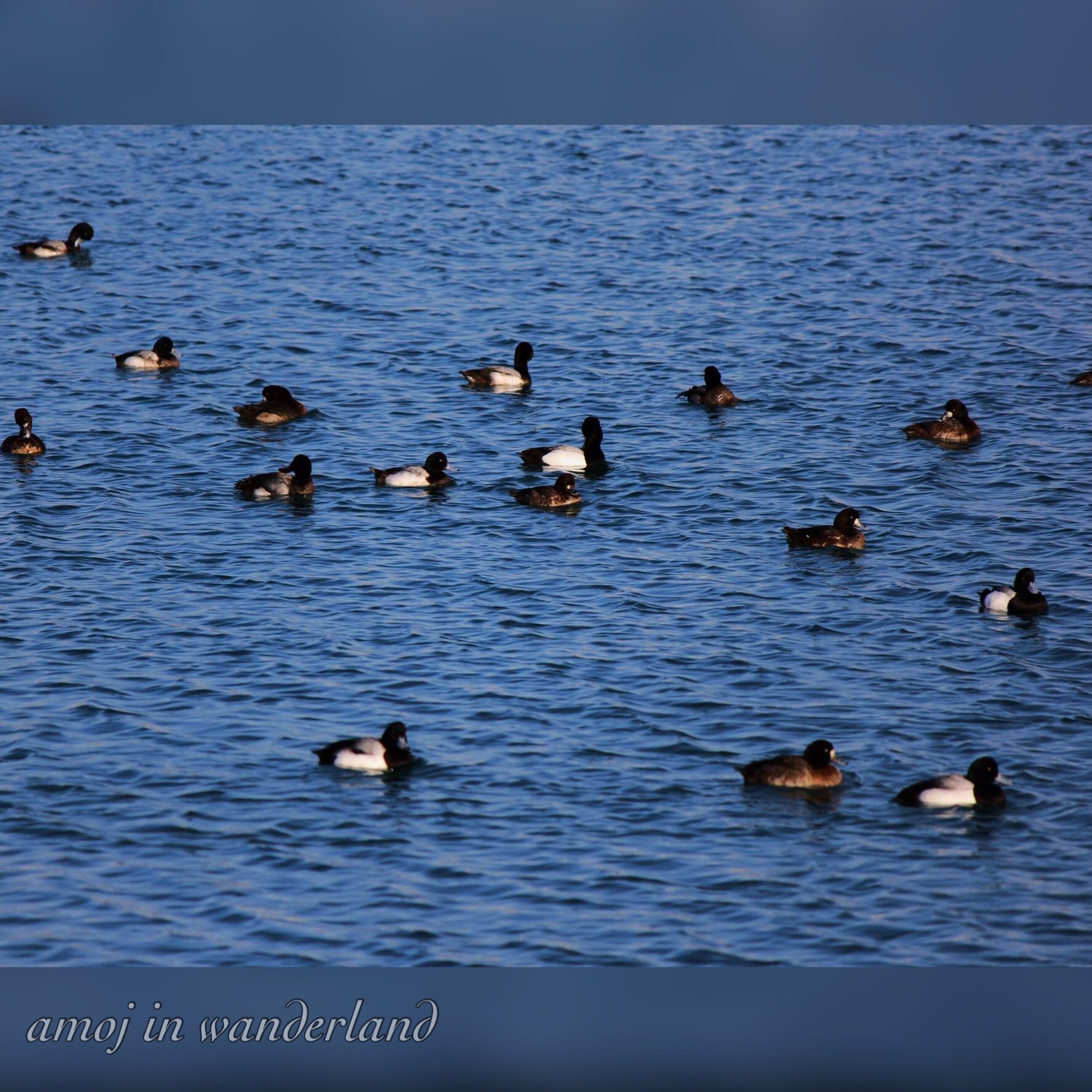
 A raft of great scaups.
To continue my story about our birdwatching in Tokachi yesterday, our next goal was to see sea eagles. We went to Toyokoro, Taiki and finally to Hiroo but to no avail, it was hard to catch a glimpse of this bird of prey.
 Eurasian wigeons.
While looking for the sea eagle, we saw different birds instead.At the seaside where we thought we can find the sea eagles were the Eurasian wigeons (Anas penelope). We went to Toyokoro port where we spotted a raft of common goldeneyes (Bucephala clangula). This duck was named for its golden-yellow eye and characterized by the male having a circular white patch below the eye in its dark head.
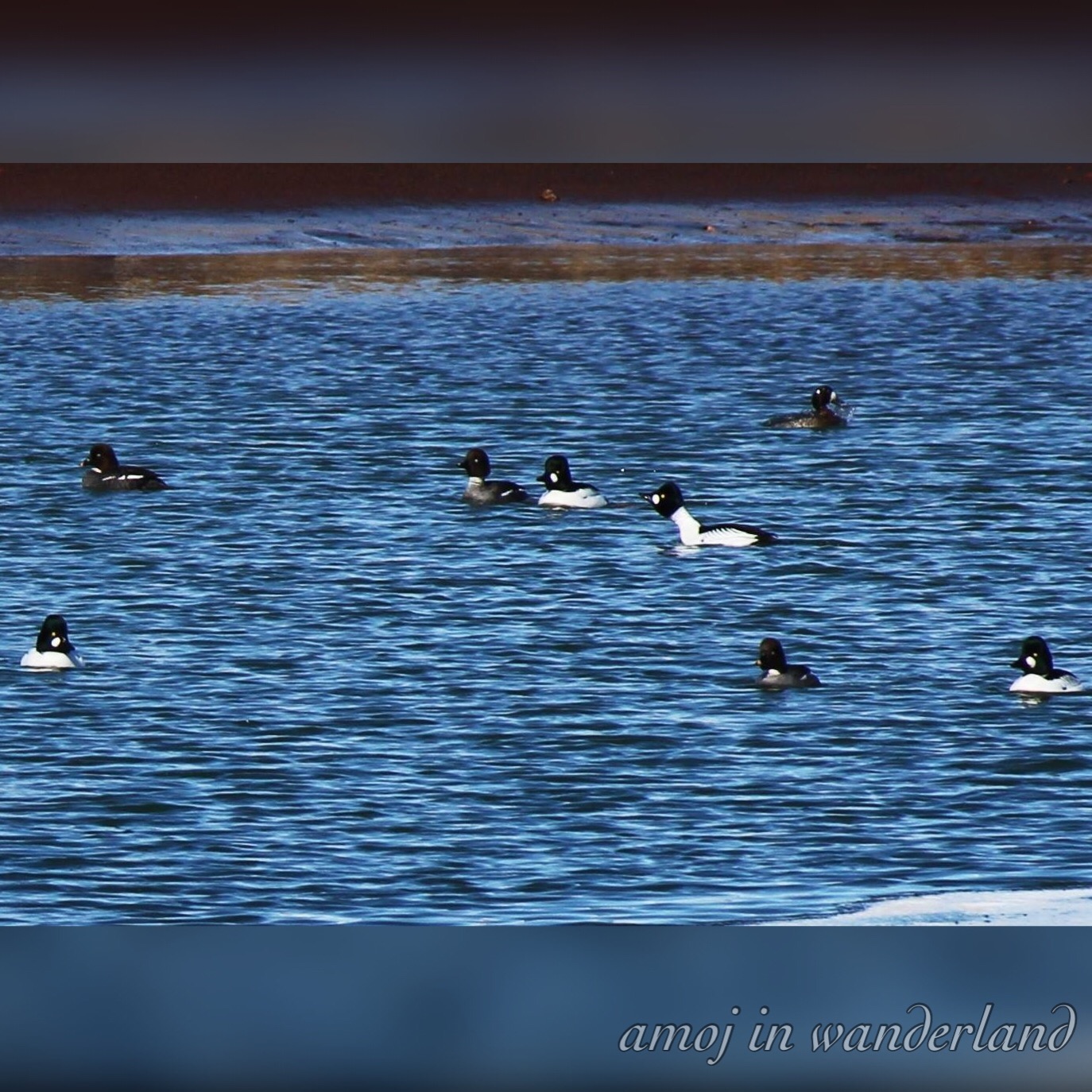 A raft of common goldeneyes.
Amazingly, we also saw a heart in the half-frosted river. This must be a sign that its already the mating season of the ducks. By the way, I’ve asked my friend if ducks are monogamous. He said they are loyal with their partner… But only for a year. After that, they will change their partners. They are unlike the cranes who have lifetime partners.
 The heart in the middle of the semi-frosted river.
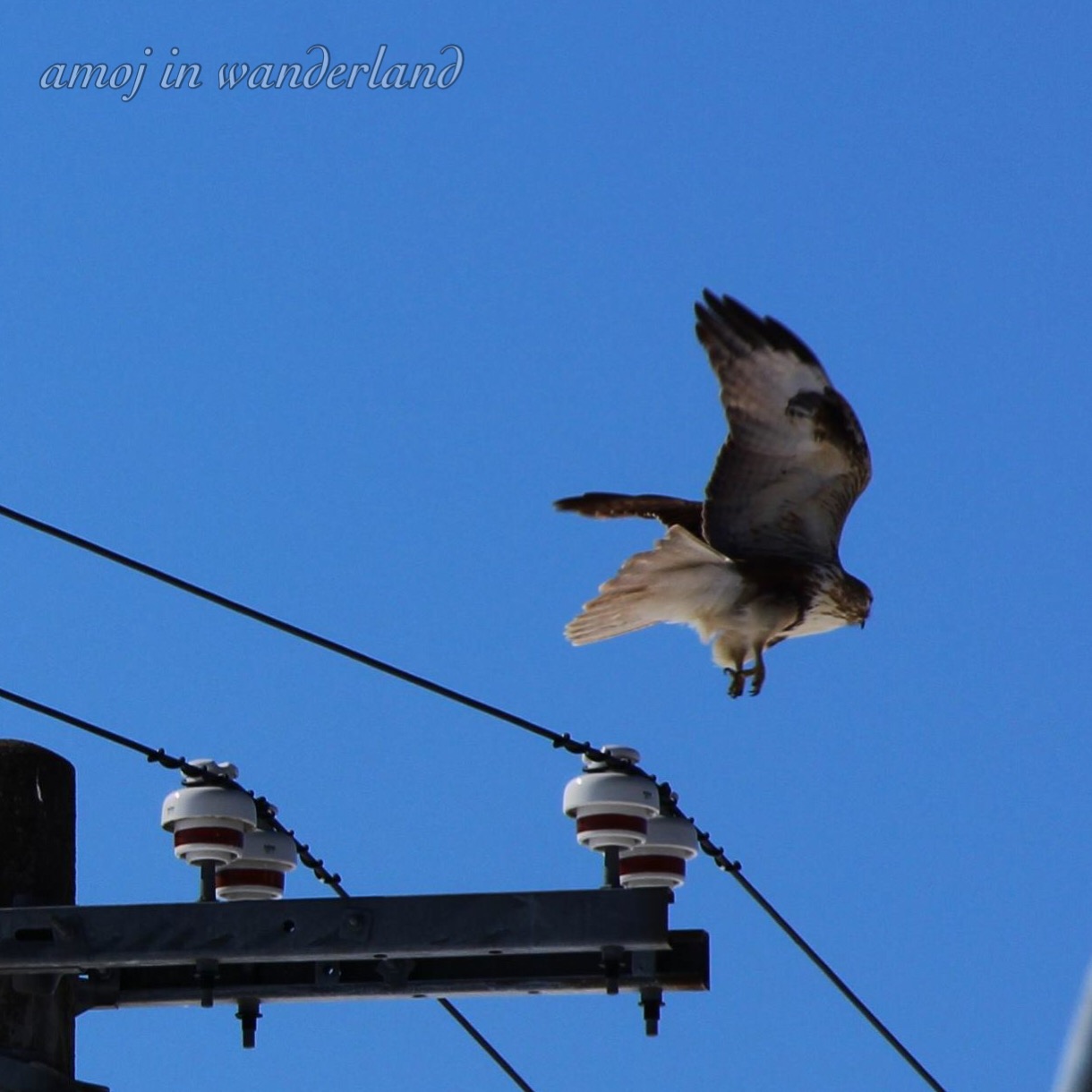 A common buzzard flying away from us.
Along the way, we spotted a number of common buzzard (Buteo buteo) at the top of the electric posts and tall trees. Common buzzards are birds of prey who favor hunting over open lands. My friend said he wants to see the rough-legged buzzard but all we saw are the common buzzards.
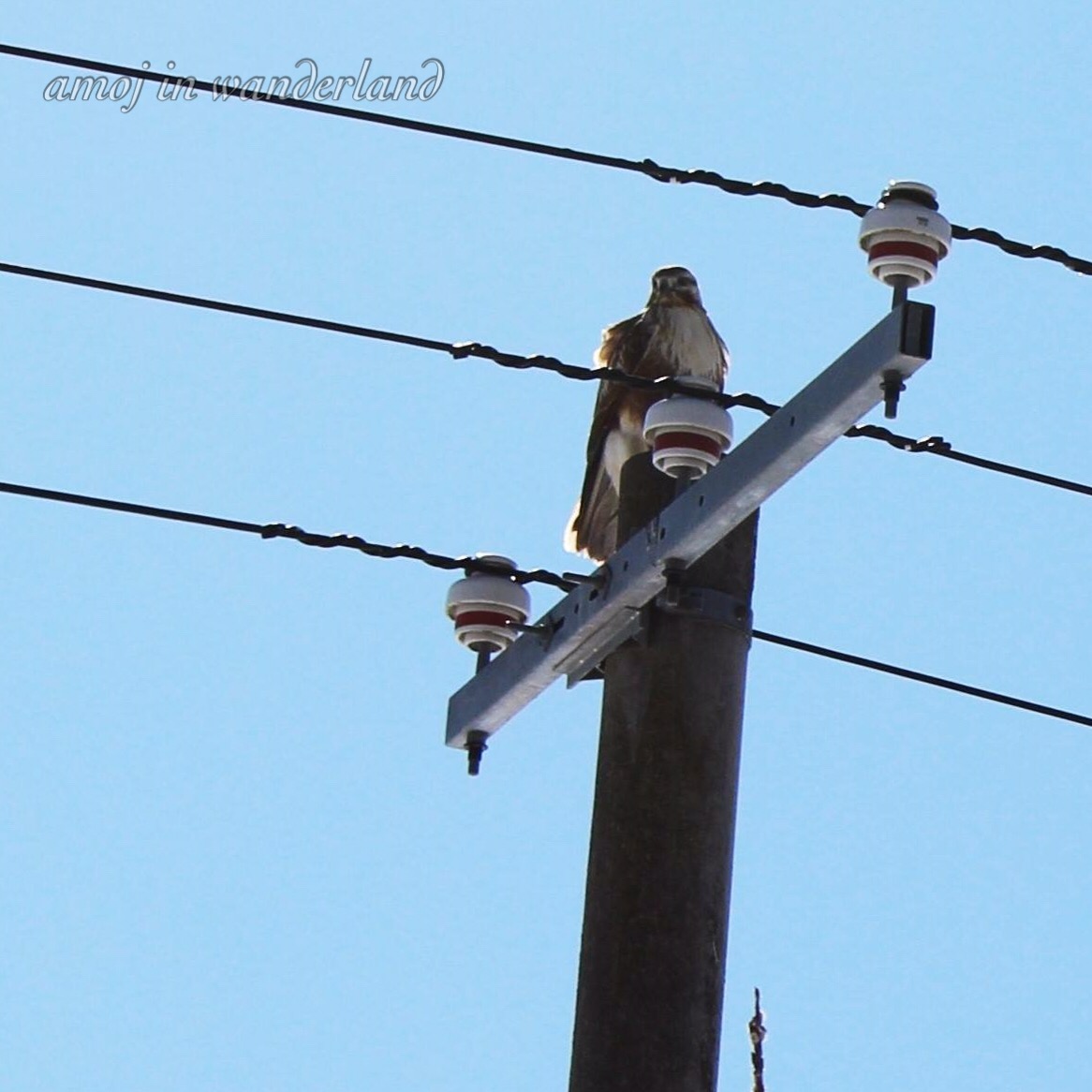 A common buzzard relaxing at the top of an electric post.
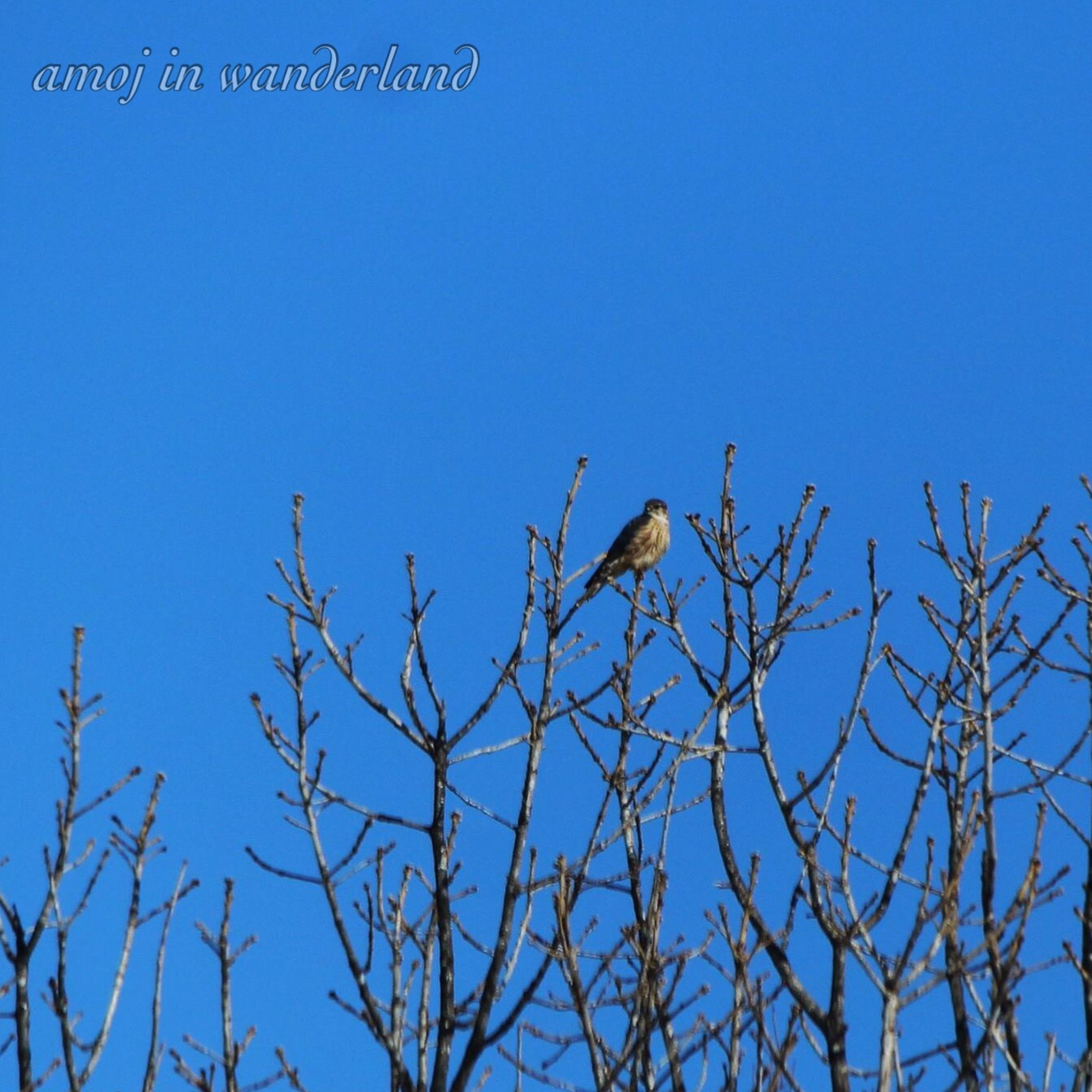 A Merlin .
We saw another bird of prey, merlin (Falco columbarius) at the top of a tree. It was somehow smaller than the buzzard.
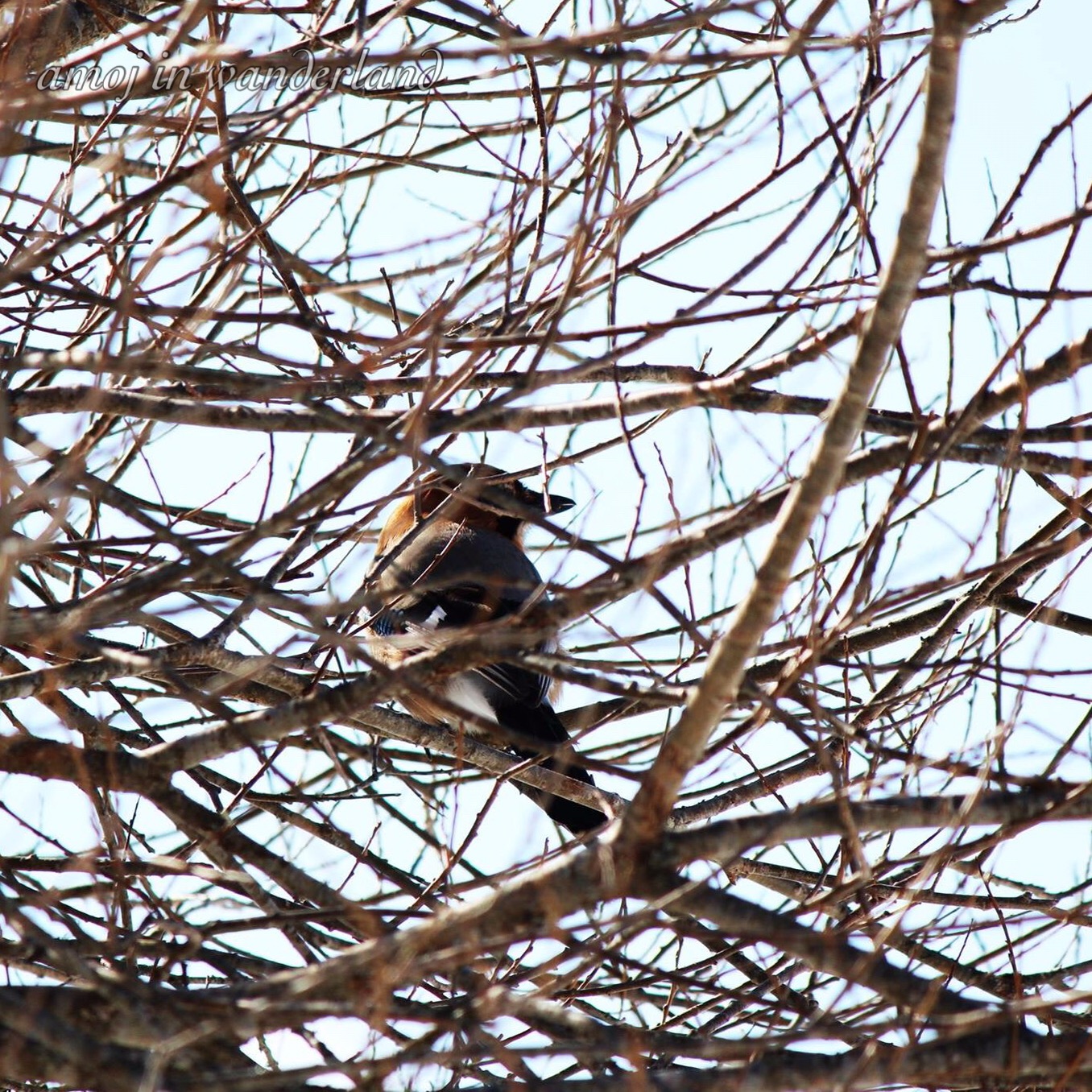 A Eurasian jay.
We also saw a Eurasian jay (Garrulus glandarius). My friend told me that jays belong to the same family as the crows. In contrast to the crows, jays have colorful plumages and store food for winter. He also added that jays are called “jays” because of their “jay” sound. I haven’t heard the jay though voicing out that sound. But anyway, jays are well known for their sound mimicry. They often sound like a different species.
 Four black scoters and a pelagic cormorant.
We went to the fishing port in Hiroo where we found many species of fish-hunting birds. We saw the black scoters (Melanitta americana) characterized by their yellow bulbous bill; the pelagic cormorant (Phalacricirax pelagicus) who have relatively short wings to provide economical underwater movement;
the red-breasted merganser (Mergus serrator) and the greater scaup (Aythya marila) to name a few.
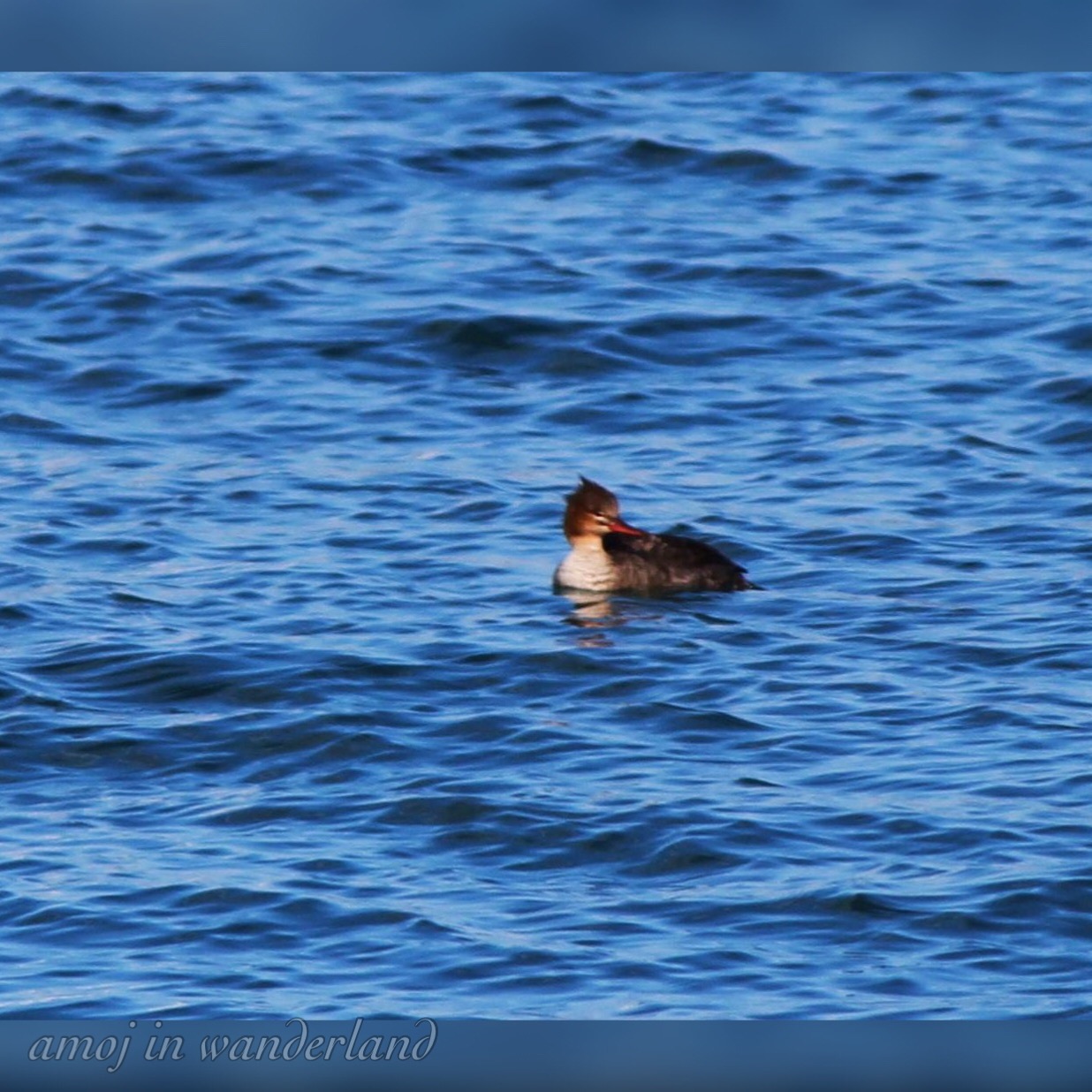 A male red-breasted merganser.
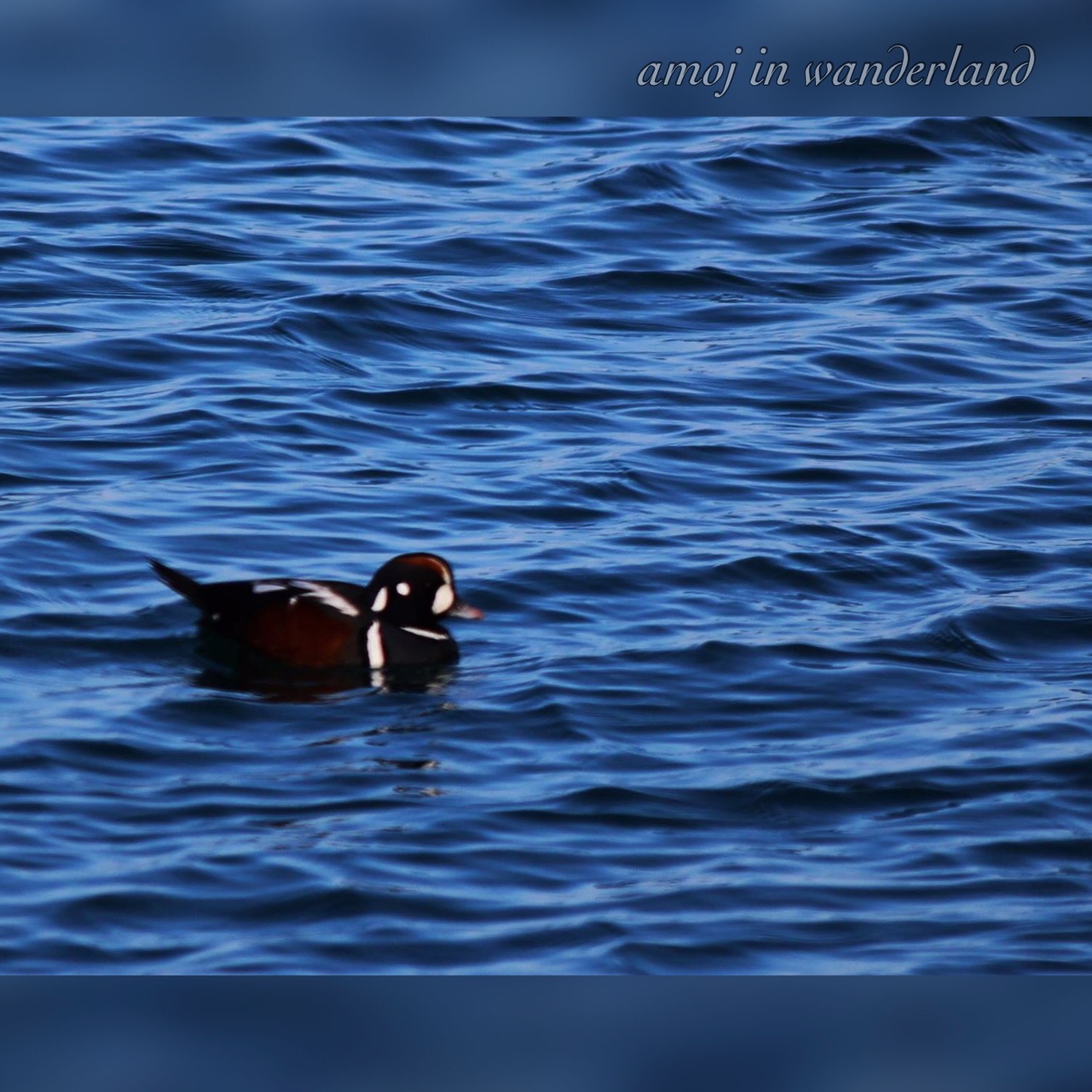 A Harlequin duck.
One of the most interesting birds we saw was the harlequin duck (Histrionicus histrionicus). Taking its name from the colorfully dressed character in the theatrical show known as Commedia dell’arte, the adult breeding males have a colorful and complex plumage pattern. It was so artistically beautiful that you cannot missed it in a crowd of many ducks.
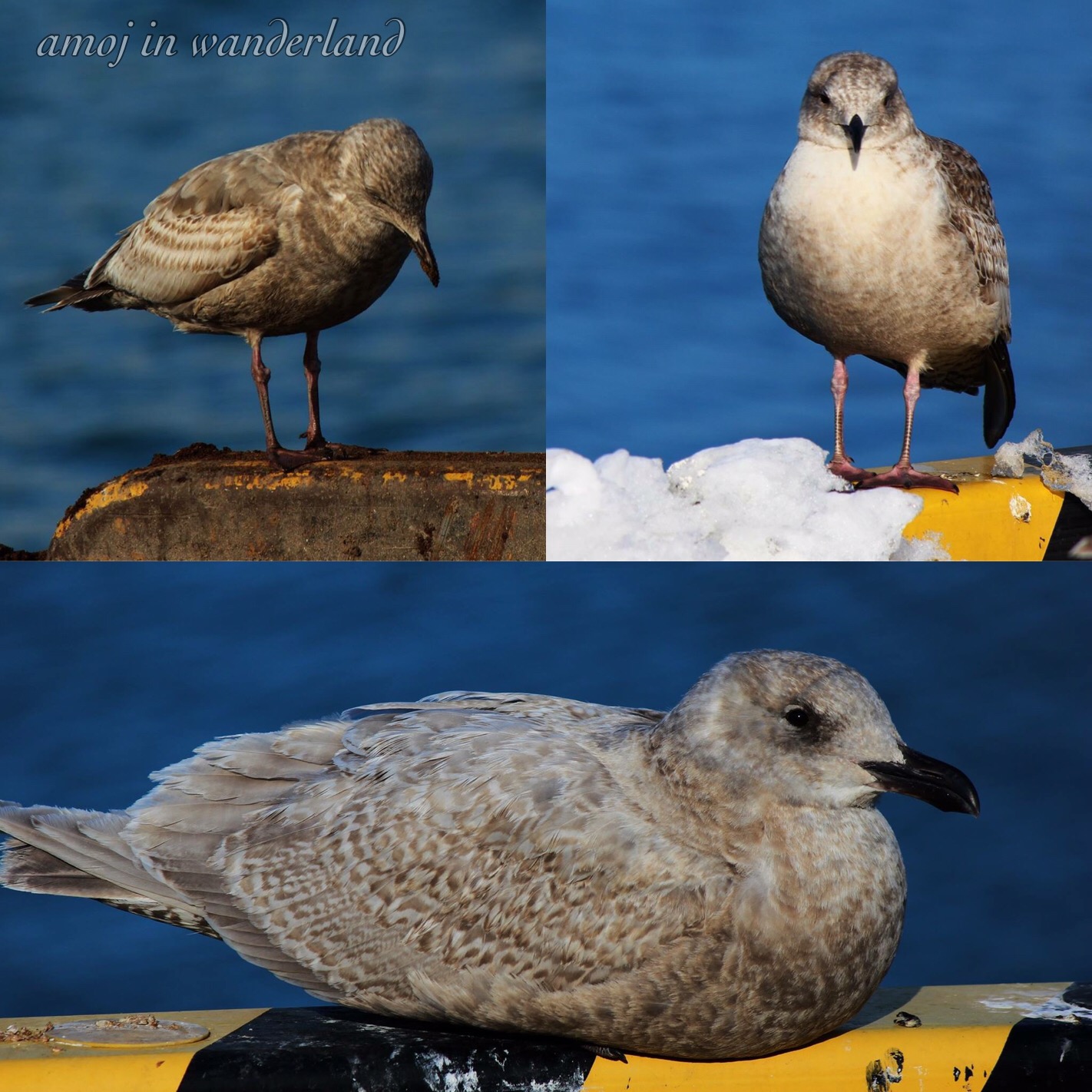 Juvenile gulls (From left to right, top to bottom): Common gull, Slaty-backed gull and Glaucous-winged gull.
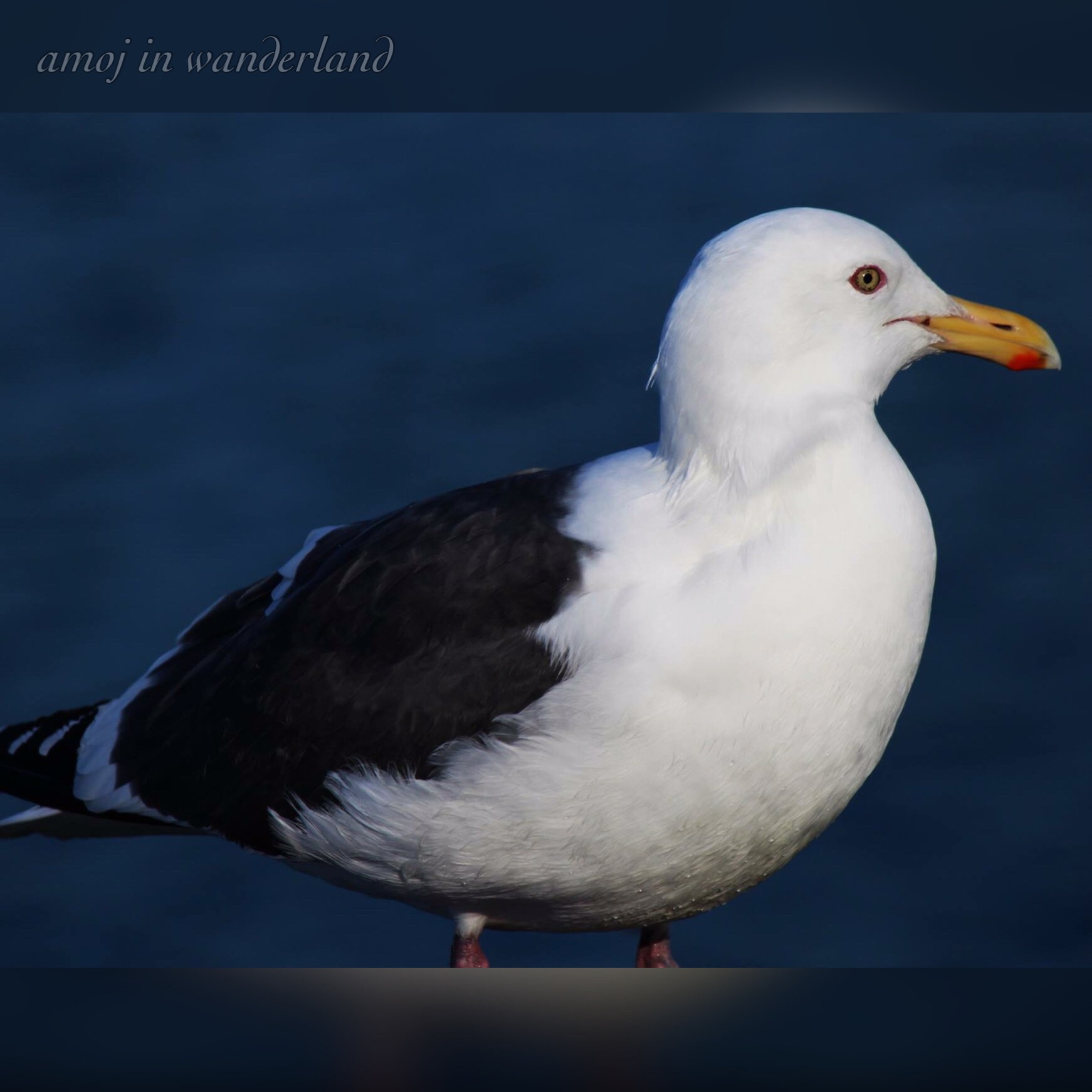 Adult Slaty-backed gull.
Another lesson given to me by my friend is about the different species of gulls. Before that, I was seeing all gulls as the same. My friend pointed out to me the names of the gulls present in that port. There was the common gull (Larus canus), the larger Glaucous-winged gull (Larus glaucescens), the Galucous gull (Larus hyperboreus) and the Slaty-backed gull (Larus schistisagus). He’s so good in differentiating about 20 gull species. I am so lucky to do birdwatching with someone so knowledgable about birds.
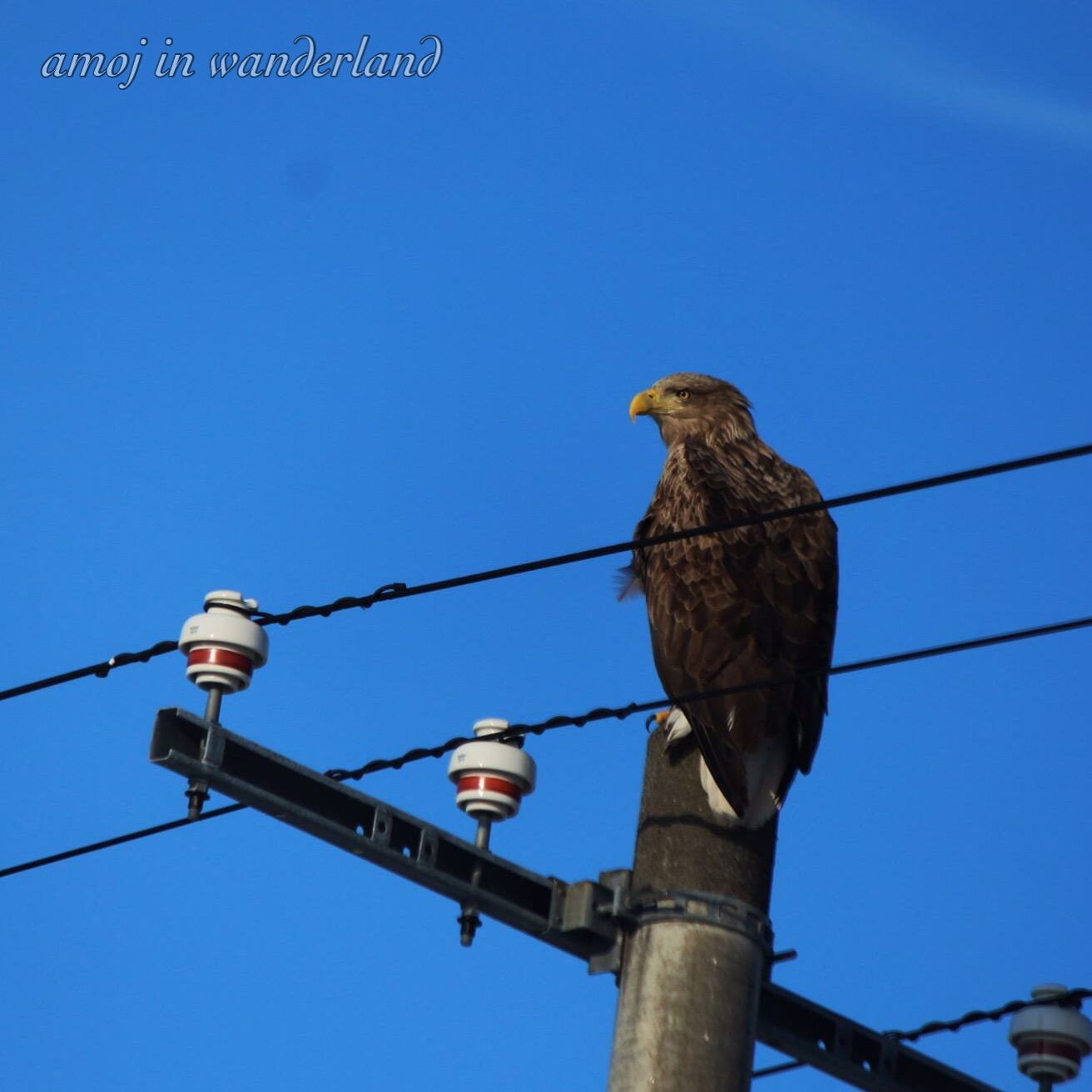 Our goal of the day: White-tailed sea eagle.
We decided to go back home and while we were on our way, we were all surprised. We finally saw a sea eagle. It was a white-tailed sea eagle (Haliaeetus albicilla) perched on an electric post in all its glory. And it was not hard for us to take pictures since he or she is not flying away from us. It was a great finale for our birdwatching on that day.
 Ending the day with a beautiful sunset.
 Amoj In Wanderland