I decided to go to Ishigaki island. Then I searched for the things I could do on the island during my 3-day stay there. And voila! A tour company called “Ishigaki Dream Tours” is offering a tour package for the 3 Yaeyama islands. These islands include Iriomote Island, Yubu Island, and Taketomi Island. Yaeyama Islands is the name given to the archipelago in the southwest of Okinawa Prefecture, covering 591.46 square kilometers, which also includes Ishigaki Island. It was a fantastic chance for me to enhance my Okinawan trip. I visited some of the Yaeyama Islands. While waiting at the airport, I called the tour company to make a reservation for the tour. This was right before my flight to Ishigaki.

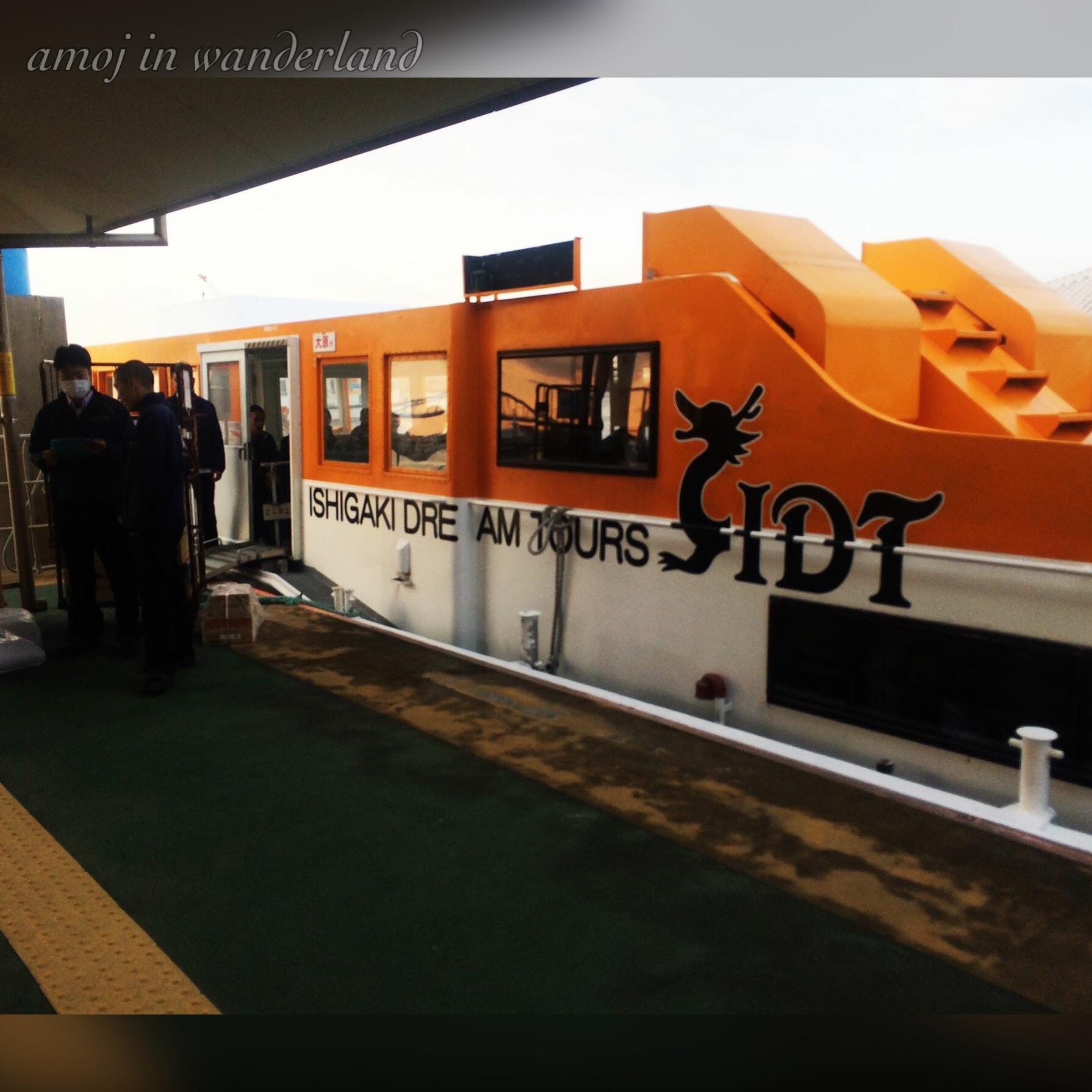
I had the tour on my second day in Ishigaki Island. I went to the office of the tour company located at the Ishigaki Port. The cool thing is that they have a robot introducing their various tours on the island. And guess what, they put a wrong name on my ticket/stub. I don’t know how they came up with a Chinese name for me, lol. I went to the ferry terminal. I took the boat to the Ohara Port on Iriomote Island first. The boat ride took about 50 minutes.
Iriomote Island
Our first stop is the Iriomote Island, Okinawa’s second largest island. The island is mostly covered with dense jungle and mangrove forests. We arrived at the Ohara Port. Then, we went to another boat for a mangrove cruise at the Nakama River.
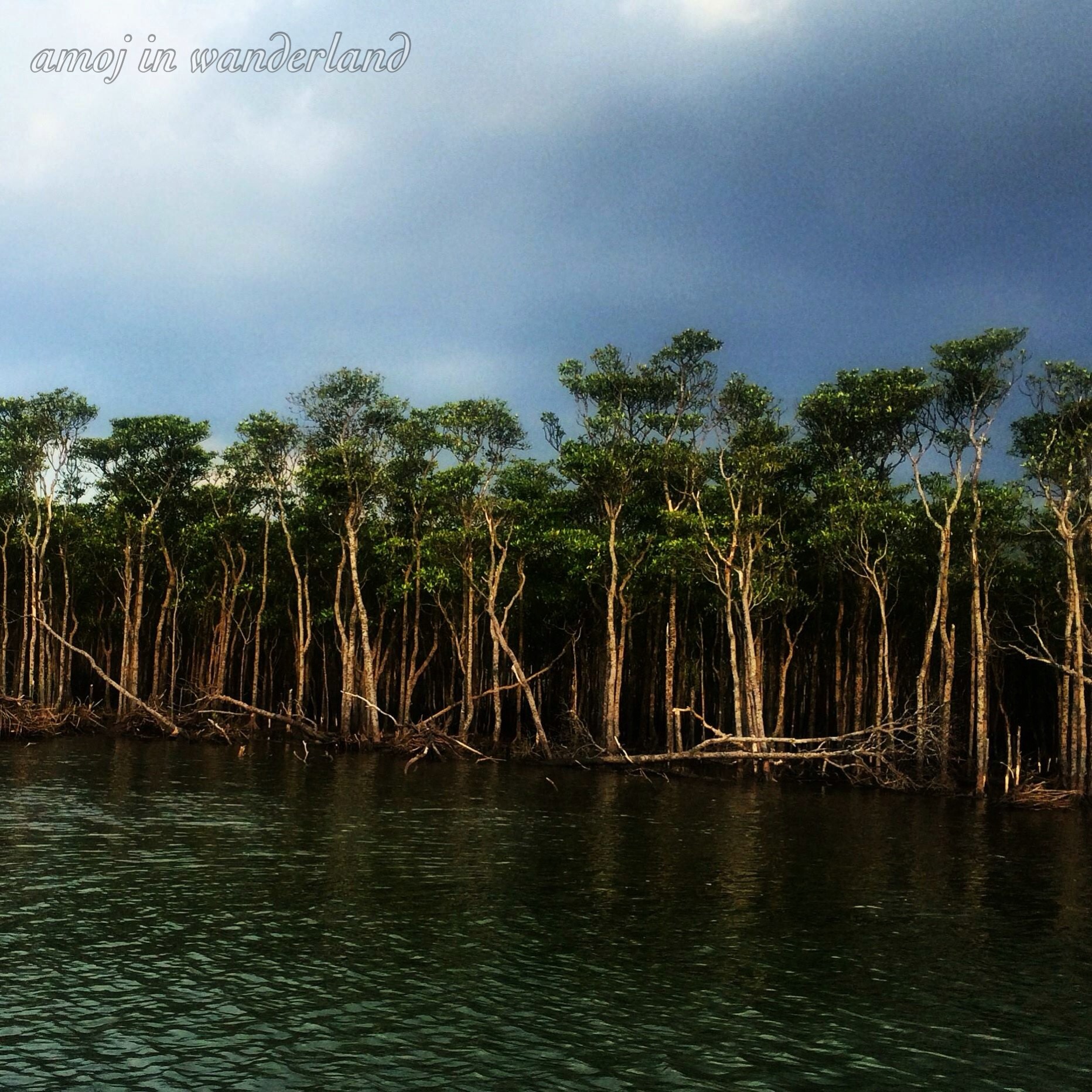
The boat tour of the Nakama River to see Japan’s largest mangrove forest was about 70 minutes. The forest makes up the Iriomote National Park, the southernmost of Japan’s national parks.
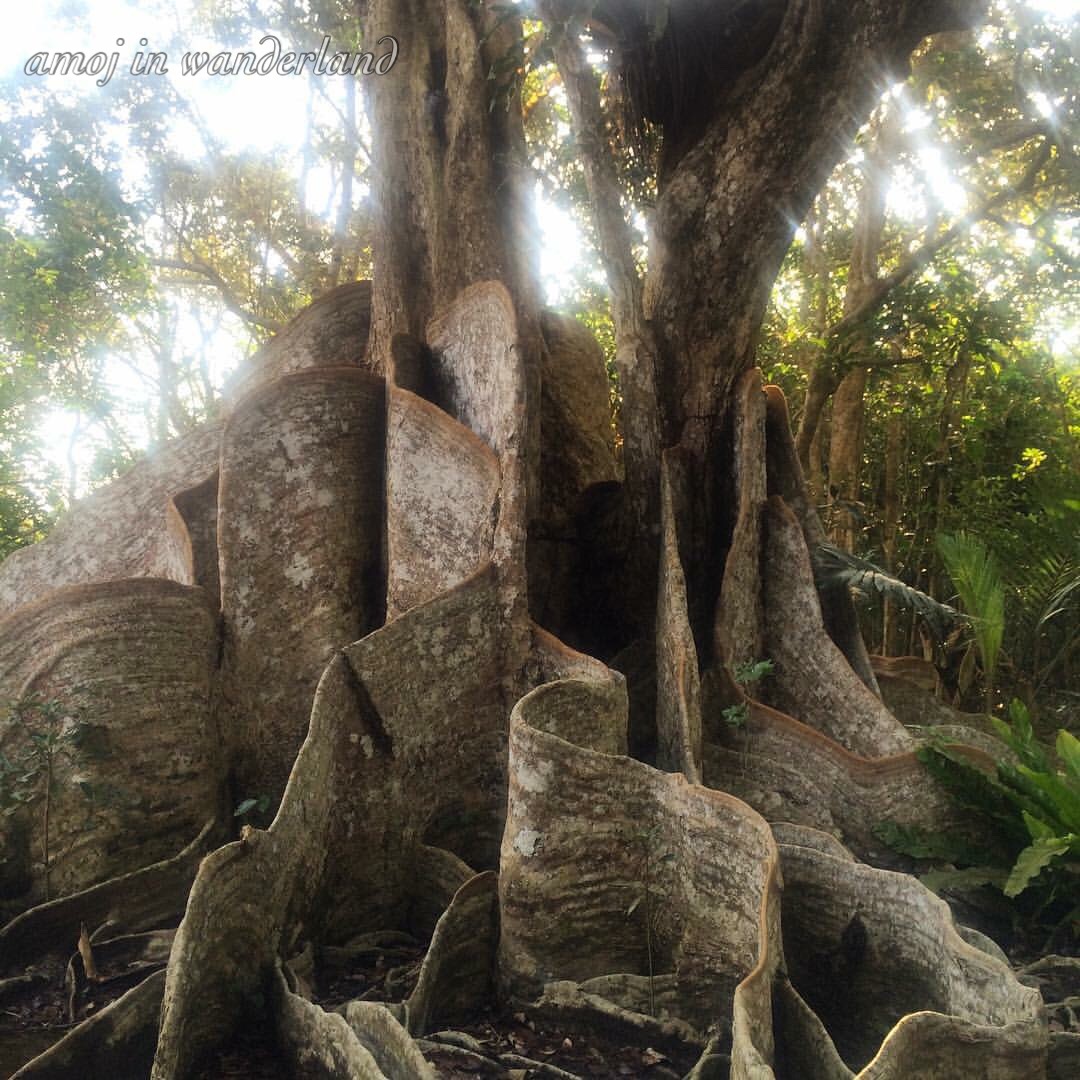
We stopped and got off the boat to see a big Sakishima-suo tree (Sterculiaceae mangrove). Considered the largest of its kind in Japan, it measures 18 m high and has a trunk diameter of 2.9 m. It has 15 buttress roots of varying sizes. These roots give the tree an impressive presence in the Haimi area of Taketomi Island. In old times, the local people used to cut the roots to use them as helms for boats.
Sakishimasuo-no-ki is known as “the suo tree of the Saki Islands.” The islands located south of the main Okinawa island are generally called the Saki Islands.
We went back to the port and took a 15-minute bus ride to Mihara.
Yubu Island
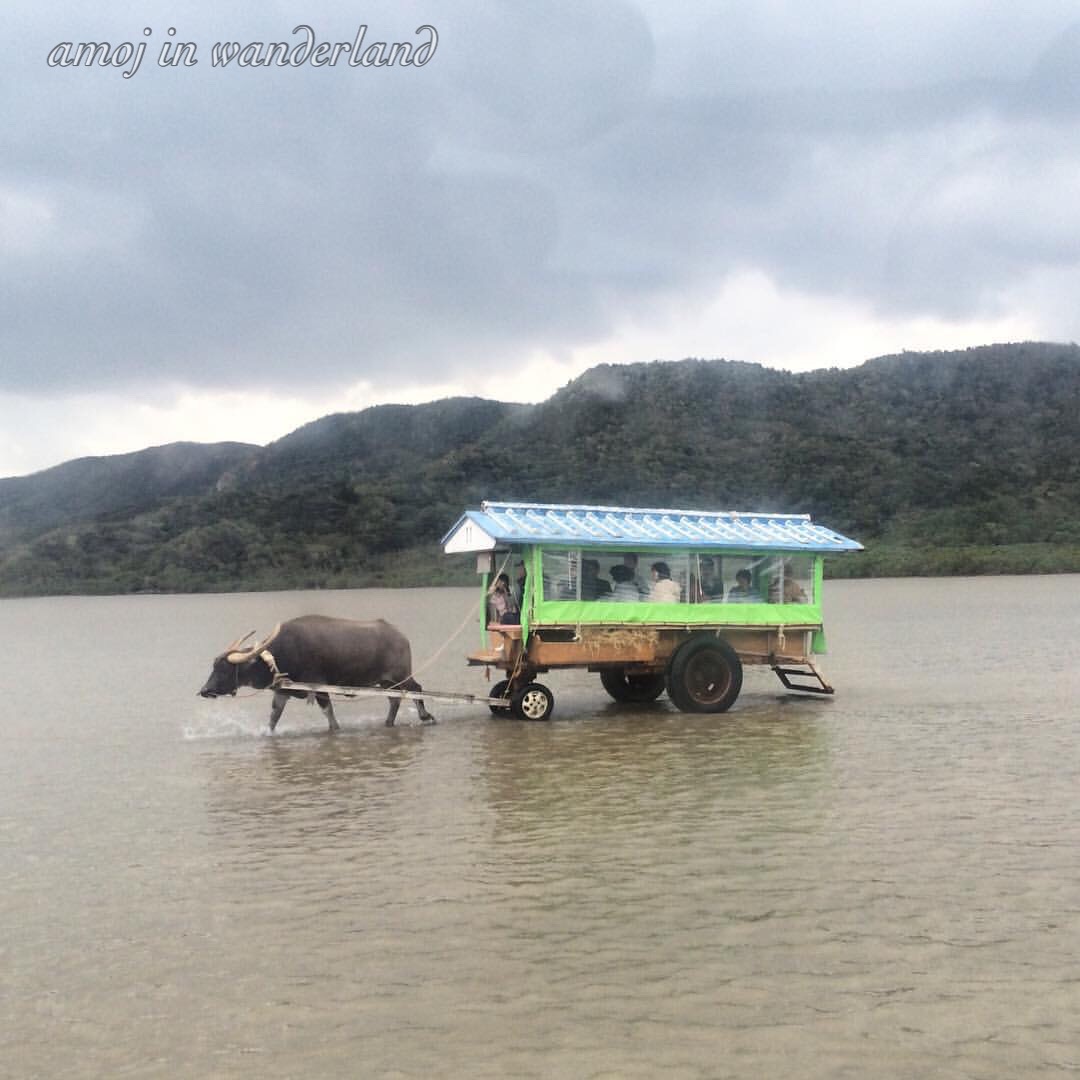
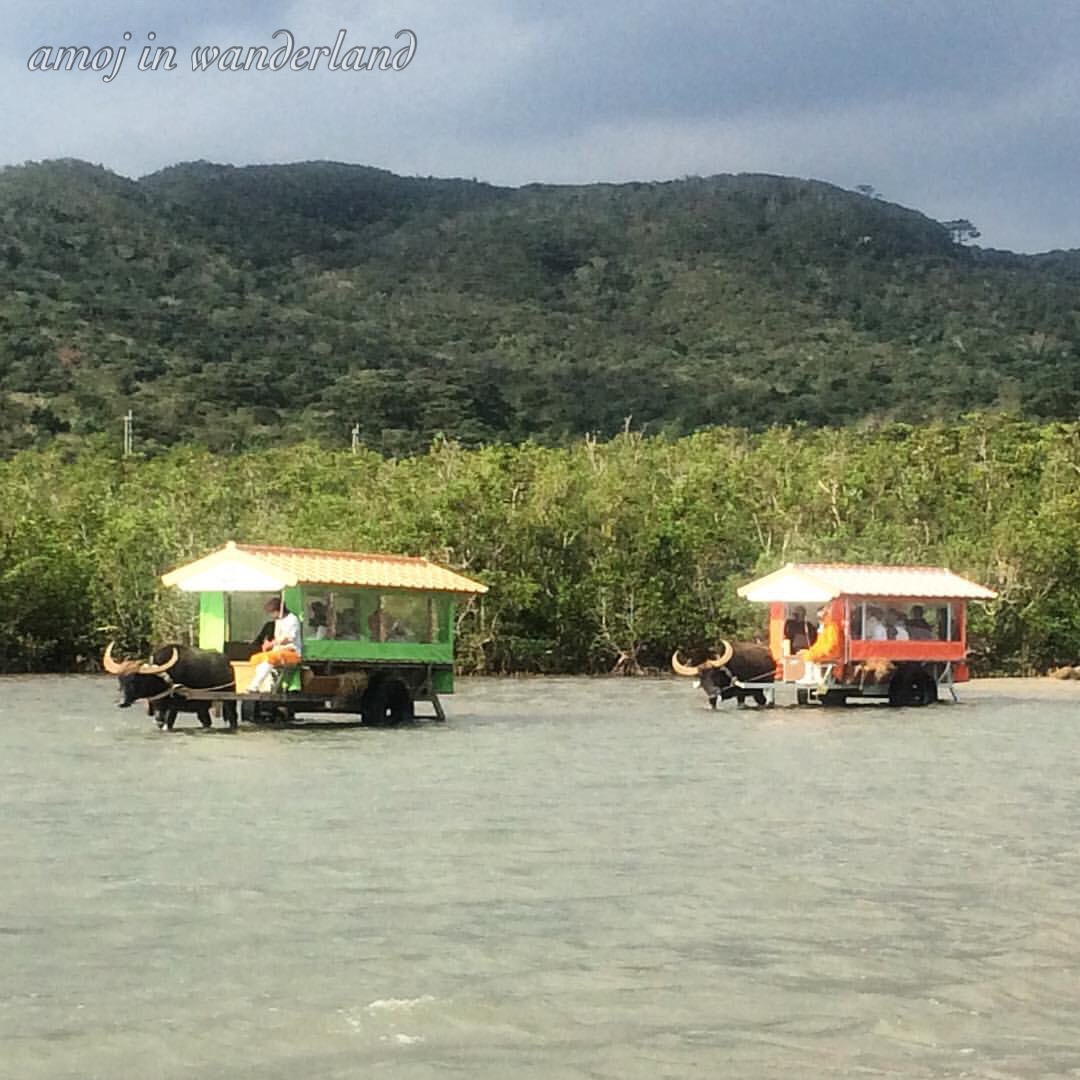
Mihara is the boarding point for the water buffalo cart ride to Yubu Island. I think this is the most interesting part of the tour. It’s my first time to see water buffaloes being used to traverse an island from another island. It is possible because the two islands are only separated by a shallow, sandy strait.
Our cart driver talked about the island in Japanese. Afterward, he played the Sanshin, an Okinawan local guitar-like stringed instrument.
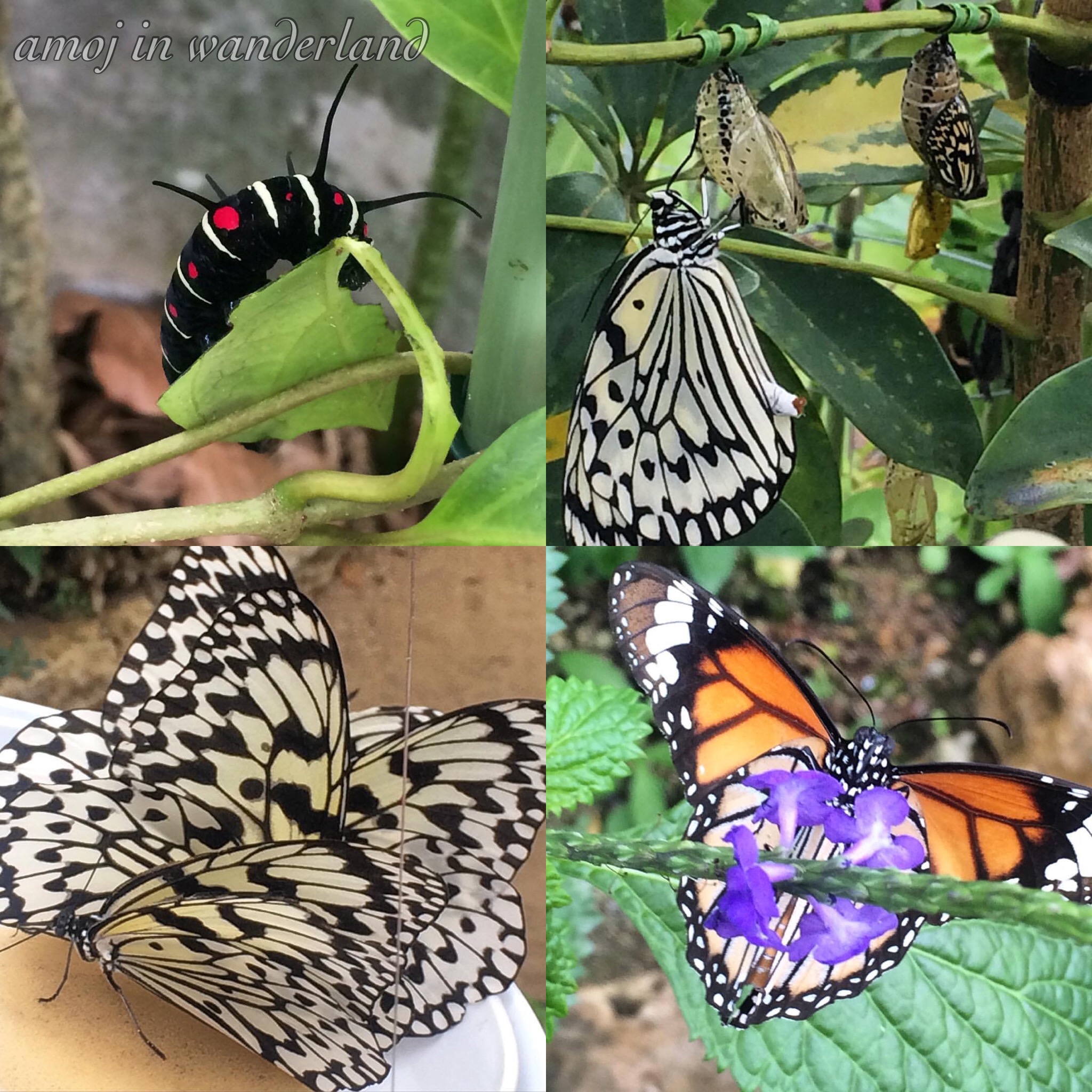
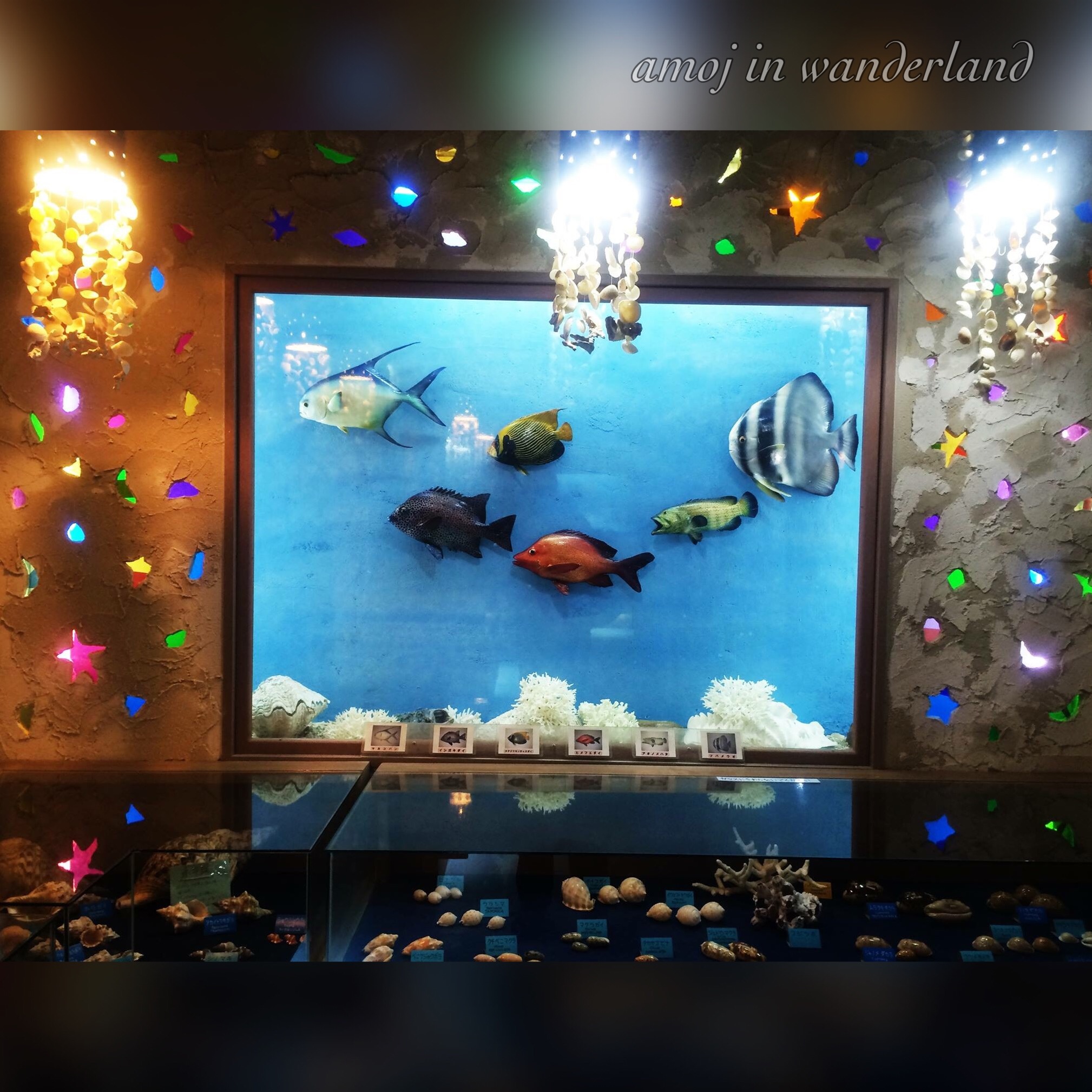
Yubujima is a very small island with a whole girth of 2.15 km. We went to the restaurant to have lunch. Then, I went out to walk around the island for our one-and-a-half hours of free time. The botanical garden includes a small bougainvillea garden. It also has a butterfly garden with the famous “Gold pupal” of rice paper butterflies. There is a cage with ducks and peacocks and a shell house displaying the shells found in the Yaeyama islands.
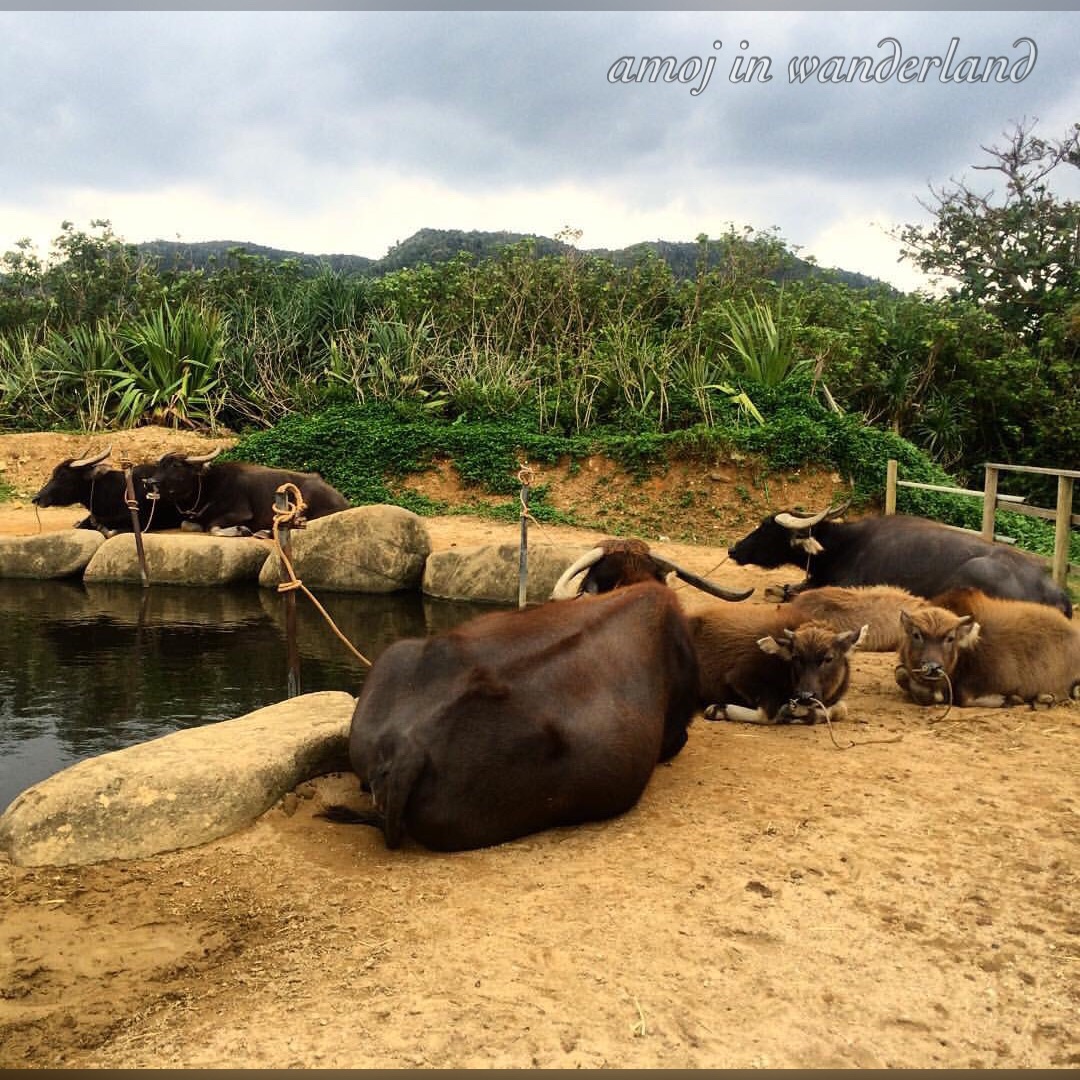
I also visited the resting place of the water buffaloes. Water buffaloes are close to my heart since they became a big part of my PhD study. We took the water buffalo cart again to go back to Iriomote and ride the bus back to Ohara Port.
Taketomi Island
We took the afternoon ferry to Taketomi Island, a small island just a few miles away from Ishigaki, the second most visited of the Yaeyama Islands.
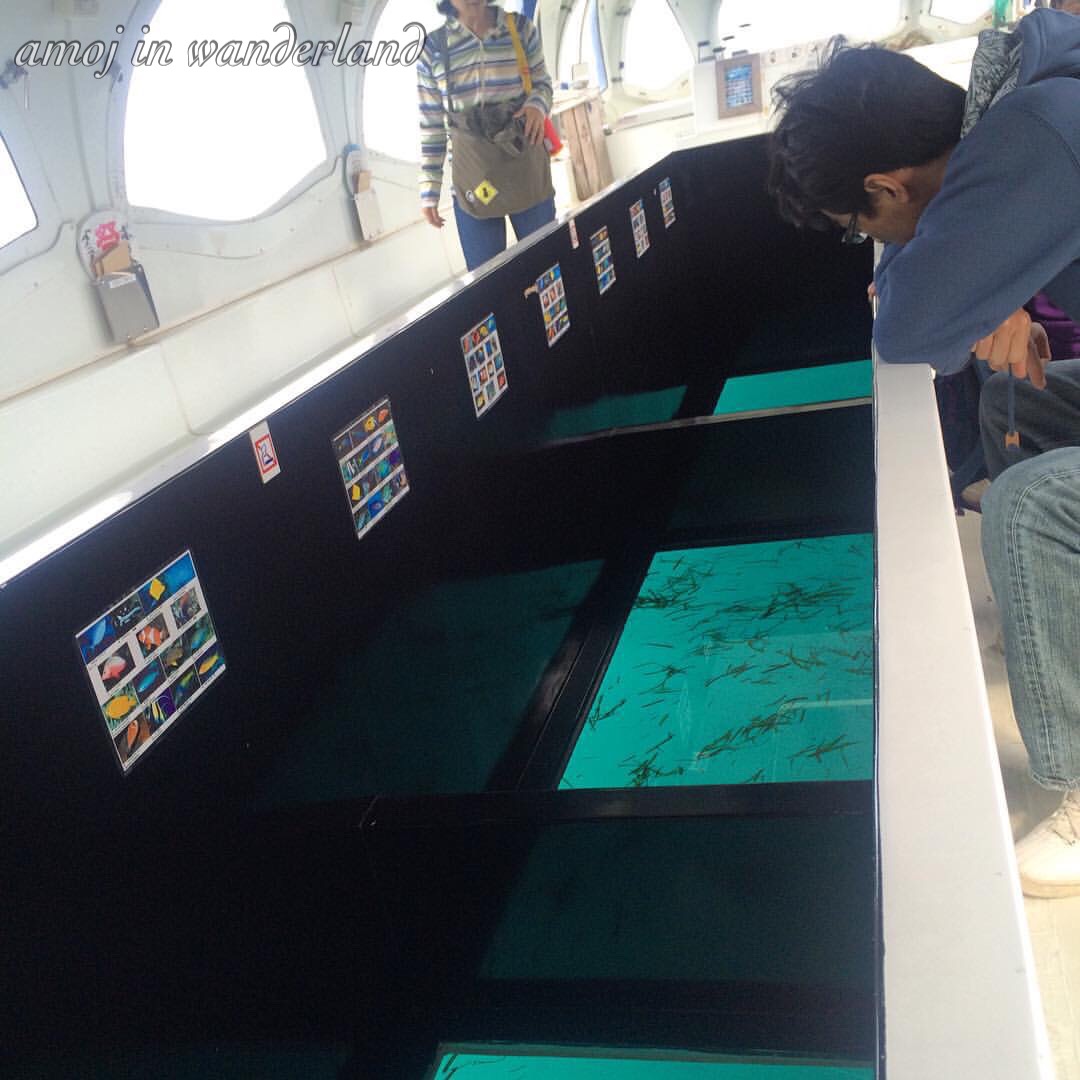
I took the glass-bottomed boat ride to see the beauty of the underwater world on the shores of Taketomi Island. The time seemed too short, though, to enjoy the beautiful corals and colorful fish.
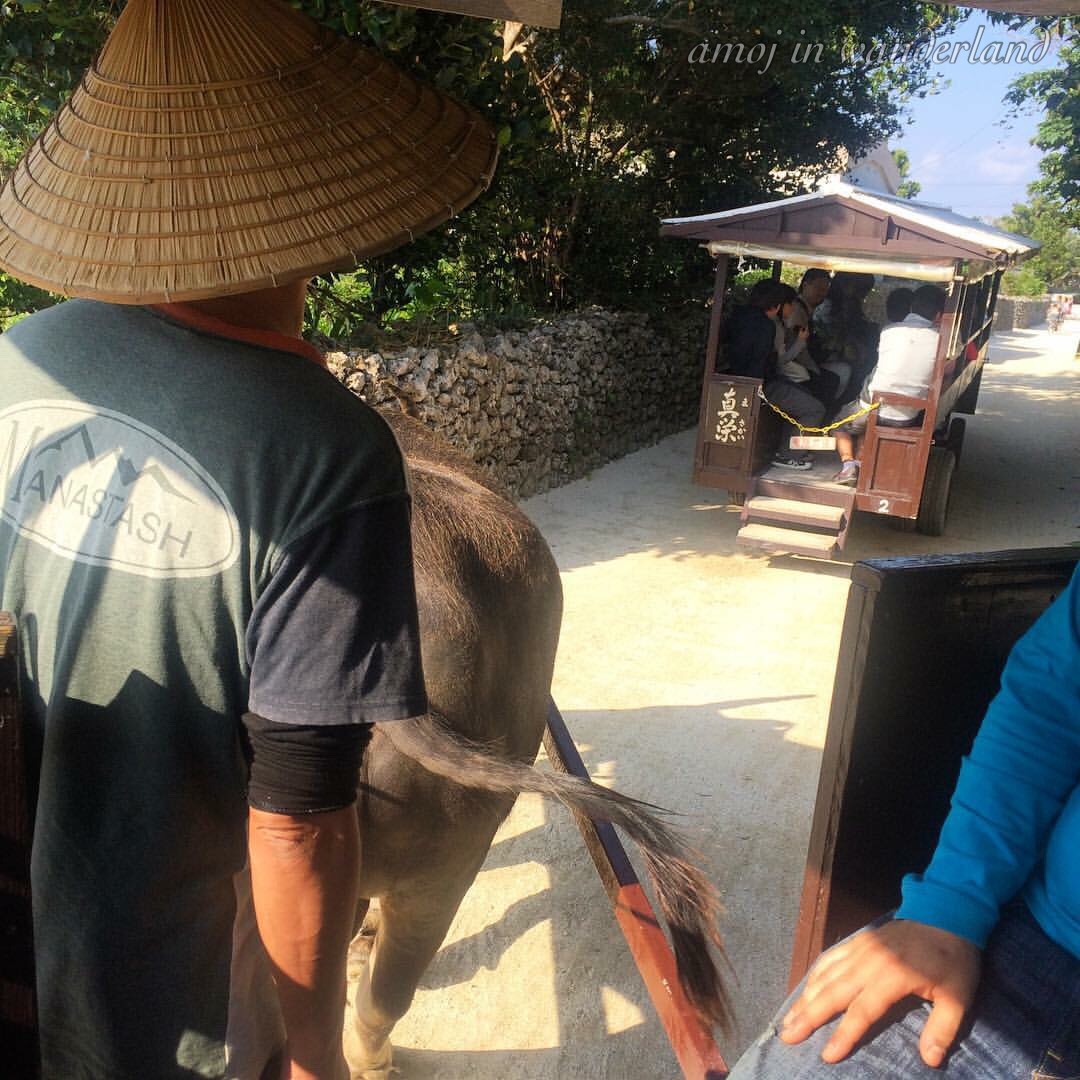
Afterward, I took a bus ride to the village. There, I had my second water buffalo ride of the day. It was a 30-minute tour through the narrow lanes around the village of Taketomi. The village is filled with traditional, clay-tiled, single-story houses. The guide played the sanshin while singing a traditional Okinawan song during our short stroll.
My tour ends with a final bus ride to the Taketomi Port. Then, I take a short ferry ride back to Ishigaki. It was a very interesting tour and a must-do for tourists like me.
 Amoj In Wanderland