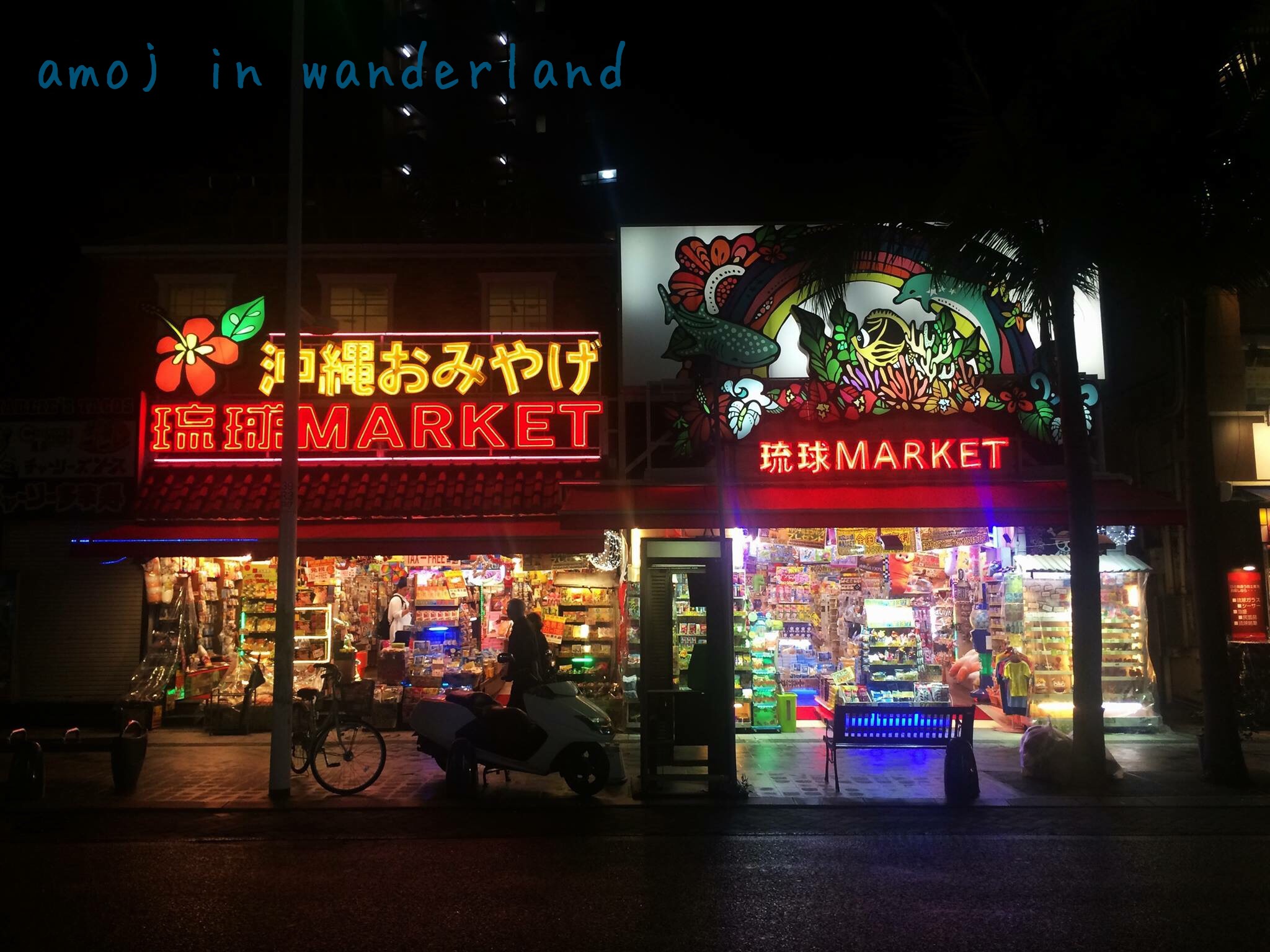
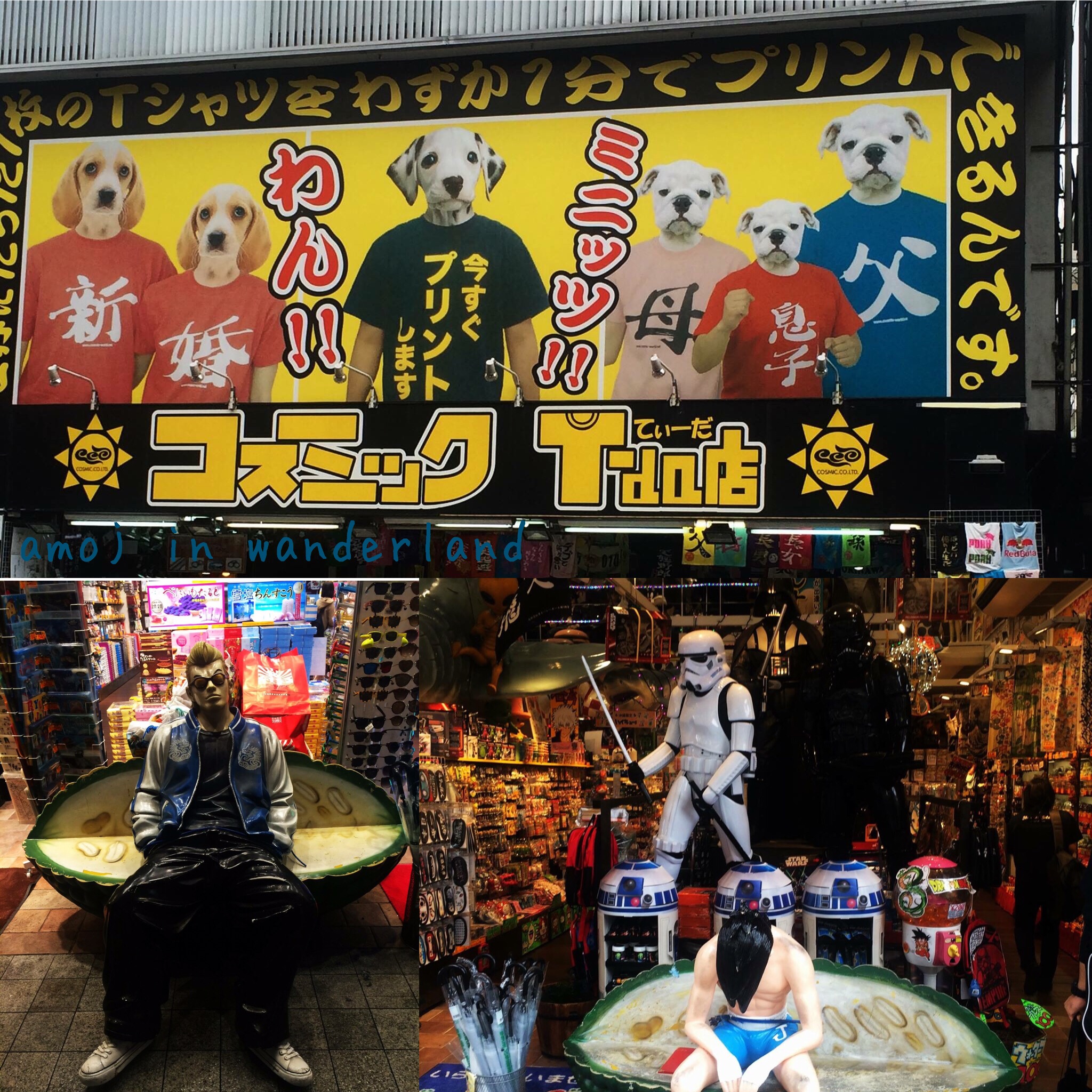
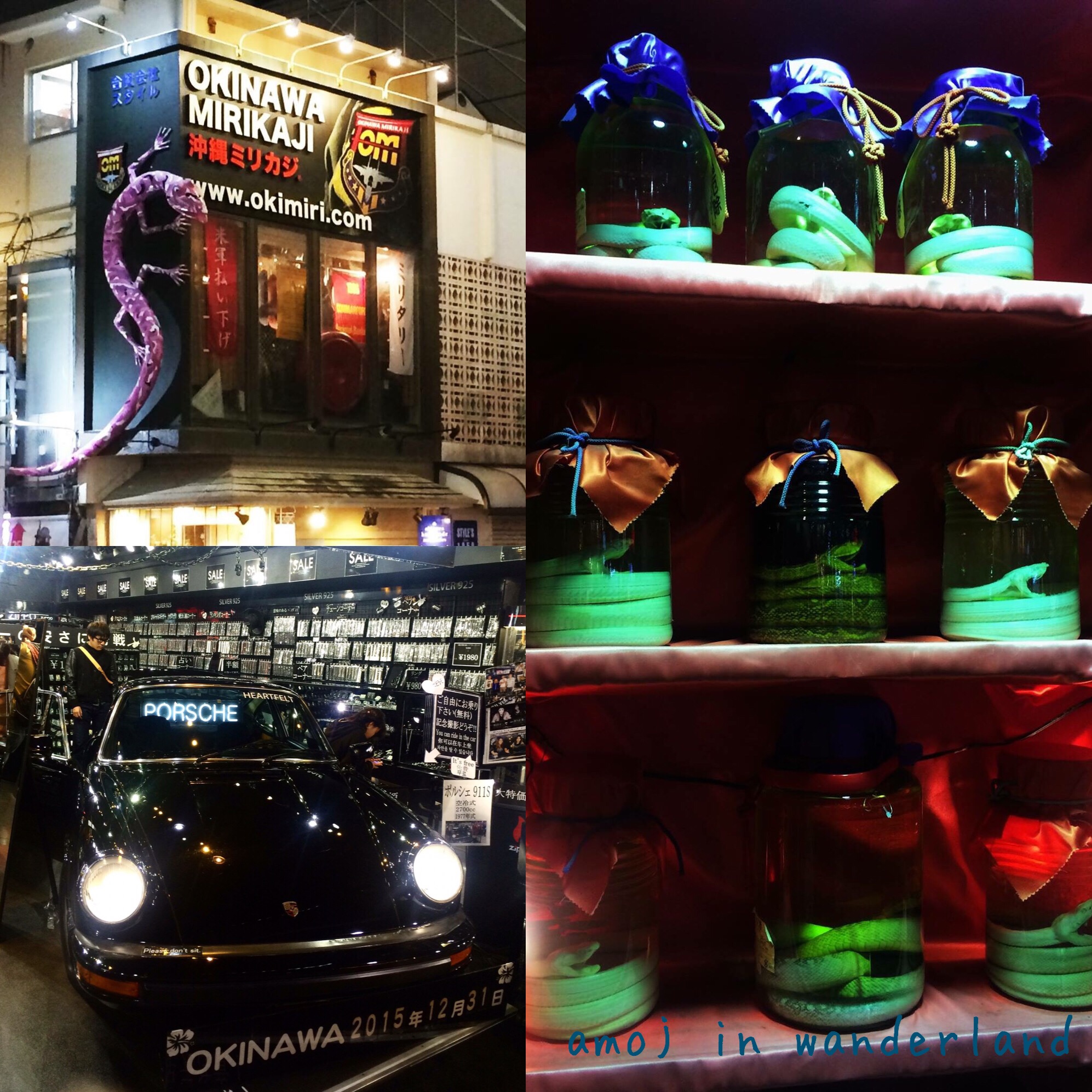
Okinawan food is a mixture of Japanese, Chinese, Southeast Asian and American cuisines. The influence of China and Southeast Asia was brought by its long history of trade in the region while the post-World War 2 saw the coming of the American influences on the Okinawan food. I went to 4 restaurants along the Kokusai Dori to taste some of the food Okinawa is offering.
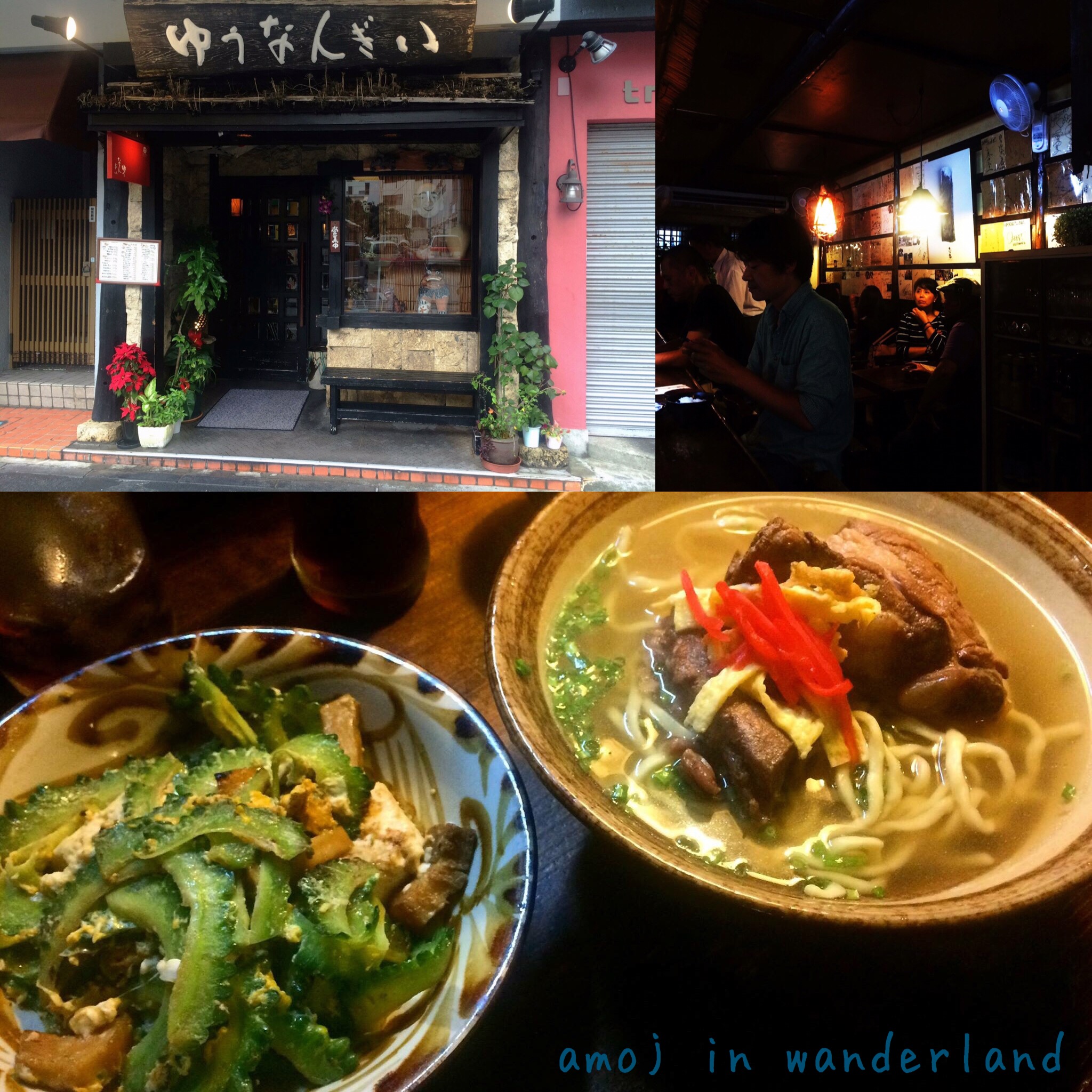
I went to Yunangi on my first day in Okinawa. I saw it by searching in the TripAdvisor app and Yunangi ranked 1st among the Naha restaurants. The restaurant is located on a sidestreet off the Kokusai Dori. It has a wooden sign with white lettering above its doorway.
It’s a small shop and the servers are friendly. I ordered Okinawa’s signature dish, goya champuru and soki soba. Champuru or champloo is an Okinawan word meaning “mixed up” or “stirred together”. It can be a mixture of any ingredients but the most popular is the goya or bitter gourd. Goya came to Okinawa from Southeast Asia and eventually became the prefecture’s most favored vegetable. I am not a fan though of bitter gourd. I have tried to finish the meal but I just couldn’t take its bitterness.
On the other hand, the Okinawa soba noodles is different from the traditional Japanese soba (buckwheat noodles). The thick wheat noodles of Okinawa are firm and slightly chewy. There were many types of soba on the menu but I chose the soki soba. Soki are very soft spare ribs cooked slowly and braised in soy sauce and sugar with Okinawa’s famous liquor awamori. Soki are also the most common toppings of the Okinawan soba.
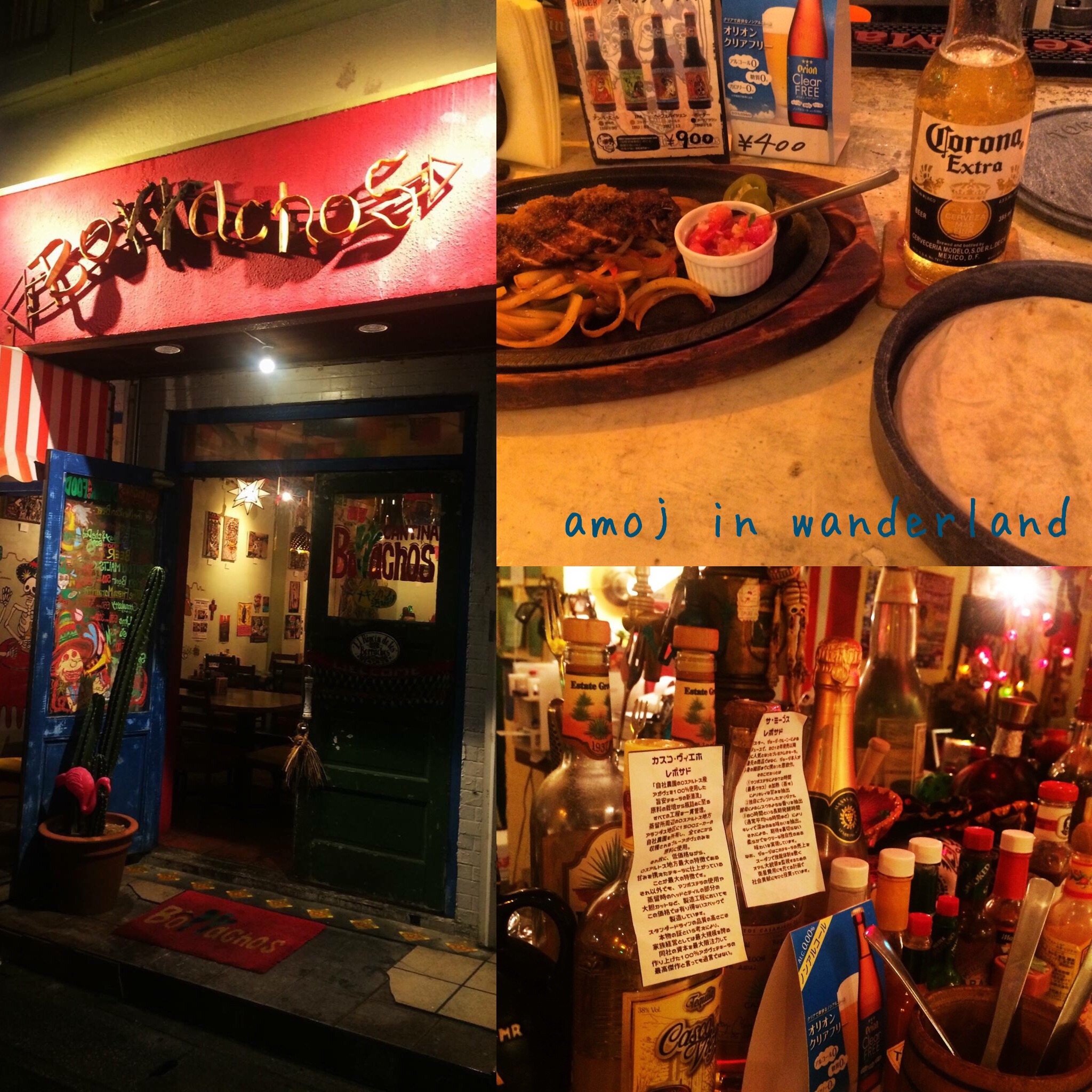
I don’t know but I am so drawn to Mexican food. So even if I was in Okinawa, I just felt the urge to eat Mexican food. And when I saw the Borrachos located on the Paradise-dori Street during the Christmas eve, I went inside and ordered “fajita on fire” and a bottle of Corona. It was a nice way of spending the Christmas eve alone in Okinawa.
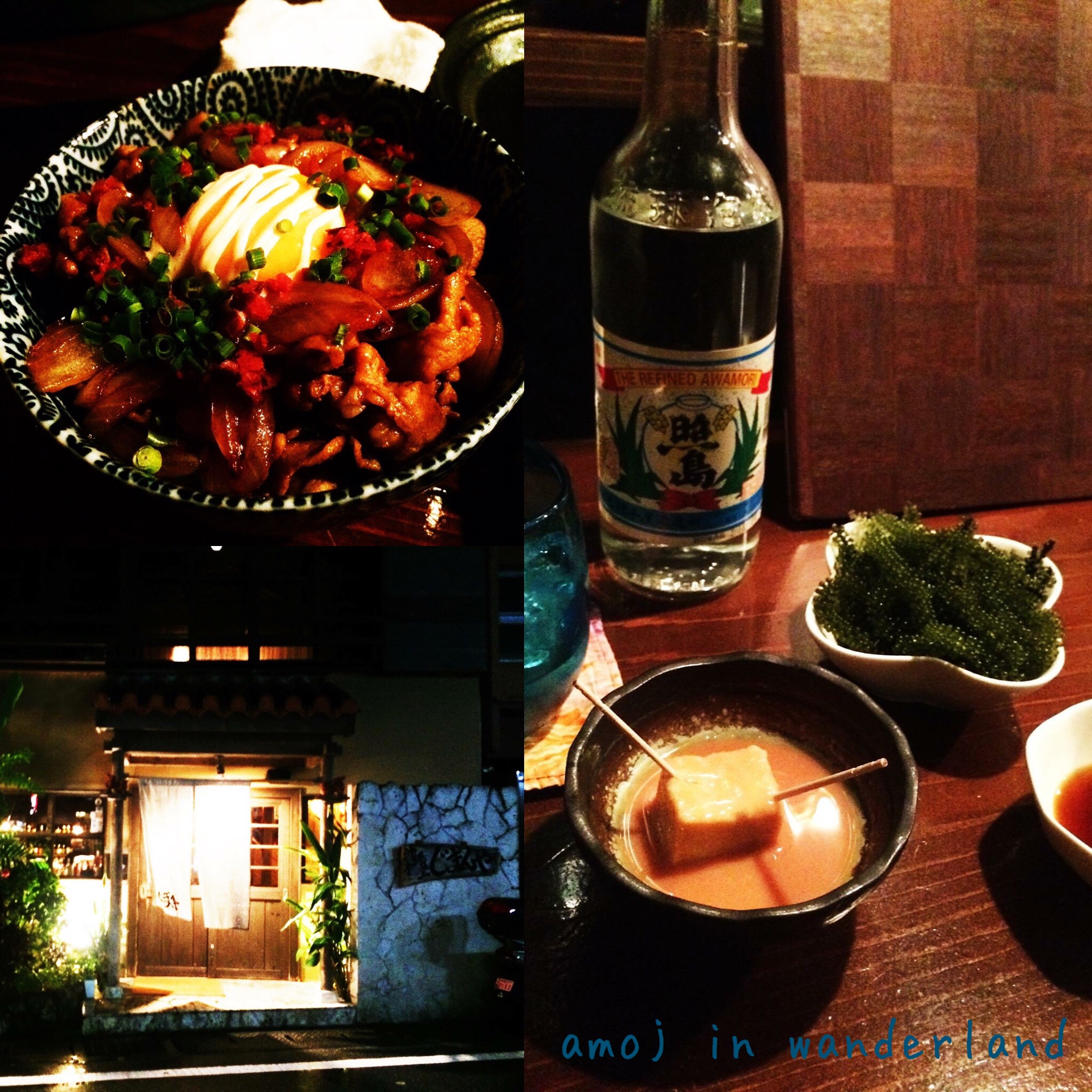
Jimanya is a small izakaya few blocks away from the Kokusai Dori. I was the first person who entered the place at that time. I want to experience drinking awamori. Awamori is an alcoholic beverage made from long grain indica rice imported from Thailand. It is not a direct product of brewing but of distillation. The Thai people taught the Okinawans the process of distillation during the 15th century.
Together with awamori, I had umibudo and tofuyo. Umibudo or sea grapes are delicate sea weed clusters that pop like bubbles in the mouth. Tofuyo is a pungent fermented tofu served in a tiny, two-centimeter cube. As it was my first time to eat a stinky tofu, I didn’t like it. I also ordered a bowl of butadon.
When I ordered awamori, I thought they will give me a glass of this alcoholic drink. But to my surprise, they have given me a 300 ml bottle. Awamori contains 30-45% alcohol, so it’s easier to get drunk. I just had the half of my third glass when I decided to stop drinking. I accidentally spilled my glass of awamori proving that I was already drunk.
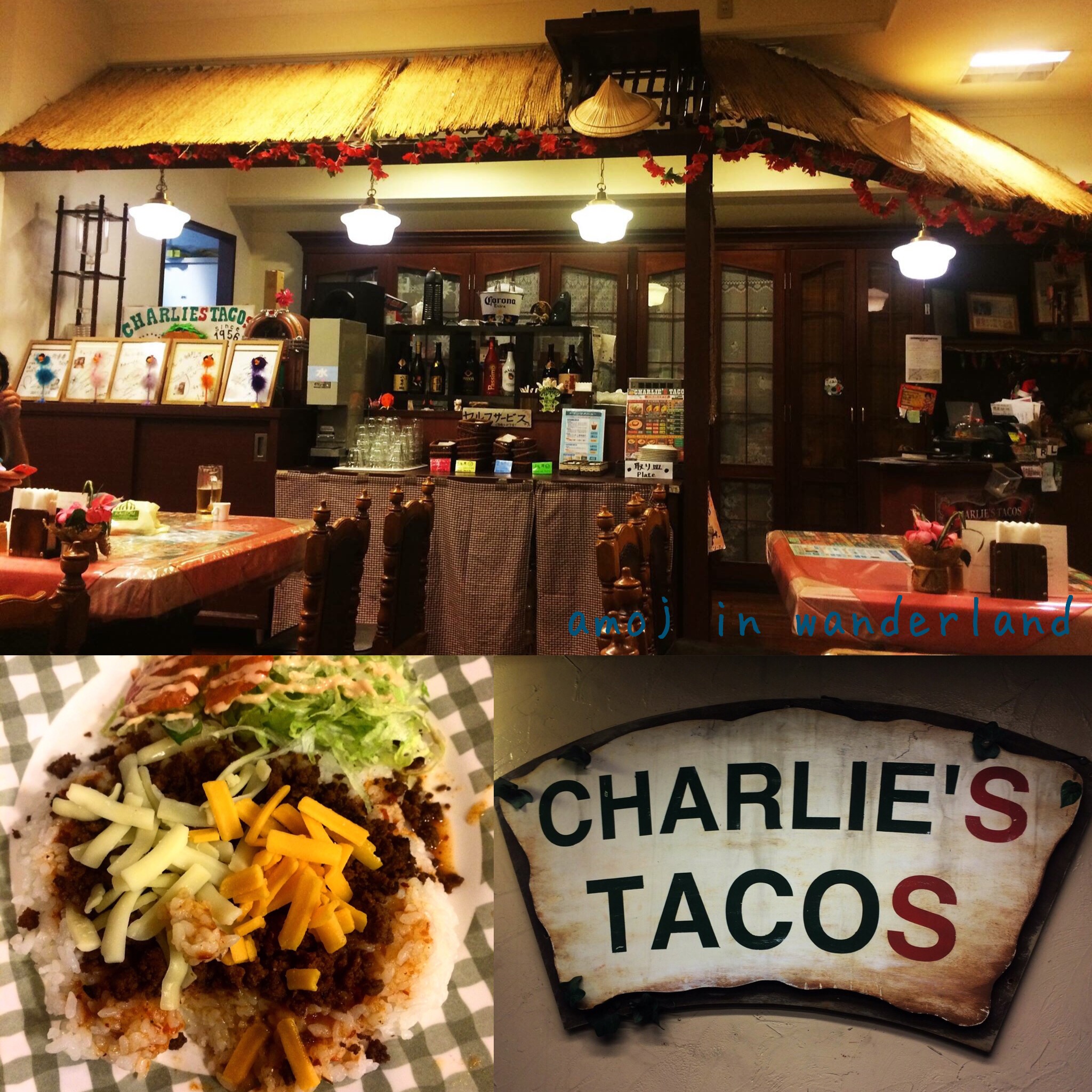
Taco rice is one of the American’s greatest contributions to Okinawan cuisine. It is consists of spiced ground beef, cheese and salsa on top of a white rice. And I had it at the famous Charlie’s Tacos.
Charlie’s Tacos in the Kokusai Dori is a branch of the original shop found at the Park Avenue in Okinawa City.
Introduced in 1956, it has been the leading taco shop in the whole of Okinawa.
 Amoj In Wanderland