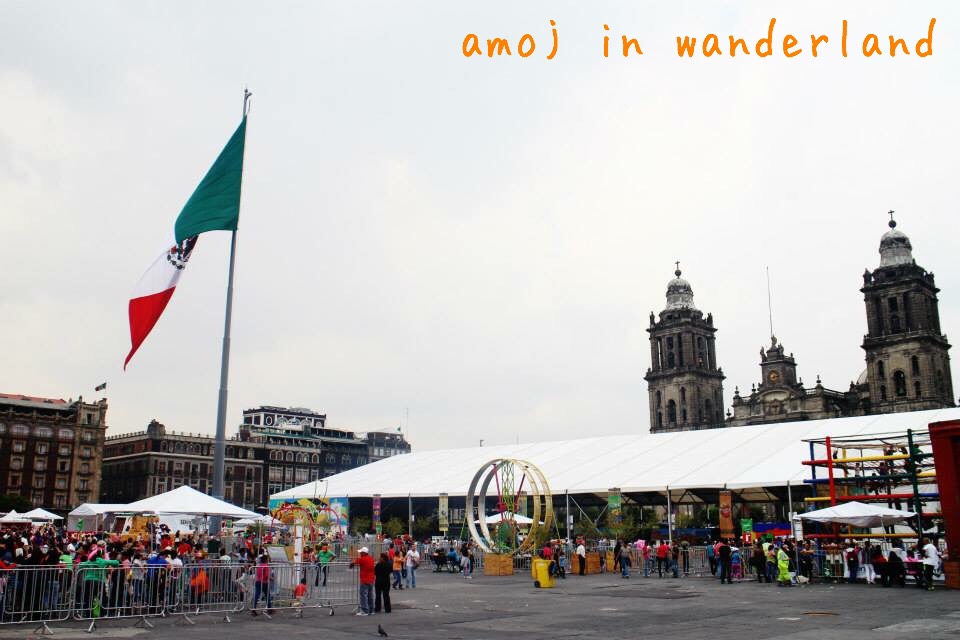
The Historic Center or Centro Histórico lies at the central neighborhood of Mexico City. This includes the Zócalo or the main plaza and extends in all directions covering a total of about 4 hectares. The Historic Center has been both the center of the ancient Aztec Empire known as Tenochtitlan and the seat of power for the Spanish colony of New Spain. Most of the city’s historic sites from both eras can be seen in this part of Mexico City with 1,550 buildings declared as historically important. It was therefore recognized as a World Heritage Site because of the area’s cultural and historical value.
On the first day of my conference, I went out with my colleagues to visit the historical Zócalo, the main part of the Historic Center. It is formally known as the Plaza de la Constitución as Mexico’s first constitution was proclaimed there in 1813. Surrounded by the leading forces in Mexico with the Palacio Nacional (National Palace) on the east and Catedral Metropolitana (Metropolitan Cathedral) on the north, Zócalo is considered as the heart of Mexico City. A huge Mexican flag can be seen flying in the middle of the square.
Zócalo is one of the largest city squares in the world and the largest plaza in Latin America measuring about 240 meters in each direction. The square was previously used as bullfighting arena and market in the early colonial period. Festivals, demonstrations and parades are usually held nowadays in the area.
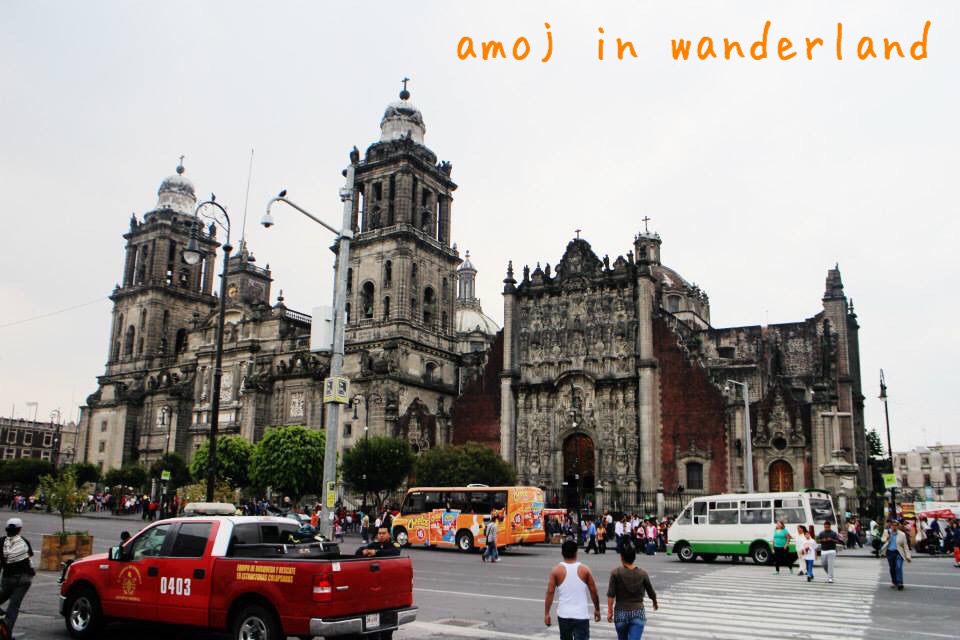
Metropolitan Cathedral
I was impressed with the massive Metropolitan Cathedral of the Assumption of the Most Blessed Virgin Mary into Heaven. It is the largest cathedral in the Americas and currently the seat of the Roman Catholic Archdiocese of Mexico. The construction of the church began in 1567 and was completed in 1788. Much of the stones being used to construct the cathedral came from the nearby Aztec’s Templo Mayor. The cathedral’s style is a mixture of baroque, neoclassical and Mexican churrigueresque architecture.
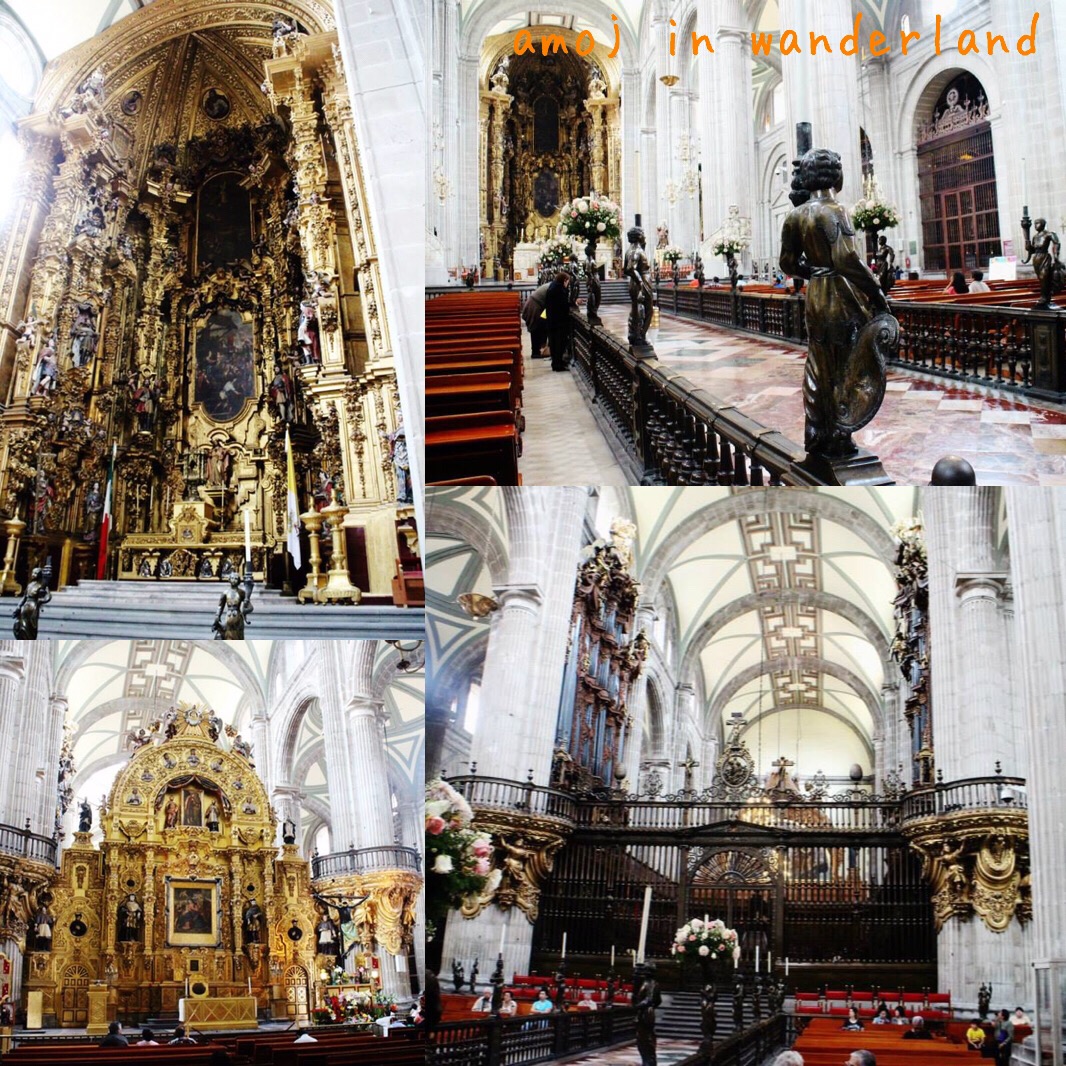
The interiors of the basilica is as grandiose as its exteriors. Most of the naves and chapels inside were designed with churrigueresque style named after the Spanish architect Jose Churriguera because of his excessively decorated style. The altarpieces, paintings and statues are also stunninh and splendid.
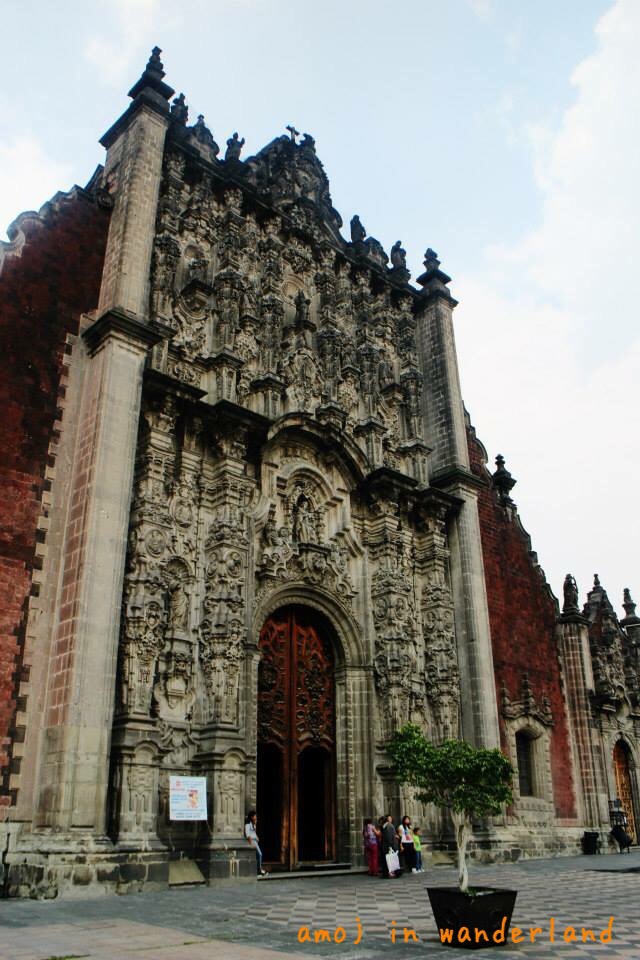
Beside the cathedral is an older chapel called Sagrario Metropolitano. Designed by the Spanish-born architect Lorenzo Rodríguez and constructed in the mid-1700s. Inspired by Rodríguez’ native Andalusia, the facade of the small church are lavishly ornamented and enriched with Mexican baroque architecture.
National Palace
Another massive building dominating the entire east side of Zócalo is the seat of the federal executive in Mexico called the National Palace. With the facade built with the red volcanic tezontle rocks, the government building measures over 200 meters long. Unluckily, I didn’t have the chance to enter this building.
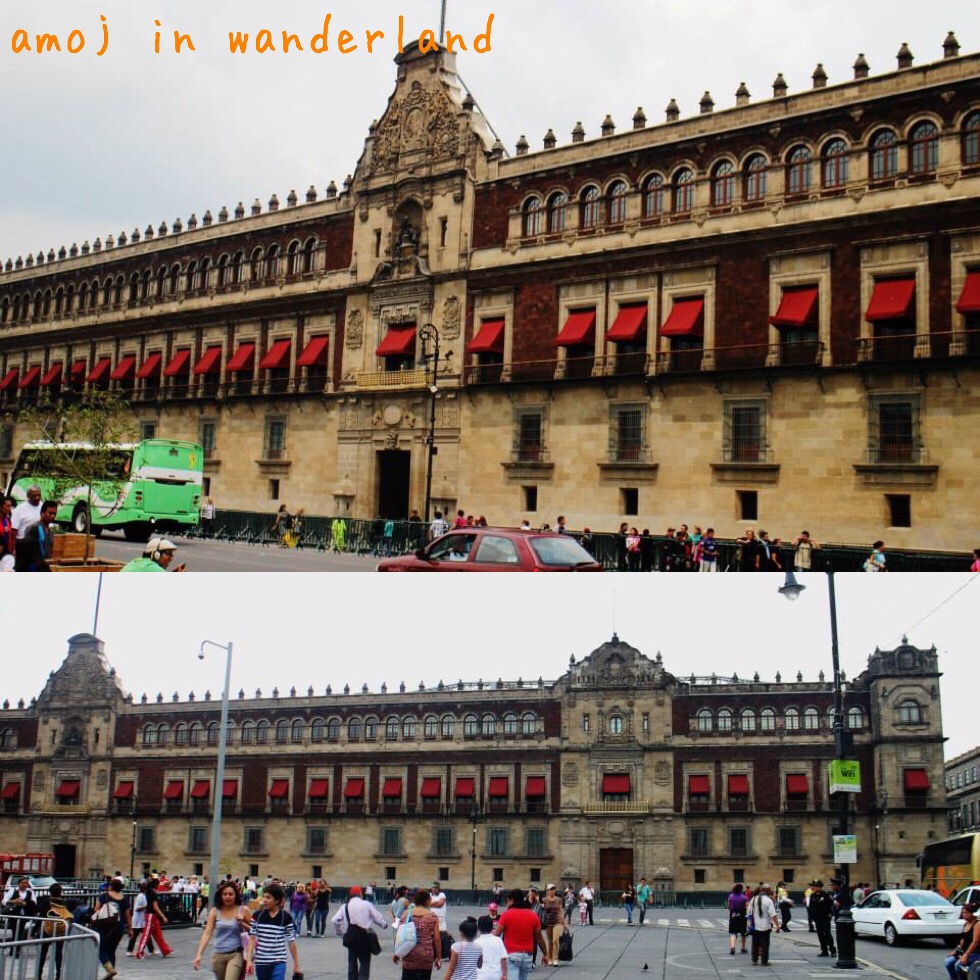
Although the National Palace is officially known as the seat of the Executive Power, the President doesn’t hold his office there but is used only for ceremonies or national holidays like Independence Day or Revolution Day. It is just currently housing some of the offices of both the Federal Treasury and the National Archives.
 Amoj In Wanderland