I continued my tour at the Historic Center of Mexico City, designated as a World Heritage Site in 1987. My last destination on that day was the Alameda Central. Alameda was named after the álamo (poplars) trees surrounding the public municipal park which was created in 1592 through the orders of Viceroy Luis de Velasco.
When the park was built, the size was only half of the current one. The expanded part was a plain plaza where public burning at the stake of convicted witches were held. The public executions have stopped in 1770 when the plaza was torn up to be part of the Alameda Park. It was expanded again in 1791.
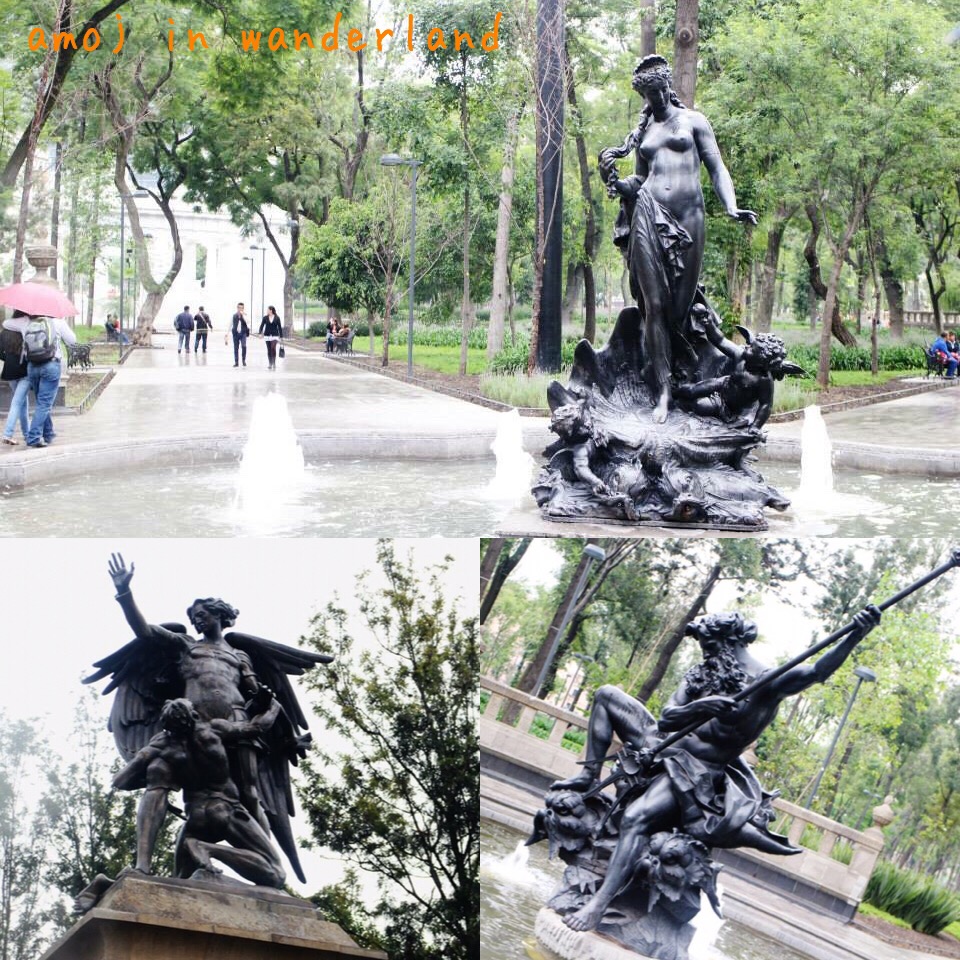
The current park contains five Greco-Roman mythology inspired fountains and a lot of statues including Mexican sculptor Jesús Fructuoso Contreras’ works Désespoire and Malgré Tout. There is also a monument commemorating the centenary of Beethoven’s 9th Symphony donated by the German community.
When we arrived at the park, there were couples publicly snuggling in the benches. This proved that the well-manicured gardens of Alameda has been a popular refuge among lovers and families.
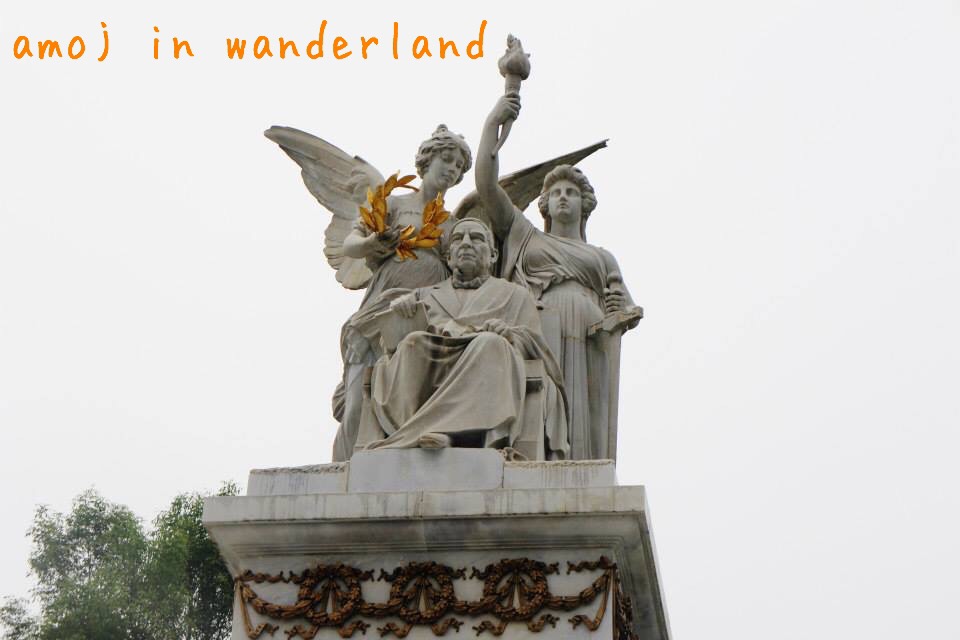
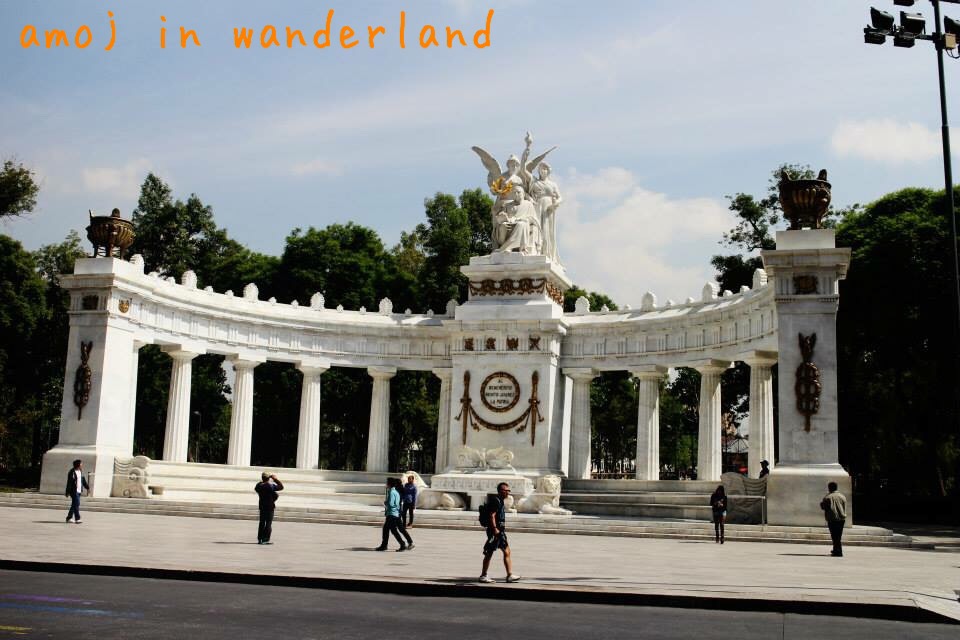
We walked a little towards the south side of the park and there stood a large white semi-circular monument flanked with marble Doric columns called Hemiciclo a Juárez. This Neoclassical monument is dedicated to one of Mexico’s most beloved statesman Benito Juárez constructed during the president’s centenary in 1906.
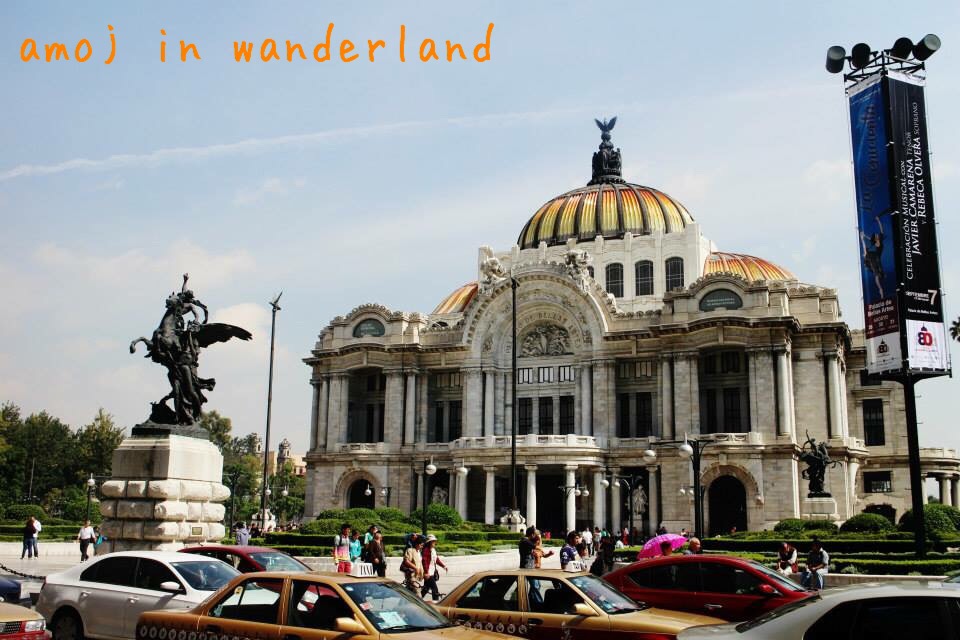
Adjacent to the park is the Palacio de Bellas Artes or Palace of Fine Arts. The building constructed in 1934 has a mixture of Neoclassical and Art Nouveau style for its exteriors and Art Deco styled interiors. Unfortunately, I didn’t have the chance to enter the building and see the famous murals done by Diego Rivera inside. Considered as one of the most prominent cultural centers, it is currently hosting exhibitions and theatrical performances including those of the Ballet Folklorico de Mexico.
 Amoj In Wanderland