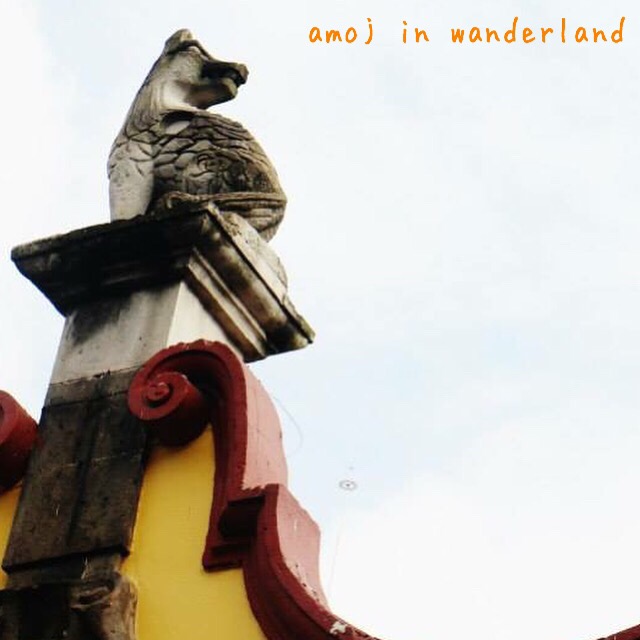
In Mesoamerican mythology, coyotes are symbols of military might. It was believed that the Aztec god Quetzalcoatl originated from a pre-Aztec coyote deity. However, the Coyoacán was named by the Aztecs with the Nahuatl word for “place of coyotes” as coyotes used to roam in the area. The place served as the headquarters of Hernán Cortés during the Spanish conquest of the Aztec Empire and made it the first capital of New Spain from 1521 to 1523.
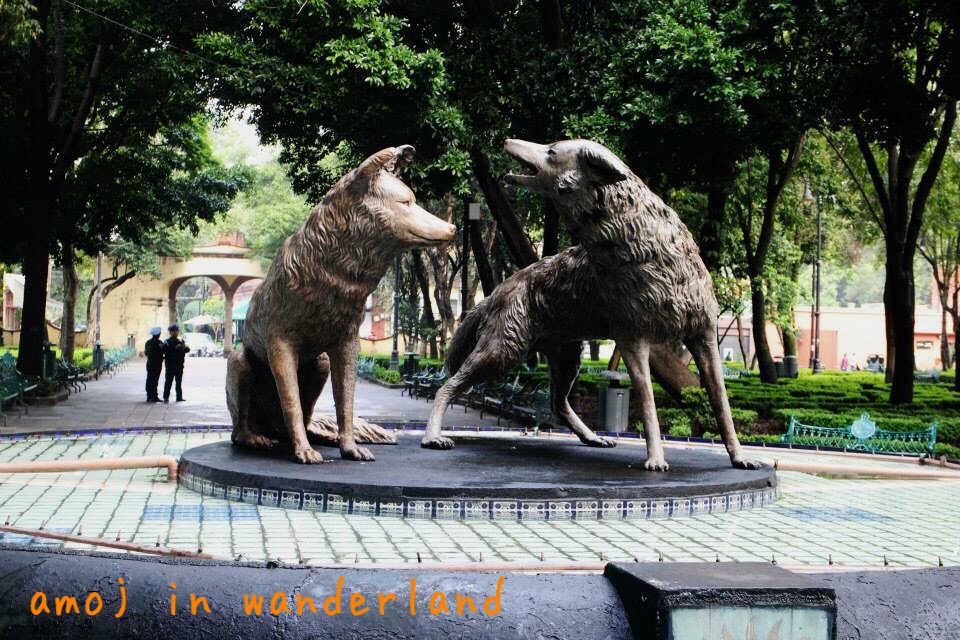
The first time I went there was to visit the house of Frida Kahlo as part of a tour going to Xochimilco. But since I never had a chance to see most of Coyoacán, I went there again with my colleague. We went there using a taxi with a very talkative and funny driver. We arrived just in front of the famous Coyote fountain located at the Jardin Centenario.
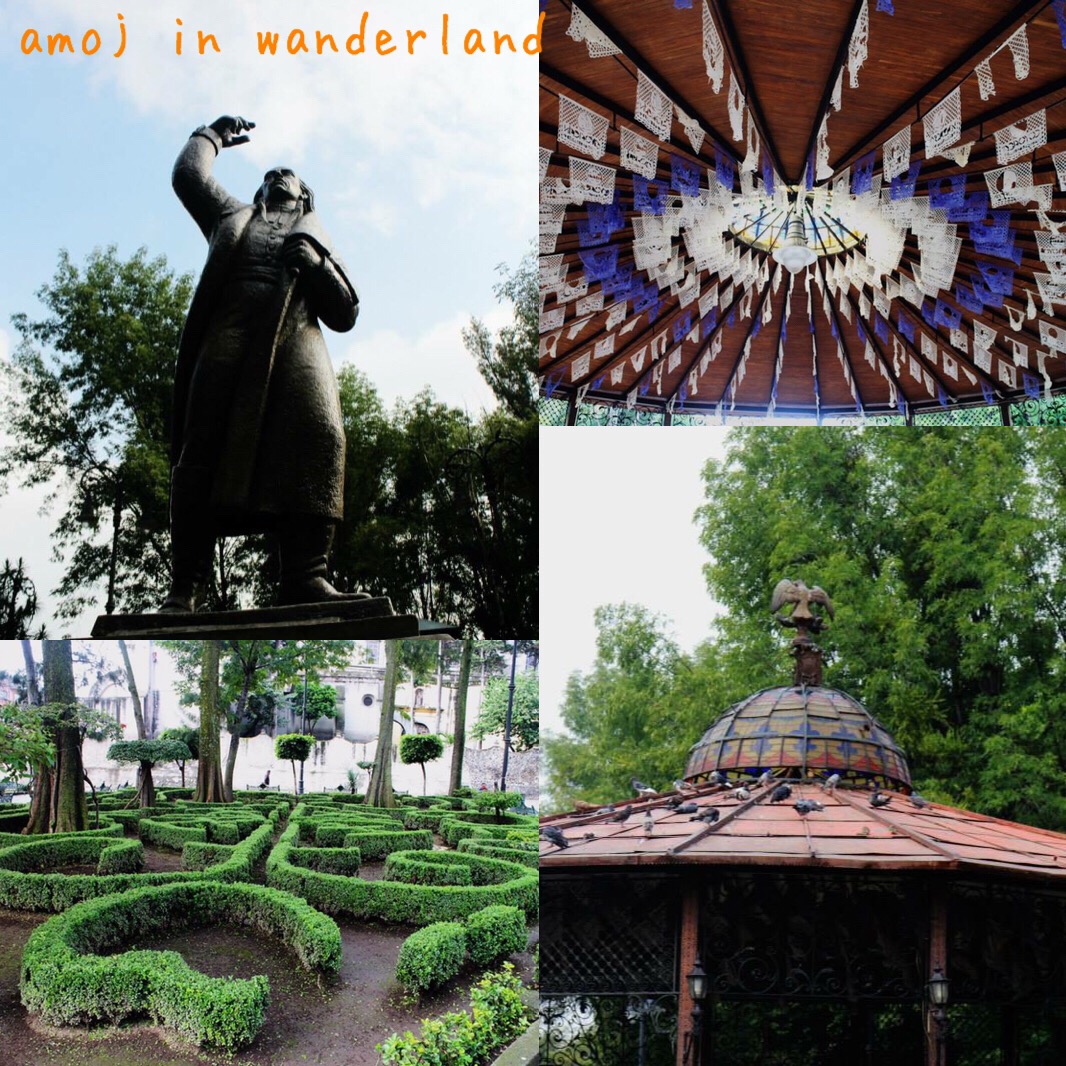
Near the bronze coyotes is the Plaza Hidalgo, the main plaza of Coyoacan. There is a kiosk in the middle of the plaza topped by a bronze eagle. The plaza is named after the Mexican Catholic priest and leader of the Mexican War of Independence, Miguel Hidalgo. A statue dedicated to the eponymous independence hero can also be found in the plaza.
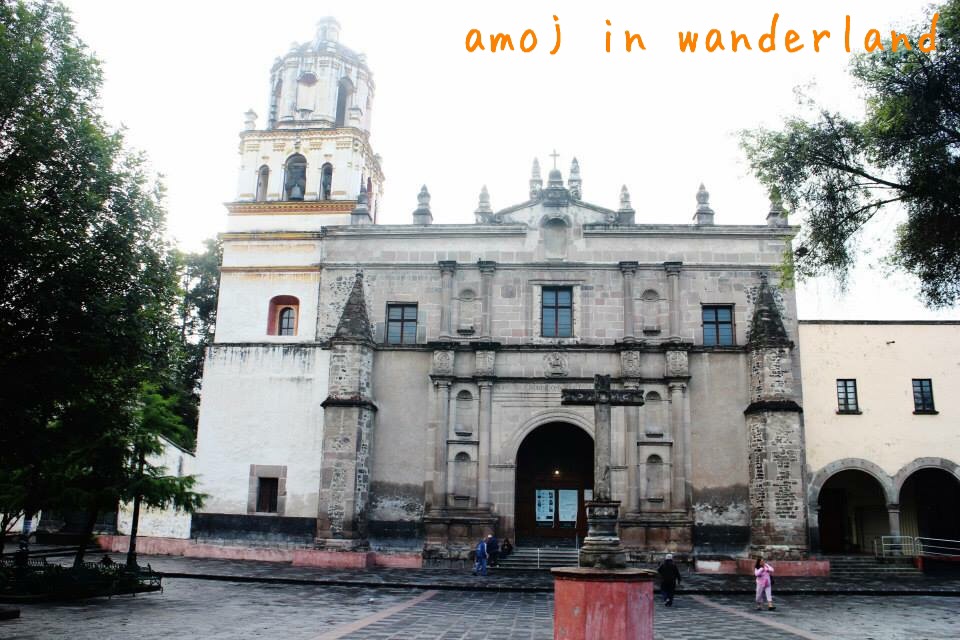
Dominating the south side of the Plaza Hidalgo is the Baroque styled church, Parroquia de San Juan Bautista. Erected in 1592, the church was built on top of a Calmecac, a school for the children of Aztec nobles. It is one of the oldest Catholic church in the Mexican Valley and thus, was declared as a national monument in 1934.
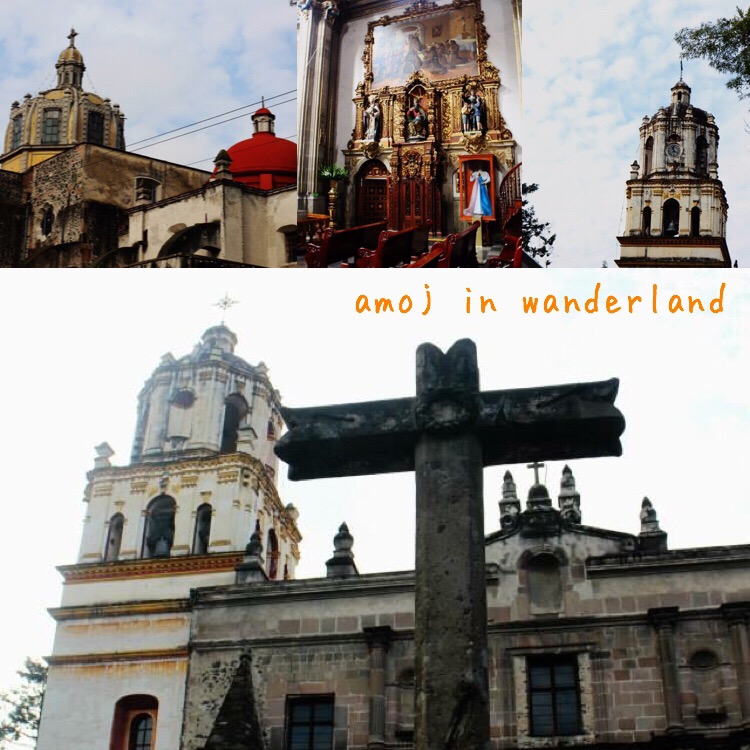
Its lavishly ornamented interiors has made the single-nave church of San Juan Bautista as one of the most beautiful churches in Mexico City.
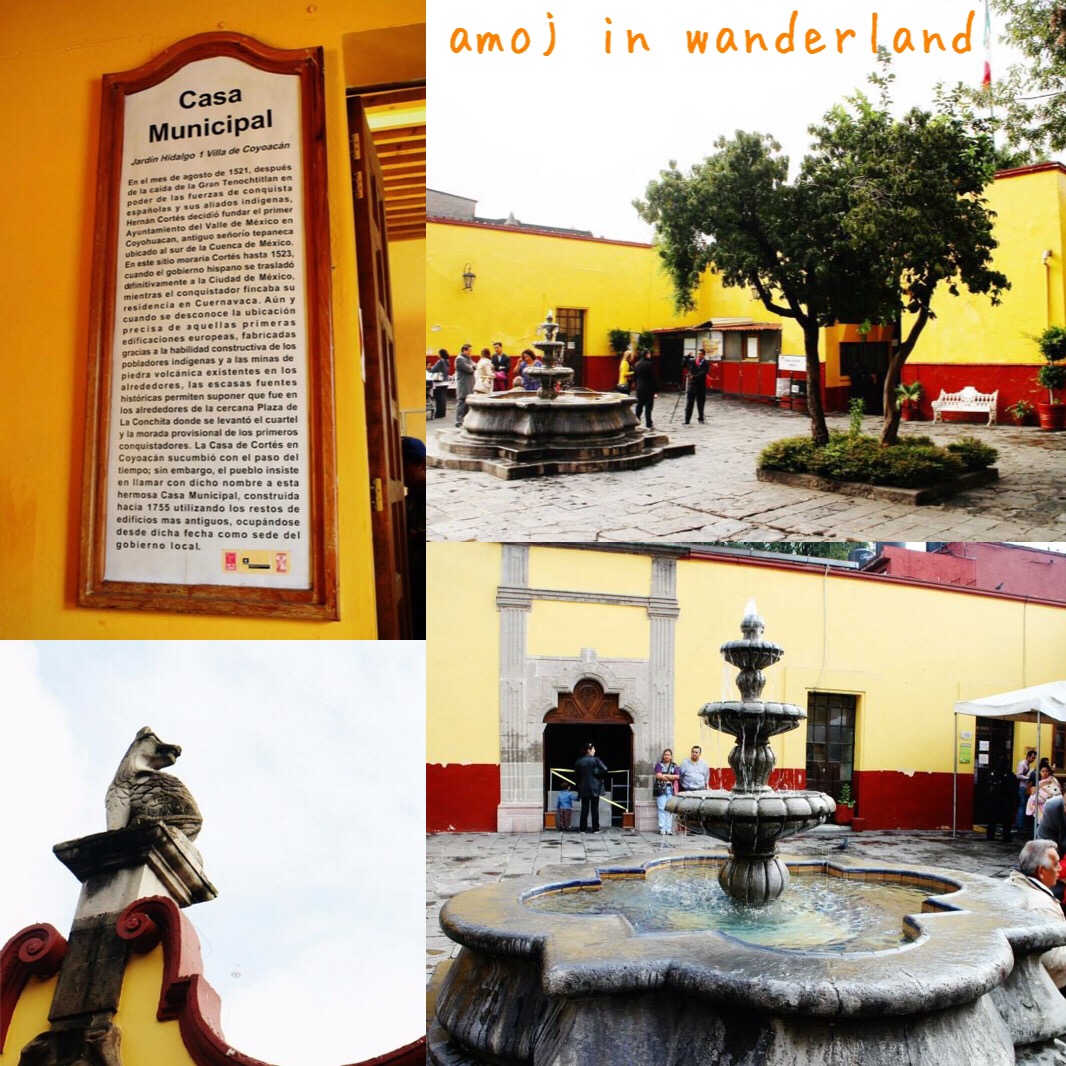
Erroneously called as Casa de Cortés, the Casa Muncipal was thought to be the place where Cortés has resided when Coyoacan was made capital of the New Spain. However, Cortés’ actual residence in Coyoacán was on another area owned by the indigenous leader Juan de Guzmán Iztolinque. The current structure on the north side of Plaza Hidalgo has served as an adminstrative-governmental building since it was built in the 18th century.
Although it was a very short trip, I was satisfied to see one of the most important cultural spots in Mexico.
 Amoj In Wanderland