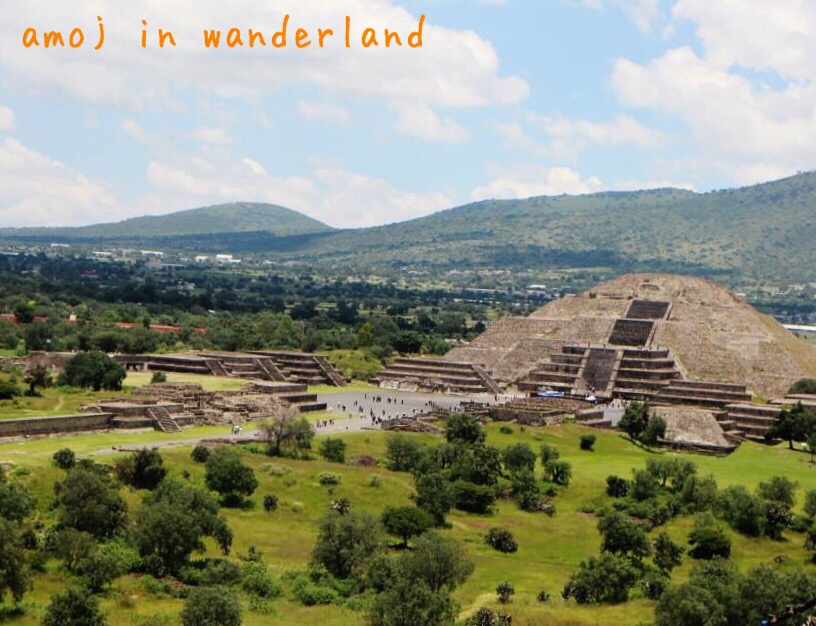
Designated as a UNESCO World Heritage Site in 1987 and considered as the most visited archaeological site in Mexico, I made sure that I could visit the great pyramids of Teotihuacan during my Mexican trip. I went there using a tour company with my colleagues the day after my conference finished.
Located 48 km northeast of Mexico City, Teotihuacan was an ancient Mesoamerican city where many architecturally significant pyramids can be found. The Mesoamerican Pyramids are usually step pyramids which served various functions such as astronomical observatories and places of ritual worships and sacrifices.
The city covers a total surface area of 83 square km and is located in the valley of Teotihuacan. In Nahuatl language, Teotihuacan means ‘The City of the Gods” or “Where Men Become Gods”. During Teotihuacan’s glorious days, it was the sixth largest city in the world having an estimated population of 125,000. However, the city was burned down and eventually collapsed around the 7th century A.D. The great pyramids that still stand in the area, are signs of how enormous the city of Teotihuacan was.
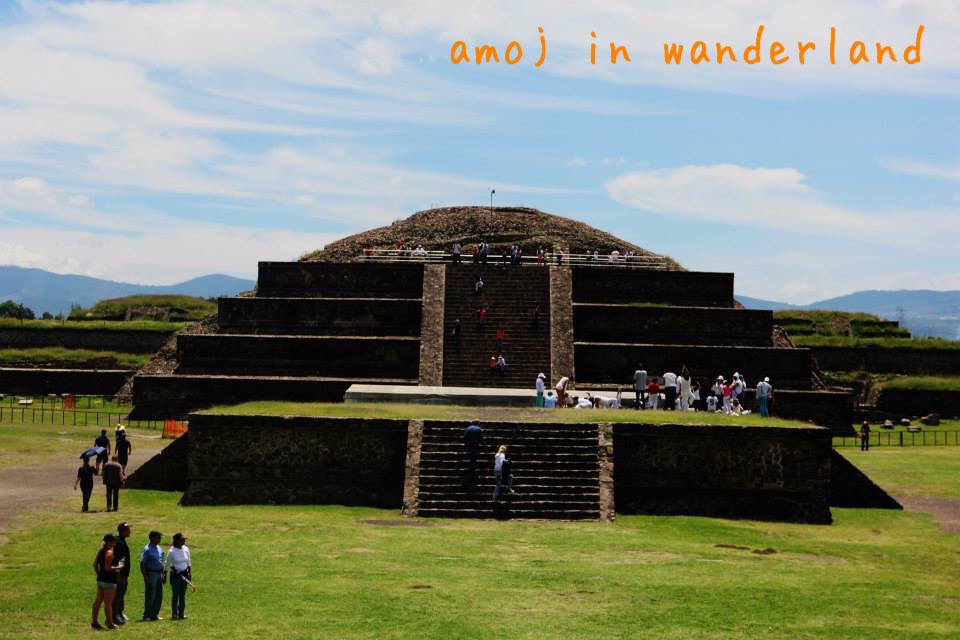
Pyramid of Quetzalcoatl
Arriving in Teotihuacan, the first pyramid that we saw is the Temple of Quetzalcoatl which is also known as the Feathered Serpent Pyramid. The temple is the third largest pyramid in the area built sometime in early 3rd Century.
In front of the pyramid is the adosada (leaning) platform. It has been separated from the pyramid to reveal the “feathered serpents” that had been left in place. These representations of the Mesoamerican “feathered serpent” deity, often identified with the Aztec god Quetzalcoatl are adorned on the sides of the pyramid and gave the pyramid its common name.
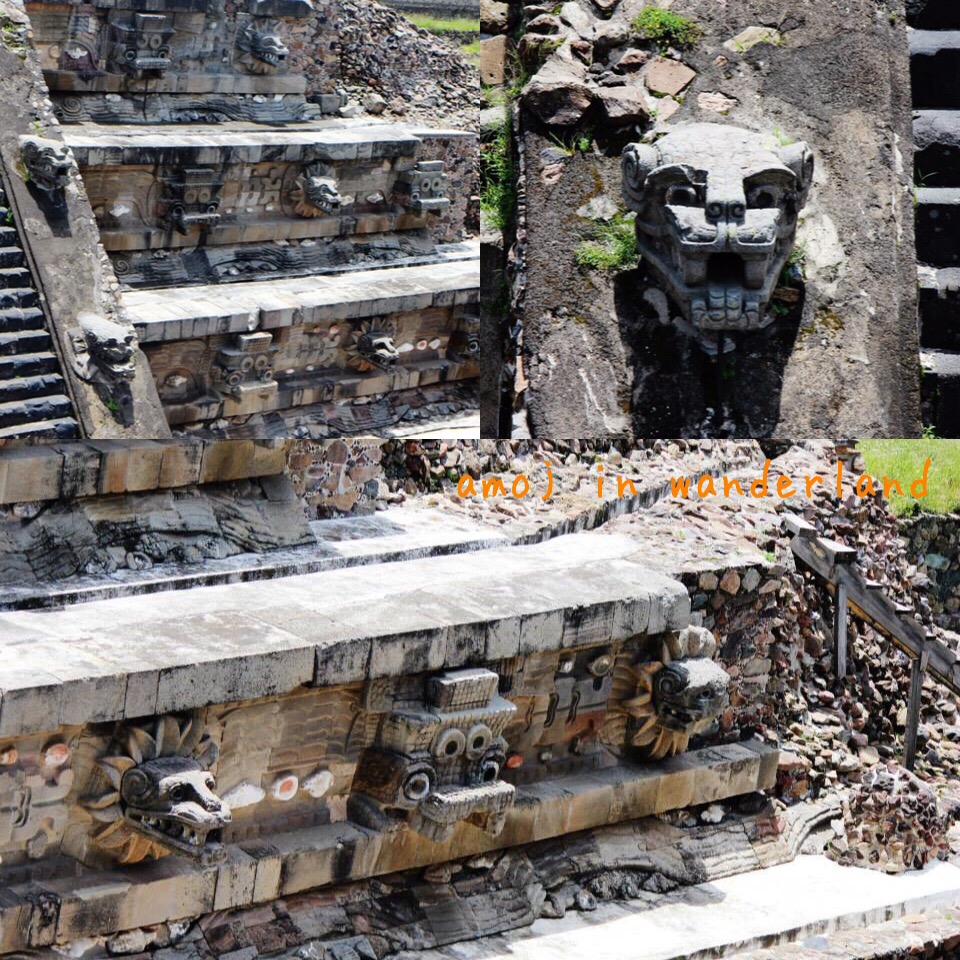
In the 1980s, remains of more than a hundred sacrificial victims were found buried beneath this structure. The facade of the pyramid was deliberately torn away and used for construction elsewhere.
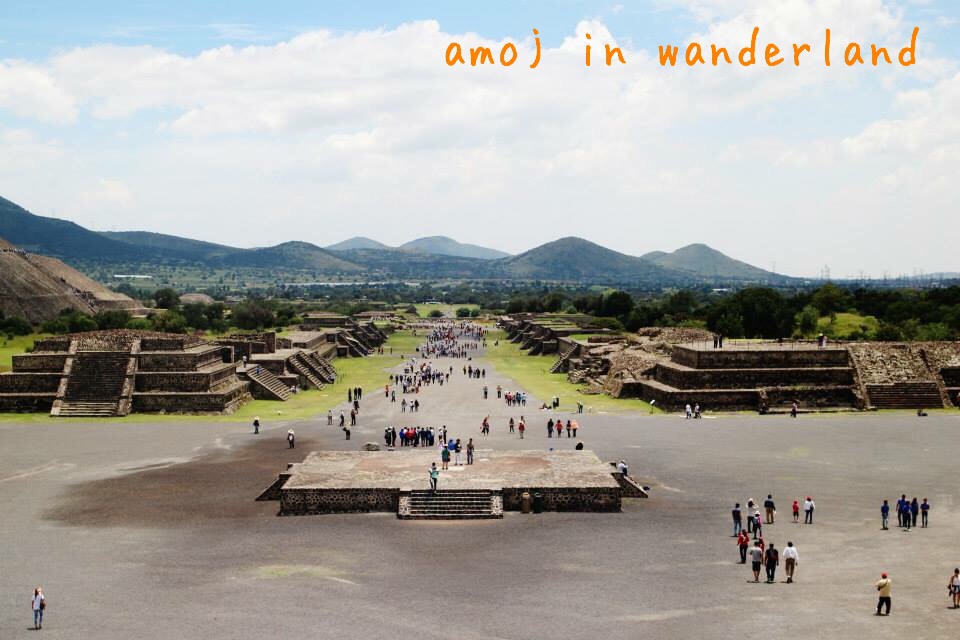
Avenue of the Dead
The main road at the center of the Teotihuacan ruins is called the Avenue of the Dead by the Aztecs, as the mounds on the sides looked like tombs. The avenue measures 40 meters wide and 5 km long.
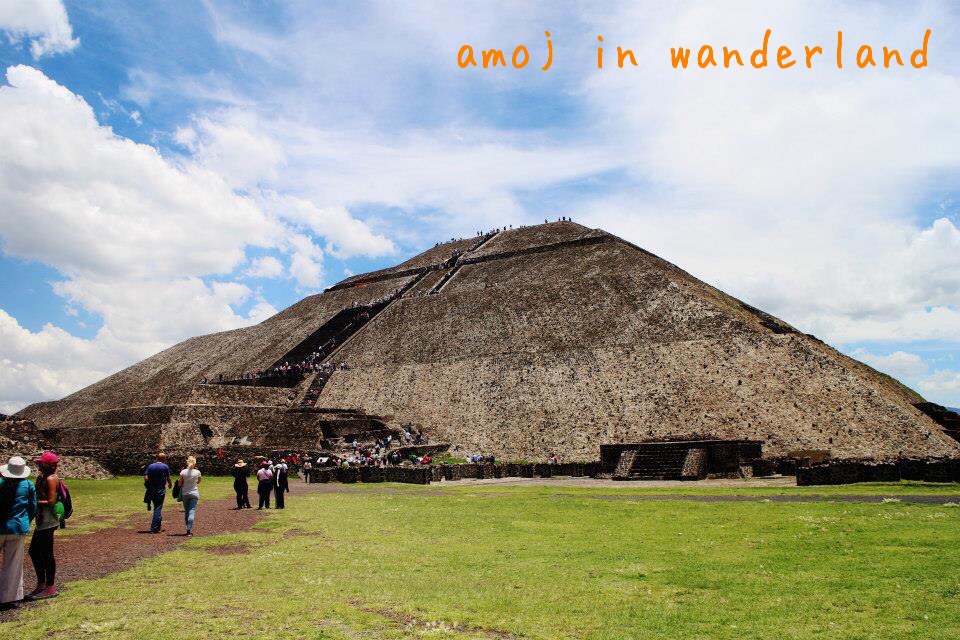
Pyramid of the Sun
The Pyramid of the Sun is the largest pyramid in Teotihuacan and the third largest ancient pyramid in the world. The original name of the pyramid was unknown and it was named as such by the visiting Aztecs just centuries after it was abandoned. The pyramid has a height of 65.5 meters and when we climbed to the top, I somehow felt how amazing the wonders of Teotihuacan were during its era.
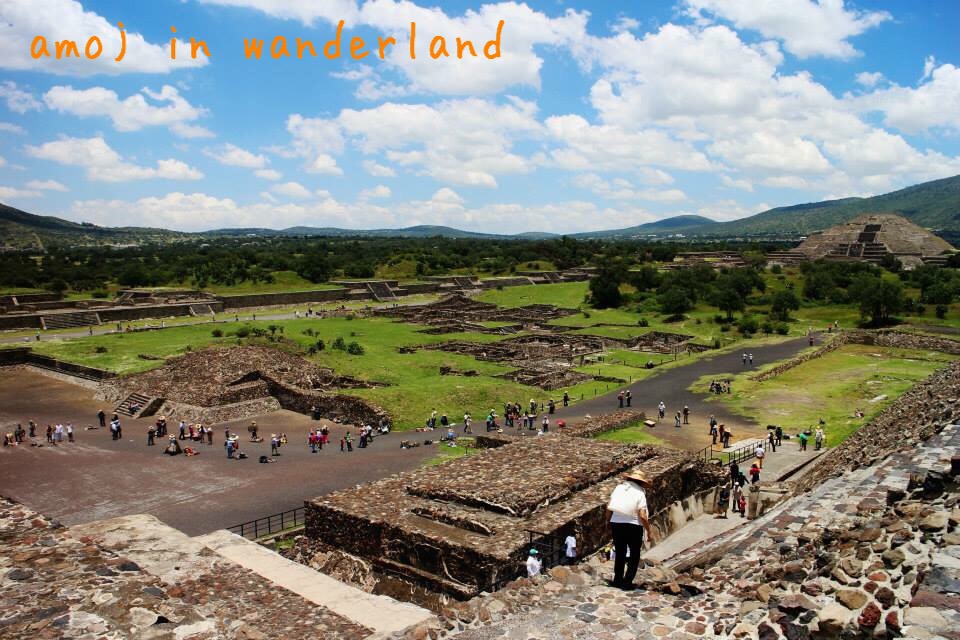
It was said that the orientation of the Pyramid of the Sun might have anthropological significance. Many significant astrological events can be viewed from the location of the structure that might have been important to the agriculture and beliefs of the ancient Teotihuacan society.
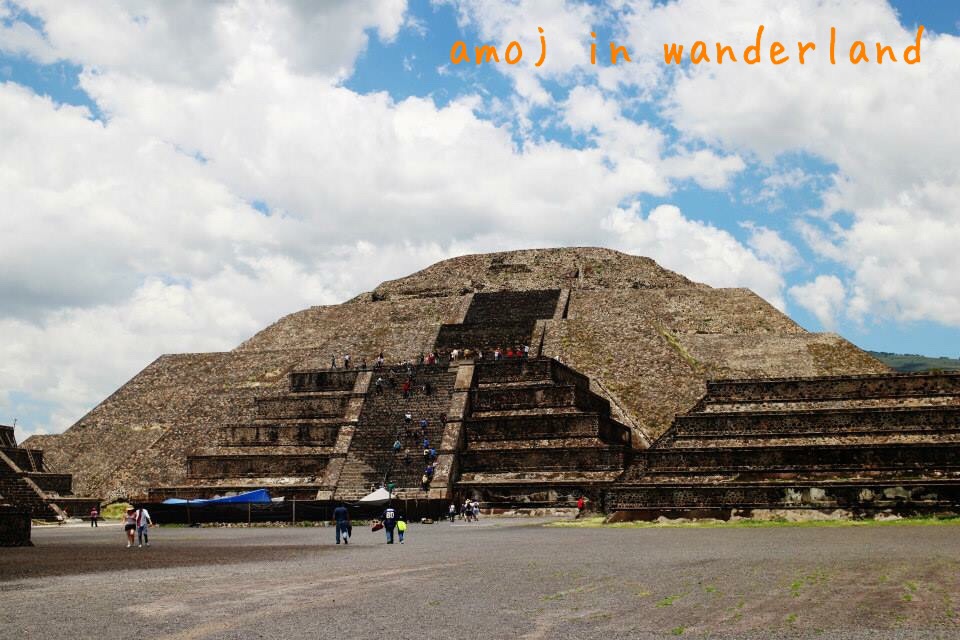
Pyramid of the Moon
Smaller than the Pyramid of the Sun and larger than the Feathered Serpent Pyramid is the Pyramid of the Moon, measuring 43 meters in height. It existed in the area prior to 200 A.D. making it older than the Pyramid of the Sun. It was also called”tenan” in Nahuatl language, which means “mother or protective stone”.
We walked to a platform where we could see the Avenue of the Dead on the horizon. It was as if I was in the movie “Apocalypto” where people were being sacrificed (although the movie is about the Mayans). Ceremonies were really done in the ancient times atop the pyramid to honor the Great Goddess of Teotihuacan.
The ancient times might have been wonderful in Teotihuacan but knowing these morbid sacrifices took place in these temples and pyramids, I would still prefer living in the modern world.
 Amoj In Wanderland