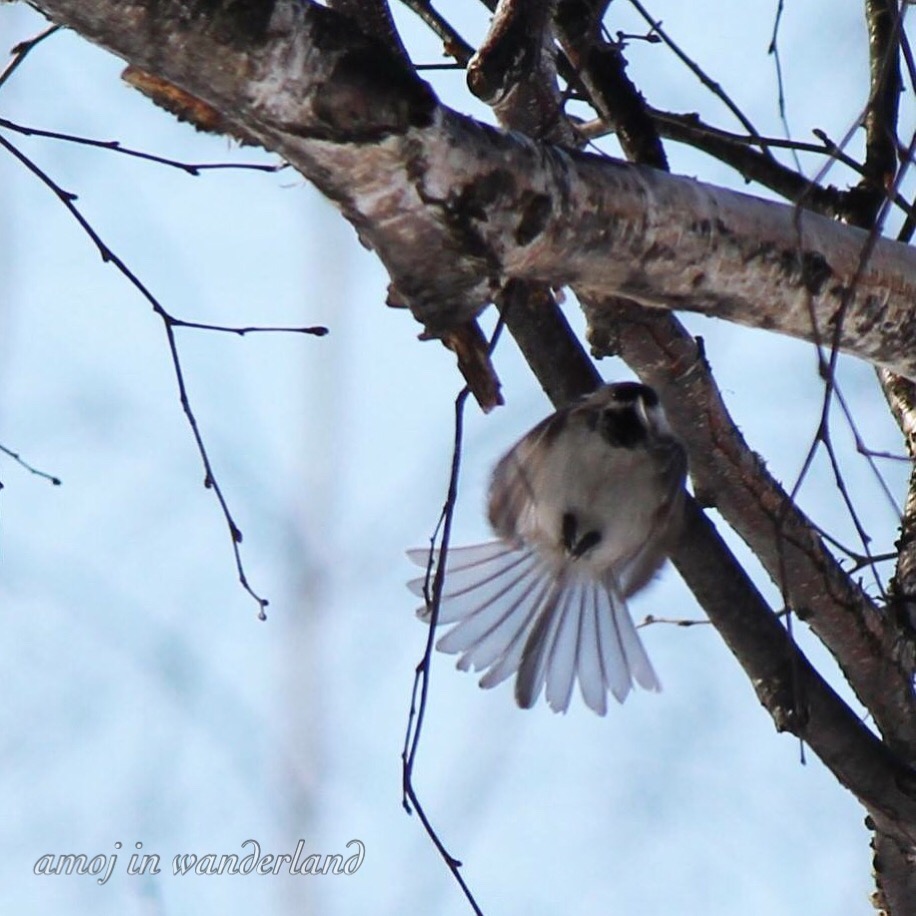
Listed as one of the cutest animals in Hokkaido, I was in pursuit of shima-enaga or the Hokkaido long-tailed tits. However, in the three weeks that I have been looking for this elusive bird, I have encountered 3 other species of birds. Two of them belong to the same family as the shima-enaga: the marsh tit and the coal tit. Tits are mainly small, stocky, woodland species with short, stout bills.
The marsh tit (Poecile palustris) was the first bird that I saw during my shima-enaga birdwatching frenzy. Marsh tits are with a black crown and nape, pale cheeks, brown back and greyish-brown wings and tail. They resemble the willow tit and were not recognized aa separate species until 1897.
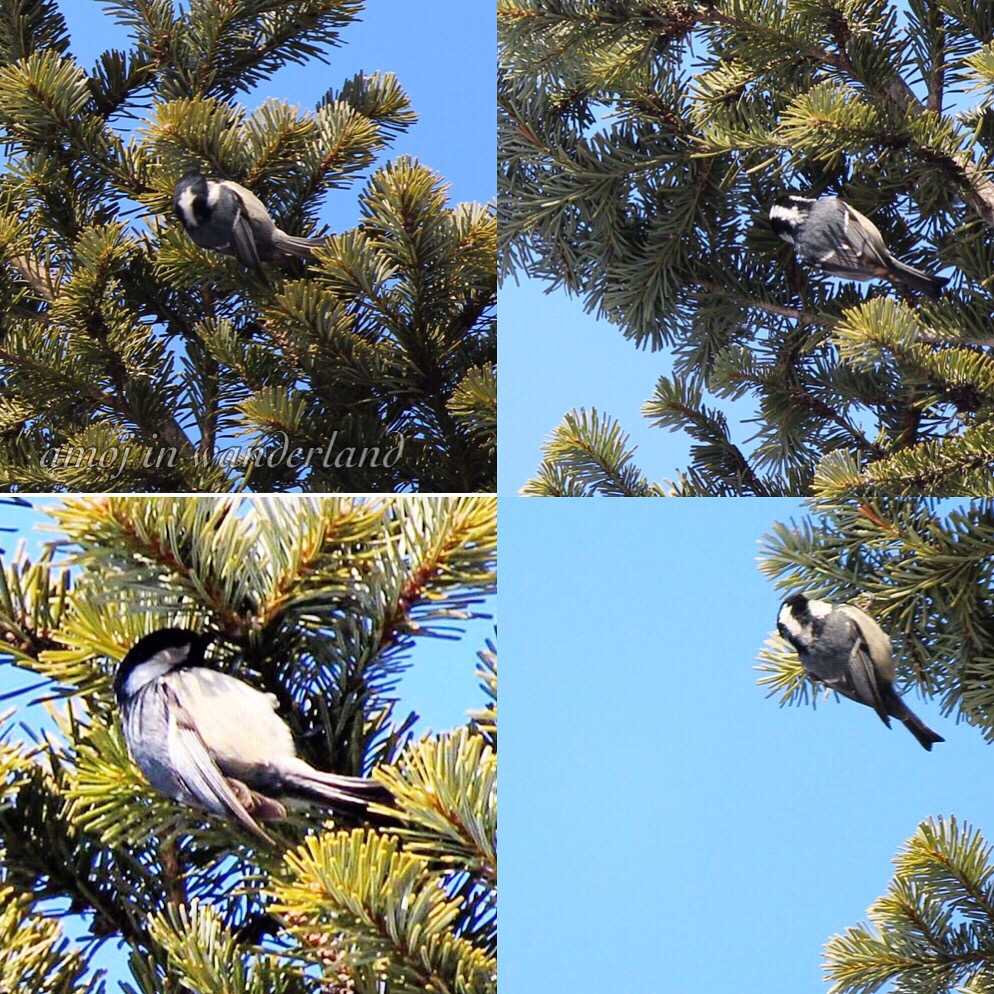
The next bird I saw while on the look-out for shima-enaga was the coal tit. The coal tits (Periparus ater) are provided with a distinctive large nape spot on their black heads.
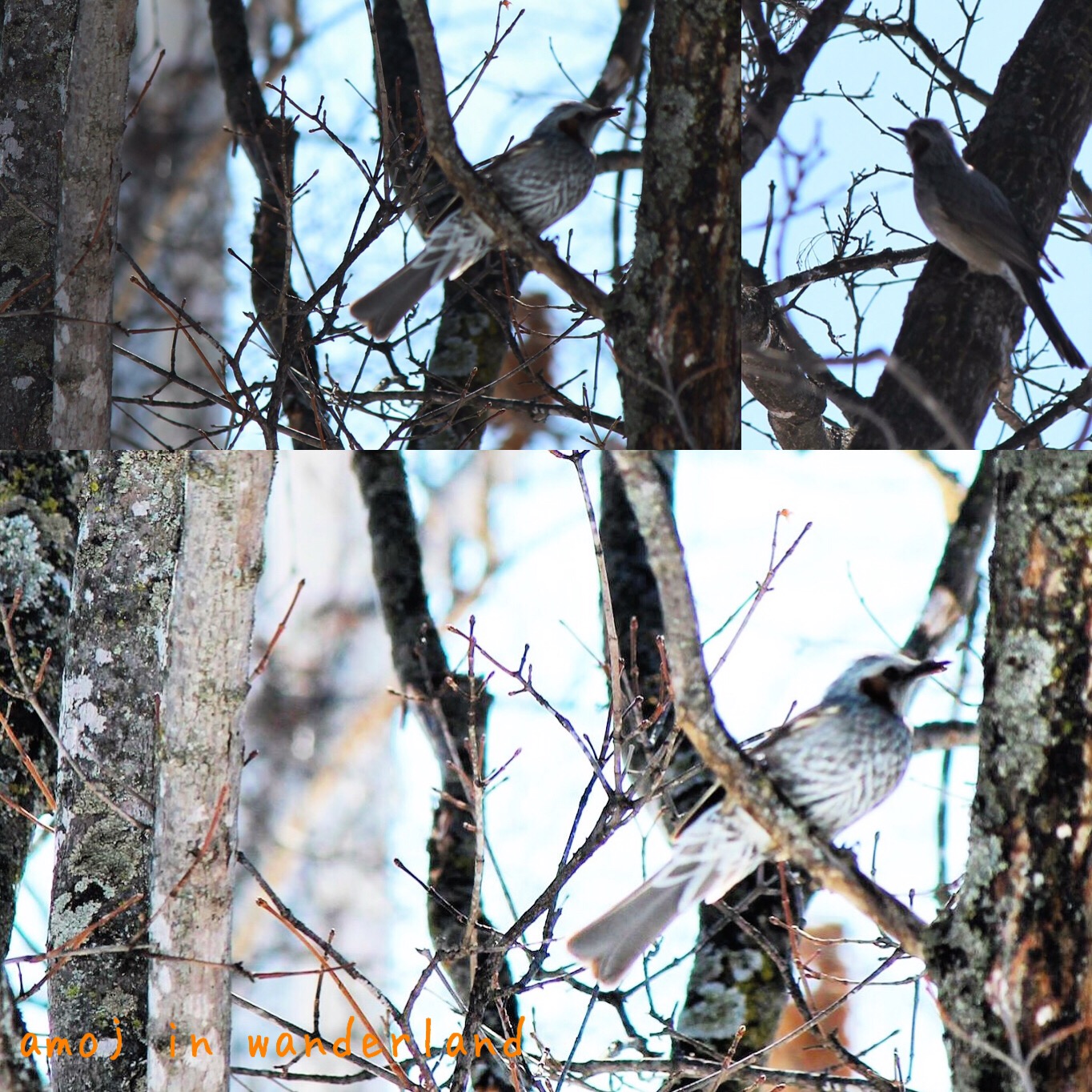
The last bird I have encountered is the Japanese brown-eared bulbul (Hypsipetes amaurotis subsp. amaurotis). Aside from Japan, this bird has also subspecies in the northern part of the Philippines. They are called hiyodori in Japanese and their squaking calls are a familiar sound in most areas of Japan. Their brown cheeks have earned them the name brown-eared bulbul.
Although I failed to see the shima-enaga, it was still a good experience to see the other birds flying in the winter season.
 Amoj In Wanderland