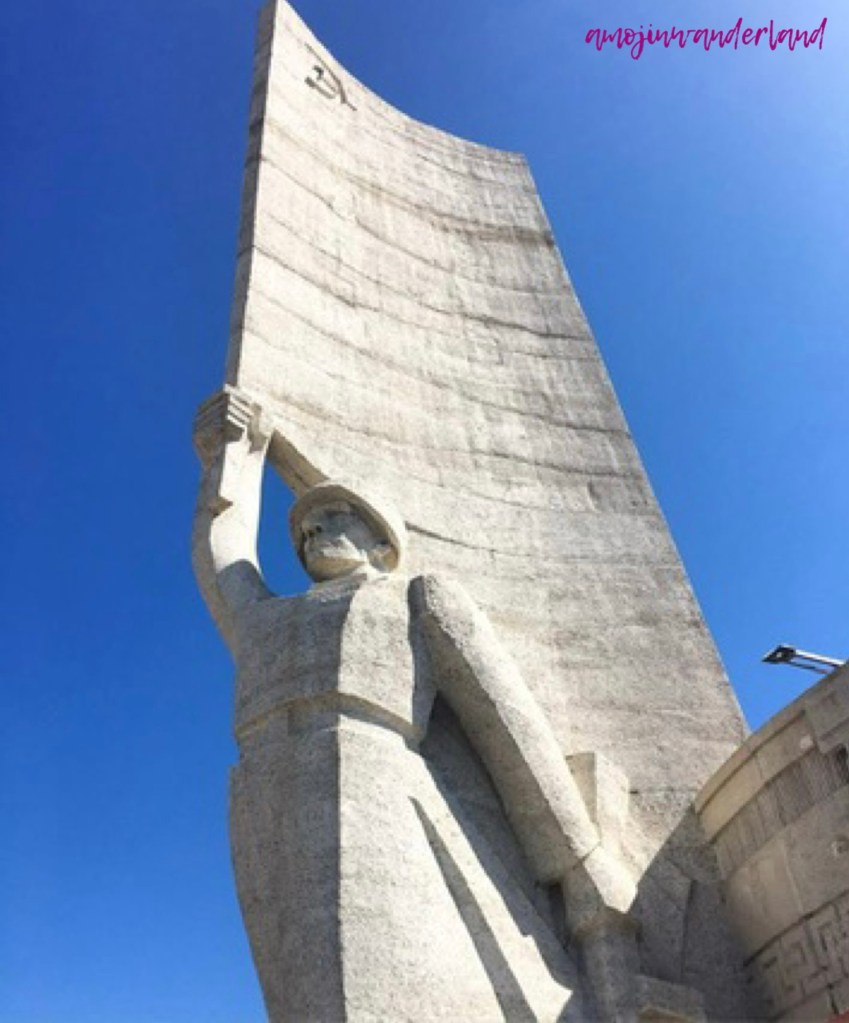
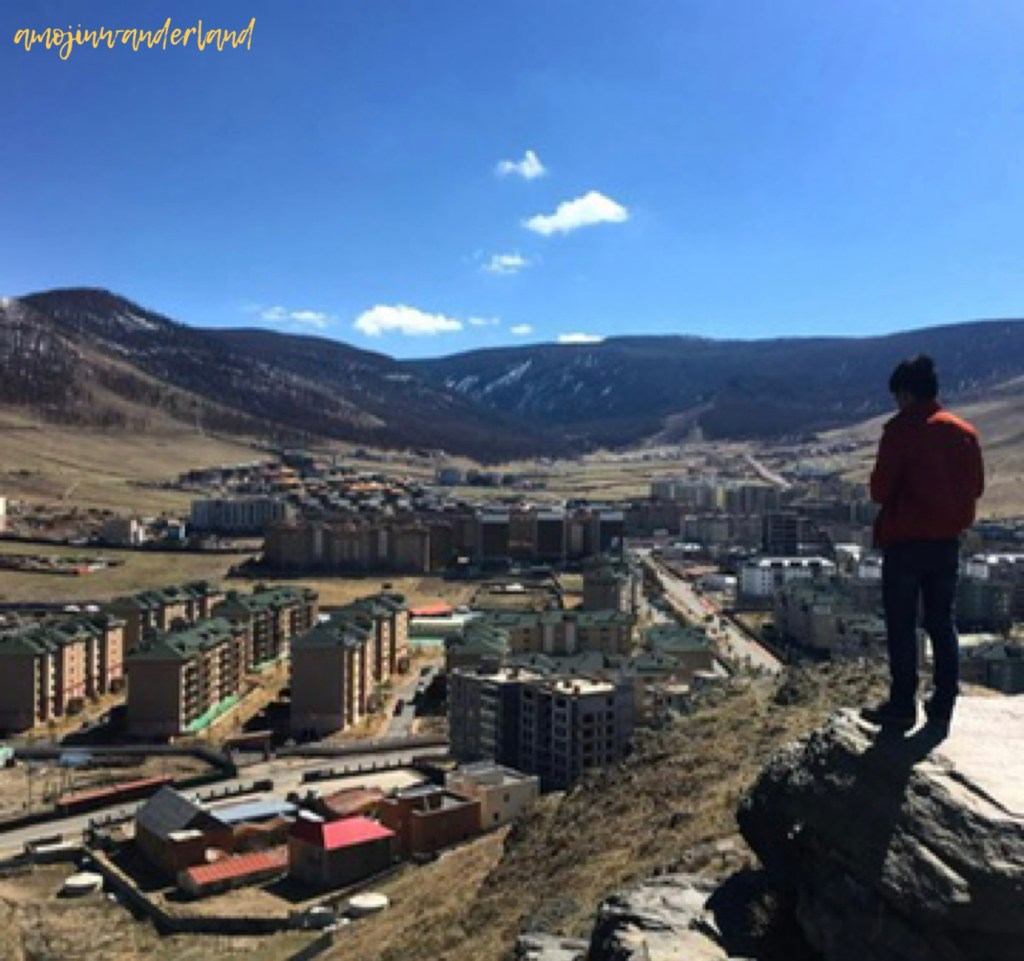
Zaisan Memorial is located on Zaisan Hill in Khan-Uul District, on the southern side of Ulaanbaatar. It is a memorial dedicated to Mongolian and Soviet soldiers who died during World War II and earlier conflicts connected to Mongolia’s modern history. Construction began in 1969 under chief architect A. Khisegt, and the memorial was officially unveiled in 1971 in commemoration of the 50th anniversary of the People’s Revolution of 1921.
The site begins at the foot of the hill with large national symbols of the two countries: the Mongolian Soyombo and the Soviet Hammer and Sickle. Nearby is a wall with a copper inscription in both Mongolian and Russian that reads, “Here the memory of Soviet soldiers, forever enshrined, in the sky with the sun and in the soil with the fire.” From this area, visitors can climb a 612-step staircase extending about 300 meters to the top of the hill. A paved road, approximately 680 meters long, also allows vehicles to reach the middle section of the hill.
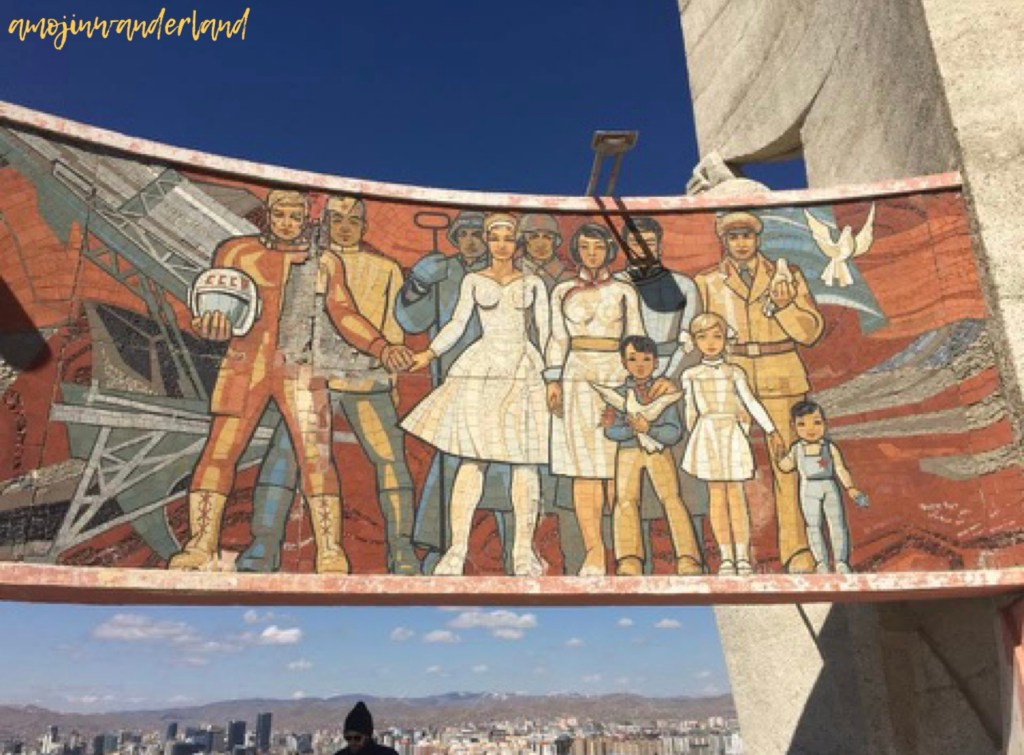
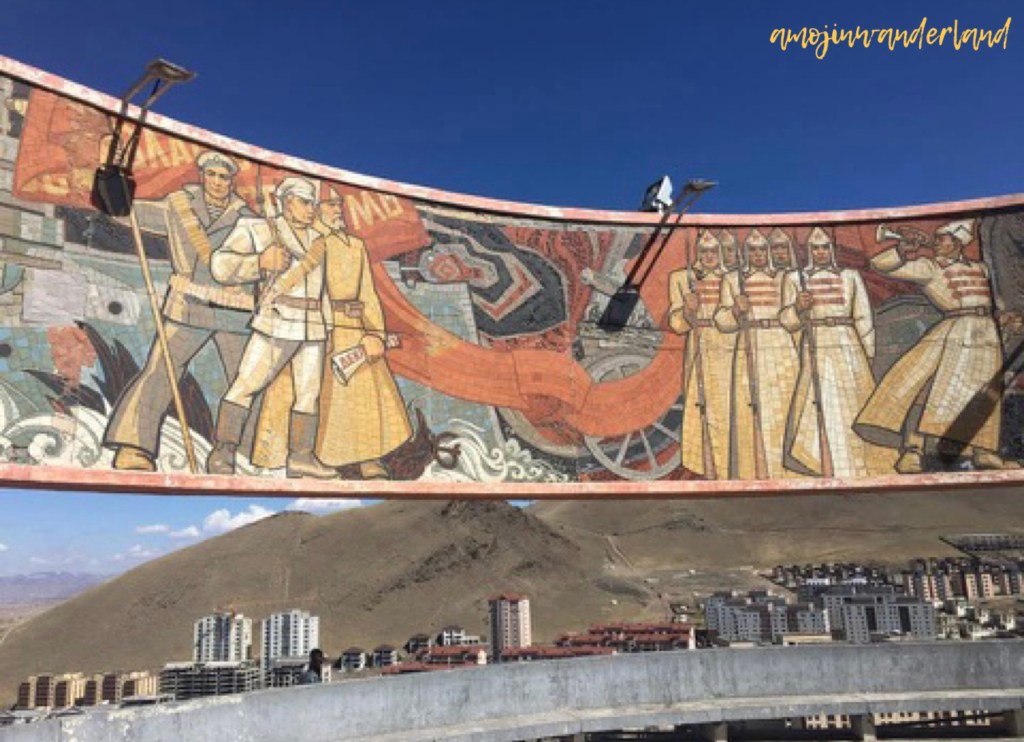
At the summit stands the Heroes’ Monument, which features a circular mural depicting key moments in the shared history of Mongolia and the Soviet Union. The scenes include the Russian Revolution of 1917, Soviet support for Mongolia’s independence in 1921, the defeat of the Japanese Kwantung Army at Khalkhin Gol in 1939, and the Soviet victory in World War II in 1945. The mural also includes later achievements, such as Soviet space missions, including Soyuz 39, which carried Mongolia’s first cosmonaut, Jugderdemidiin Gurragchaa.
The central structure of the monument is designed in the form of a tulga, the traditional Mongolian hearth, a common symbol of life and the household. Rising from this structure is a 27-meter-tall statue of a Soviet soldier holding a victory banner and a machine gun. Adjacent to the monument is a plaza with an inscription in Mongolian that states, “Your precious lives in us continue, your glorious deeds in life immortal.”
 Amoj In Wanderland