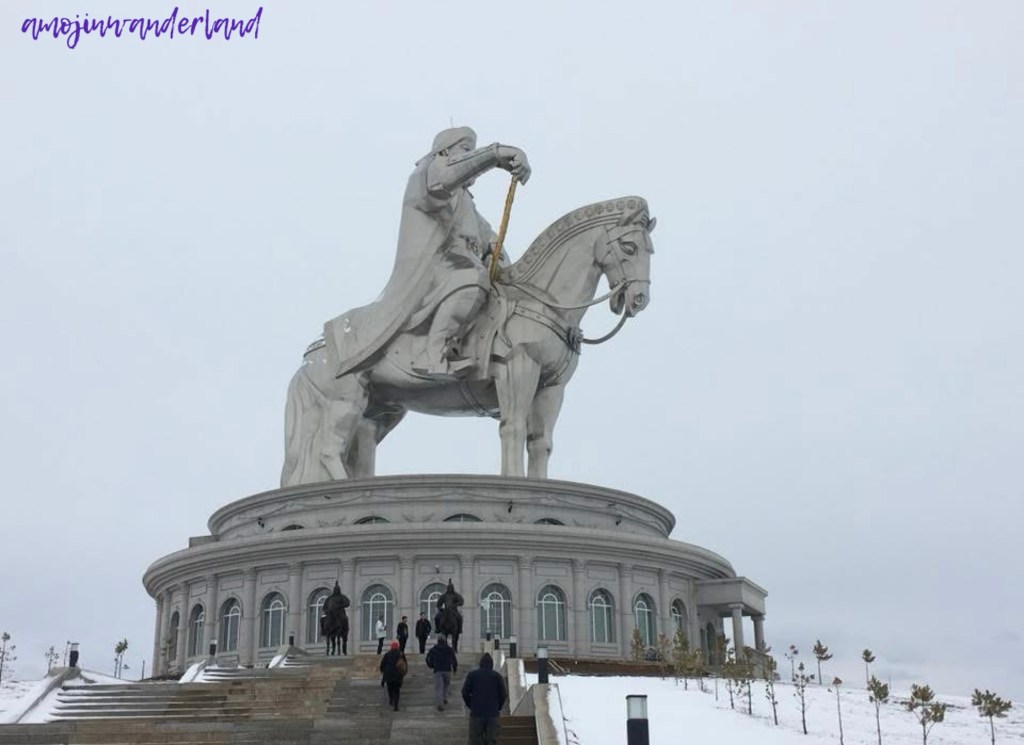
Visiting the Genghis Khan Equestrian Statue in winter is an experience that merges the raw beauty of Mongolia’s frozen steppe with the immense weight of its history. As I traveled 54 kilometers east of Ulaanbaatar, the city slowly disappeared behind swirling curtains of snow, revealing a landscape both desolate and majestic. The cold grew sharper the farther we drove, as though the winter itself was preparing me to meet the legend who shaped the fate of continents.
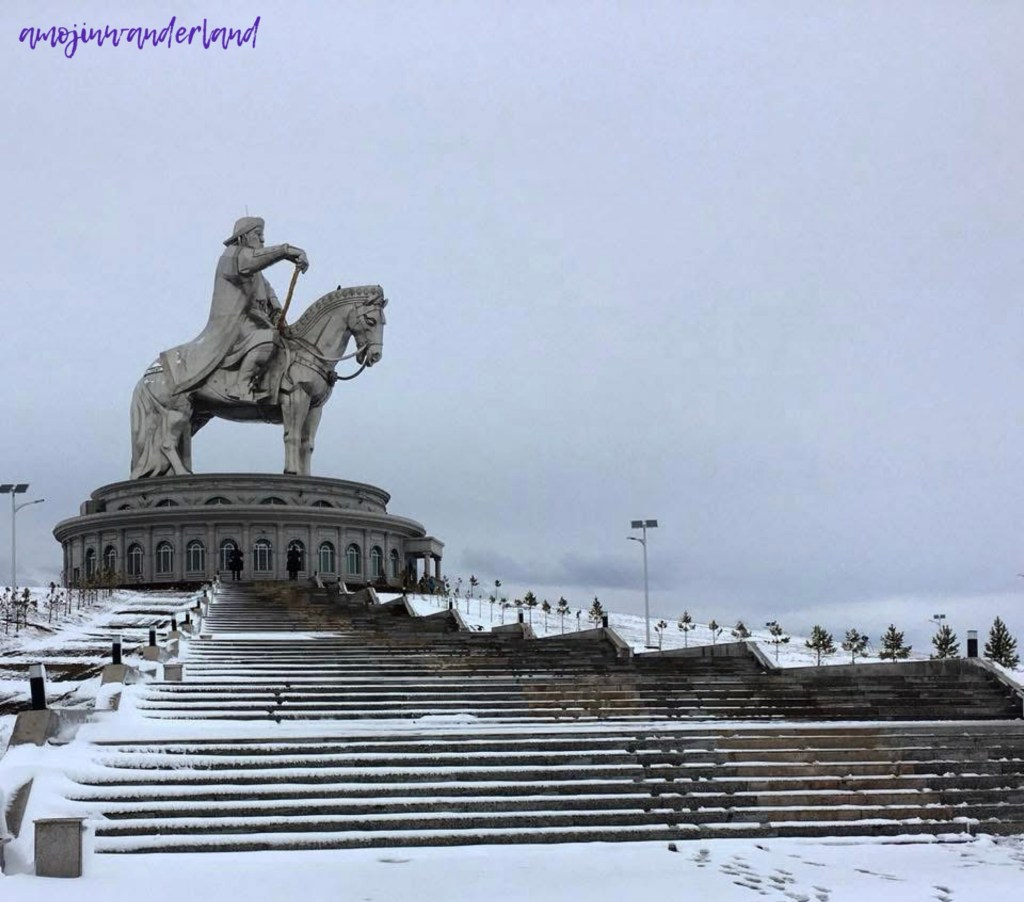
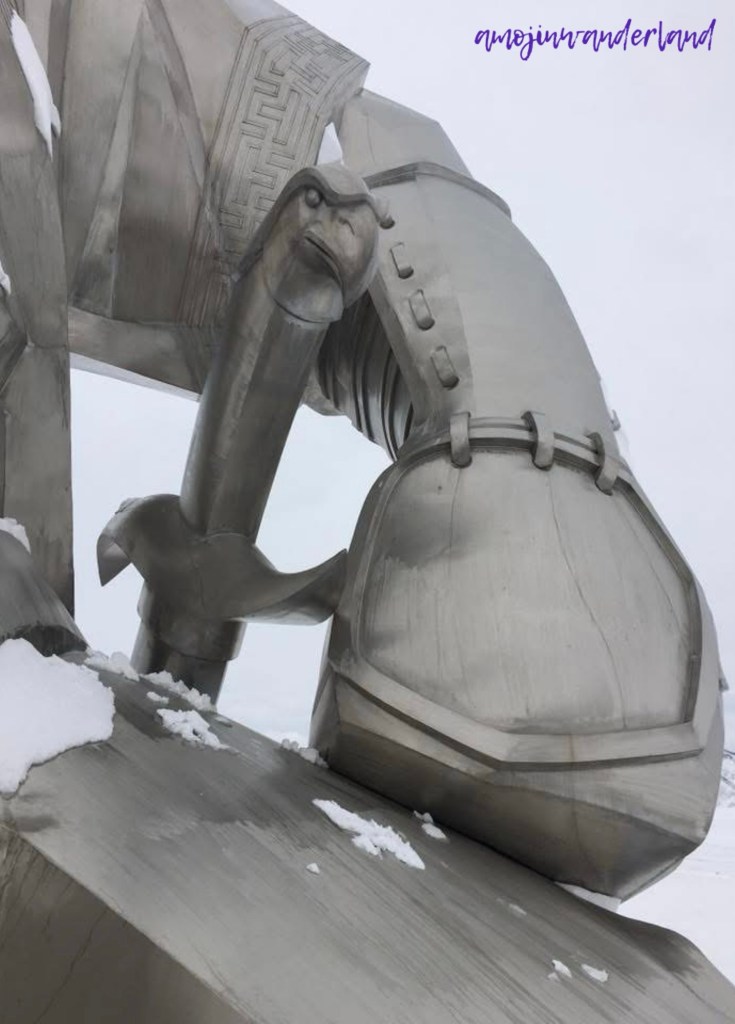
Then, rising from the vast white plain of Tsonjin Boldog, the monument appeared, shimmering, immense, and undeniably powerful. The 40-meter stainless steel statue of Genghis Khan on horseback, considered the world’s tallest equestrian statue, dominates everything around it. Its polished surface reflected the pale winter sun, giving the impression of a giant cast from ice and steel. The statue stands near the Tuul River, where legend says Genghis Khan discovered a golden whip. Fittingly, it points eastward toward his birthplace, as if eternally returning to the origins of the Mongol story.
The structure stands atop a 10-meter visitor center supported by 36 columns, each symbolizing the 36 khans from Genghis to Ligdan Khan. Designed by sculptor D. Erdenebileg and architect J. Enkhjargal, the statue was completed in 2008 to commemorate the 800th anniversary of the founding of the Mongol Empire. Even before stepping inside, the complex already felt like a fusion of myth, national pride, and architectural ambition.
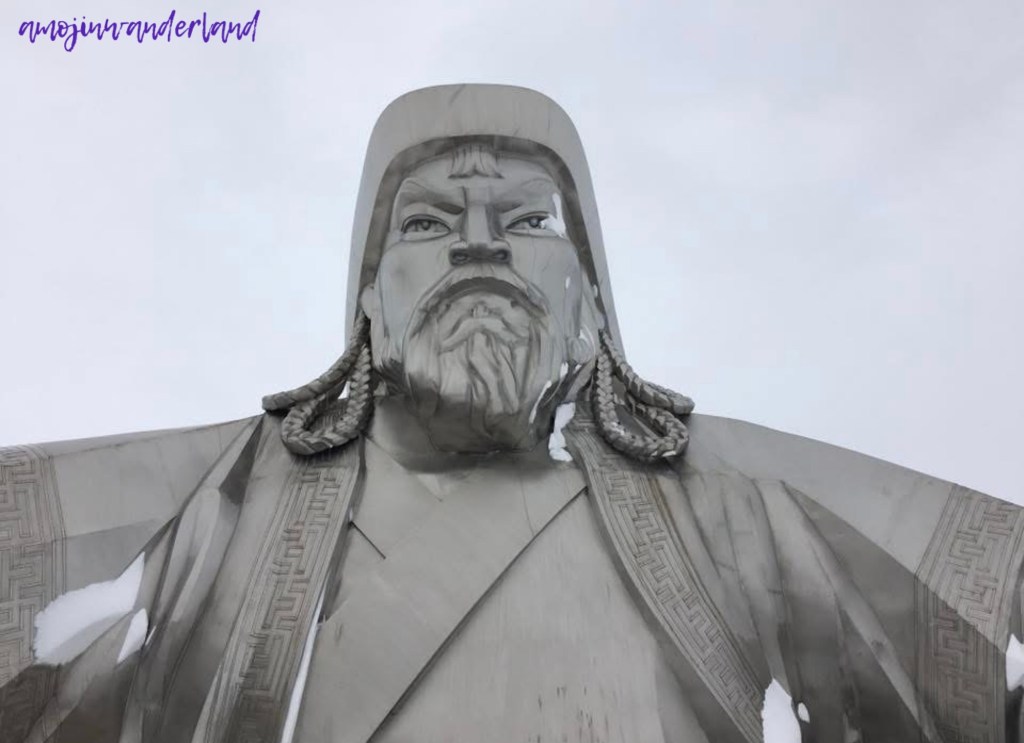
Outside Mongolia, Genghis Khan is often remembered as the ferocious conqueror responsible for devastation across Asia and beyond, his campaigns believed to have caused the deaths of millions. He divided the known world in two and reshaped civilizations during the 13th century. Yet within Mongolia, he is revered as a national hero and cultural icon, a unifying force who forged warring tribes, revitalized the Silk Road, and established what would become the largest contiguous empire in world history. His legacy, complicated and monumental, continues to loom over the nation, especially since the fall of the communist government more than two decades ago, when Mongolians freely began erecting monuments in his honor.
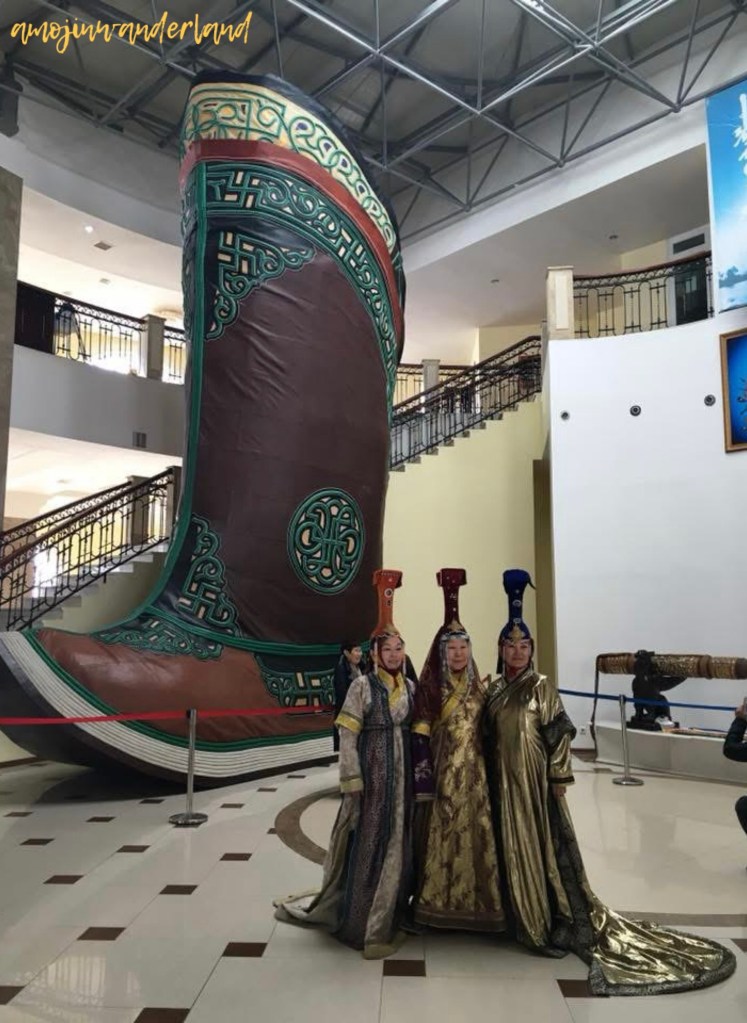
Stepping into the visitor center offered refuge from the winter cold, along with a vivid walk through the Mongol Empire’s legacy. The museum displays Hunnu artifacts, items from the height of Mongol expansion, ornate weaponry, and cultural relics that narrate an empire’s rise. One of the most unforgettable sights is the enormous traditional Mongolian leather boot, standing nine meters tall, an unexpected yet playful reminder of the scale and creativity of this complex. Visitors can also try on royal costumes for photographs, immersing themselves briefly in the regal world of khans and queens.
 Amoj In Wanderland