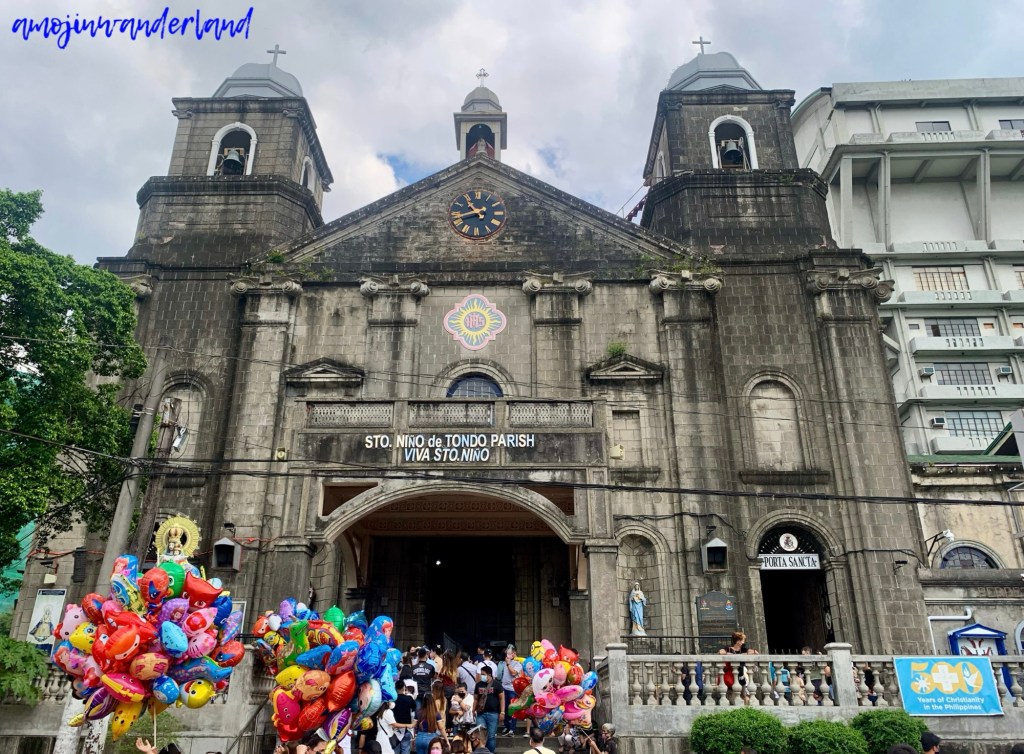
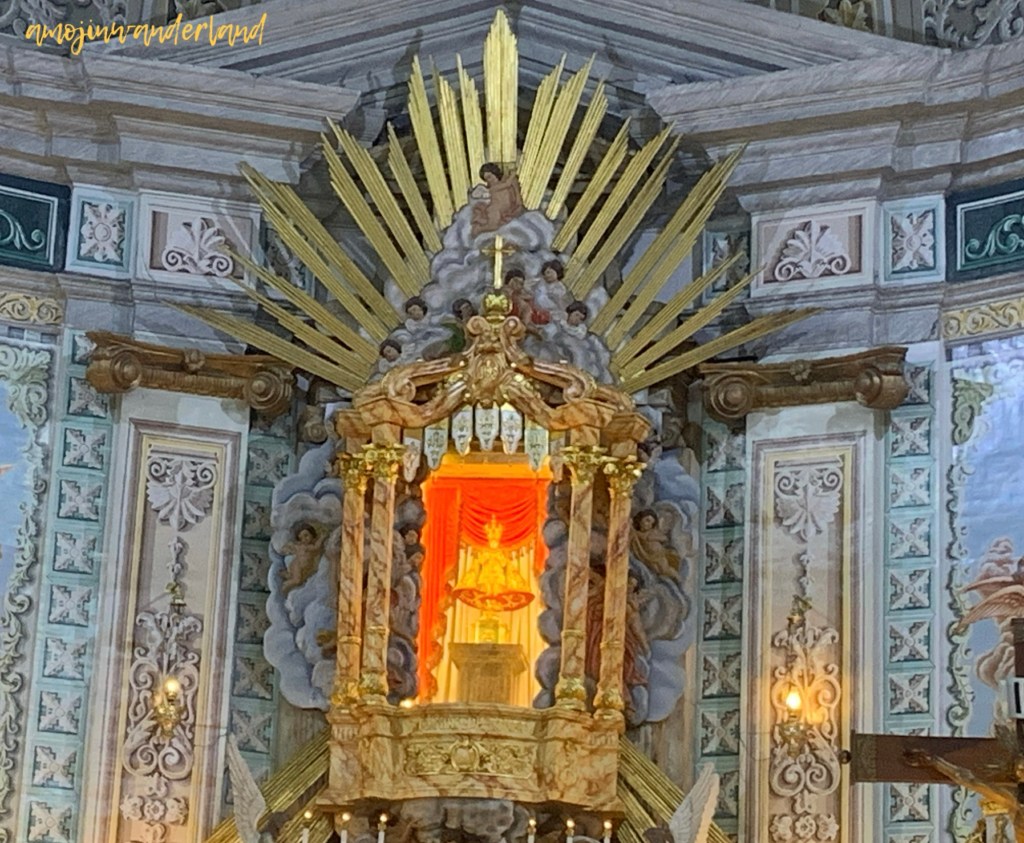
The Minor Basilica and Archdiocesan Shrine of Santo Niño, more commonly known as Tondo Church, was established by the Augustinians in 1572 and holds the distinction of being the first parish church in Luzon. It is also home to the second oldest image of the Santo Niño in the Philippines, next only to the Sto. Niño de Cebu. The image enshrined in the church originated from Acapulco, Mexico, and was handed to the Archbishop of Manila by a wealthy merchant before being entrusted to the parish priest of Tondo, where it has remained since the church’s founding.
From Tondo, the early evangelization of surrounding areas expanded steadily. Its first visitas included Tambobong (now Malabon), Kalookan (Caloocan), Betis in Pampanga, and Calumpit in Bulacan, later extending to Lubao, Malolos, and Morong. Fray Alonzo Alvarado, OSA, served as its first Augustinian minister. The original church structures were made of light materials, but by 1611, the construction of a stone monastery had begun under Fray Alonso Guerrero. Over the decades, the church and convent underwent repeated repairs and renovations due to structural deterioration and natural disasters.
The church was significantly damaged by the earthquakes of 1645, 1740, and 1863, each time requiring major reconstruction. After the 1863 earthquake, rebuilding was undertaken by Fr. Manuel Diez Gonzalez and completed under Fr. Casimiro Herrero following the plans of architect Luciano Oliver. This phase of construction introduced steel framing for the dome and iron roofing, marking an important development in local church construction. Additional features, including the pipe organ from Barcelona installed in 1893 and the molave main door added in 1898, further enhanced the structure. During the Japanese occupation in World War II, the church was used as a military quarters, and religious services were temporarily transferred to a nearby private residence before resuming in the church toward the end of the war.
In recent decades, the church has continued to undergo maintenance and improvements. In 1997, major repairs were conducted and carillon bells were installed. In 2019, it was formally elevated as an Archdiocesan Shrine. More recently, on November 24, 2025, it was officially declared a Minor Basilica by decree of Pope Leo XIV.
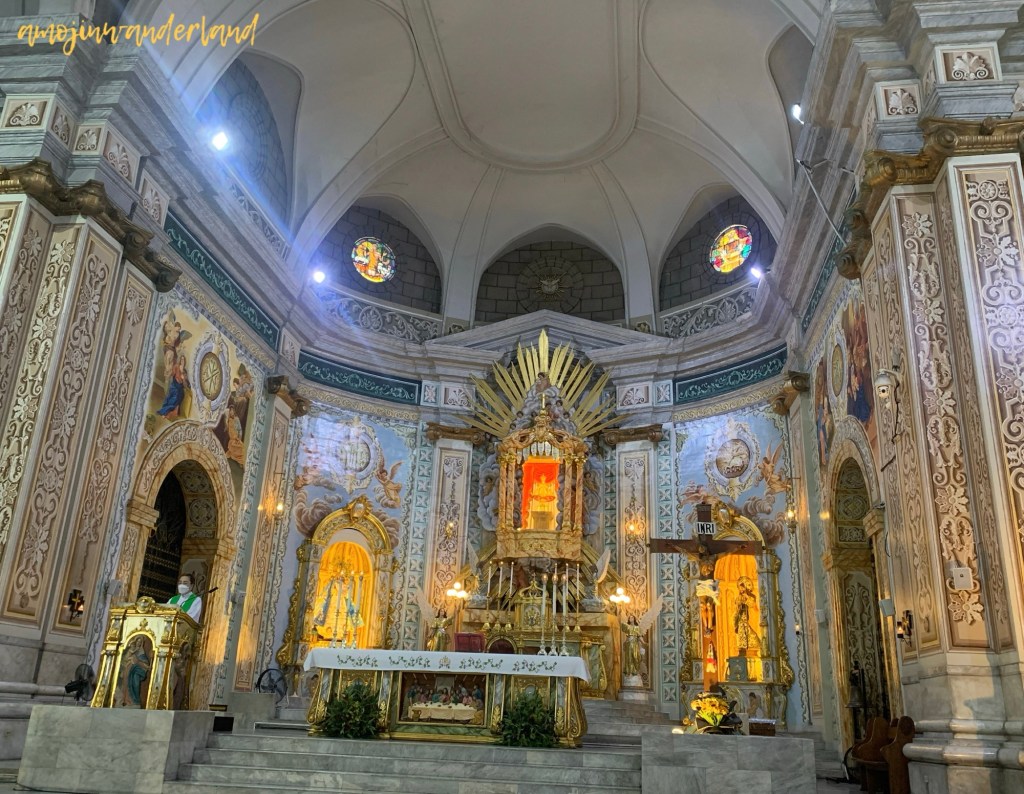
Architecturally, the basilica reflects a restrained neoclassical style. The façade features Ionic rectangular pilasters, massive buttresses supporting the bell towers, blind arched openings, and a triangular pediment. The interior consists of a central nave flanked by two aisles connected by solid columns.
 Amoj In Wanderland