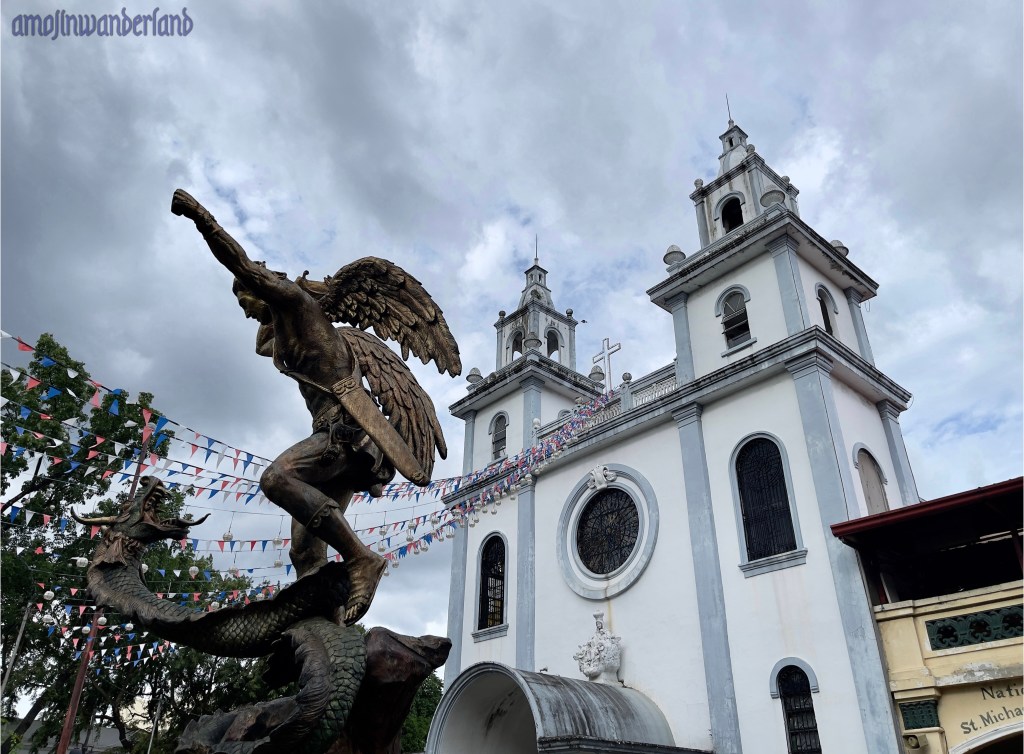
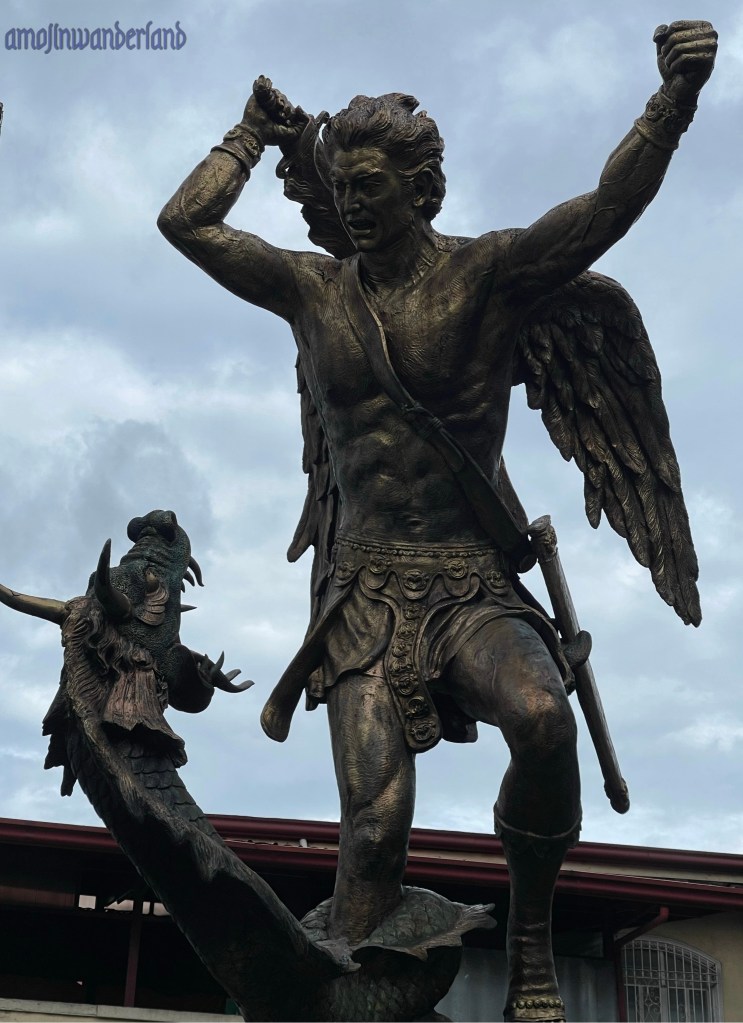
Potentially the first church in the Philippines dedicated to the Archangel, San Miguel de Manila was established by the Jesuits in the 1620s in the area known as Dilao, presently called Paco, Manila. This parish is focused on the archangels, particularly Saint Michael, Saint Gabriel, and Saint Raphael. Officially now known as the Royal Parish and National Shrine of Saint Michael and the Archangels, it has been relocated to the intersection of Jose Laurel Street and General Solano Street in the San Miguel district since 1835. Previously, this specific site was occupied by La Fábrica de Cerveza de San Miguel, now called San Miguel Brewery.
Evidently, prior to the establishment of San Miguel, Japanese expatriates residing in Manila during the 17th and 18th centuries lived scattered across the villages of Dilao and Santiago. This dispersion was a result of the Jesuits and Filipino Catholics offering sanctuary to Japanese Christians who were facing persecution under the Tokugawa Shogunate in 1611. Blessed Dom Justo Takayama, a feudal lord known as a daimyō, led approximately 300 Japanese Christians to the Philippines in 1614. San Miguel emerged as a Jesuit initiative aimed at uniting the Japanese community in a dedicated quarter. Initially, the barrio was part of Dilao until around 1591 when the Jesuits established a mission specifically for the Japanese. Over time, this mission evolved into an independent parish separate from Dilao, with its own church devoted to St. Michael the Archangel. Some accounts propose that the parish was named after Saint Michael due to the significant number of arriving Japanese individuals belonging to the samurai or warrior class.
In the beginning, there was a dispute between the Franciscan and Jesuit orders regarding the responsibility of ministering to the Japanese immigrants. The Jesuits argued that a Papal Bull had granted them exclusive authority over all Japanese missions. However, a significant number of Japanese settlers resided in Dilao, a parish under the administration of the Franciscan Friars. This conflict was resolved in 1618 when the Archbishop of Manila intervened and designated the Japanese mission, formerly a district of Dilao, as the independent parish of San Miguel, established by the Jesuits. This decision separated it from the Franciscan town of San Fernando Rey.
Under the decree of expulsion issued by King Carlos III of Spain, the Philippine Jesuits were deported from the island on August 1, 1768. The Society had been serving in the Philippines for a period of 187 years. As a consequence of the Jesuit expulsion, the parish of San Miguel was left without its pastors. It was subsequently placed under the jurisdiction of the parish of Quiapo and remained under the administration of the secular order for the following 9 years. However, in 1777, the responsibility for San Miguel was transferred to the Franciscan Friars, who took charge of its ministry.

As a result of the devastating fire in 1778 that engulfed the entire suburb, the decision was made to relocate the parish to the opposite side. In 1799, the construction of a temporary parish church was initiated. The new St. Michael shrine, which took 36 years to build and required the involvement of 17 parish priests, was finally inaugurated in 1835, although the interior remained unfinished. Unfortunately, the church fell victim to both the earthquake of 1852 and a major fire in 1859, resulting in its destruction. However, in 1871, Doña Margarita Roxas, the influential figurehead of the clan now recognized as Ayala, generously financed the reconstruction of the San Miguel parish rectory.
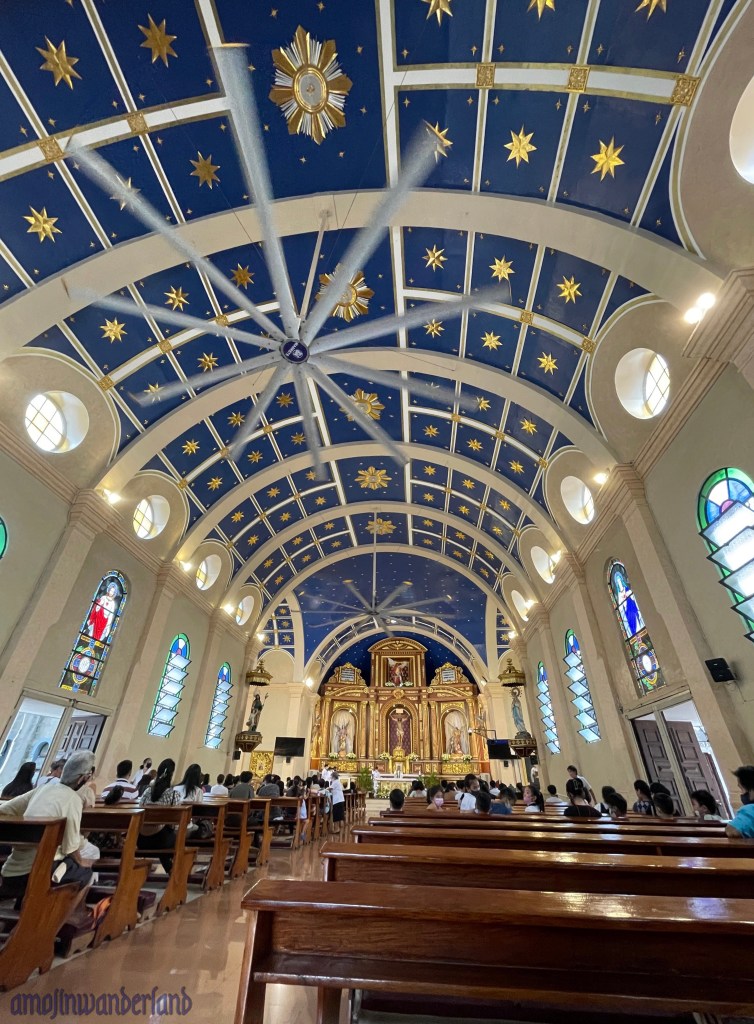
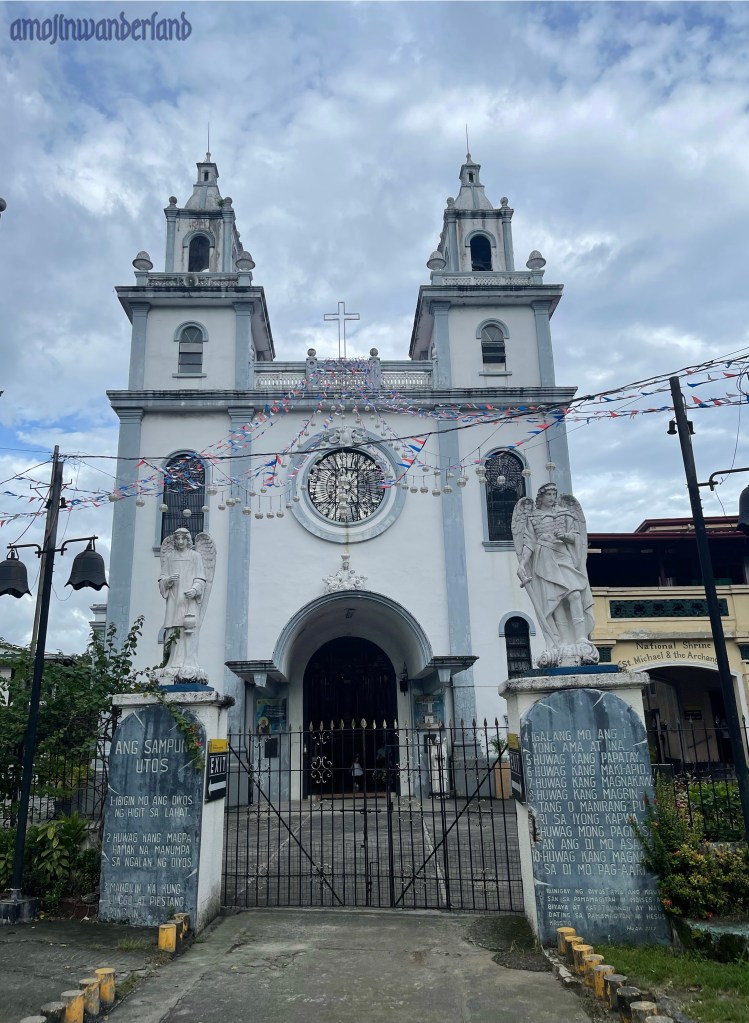
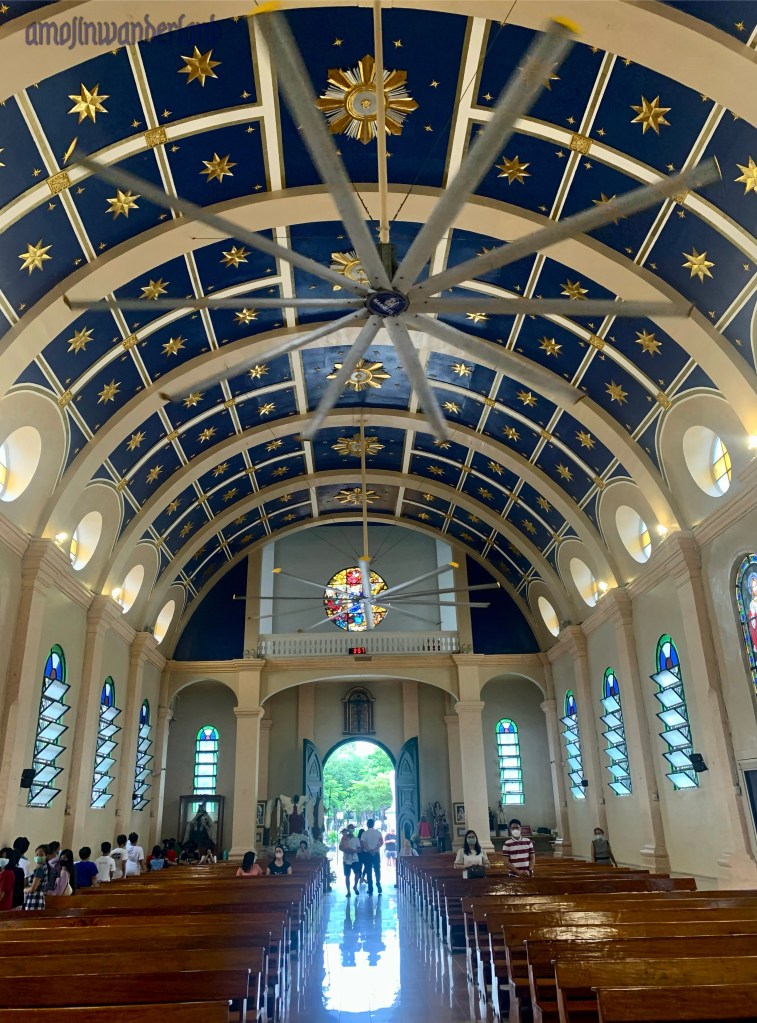
The church displays a distinctive European Baroque architectural style, featuring notable elements such as symmetrical bell towers. One of the prominent features was the San Miguel High Altar, which remained intact for approximately seven decades until a recent renovation. This altar was adorned with a retablo containing four niches. The highest niche of the retablo showcased the figure of the Archangel Michael. Positioned in the central niche was Jesus Christ depicted on the cross, while on the left and right sides were the archangels Gabriel and Raphael, respectively. Additionally, the church underwent renovations in the late 1950s, including the installation of a new blue-and-cream ceiling and a terrazzo or marmolized flooring.
While Manila Cathedral was being reconstructed after the destruction of World War II, San Miguel served as the pro-Cathedral for the Archdiocese of Manila and the Arzobispado. This continued until the inauguration of the new cathedral in Intramuros on December 8, 1958, and the construction of the new Archdiocesan Headquarters in Calle Arzobispo within the Intramuros in 1987. On February 22, 1986, the first day of the EDSA revolution, the church was consecrated as the National Shrine of St. Michael and the Archangels.
 Amoj In Wanderland