Why did Pampanga choose to lay to rest the remains of the esteemed Aurelio Tolentino and construct his monument at the crossing of two bustling streets in Guagua, rather than in a church, park, or a cemetery?

After his passing on July 5, 1915, Tolentino was initially laid to rest at the Manila North Cemetery. However, in 1921, his remains were relocated to Guagua, Pampanga, his birthplace.

During his lifetime, Tolentino was a playwright, poet, journalist, and a revolutionary. He was also known to be a good friend of Andres Bonifacio and became an early member of the Katipunan. He was even one of the signatories of the Declaration of Independence in Kawit, Cavite on June 12, 1898.
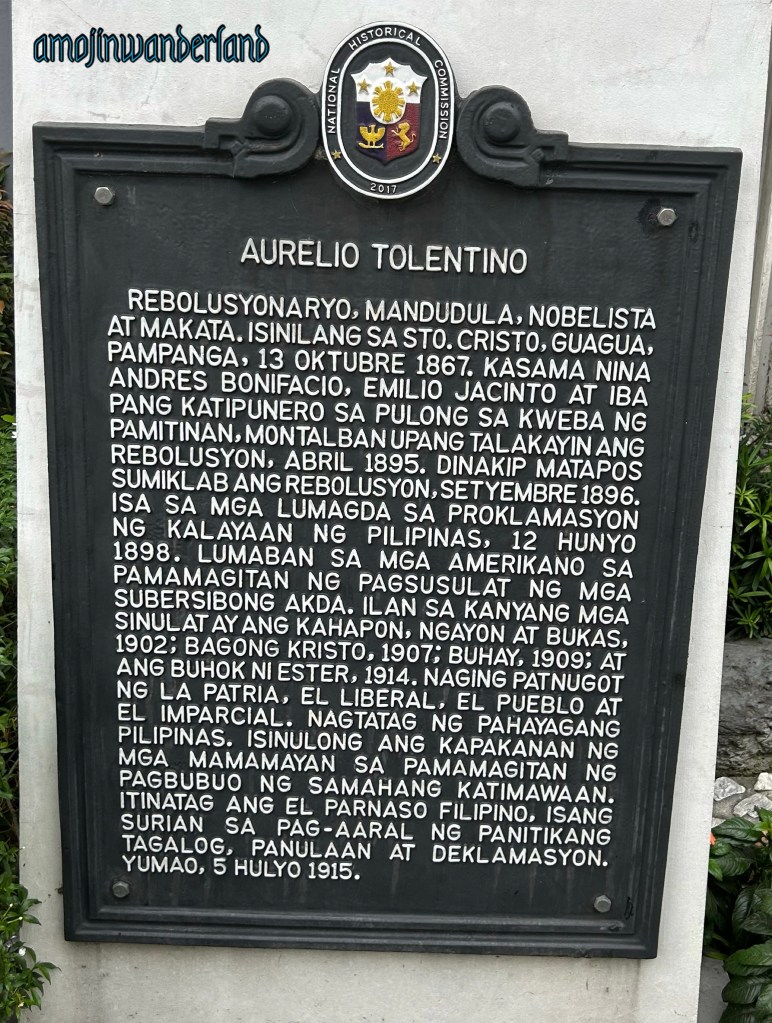
He was arrested twice, first by the Spaniards and later by American forces. His works became propaganda materials during the American occupation including the anti-imperialist play Kahapon, Ngayon at Bukas that cause his second arrest in 1903. In recognition of his significant contributions to the Philippine theatrical arts, the main theater of the Cultural Center of the Philippines was dedicated and named after him.
 Amoj In Wanderland