In the afternoon, we reached Jakarta and had a desire to visit the Jakarta Cathedral. Despite the considerable distance from our hotel, we encountered heavy traffic during our journey. Consequently, by the time we arrived at the cathedral, it was already dark.
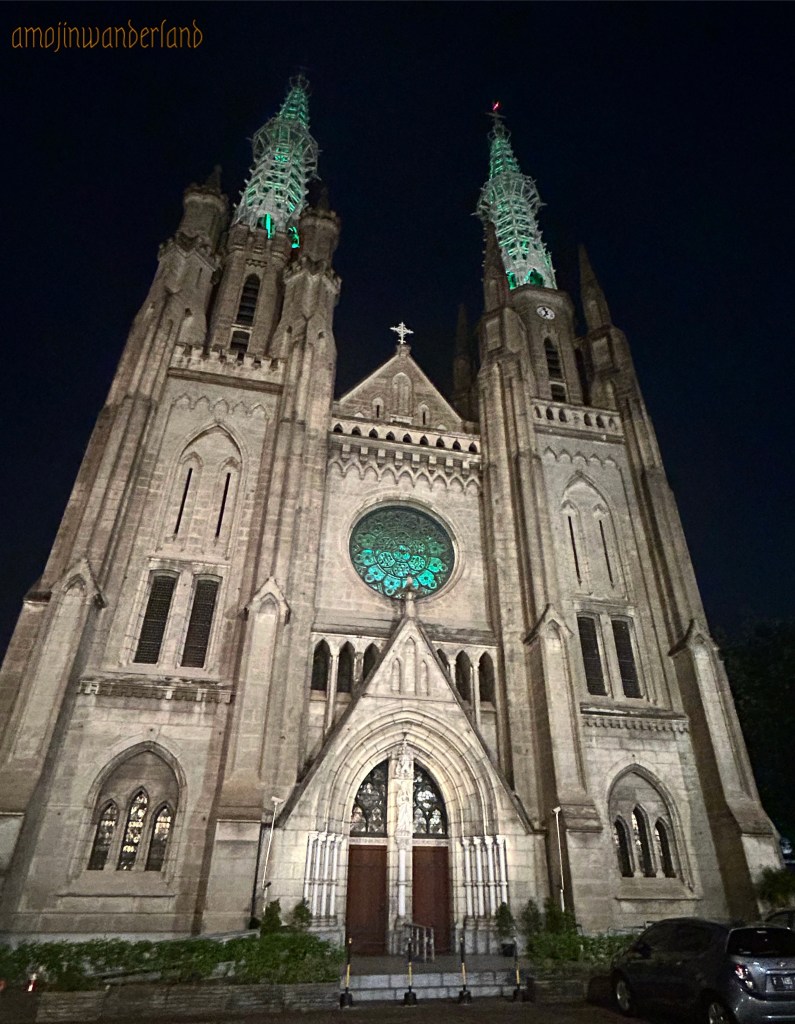
The Jakarta Cathedral or Gereja Katedral Jakarta is situated directly across from Jakarta’s prominent mosque, the Istiqlal Mosque. The strategic placement of these two landmarks is not a mere coincidence. It was a deliberate decision by Indonesia’s first president, Soekarno, who selected this location to represent the nation’s core philosophy of unity in diversity, where various religions can peacefully coexist in harmony.
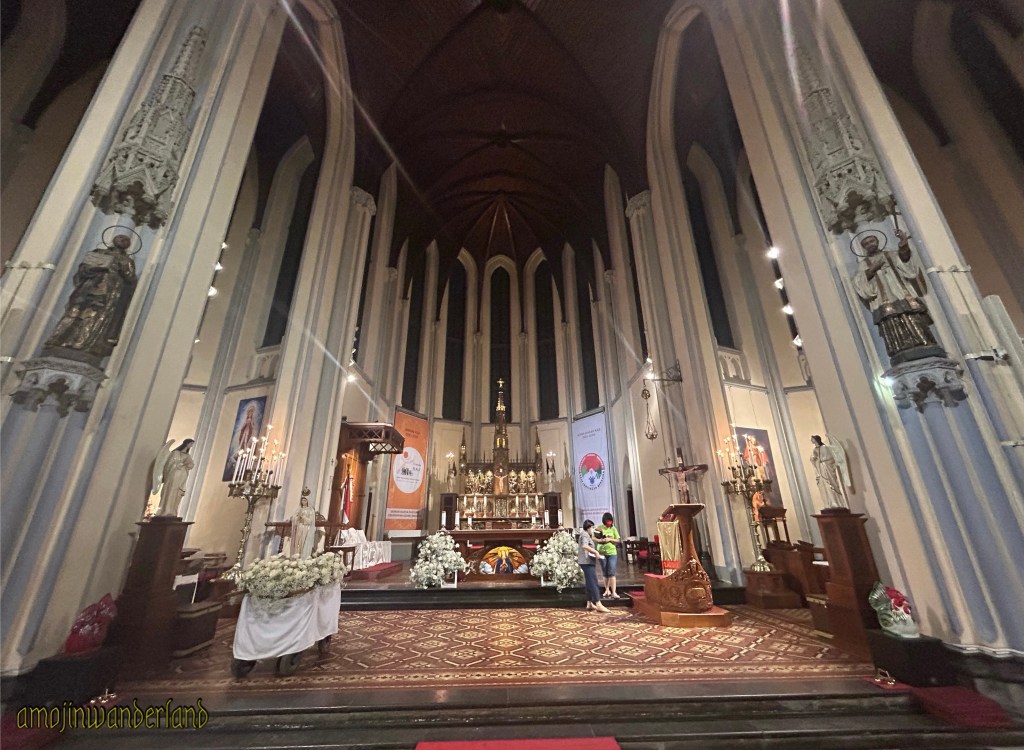
The Jakarta Cathedral, officially known as Gereja Santa Maria Pelindung Diangkat ke Surga, is dedicated to the Virgin Mary. Its name translates to the Church of Our Lady of Assumption. The cathedral was consecrated in 1901 after being reconstructed on the same spot where the previous cathedral, built in 1829, had collapsed in 1890. The decision to rebuild on the same site was made by the prefecture, and they entrusted the design of the new church to Antonius Dijkman, a Jesuit priest.
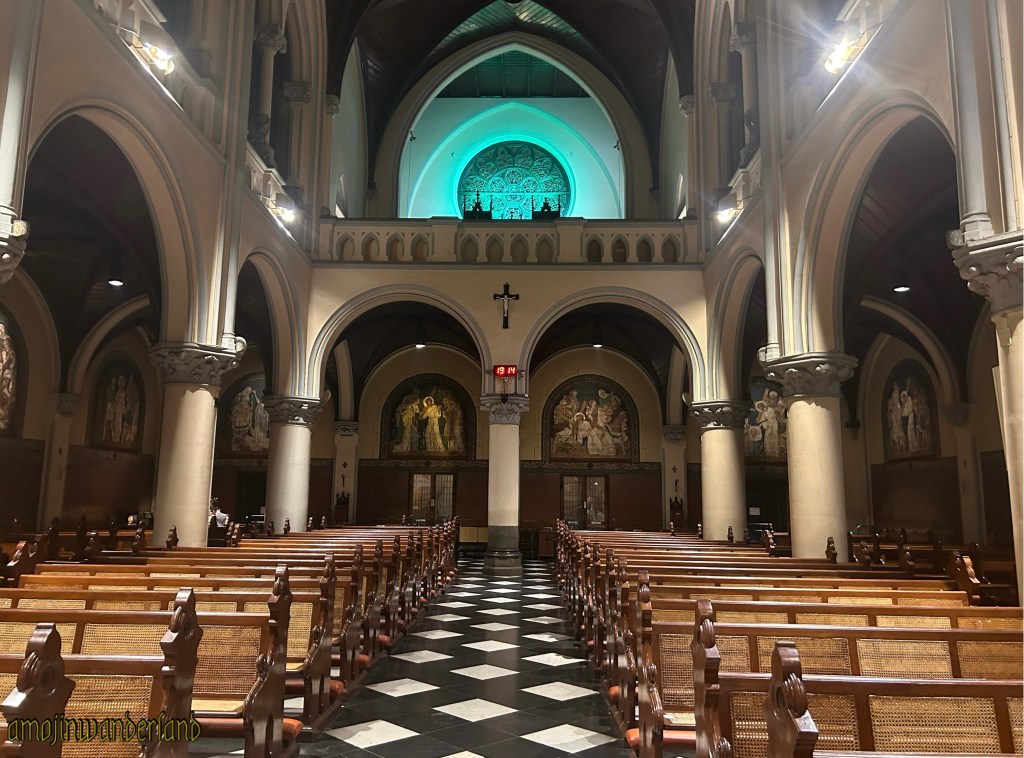
Dijkman’s architectural design for the new church followed the principles of neo-Gothic style. Despite its outward appearance resembling stone, akin to neo-Gothic churches in Europe, the Jakarta Cathedral is actually built using sturdy red bricks, which are then covered with plaster and adorned with patterns to imitate the look of natural stone construction. The substantial walls are constructed to provide support for the teak beams that form the roof. As for the three spires, they are crafted from an iron framework. The choice of these materials, instead of traditional stone masonry, was based on their relatively lighter weight.
Within the cathedral, three altars are present. To the left stands the Altar of Saint Mary, which was finished in 1915. On the right side stands the Altar of Saint Joseph, completed in 1922. The magnificent and highly significant central altar, along with the tabernacle and the golden cross, is believed to have been crafted in the Netherlands during the 19th century and installed in the cathedral in 1956.
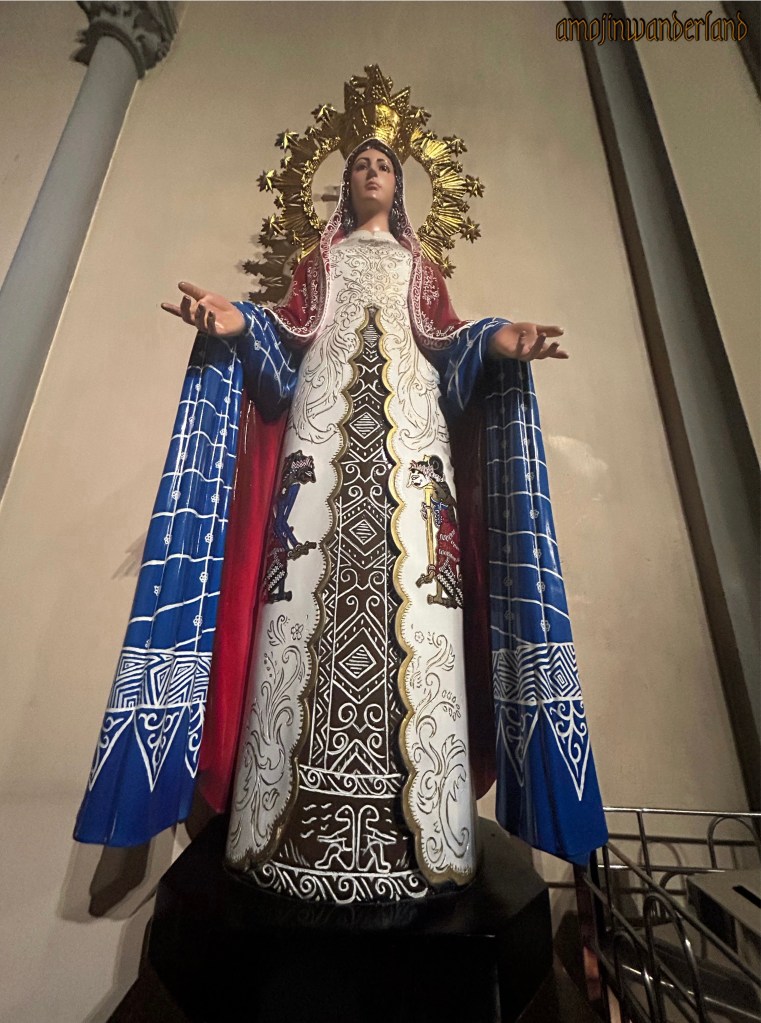
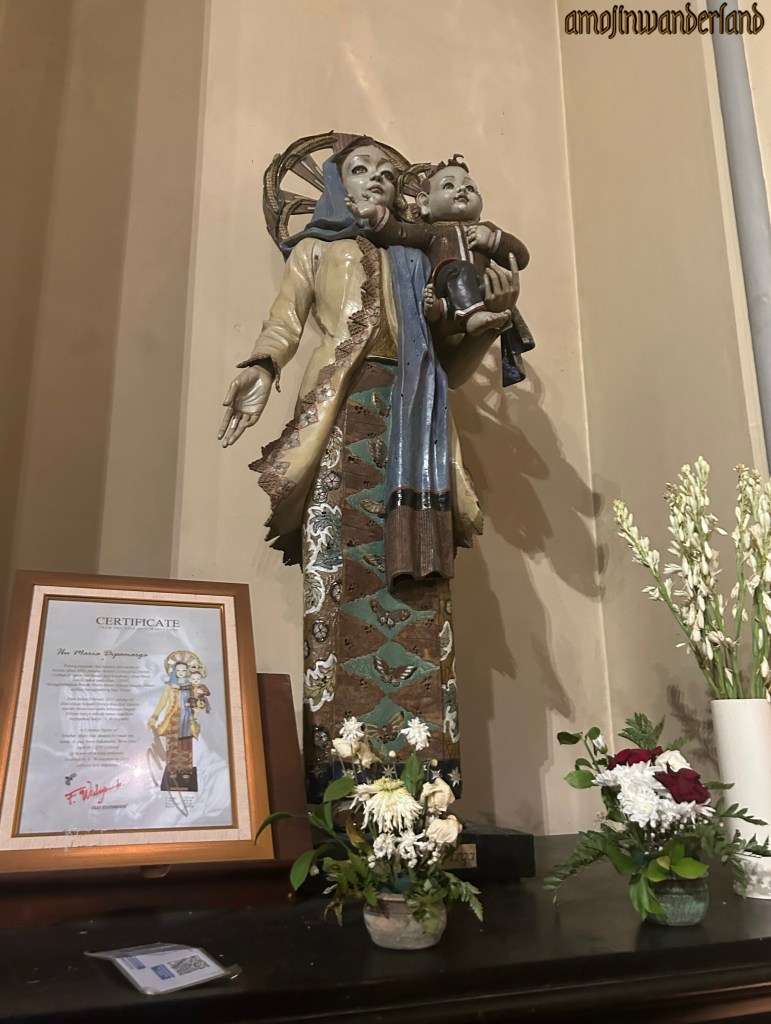
There is a statue of Mary, Our Lady of All Tribes or “Maria Bunda Segala Suku” which is a depiction of the Virgin Mary with cultural elements from various tribes in Indonesia. This depiction is inspired by the diversity and spirit of Indonesian nationalism. The statue was inaugurated in 2018 at the Jakarta Cathedral. There is another image of the Madonna and Child known as “Ibu Maria Dipamarga,” created by the Indonesian ceramic artist F. Widayanto in 2016 using clay from Sukabumi, West Java.
 Amoj In Wanderland