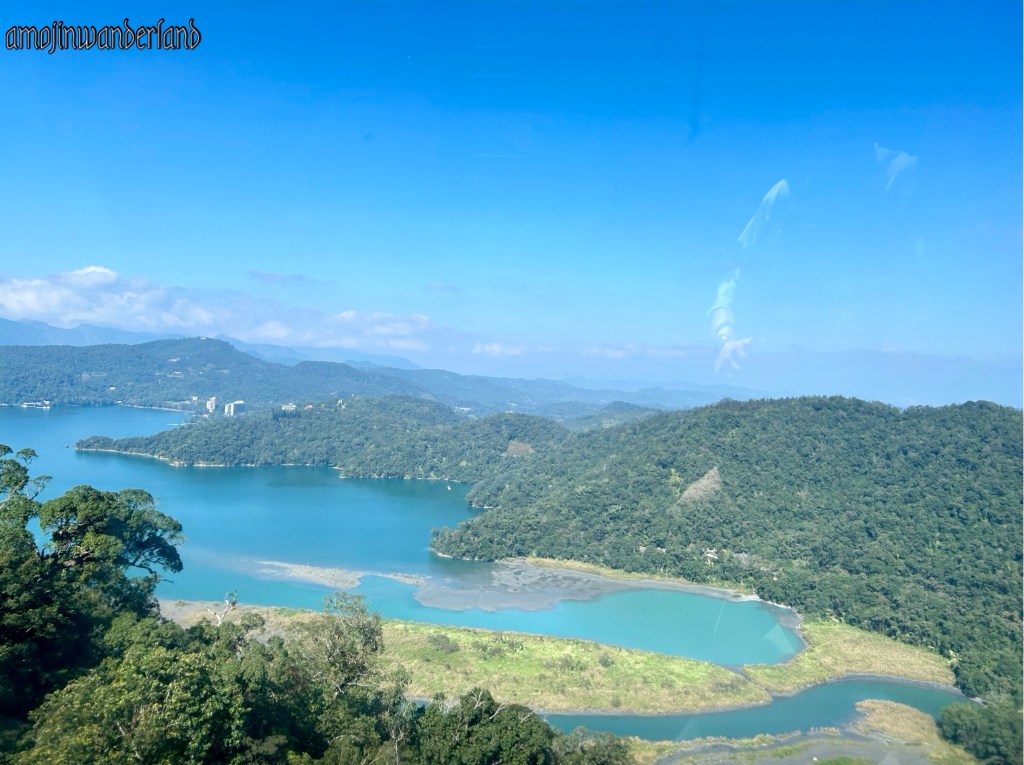
During my brief stay in Taiwan, I haven’t had the opportunity to explore Taichung. Luckily, a one-day sightseeing excursion is included in the conference schedule where I’ve been invited as a speaker, and Sun Moon Lake is our designated destination.
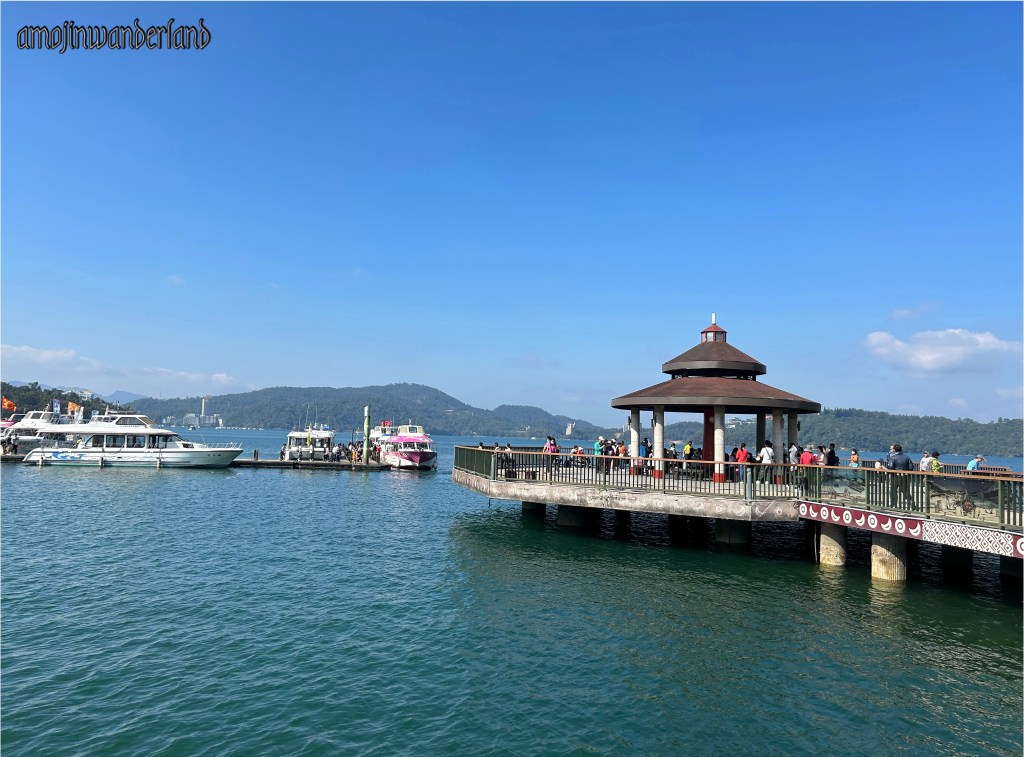
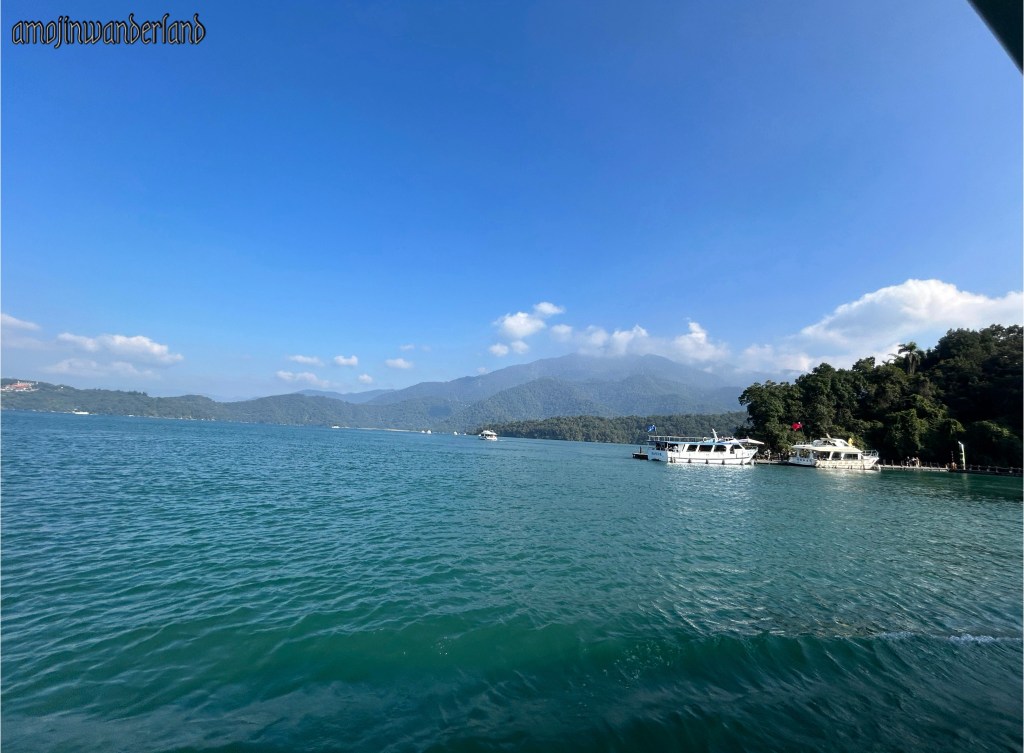
In the early morning, we departed for Sun Moon Lake, situated approximately 2 hours away from our hotel. This scenic alpine lake is nestled in the heart of Yuchi Township, Nantou County, Taiwan. Renowned for its breathtaking beauty, the lake gets its name from its distinctive shape—resembling a round sun on one side and a crescent moon on the other. The crystal-clear waters mirror the tranquil landscapes, forming a captivating panorama.
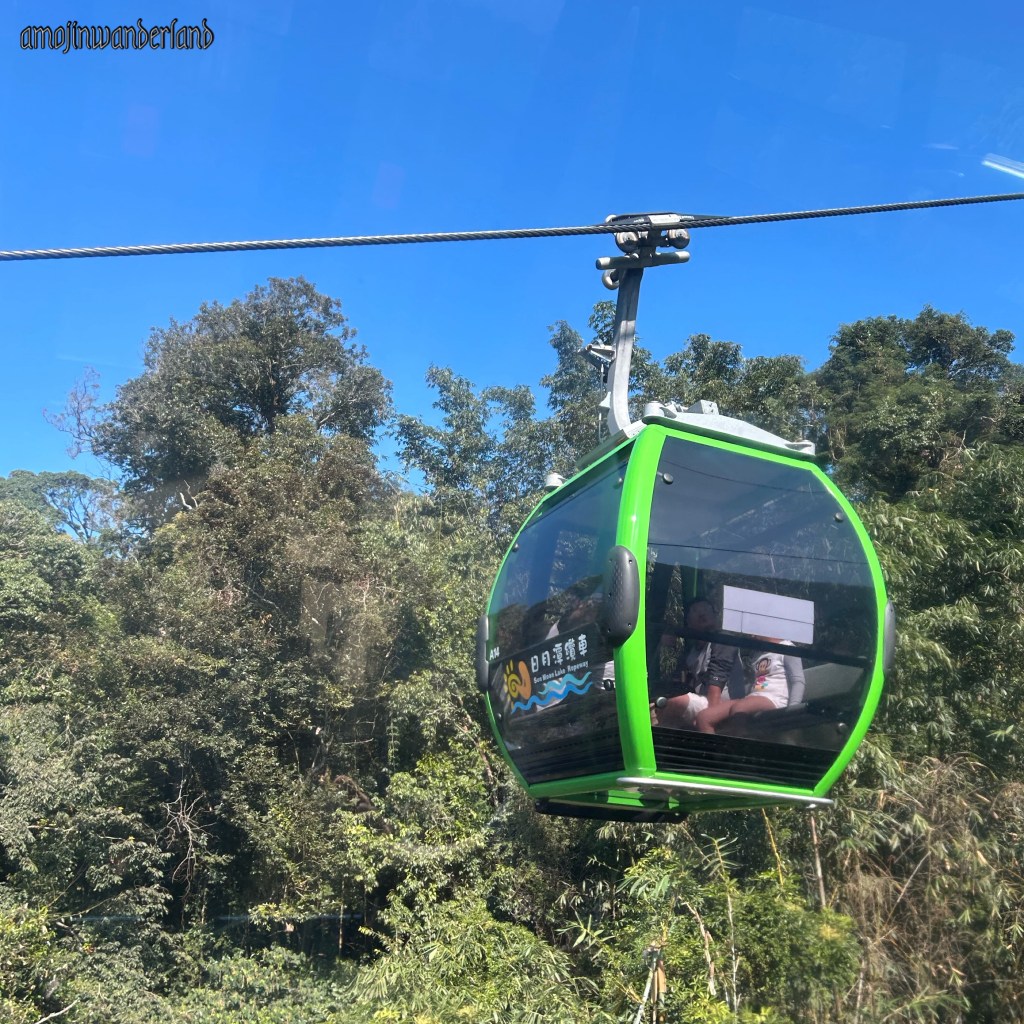
Upon reaching our destination, we boarded the cable car at Sun Moon Lake. Covering a distance of 1.877 kilometers from the Sun Moon Lake Youth Activity Center to the Observation Tower of the Formosan Aboriginal Culture Village, the 7-minute direct cable car journey provides breathtaking views of Sun Moon Lake, along with the surrounding mountains and basins of Puli.
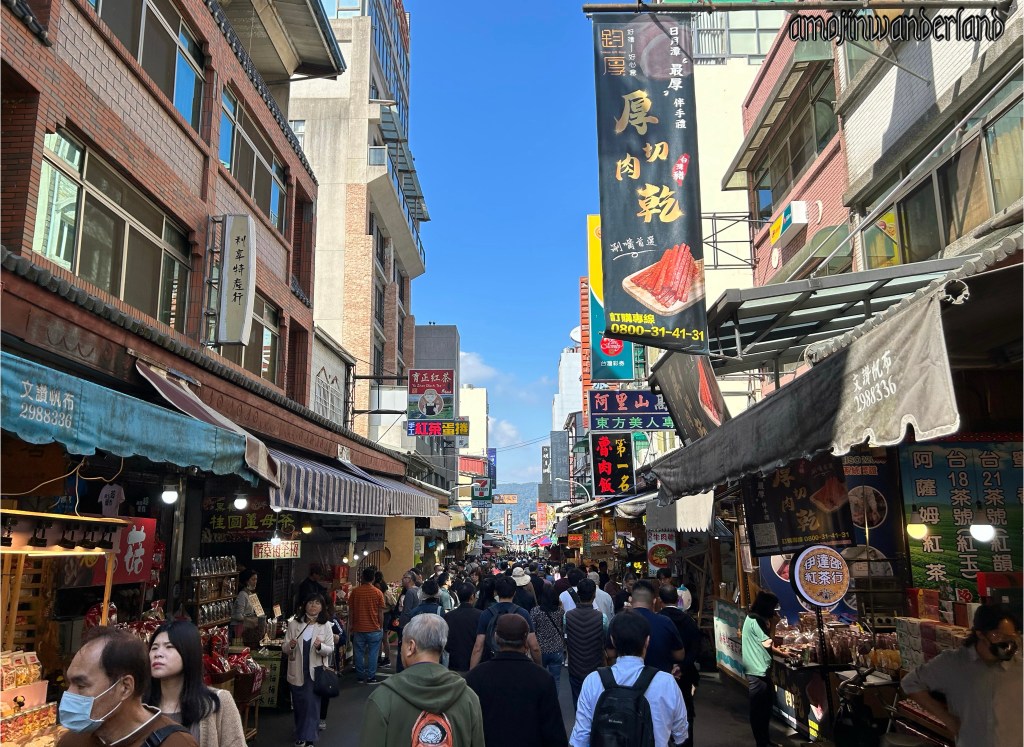
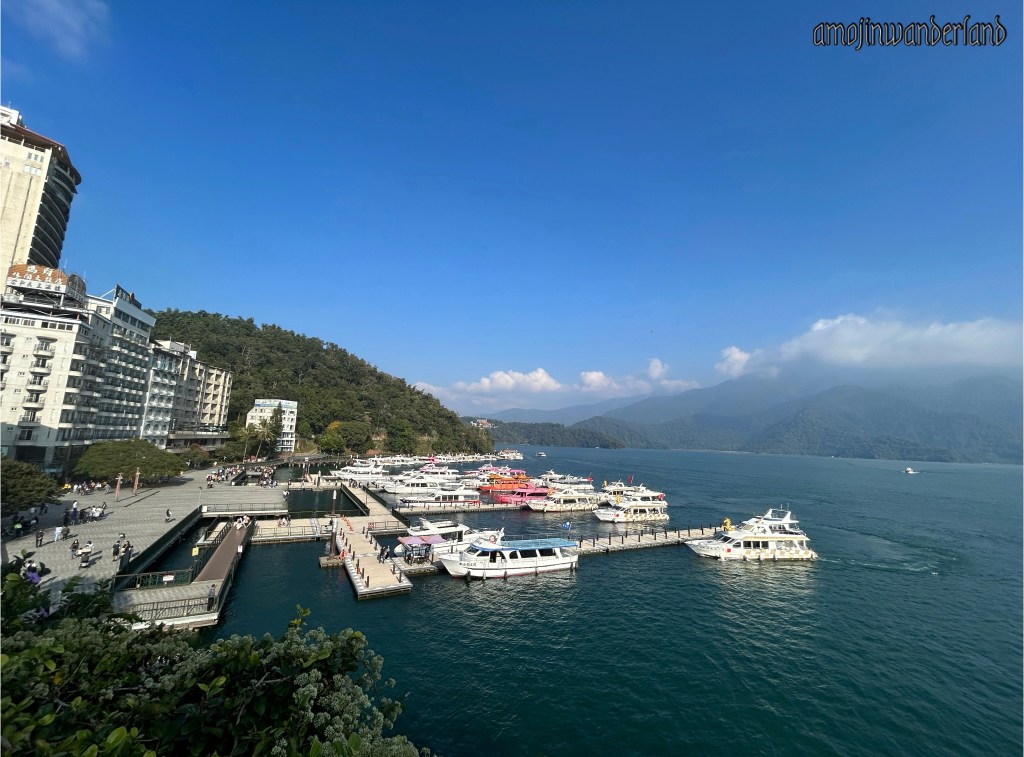
Later, we headed to Ita Thao Pier for a ferry ride. In the Thao language, Ita Thao is referred to as Barawbaw, serving as the final dwelling place for the Thao community at Sun Moon Lake. With the influx of tourists and Han traders, Ita Thao has evolved into the most densely populated area surrounding the lake. The village boasts various establishments, including stores, restaurants, and hotels. During our visit, we enjoyed lunch at a local restaurant in this vibrant locale.
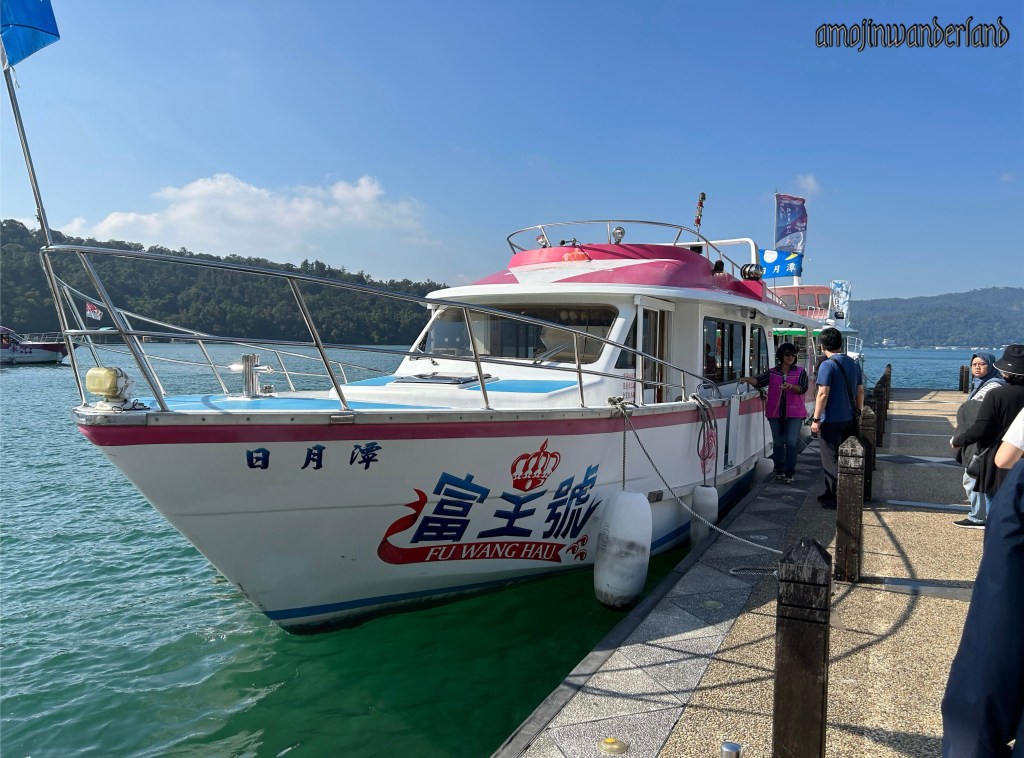
The ferry transported us across the lake to Xuanguang Wharf, nestled against the backdrop of the mountains.
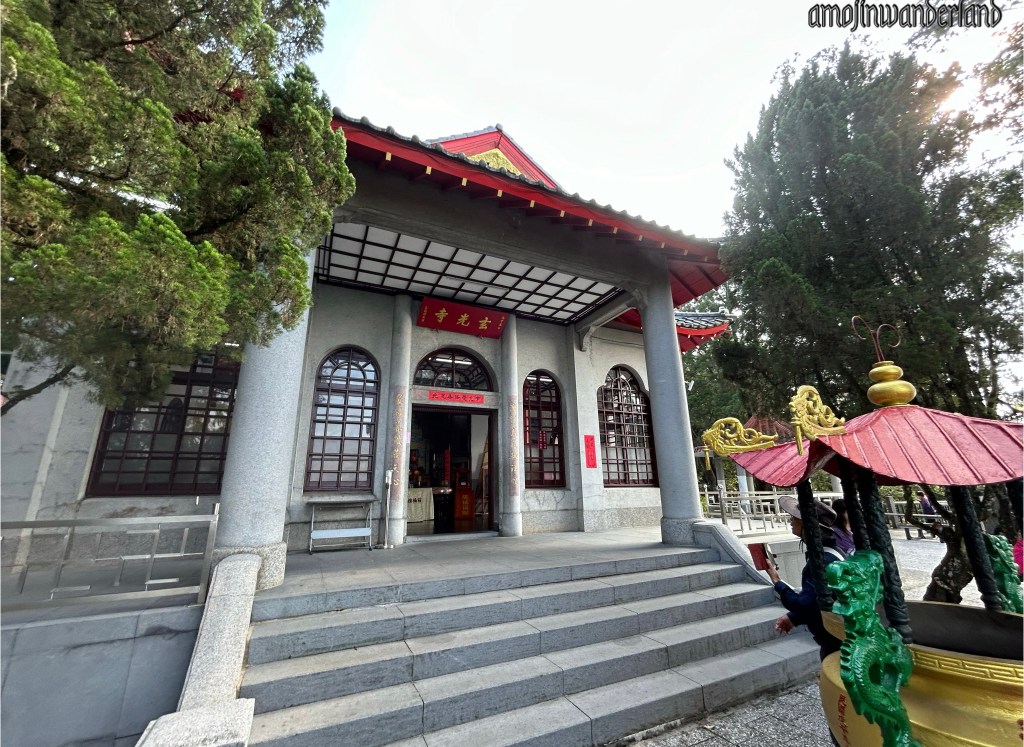
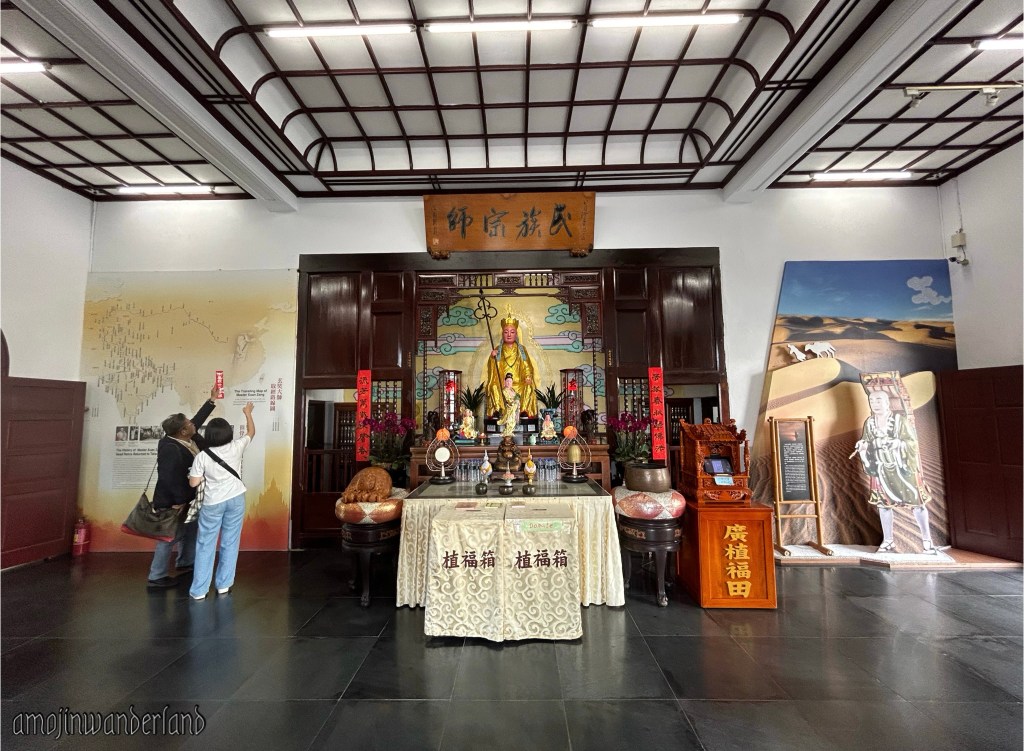
Upon arrival, we ascended the stairs to explore Xuansang Temple, positioned between Sun Lake and Moon Lake. Inside, a golden idol of the Buddhist monk Xuansang graces the temple, bearing the inscription “Great National Scholar.” Xuansang, a renowned Tang Dynasty Buddhist monk, embarked on a journey to India to acquire Buddhist scriptures.
After over a decade, he returned to China, carrying over 650 sutras. With his disciples, he translated 75 of these texts and obtained an additional 1,335 scrolls. His endeavors significantly contributed to the dissemination of Buddhism in China. Amid the China-Japan war, a Japanese individual obtained a fragment of Master Xuansang’s bone relic from Nanjing. In 1952, this relic was brought to Taiwan, and following the construction of Xuanguang Temple at Sun Moon Lake in 1958, it was enshrined there.
On our return journey, the ferry brought us to the Shuishe Pier.
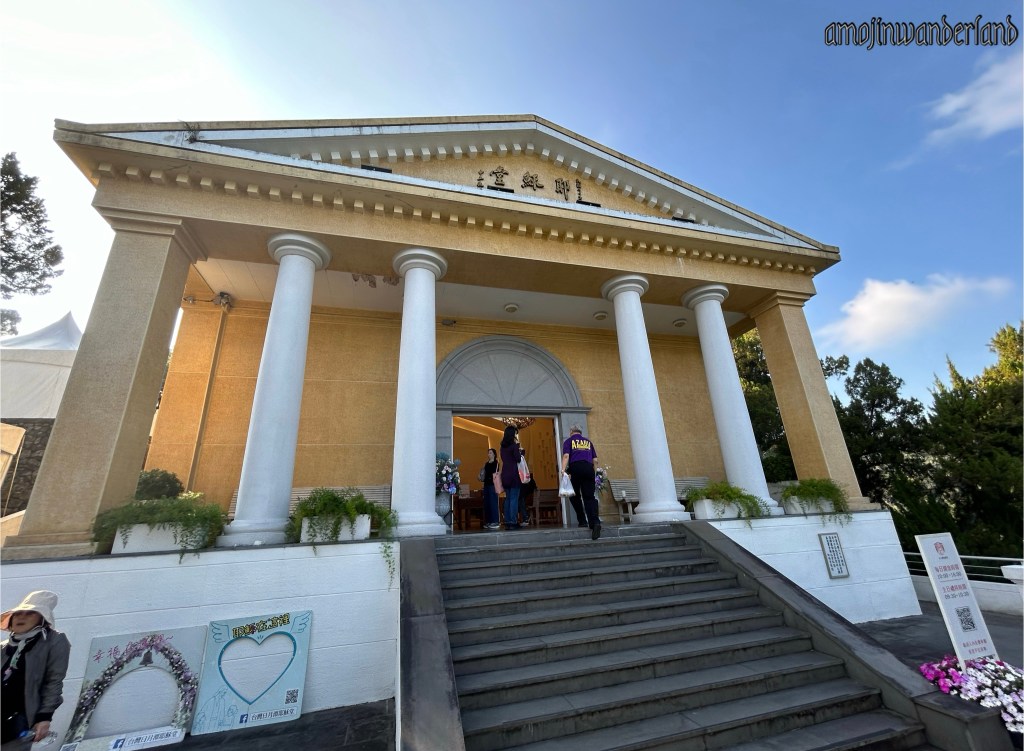
From there, we strolled to the nearby Church of the Gesù, nestled among verdant trees on the Hanbi Peninsula. The classical Roman structure, adorned with yellow walls and white pillars, exudes grace and offers picturesque views of the serene Sun Moon Lake. Constructed in 1971, the church was intended for Chiang Kai-shek and his wife to offer prayers during their visit to the lake.
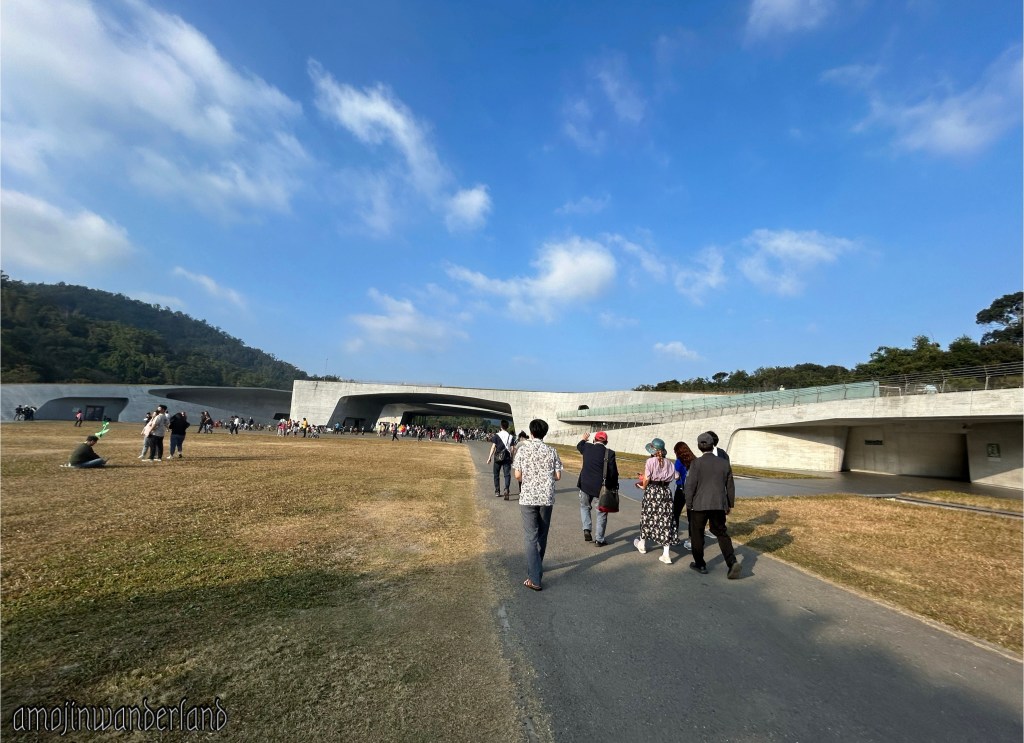
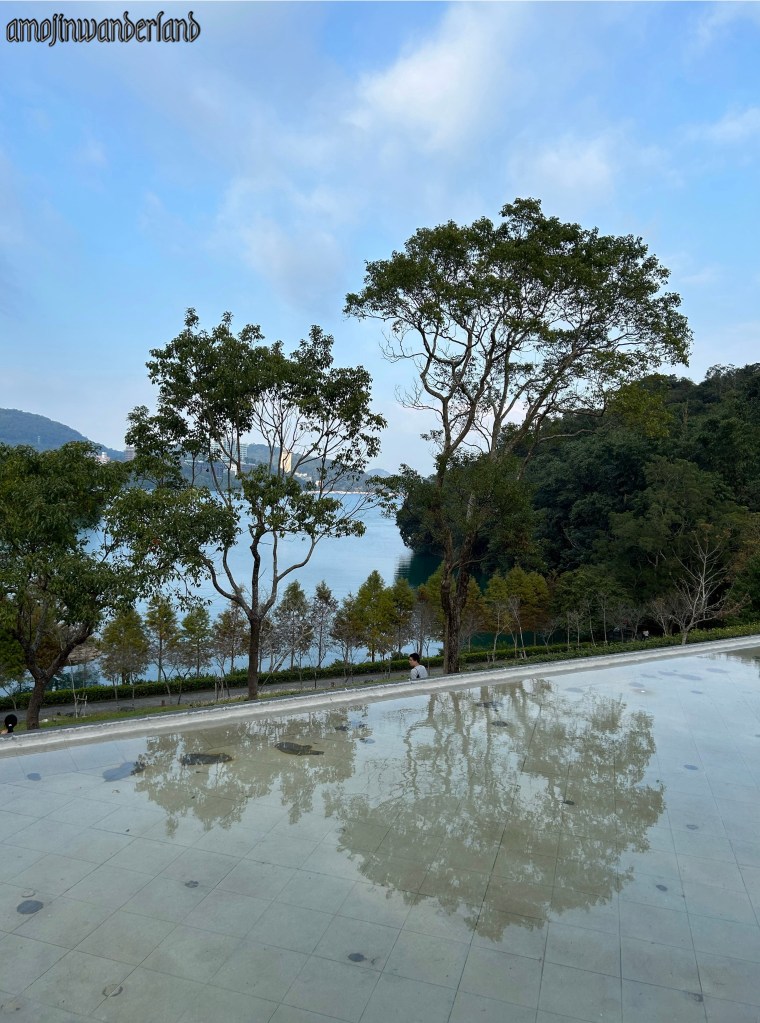
Our final stop was the Xiangshan Visitor Center, crafted by the acclaimed Japanese architect Dan Norihiko. The overarching design of the center revolves around fostering the harmonious coexistence of human habitation and the natural environment. The building’s interior and exterior feature waterscapes, a green roof, and landscaping integrated with the surrounding land.
It was already 7 in the evening when we reached our hotel back in Taichung.
 Amoj In Wanderland