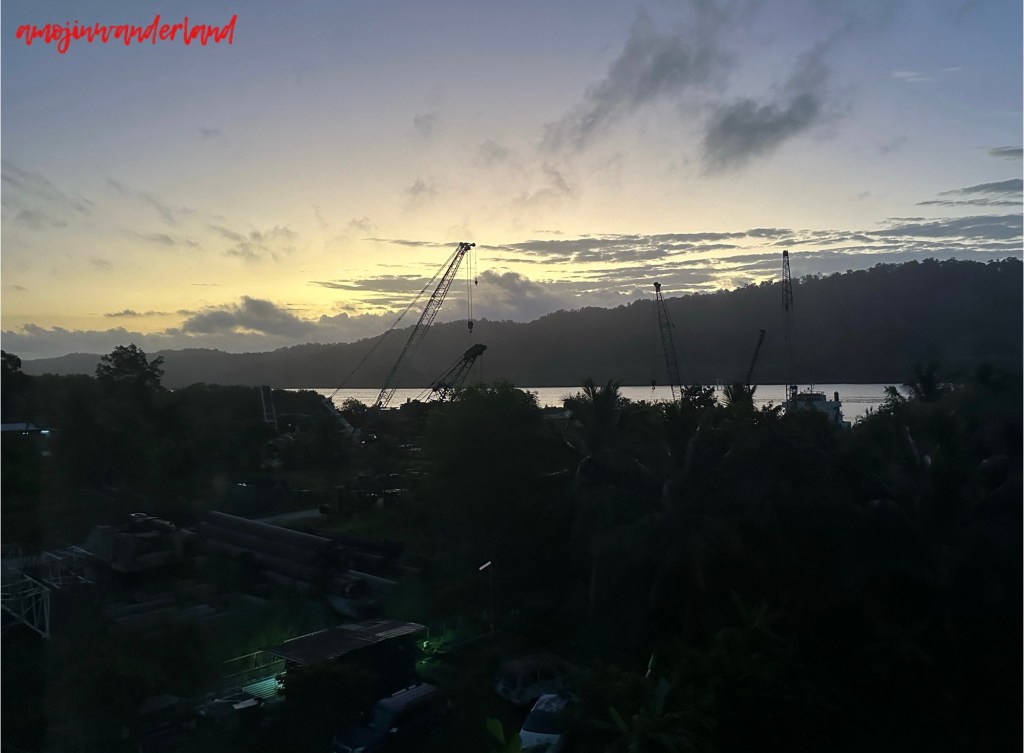
Our hotel resided in Kota Batu, situated on the outskirts of Bandar Seri Begawan, the capital of Brunei. In historical terms, Kota Batu held considerable significance as Borneo island’s primary town before the emergence of Kampong Ayer, the largest water village globally. Known as “Kota Batu,” meaning “Stone Fort” in Malay, this area once served as the esteemed Bruneian Empire’s capital. It encompassed an ancient palace, administrative center, and mosques, tracing its origins to Brunei’s third sultan, Sharif Ali.
Between 1368 and 1888, the Bruneian Empire stood as a dominant force in the Malay Archipelago. However, the British navy brought an end to this era by reducing Brunei to a British protectorate state. Luckily, the remains of Kota Batu are still intact and conveniently accessible. So when we had the chance, we visited these historically-significant sites nearby.
Kota Batu Archaeological Park
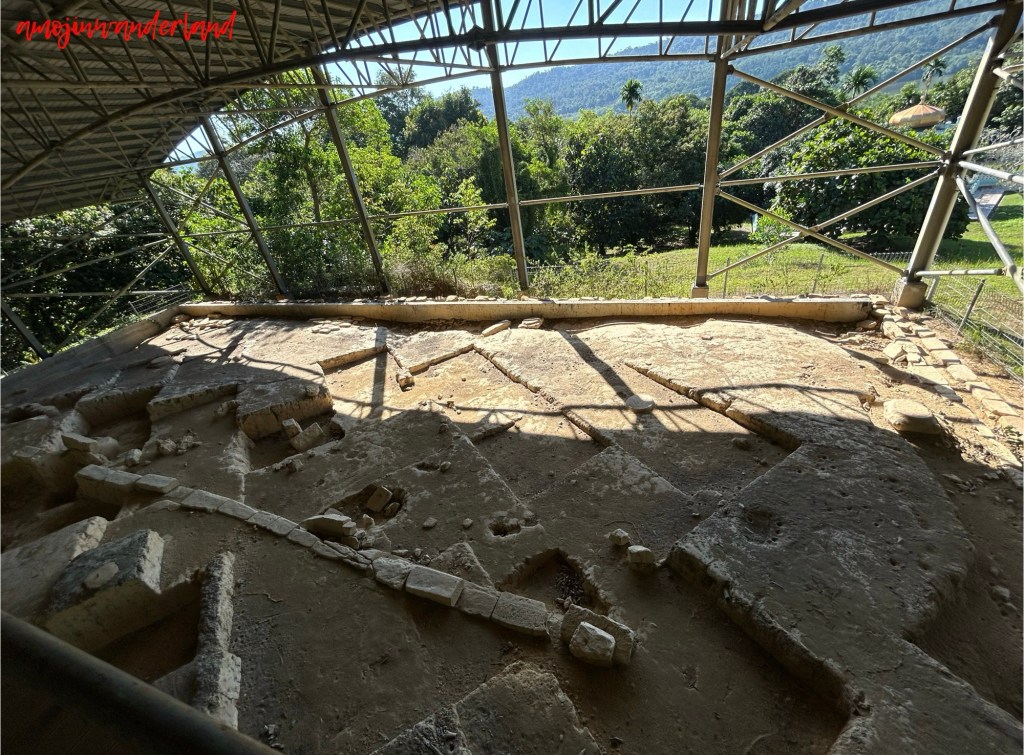
Just a few hundred meters from our hotel is the Kota Batu Archaeological Park. Rediscovered in the 1950s during Brunei’s post-World War II reconstruction after the Japanese occupation, these ruins swiftly became Brunei’s paramount archaeological site.
Among the ruins, archaeologists discovered porcelain dating back to the Chinese Song Dynasty, strengthening the belief that Brunei engaged in trade relations with China in the first half of the previous millennium. Another significant finding was the abundance of large cut stone pieces, believed to have been components of a palace, further supporting the notion that Kota Batu served as Brunei’s ancient and original capital.
Mausoleum of Sultan Sharif Ali
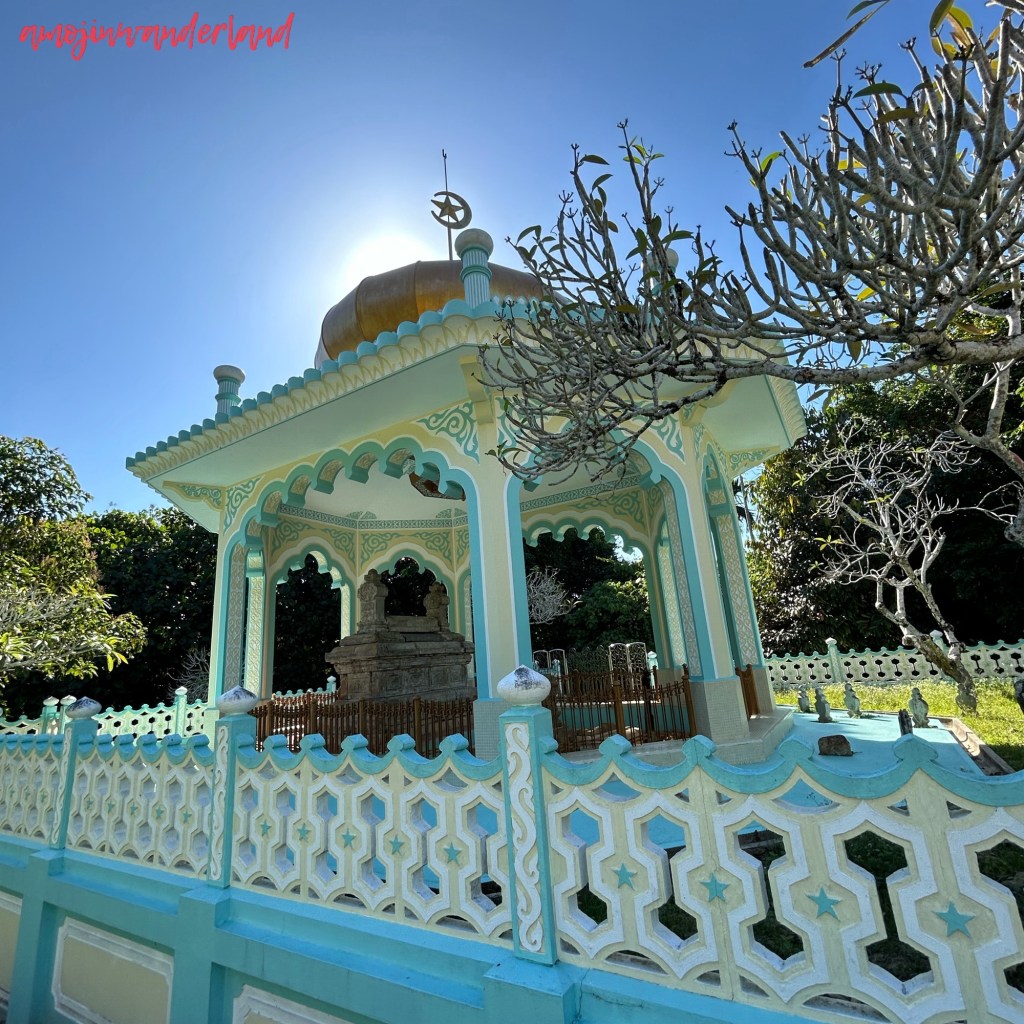
Adjacent to the Kota Batu Archaeological Park lies the tomb of Sultan Sharif Ali. As Brunei’s third sultan, Sharif Ali holds the distinction of being the first Islamic scholar to govern the Bruneian Empire. He played a pivotal role in the Islamization of Brunei during its early years, constructing the first mosque and implementing Islamic law. Additionally, he supervised the development of the national emblem and the fortification of Kota Batu.
Sharif Ali’s tomb was uncovered in the vicinity of the Kota Batu Archaeological Park during the initial archaeological excavations. Following this discovery, Hassanal Bolkiah, Brunei’s current sultan, ordered the construction of Ali’s mausoleum early in his reign.
Mausoleum of Sultan Bolkiiah
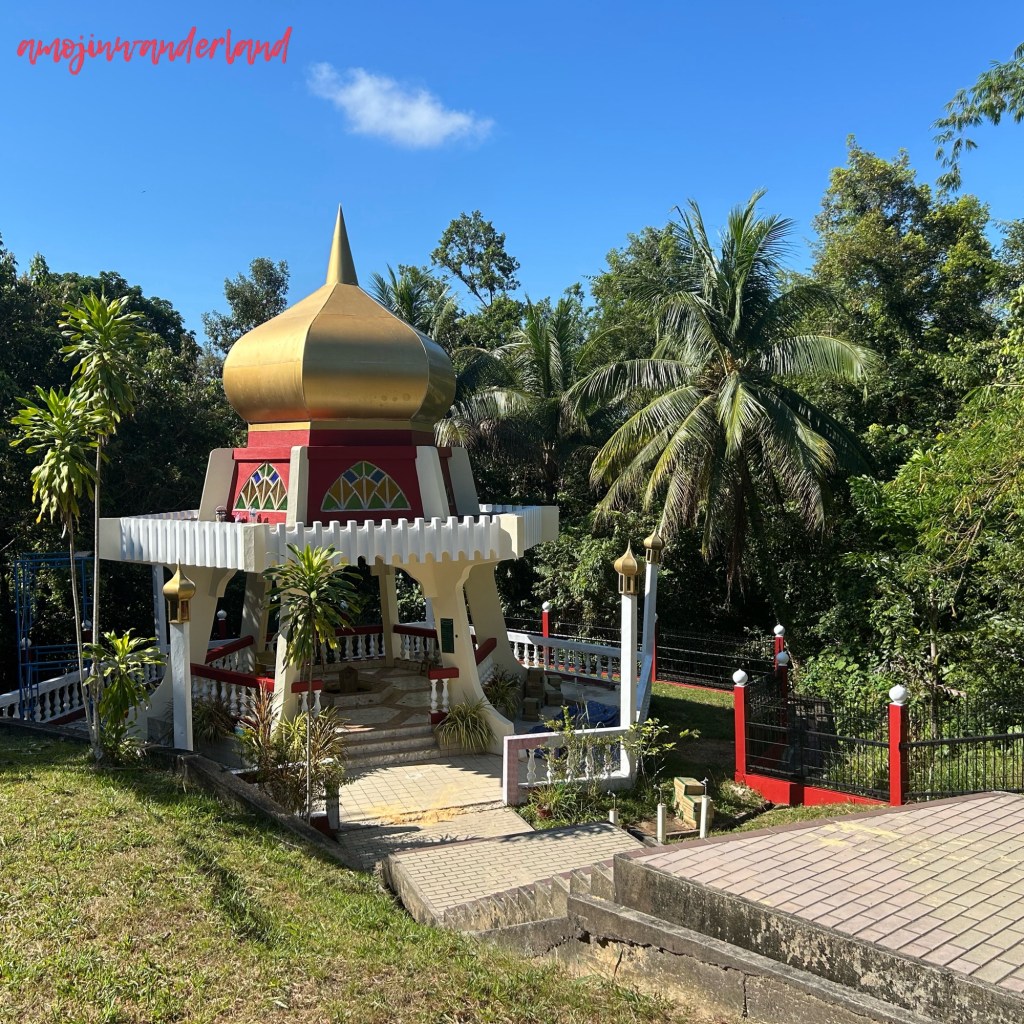
Another few hundred meter walk is the Mausoleum of Sultan Bolkiah, grandson of Sultan Sharif Ali and one of Brunei’s most beloved leaders. He is remembered fondly as the ambitious man who led Brunei during its Golden Age. His 40 year reign was Brunei’s greatest in terms of expansion and glory. It brought significant wealth and power to the Empire. He extended Brunei’s territory from just a pocket in Borneo all the way to Seludong, now Manila and in all directions on the island.
 Amoj In Wanderland