
Kampong Ayer, a remarkable water village, is nestled on the banks of the Brunei River. Dubbed the “Venice of Brunei,” this expansive water settlement boasts a history that spans over a thousand years, making it one of the largest of its kind globally.

For centuries, Kampung Ayer has held a significant historical role as the primary settlement of Brunei. It served as the de facto capital, acting as the focal point of social and economic activities within the Bruneian Empire. This prominent status endured even into the early period of British imperialism in Brunei, highlighting the enduring importance and influence of Kampung Ayer throughout Brunei’s history.
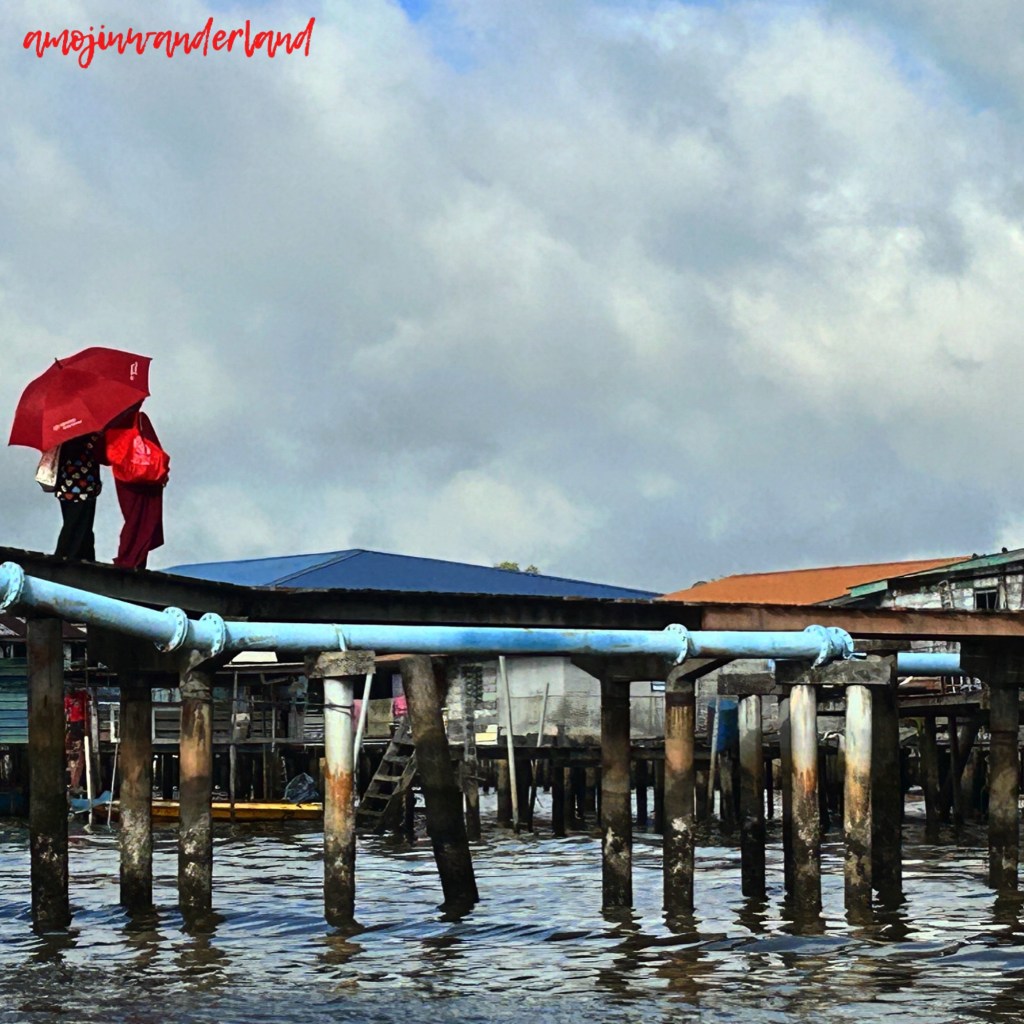
In Kampong Ayer, houses are elevated on stilts above the water, a distinctive architectural feature of this water village. Traditionally constructed from wood, these houses embody the style of traditional Malay architecture. The village boasts an intricate network of walkways on stilts and pedestrian bridges, connecting the houses and other structures. These pathways are constructed using a variety of materials, including wood, concrete, and metal stilts, facilitating movement and interaction within the community while preserving the village’s unique charm and heritage.

In neighborhoods where connecting walkways are absent due to wide waterways, residents rely on motorboats for mobility. These boats, typically crafted in traditional local style from wood, are equipped with engines for propulsion. Known locally as “perahu tambang” or “water taxis,” these vessels serve as essential transportation within Kampong Ayer, ferrying residents across the waterways and connecting disparate neighborhoods.
 Amoj In Wanderland