
King Chao Anouvong was the ruler of Vientiane from 1805 to 1828. He is remembered as a pivotal figure in Laotian history. He resisted Siamese dominance and fostered a distinct national identity for Laos. During his reign, Laos was divided into three kingdoms—Champasak, Vientiane, and Luang Prabang—all under Siamese control. From the outset, Chao Anouvong showed his dissatisfaction with Siamese rule. He performed symbolic actions, such as constructing Wat Si Sa Ket. This temple was positioned strategically. Visitors pledging allegiance to him would turn their backs on Bangkok. This was a subtle act of defiance.
Tensions escalated after King Rama III ascended the throne of Siam. He imposed harsher policies on the Laotian kingdoms and Lao people in Thailand. These policies included demeaning practices like tattooing Lao individuals for identification and publicly insulting Chao Anouvong’s son. In 1826, Chao Anouvong launched an armed rebellion. He was emboldened by the mistaken belief that foreign powers like Britain and Burma were preparing to attack Siam. Yet, the rebellion was a disastrous miscalculation. Lacking external support, the uprising was crushed, and Siamese forces retaliated by devastating Vientiane in 1828.
Chao Anouvong was captured and taken to Bangkok, where he was publicly humiliated in a cage before his death. Despite the tragic end of his rebellion, Chao Anouvong is celebrated as a national hero. His struggle against Siamese control laid the groundwork for a distinctive Laotian identity. He is regarded as the founder of the modern Lao state.
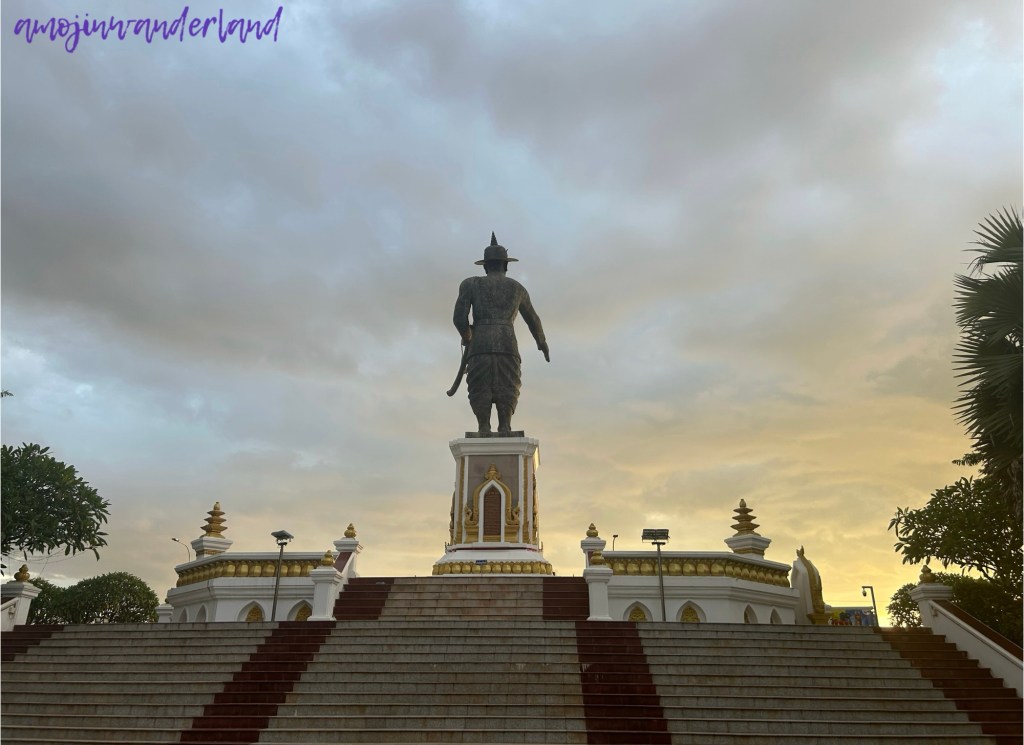
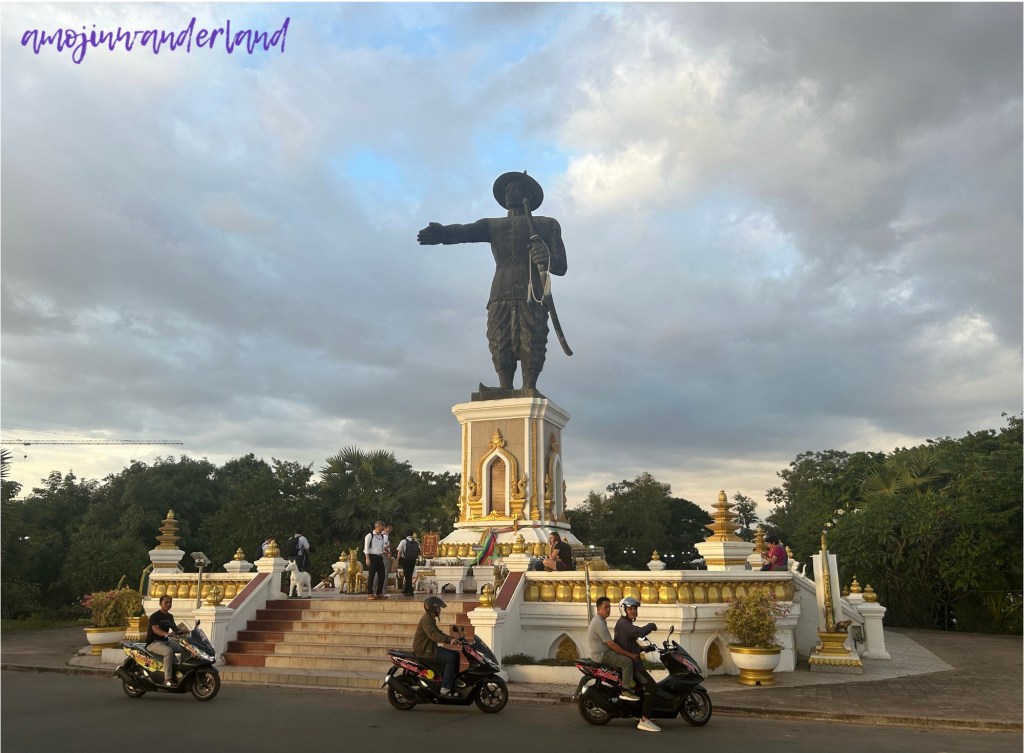
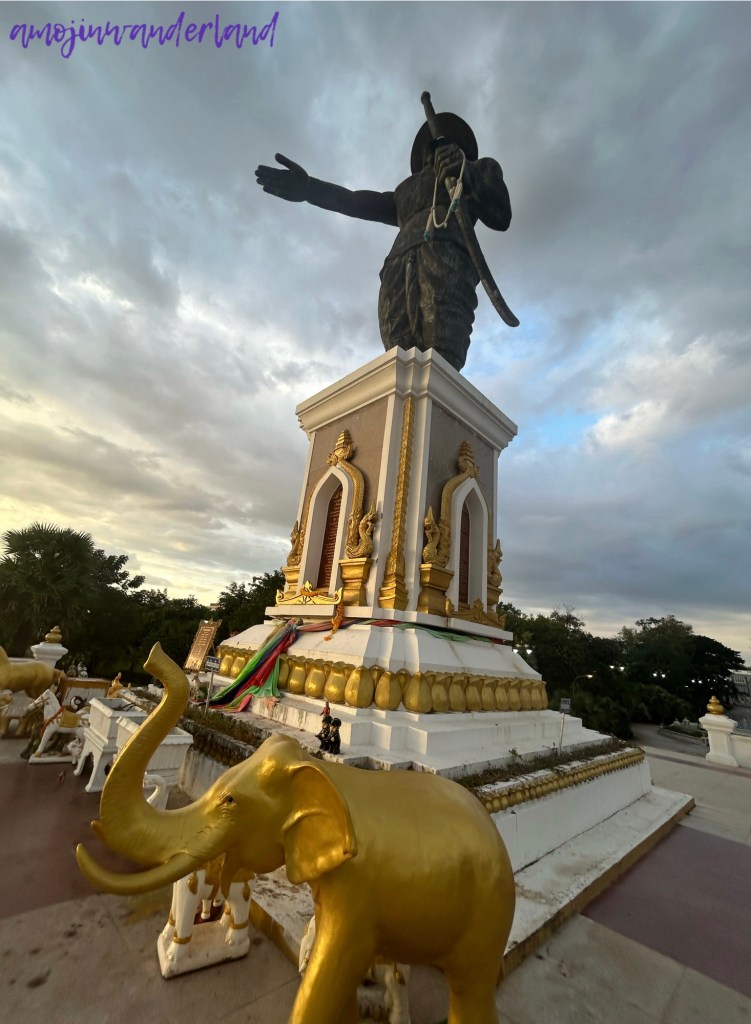
The Chao Anouvong Statue was erected in Vientiane’s Chao Anouvong Park in 2010. It commemorates the 450th anniversary of the city’s founding. The statue faces the Mekong River. It symbolizes his enduring legacy. It also serves as a focal point of national pride near the vibrant Vientiane Night Market.
 Amoj In Wanderland