
The Patuxai, also known as the Victory Gate or Gate of Triumph, is a war monument in downtown Vientiane, Laos, constructed between 1957 and 1968. Initially called the Anousavary or Anosavari Monument, it was dedicated to Laotian soldiers who fought in World War II and the independence war against France in 1949. The French referred to it as the “Monument Aux Morts.” The name “Patuxai” comes from the Laotian words “Patuu” (door or gateway) and “Xai,” derived from the Sanskrit “Jaya,” meaning victory.

The structure, often likened to Paris’s Arc de Triomphe, reflects distinct Laotian design elements. It features mythological motifs such as the kinnari, a half-bird, half-woman creature. Patuxai stands at the end of Lane Xang Avenue and is surrounded by Patuxay Park. The monument’s five towers symbolize the five principles of coexistence among nations and the five Buddhist virtues: amiability, flexibility, honesty, honor, and prosperity. Its gateways, oriented toward the four cardinal directions, lead to ceremonial ponds representing lotus flowers as a tribute to the nation’s warriors. The roof’s design takes inspiration from India’s Taj Mahal, with additional towers featuring Laotian-style spires and frescoes of foliage.
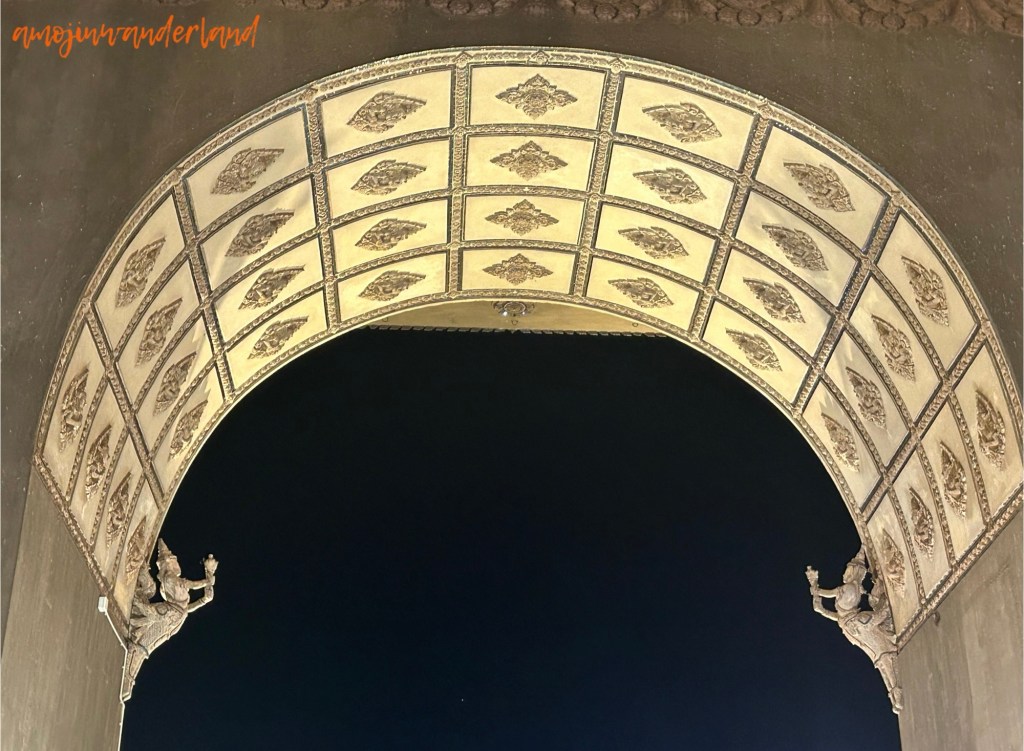
Interestingly, the monument was built using American funds and cement originally intended for a new airport, earning it the nickname “vertical runway.” Its design was the brainchild of Tham Sayasthsena, a self-taught Laotian sculptor, whose plan was selected from numerous submissions.
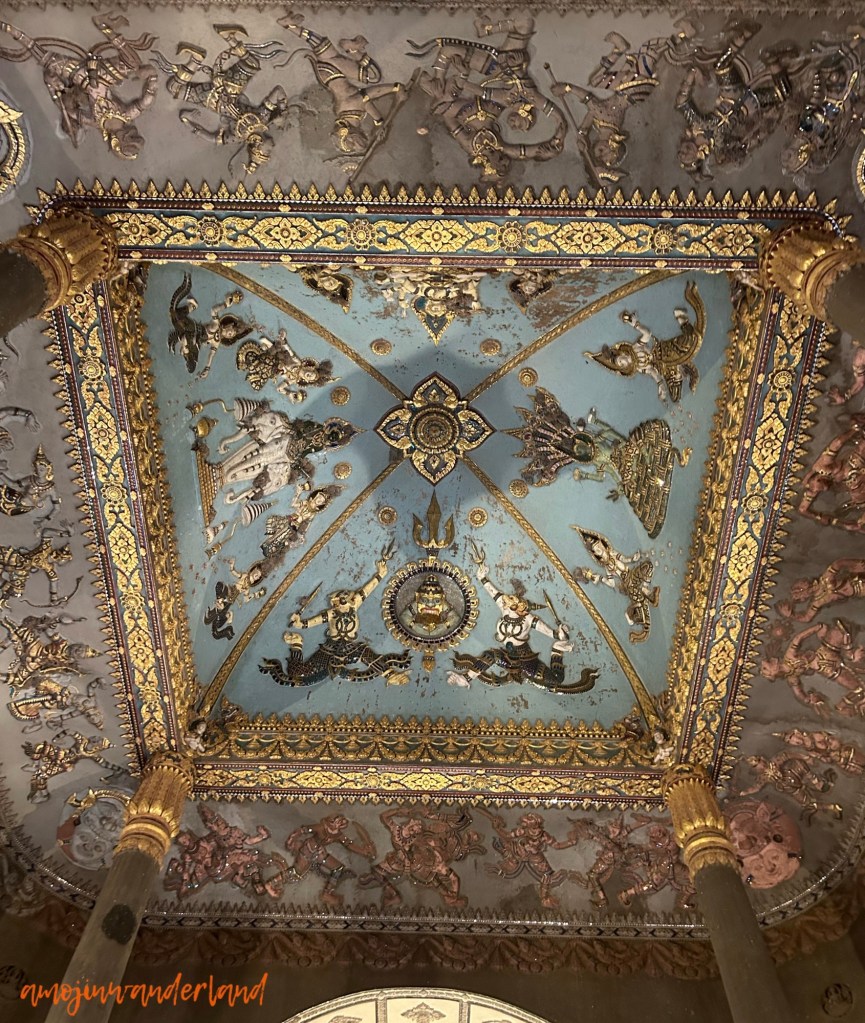
After the Pathet Lao seized power in 1975, ending the monarchy, the monument was renamed Patuxai to commemorate their victory, aided by the North Vietnamese Army. The structure has remained incomplete, though successive governments have allocated funds for its enhancement. Although unfinished, the Patuxai remains an iconic symbol of Laos, blending historical significance with cultural and architectural pride.
 Amoj In Wanderland