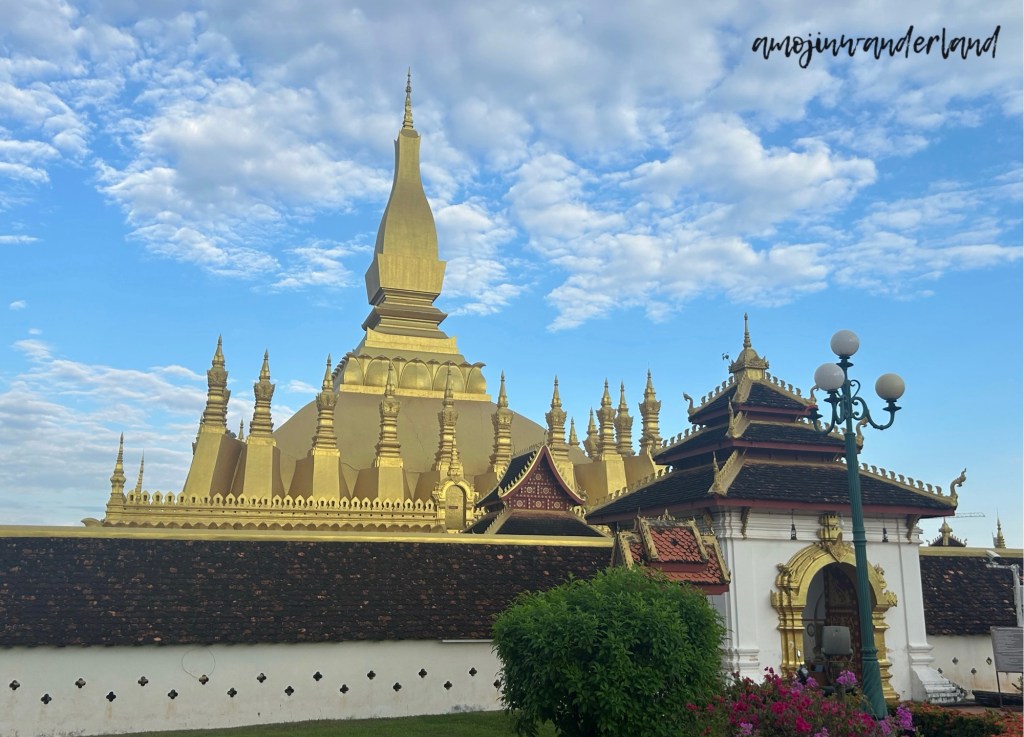
Pha That Luang, the “Great Stupa,” stands as the most revered religious site and a national symbol in Vientiane, the capital of Laos. Originally built in 1566 CE on the site of a 13th-century Khmer temple, it was constructed to enshrine a relic of the Buddha. Over the centuries, the stupa has faced destruction and reconstruction multiple times due to wars and invasions, yet it remains a powerful symbol of the Lao people’s resilience and cultural identity.

The current structure, standing 45 meters tall, features a gleaming pinnacle coated in approximately 500 kilograms of gold leaf, while the rest of the stupa is painted gold. Surrounding the stupa is a high-walled cloister, with each side measuring about 85 meters in length, enhancing its grandeur. The stupa’s present form is the result of a major restoration in the 1930s, following earlier unsuccessful attempts to revive it after the damage inflicted by the Thai invasion of 1828.
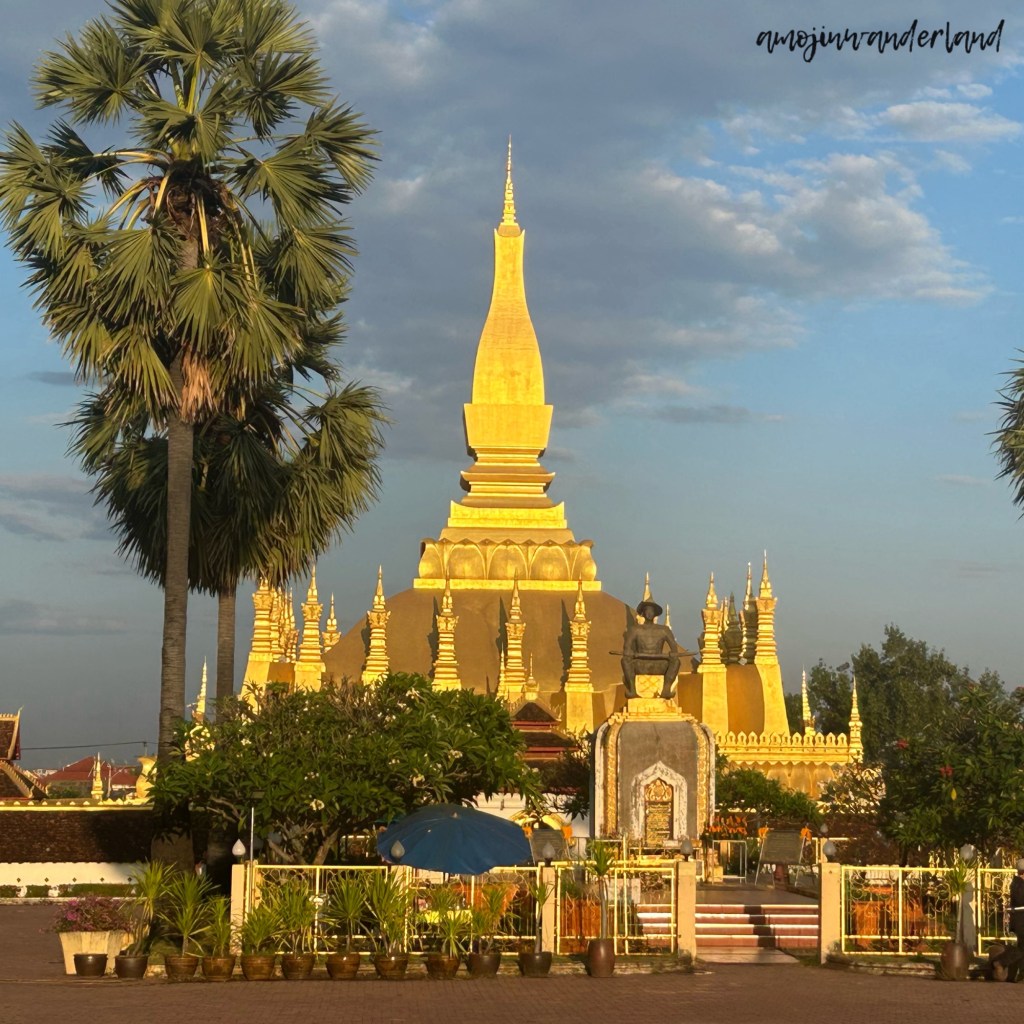
Further damage during the Franco-Thai War was repaired after World War II, solidifying its status as a cultural and religious centerpiece for the Lao people. With its storied past and striking architecture, Pha That Luang is not only a sacred site but also a testament to the enduring spirit and history of Laos.
 Amoj In Wanderland