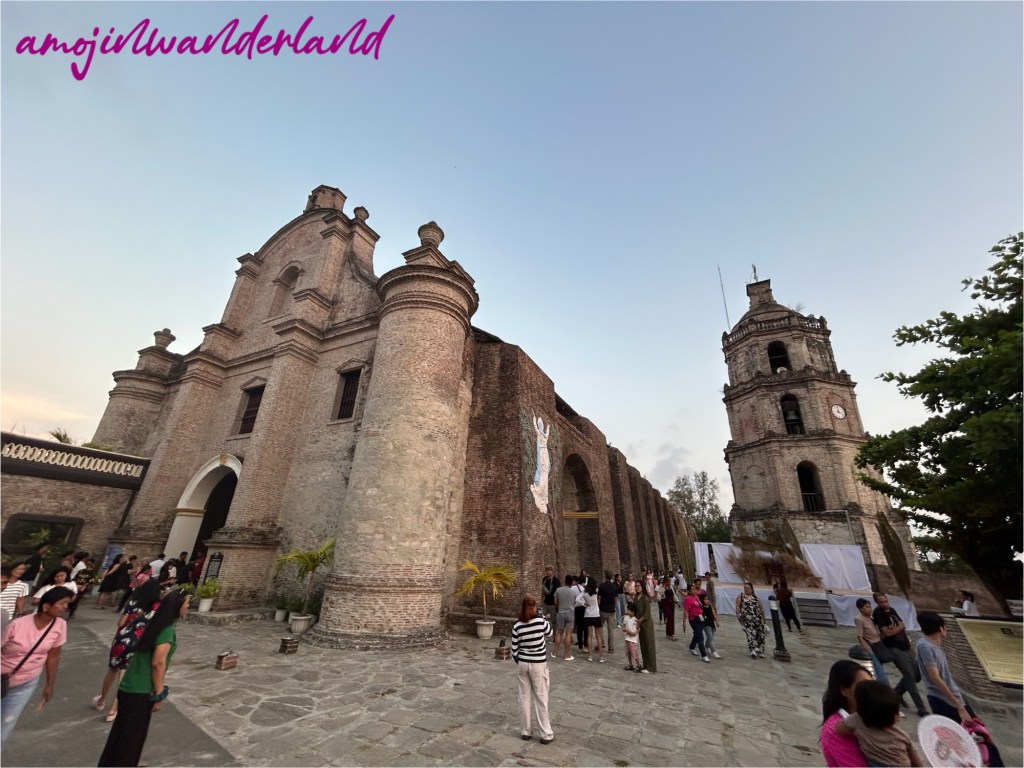
Perched atop a hill overlooking the town of Sta. Maria in Ilocos Sur, the Minor Basilica of Our Lady of the Assumption stands as one of the most remarkable heritage churches in the Philippines. Reached by climbing an 85-step granite stairway, the church offers a sweeping view of the surrounding plains, blending architectural strength with scenic beauty.
Construction of the current church began in 1765 under the Augustinian friars. Over time, it has undergone several renovations that shaped its unique features. In 1810, a freestanding octagonal bell tower was added and fitted with a bell the following year. As the tower’s foundation settled over time, it acquired a slight tilt, adding character to the already striking structure. A protective wall was built around the hill in 1863, further reinforcing its fortress-like design, and the convent underwent major renovations in 1895.
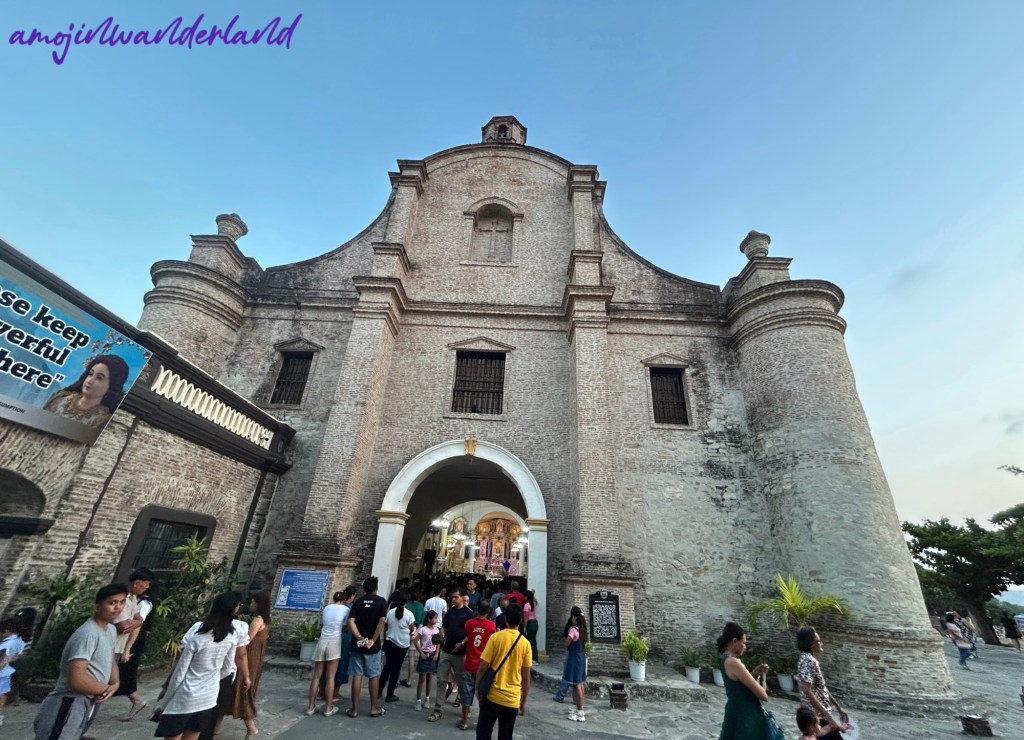
The church’s design reflects the Earthquake Baroque style, built with durability in mind. The massive brick façade features a recessed arched portal, flanked by rectangular pilasters that divide the structure into three vertical sections. The curved pediment above is topped with a small cupola and adorned with urn-shaped finials, giving the church a sense of upward movement and grace. Measuring around 99 meters in length and 22.7 meters in width, the church follows a traditional single-nave layout.
The thick outer walls are reinforced by 13 enormous buttresses on each side. The first buttress near the front stairway is decorated with a relief sculpture showing the discovery of the image of Our Lady of the Assumption atop a tree—an event that sparked local devotion. On the eastern wall, one buttress is cleverly shaped like a staircase, once used to access the roof when it was still thatched, before the switch to corrugated galvanized iron (CGI), which is lighter and better suited for earthquake-prone areas.
The bell tower, located slightly off-center from the main church façade, has four tapering levels capped by a dome and cupola. Its windows and decorative features such as pilasters and finials suggest later enhancements. A visible clock on the third level faces the front steps, and six bells, including one large one inside, are still used today.
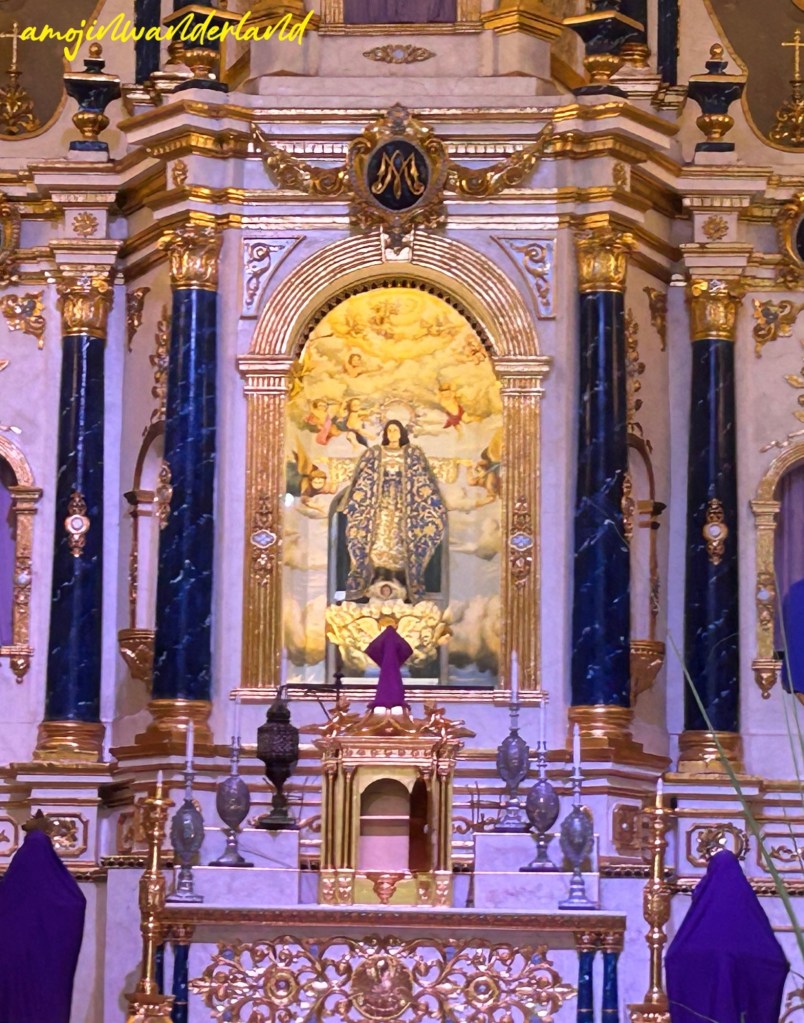
Inside, the basilica houses the revered image of Our Lady of the Assumption, locally called Apo Baket. Standing 112 cm tall, the statue is carved in wood with an ivory face and hands, dressed in a blue cape with silver floral designs and a white gown embroidered with gold. Her arms are outstretched, and her gaze is turned heavenward, symbolizing her Assumption. The image was once stored in an elaborately carved chest believed to be from the galleon trade.
In 1993, the church received international recognition when it was designated a UNESCO World Heritage Site, included in the Baroque Churches of the Philippines, a collection of four Spanish-era churches noted for their adaptation of European Baroque architecture to local conditions, particularly earthquakes.
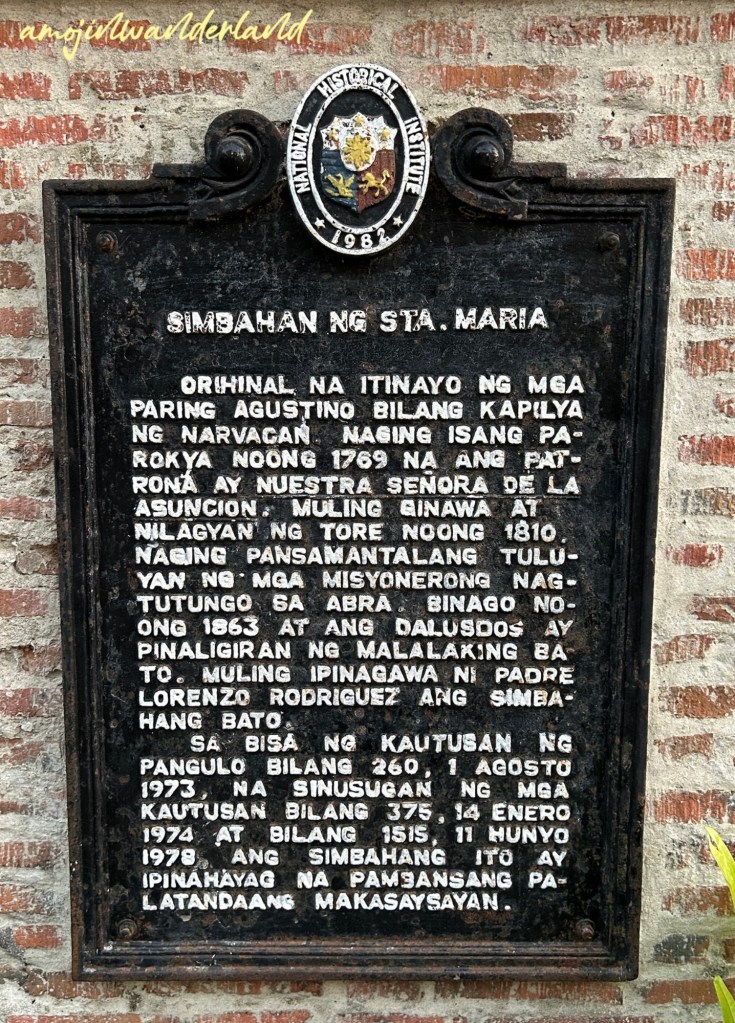
Further honors followed: on August 15, 2022, the church was elevated to an archdiocesan shrine, and on November 18, 2024, Pope Francis declared it a Minor Basilica, the second in Ilocos Sur. These milestones reflect the church’s importance as a religious and cultural landmark.
A National Historical Commission of the Philippines marker at the entrance identifies the church as a National Historical Landmark, while in 2015, the National Museum declared the entire church complex and cemetery a National Cultural Treasure.
 Amoj In Wanderland