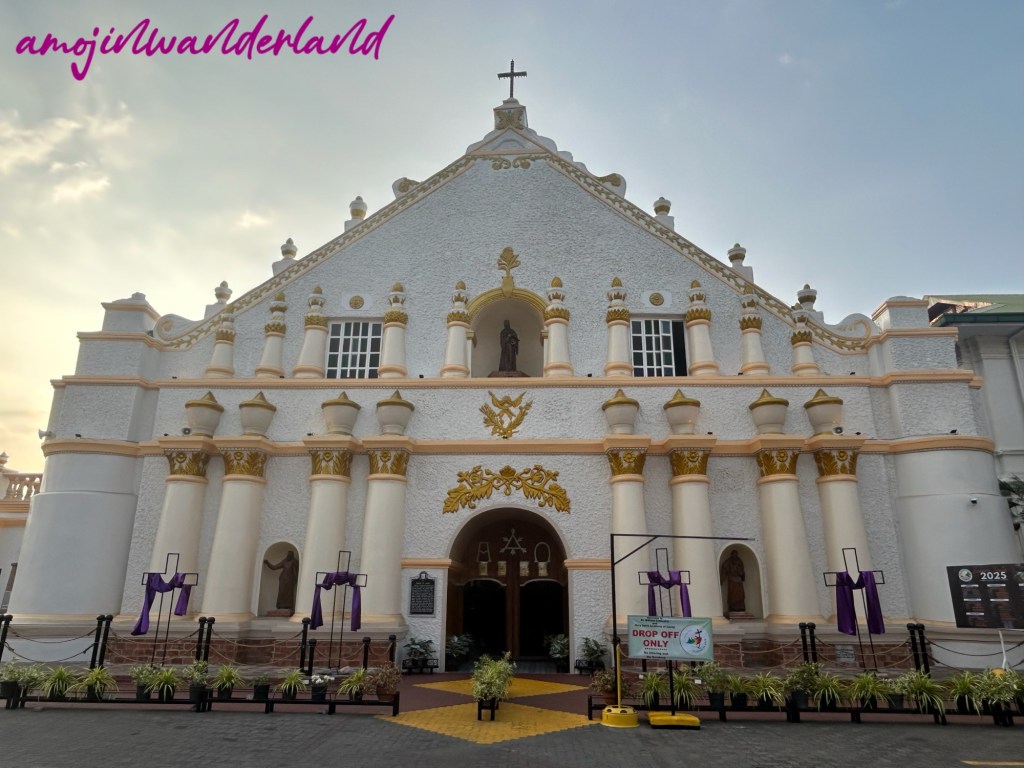
The story of St. William’s Cathedral, more commonly known as Laoag Cathedral, began in 1580 when the Augustinian missionaries established a parish in Laoag. The original structure was made of wood and thatch, typical of early mission churches. As the town grew, a more permanent church was planned. The stone foundations of the current structure were laid in 1612, marking the start of what would become a central feature of the city for centuries.

Like many old churches, it went through periods of damage and repair. A fire in 1843 caused significant destruction, and restoration work took place between 1873 and 1880.
In the late 19th century, the church was occupied by different groups. Revolutionary forces used it in 1898, and American troops took control in 1899. Around this time, the Aglipayan Church challenged the Roman Catholic Church for ownership, but the latter retained control. The facade was covered with lime plaster in 1936, giving it a smoother look that remains today.
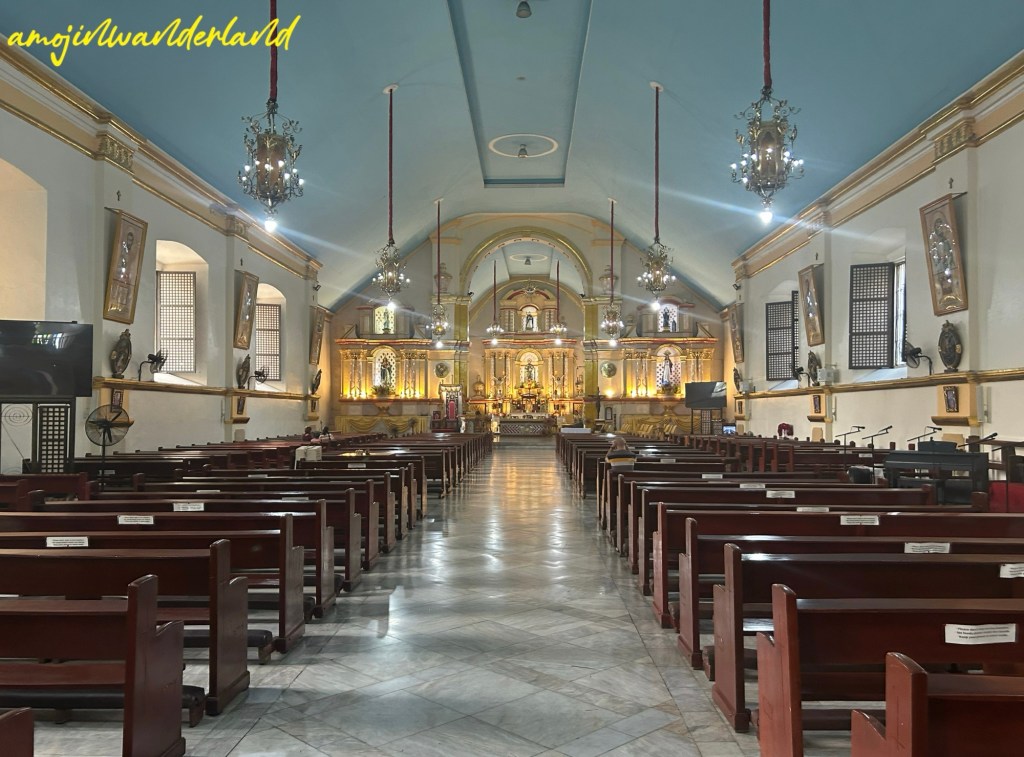
When the Diocese of Laoag was created in 1961, the church was designated a cathedral. It underwent further renovations in 1971–1972 and experienced minor damage from an earthquake in 1983.
The church’s design reflects an Italian Renaissance style, featuring a two-storey facade supported by paired columnson each side of a large arched entrance. At the top, there’s a niche that holds a statue of San Guillermo el Ermitaño, the city’s patron saint. The windows are made of capiz shells with wrought iron grills, which are common features in older churches in the Philippines.
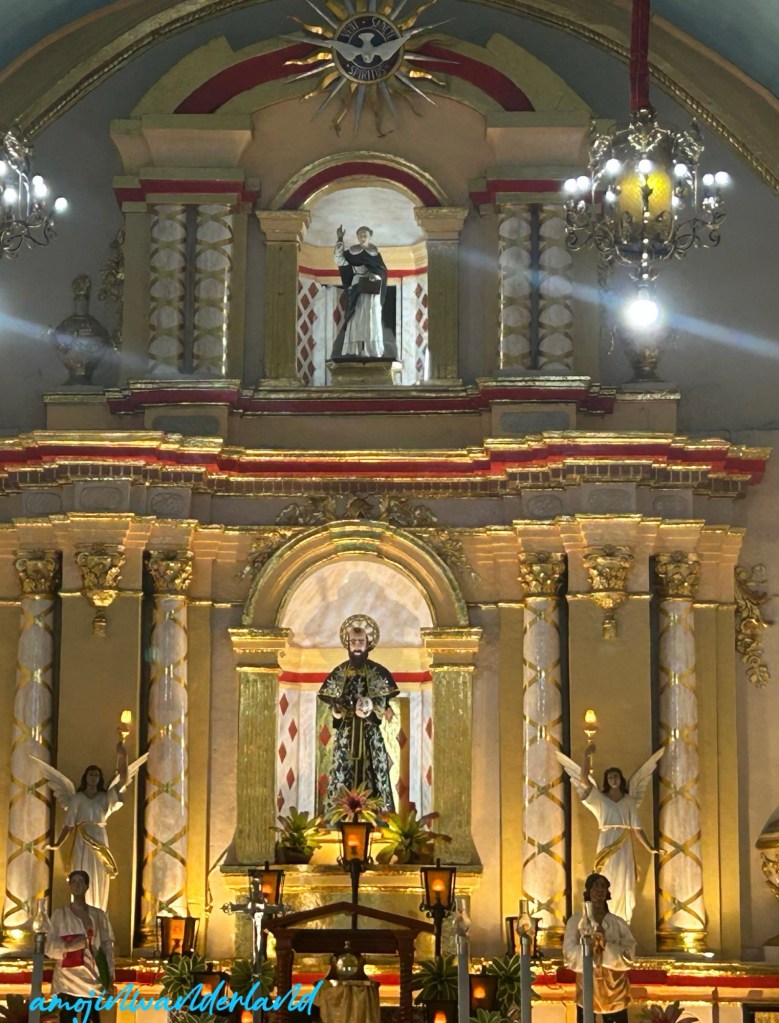
Inside, the cathedral houses a main altar (retablo) and two smaller side altars, all in a traditional layout. The space is relatively simple, with enough detail to reflect its long history without being overly ornate.
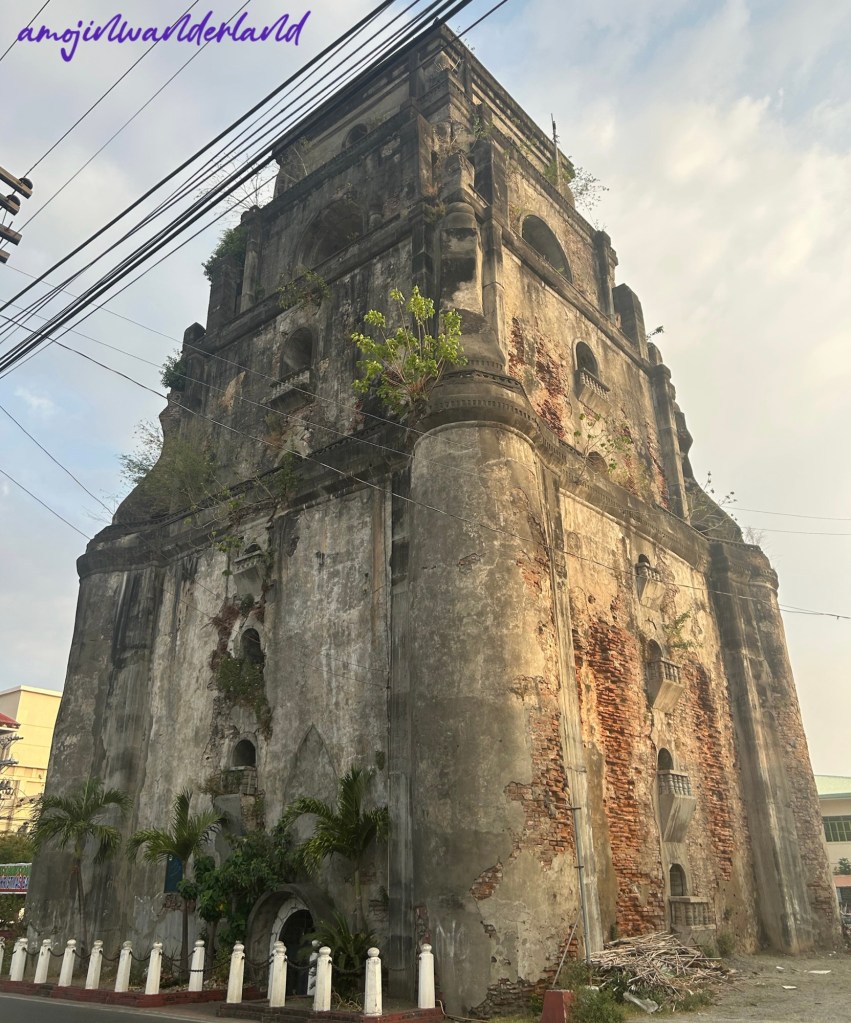
Just a short walk from the church stands the well-known Sinking Bell Tower. Built likely after the 1707 earthquake, the tower is made of local bricks joined with a mixture of molasses, lime, sand, and juice from sablot leaves. The structure has a winding stairway inside and used to have a large clock on its western side. Due to the soft ground, the tower is slowly sinking at an estimated rate of about an inch a year, which has made it one of the more unique features of Laoag. Despite that, it has stayed stable through several earthquakes and is often referred to as an example of Earthquake Baroque architecture.
 Amoj In Wanderland