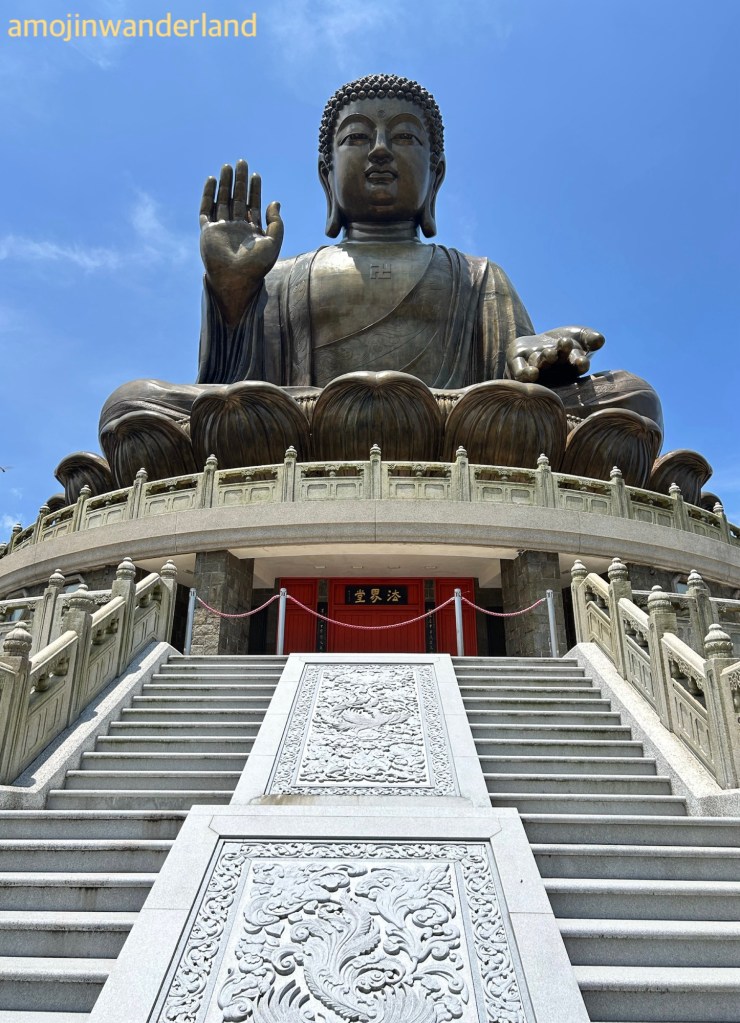
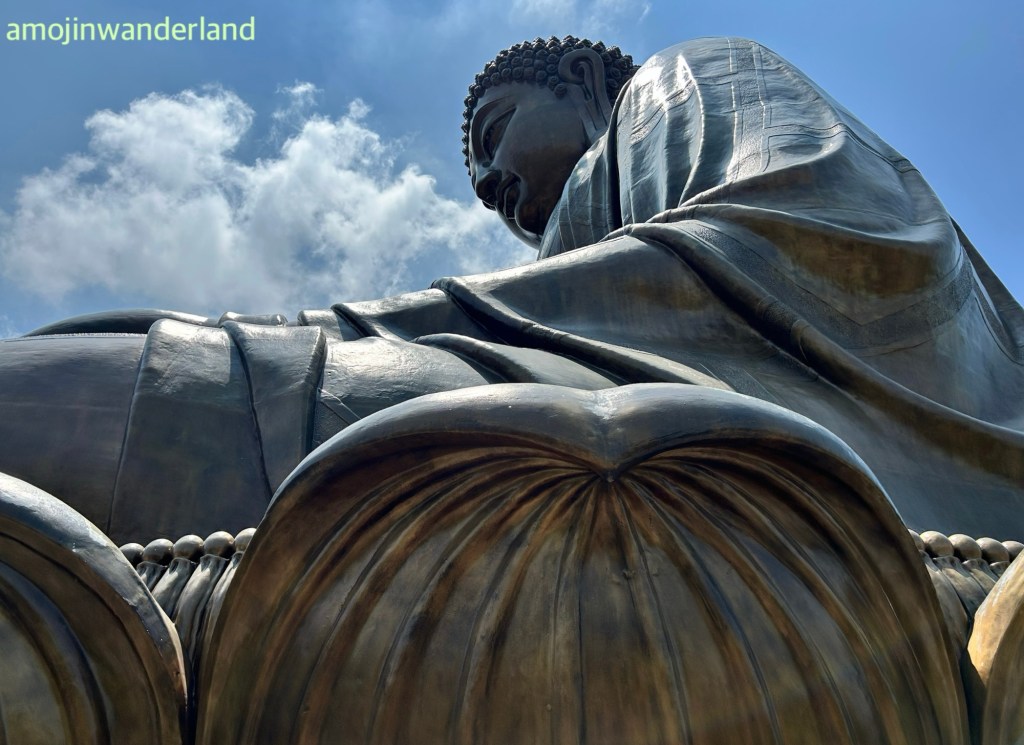
One of the most iconic landmarks in Hong Kong is the Tian Tan Buddha, or simply, the Big Buddha, perched high on Ngong Ping Plateau on Lantau Island. Standing at 34 meters tall, this massive bronze statue is visible from miles away, its calm and serene presence overlooking the lush mountains and sea.
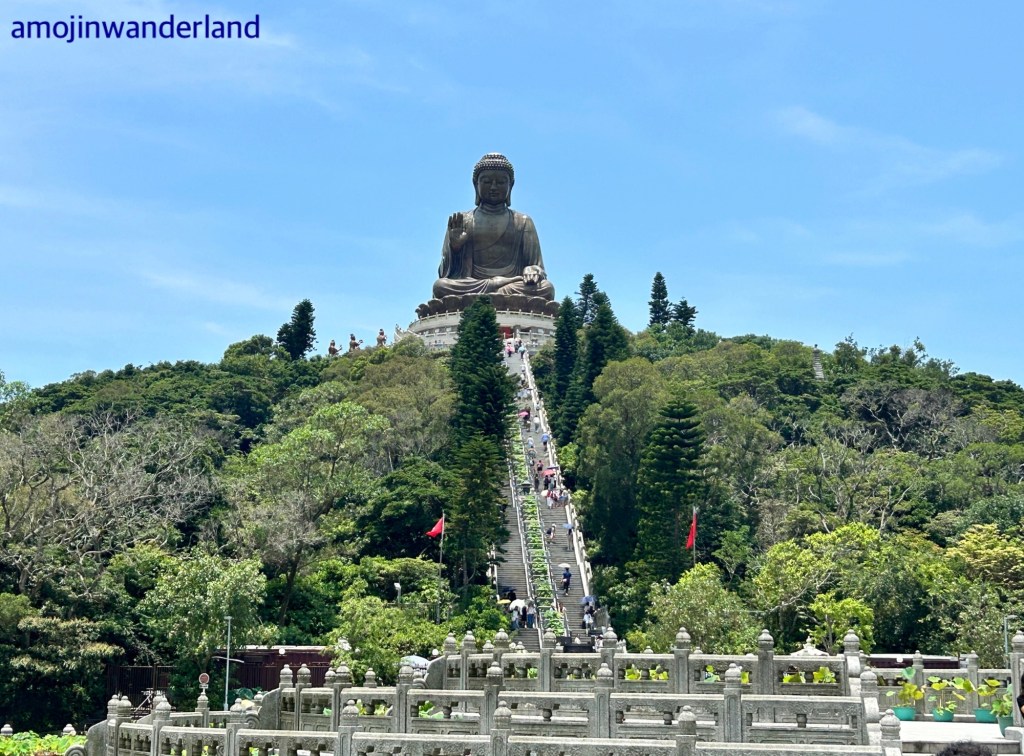
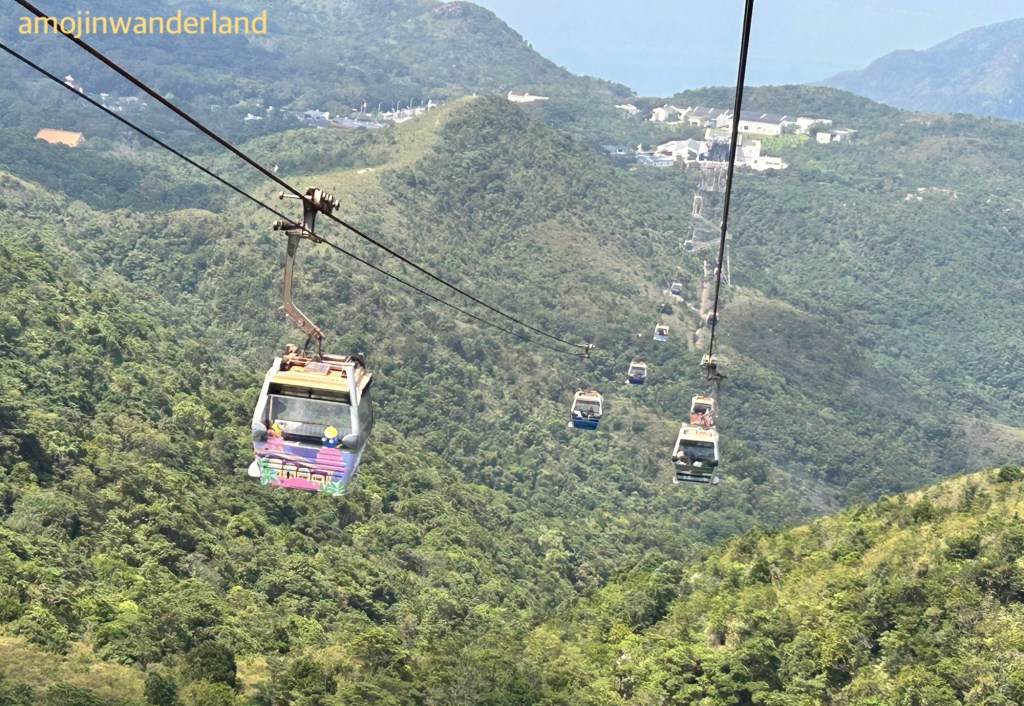
Getting to the Buddha is an experience in itself. We took the Ngong Ping 360 Cable Car, which offered stunning panoramic views of Lantau’s greenery, Hong Kong International Airport, and the South China Sea. As we got closer to Ngong Ping, we could see the Buddha slowly appearing in the distance, sitting majestically against the backdrop of rolling hills.
Upon arriving at Ngong Ping Village, it’s just a short walk to the base of the Buddha. But to truly meet him face to face, you need to take on the 268 steps leading to the top. The climb can be a little challenging, but there’s no rush. Along the way, you can stop to catch your breath and enjoy the view, which becomes more breathtaking with every step you take.
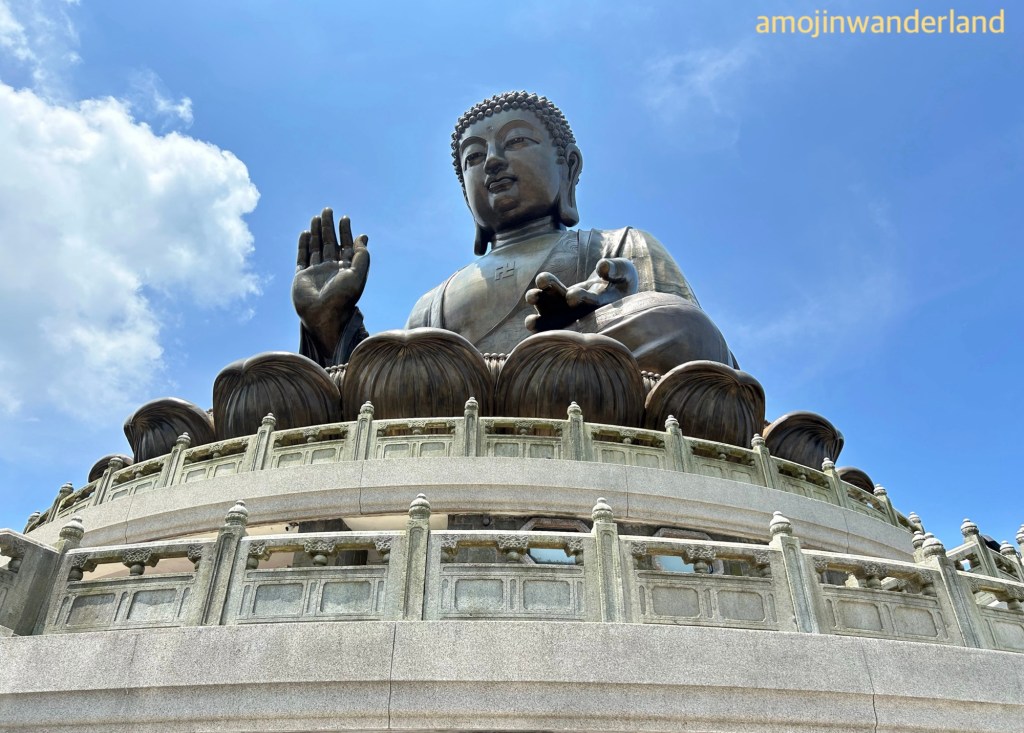
Reaching the top, we were greeted by the sheer scale of the Buddha up close. His right hand is raised in a gesture of blessing, while his left hand rests on his lap, symbolizing peace and balance. Surrounding the statue are six smaller bronze figures called the Offering of the Six Devas, each presenting symbolic offerings of flowers, incense, lamp, ointment, fruit, and music to the Buddha.
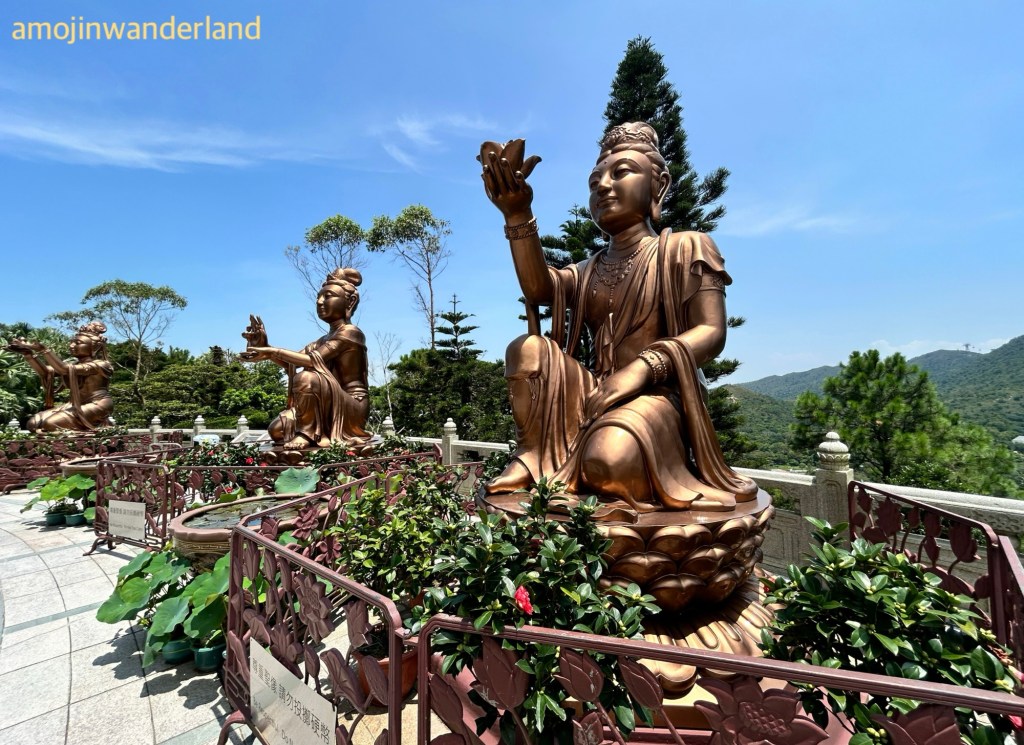
From the platform, you get sweeping views of the mountains, Po Lin Monastery below, and even the distant coastline. There’s a calming silence up there, despite the number of visitors. It’s a space that naturally invites you to pause and reflect.
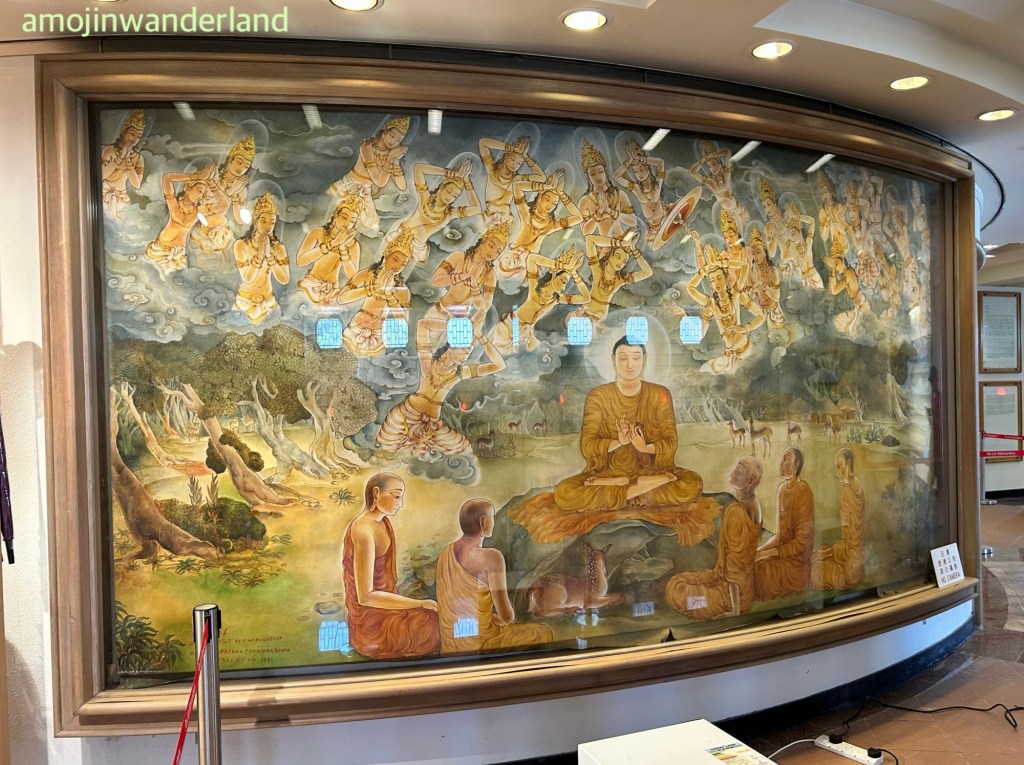
Inside the base of the Buddha is a small exhibition hall displaying relics, including what is believed to be a portion of Buddha’s cremated remains. Entry to the hall is included with a donation or the vegetarian lunch ticket from Po Lin Monastery.
 Amoj In Wanderland