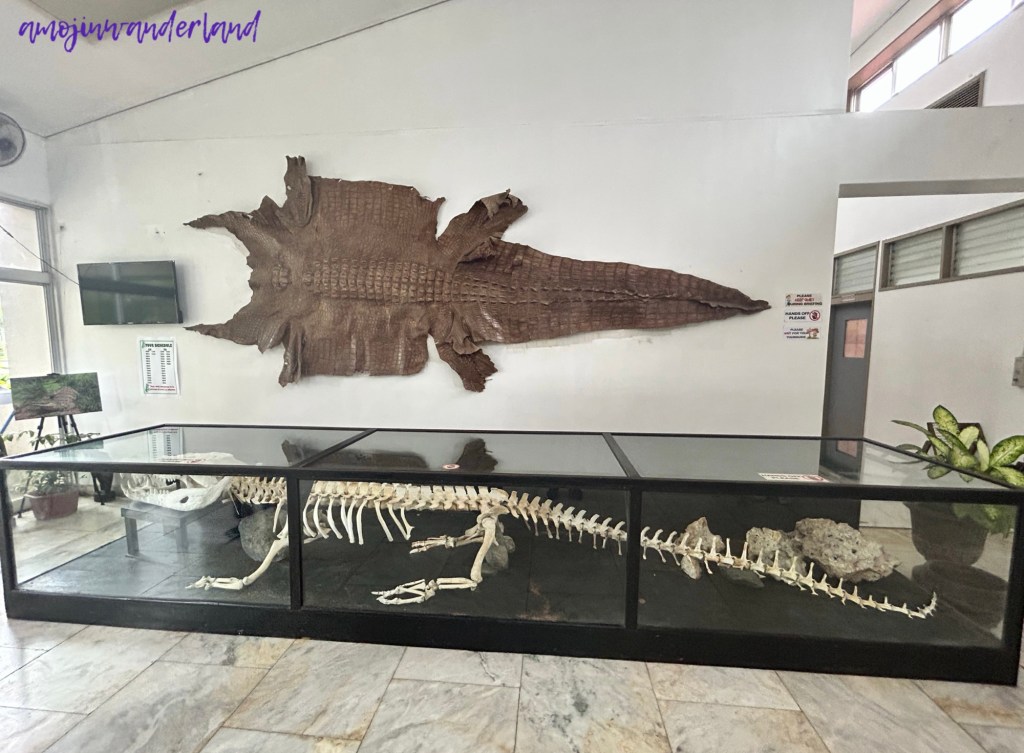
The Palawan Wildlife Rescue and Conservation Center (PWRCC) was founded on August 20, 1987 as the Crocodile Farming Institute (CFI) through a partnership between the Department of Environment and Natural Resources (DENR) and the Japan International Cooperation Agency (JICA). The institute aimed to protect both the Philippine crocodile and the Saltwater crocodile, while introducing crocodile farming as a sustainable livelihood. In 2000, it became the PWRCC, expanding its work to include the care and rehabilitation of other threatened species in Palawan.
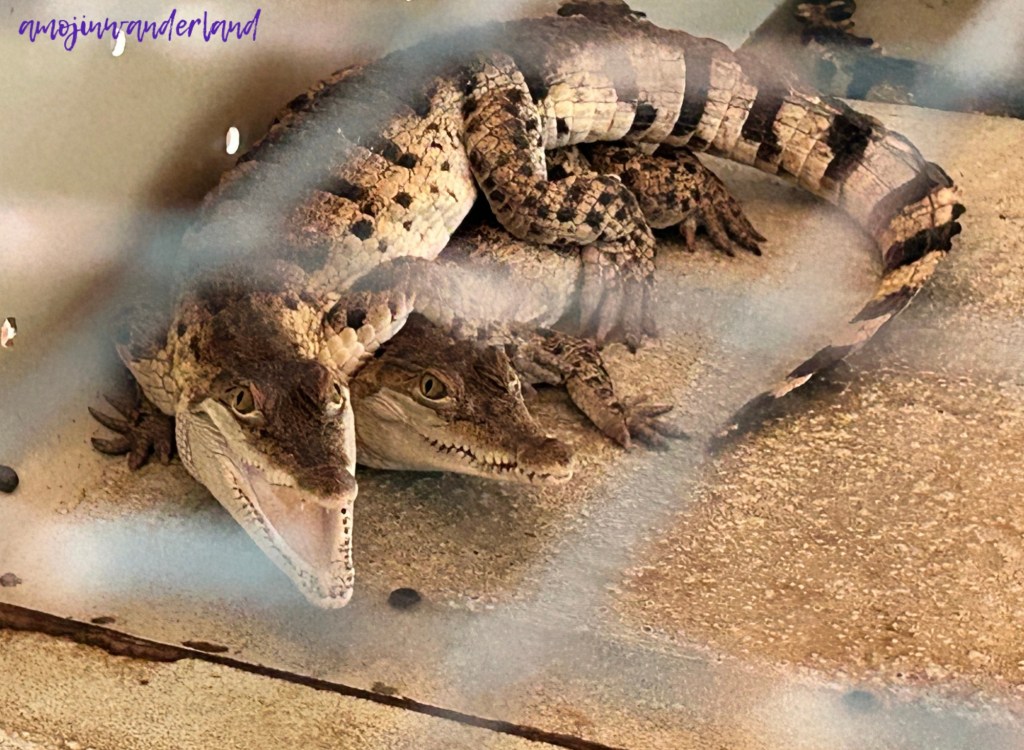
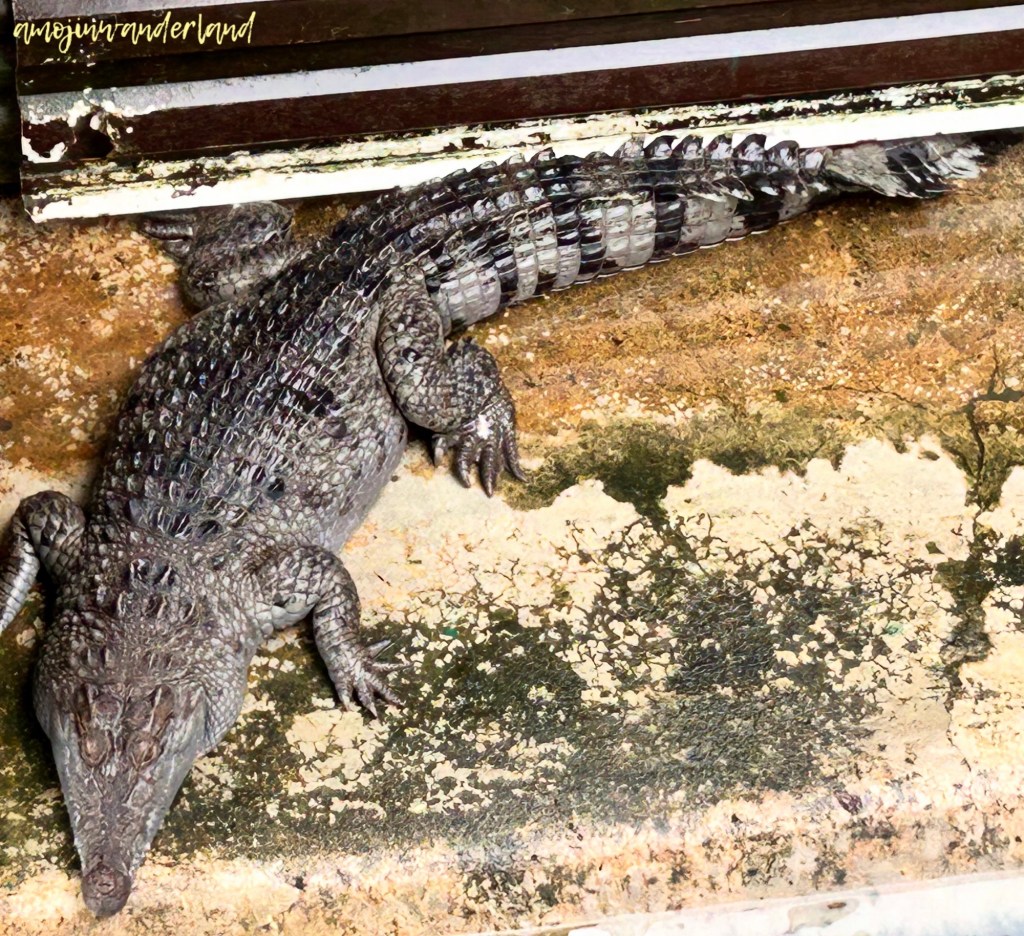
Visitors begin their tour at the hatchery, where baby crocodiles are raised before being transferred to larger enclosures. The highlight is meeting the two species cared for at the center: the Philippine crocodile (Crocodylus mindorensis), a rare freshwater species found only in the country and now critically endangered, and the Saltwater crocodile (Crocodylus porosus), the world’s largest reptile, thriving in coastal and brackish waters but often feared for its size and territorial behavior.
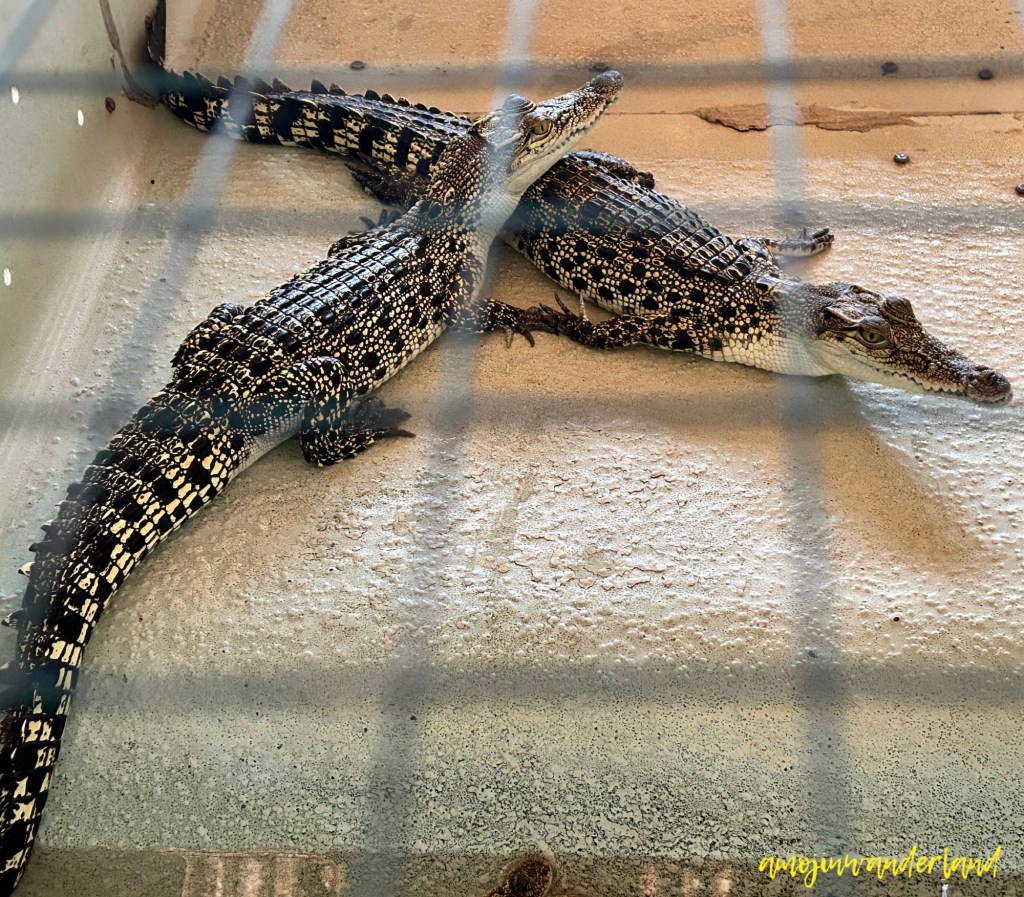
The Philippine crocodile is smaller, usually reaching only 2–3 meters, while the Saltwater crocodile is capable of growing over 6 meters.
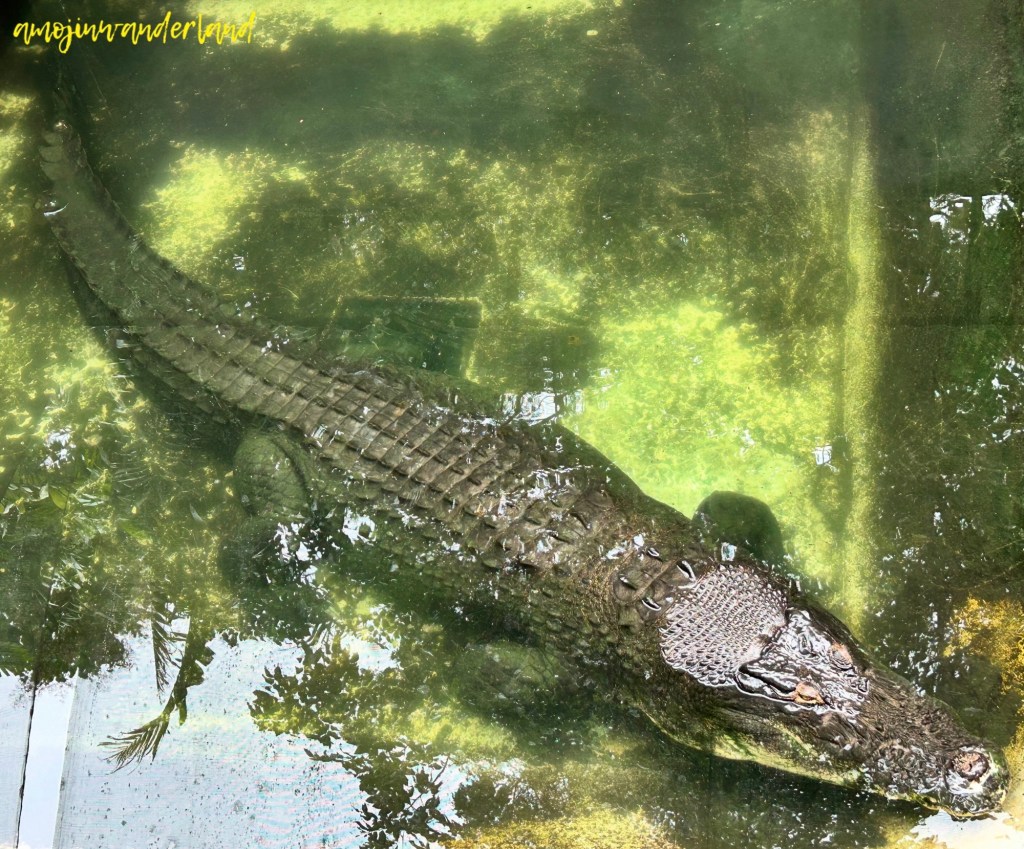
By housing both species, the center highlights two very different conservation stories—one focused on preventing extinction, the other on balancing protection with human safety.
 Amoj In Wanderland