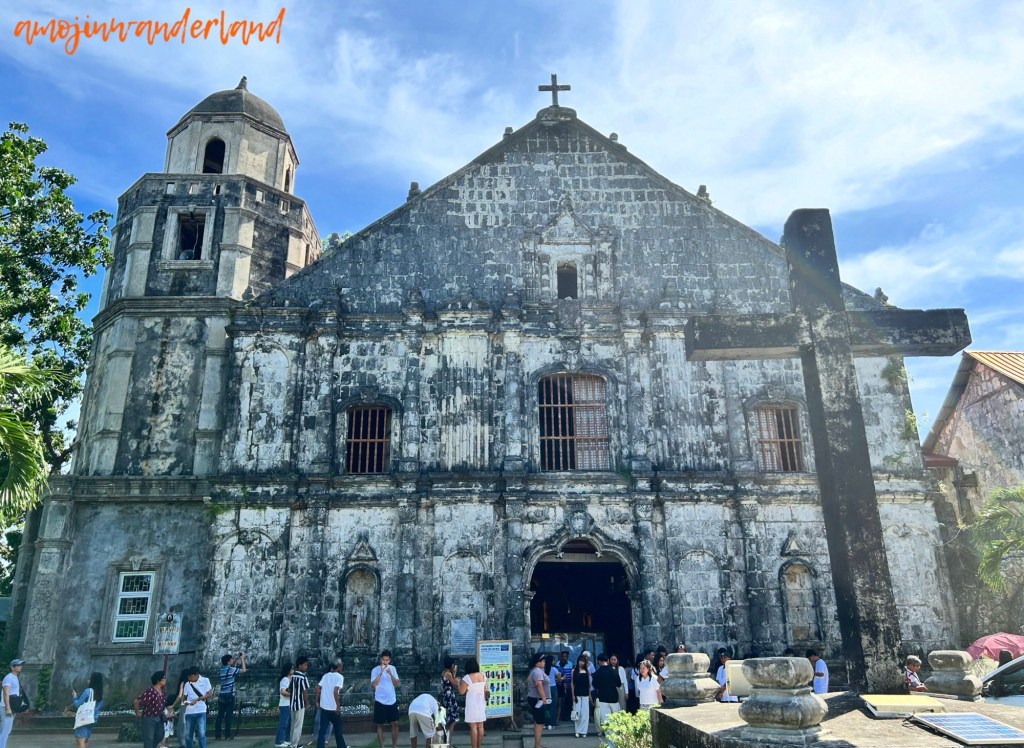
St. James the Great Church of Bolinao, Pangasinan
The St. James the Great Church of Bolinao, also known as Bolinao Church, stands majestically in the heart of Bolinao, Pangasinan. Built out of black coral stones, the church exudes a commanding presence. Its weathered walls tell stories that span more than four centuries. The church was officially established in 1609. The Augustinian Friars assumed control of the mission territory. The Spanish Colonial Government had previously entrusted it to the Dominican Friars in 1594. The Dominicans eventually left in 1607. They departed due to the vastness of their mission territories and the limited number of missionaries. This paved the way for the Augustinians’ return and the church’s formal establishment.
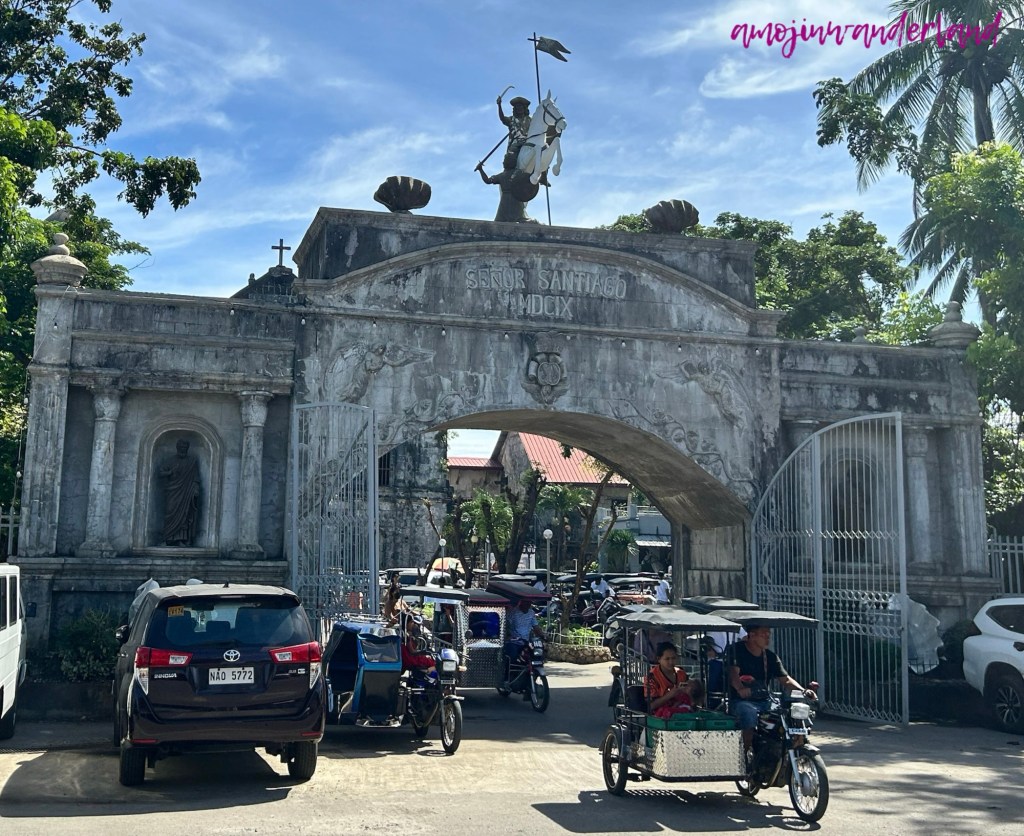
Entrance gate of Bolinao Church
The early religious history of Bolinao is marked by the succession of several missionary orders. The first friars to arrive were the Augustinians, who stayed from 1585 to 1587. They were succeeded by the Dominicans from 1588 to 1599, after which the Augustinians returned and lasted until 1607. In 1609, the Augustinian Recollects took over, administering the town until 1679. They returned in 1712 and continued their mission until 1749. During this period, the Recollects moved the town from its original island location to the mainland. They made this decision because frequent piratical raids threatened the community.
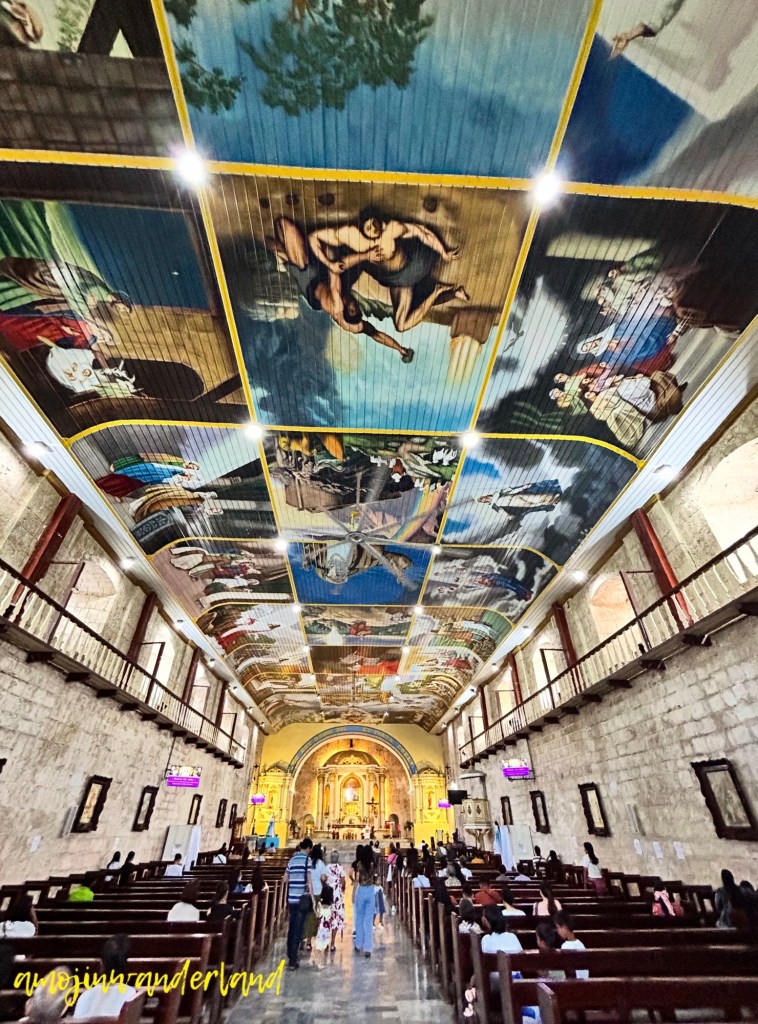
Inside the Bolinao Church
Through the centuries, the St. James the Great Church endured numerous natural and man-made calamities. It survived the devastating earthquake of 1788, the fire incident of 1819 that razed much of its structure, and the destructive onslaught of Typhoon Emong in 2009.
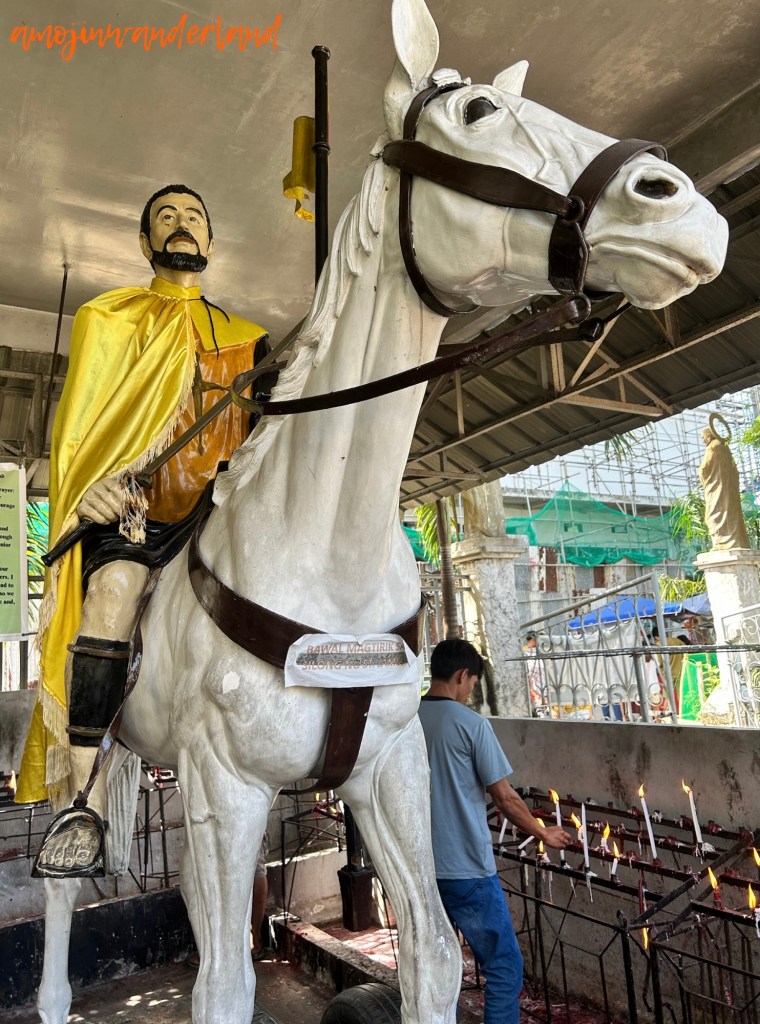
Statue of St. James the Great
Architecturally, Saint James the Great Parish is designed in the High Renaissance style. One of its notable features is the trefoil arch main door, a distinct element that adds grace to its otherwise simple facade. The church’s design is plain yet elegant, characterized by super-positioned columns alternating with window openings and tall blind arches that prominently frame the ends of the walls. Inside, the quiet dignity of the coral stone structure invites reflection and reverence, its rustic beauty enhanced by the soft play of light filtering through its windows.
 Amoj In Wanderland