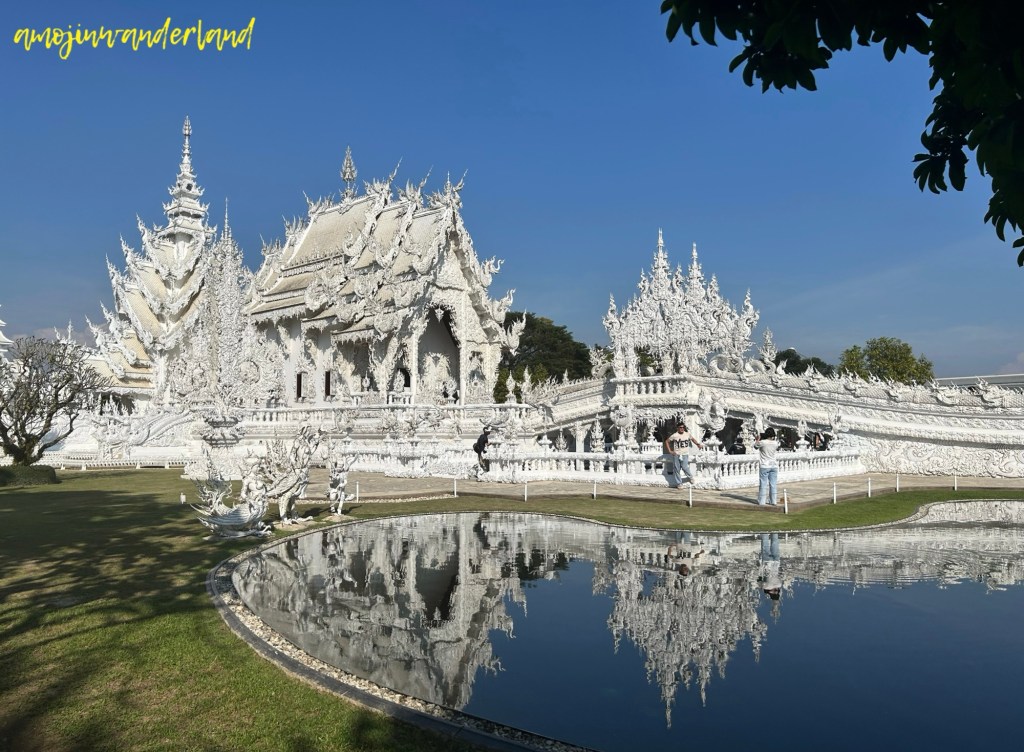
The first temple we visited in Chiang Rai is Wat Rong Khun, more widely known as the White Temple. The present form of Wat Rong Khun is the work of Chalermchai Kositpipat, a national artist from Chiang Rai who began rebuilding the temple in 1997. By the end of the 20th century, the original structure was in poor condition and lacked funds for restoration. Chalermchai decided to reconstruct the temple using his own resources, turning it into a long-term project that combines religious devotion and contemporary Thai art.
The main structures are built on a concrete frame with wooden roofing. From afar, the temple appears porcelain-like, but the effect comes from white plaster surfaces embedded with small mirrored glass pieces. The white color represents purity, while the glass reflects light and adds visual texture to the exterior.
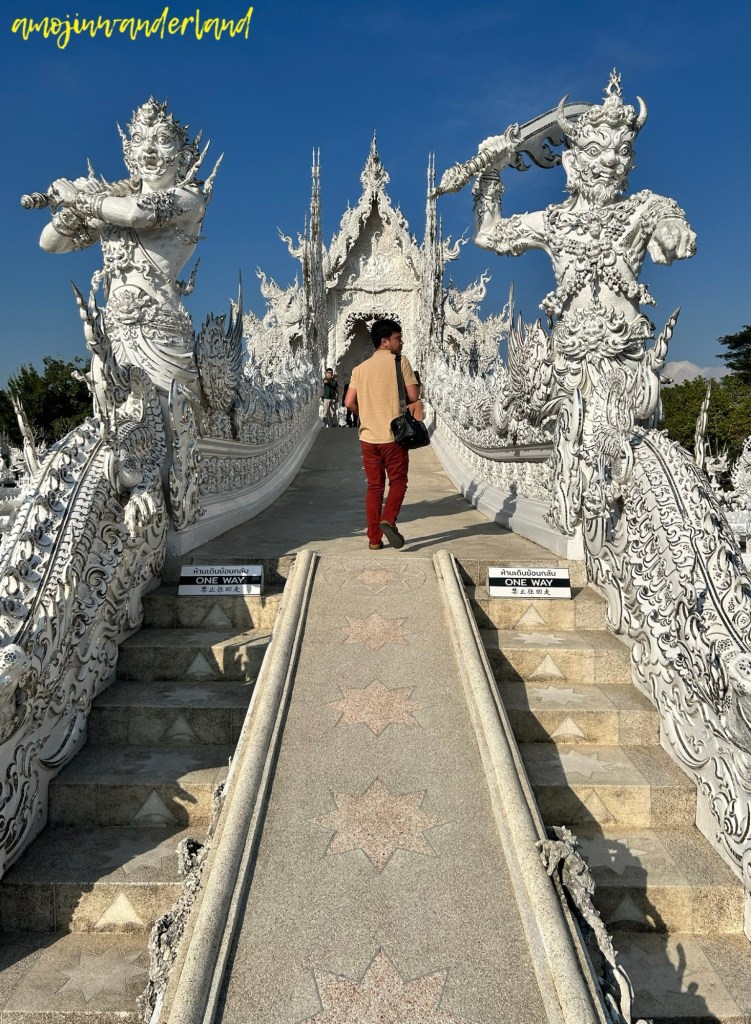
The ubosot, or main ordination hall, is approached by crossing a bridge over a small lake. Beneath the bridge are sculpted hands reaching upward, symbolizing desire and attachment. The bridge represents the idea that one must move beyond these to progress spiritually. Near the lake are statues of Kinnaree, half-human and half-bird figures from Buddhist mythology. At the end of the bridge stands the entrance often referred to as the “gate of heaven,” guarded by figures representing Death and Rahu, followed by Buddha images placed in meditative poses.

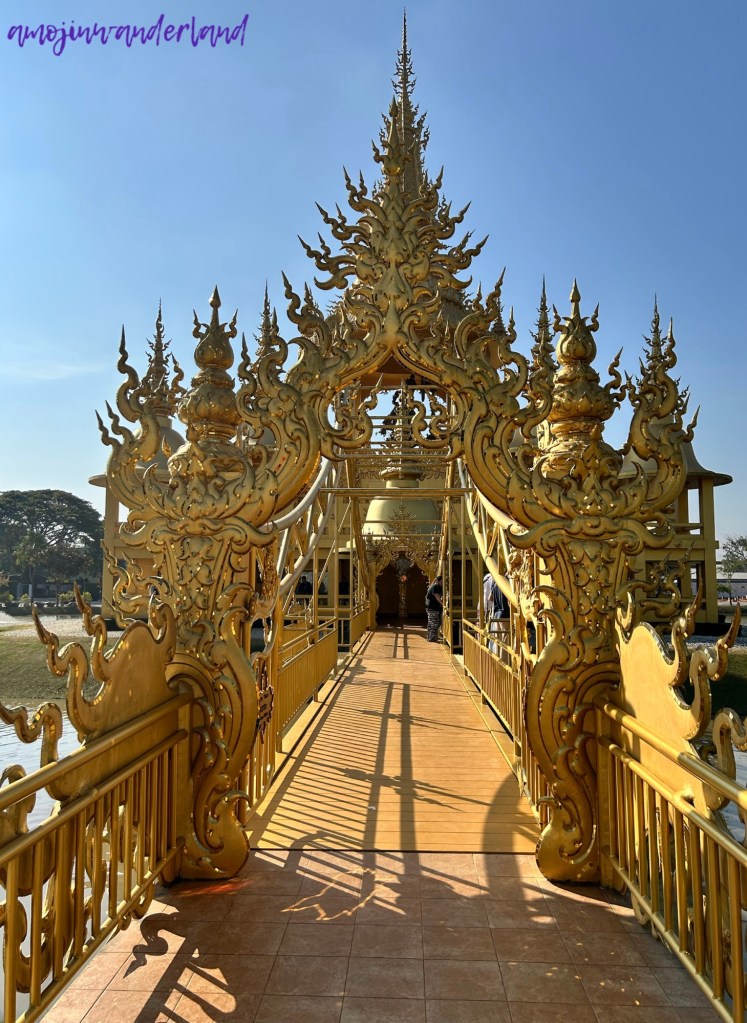
Within the temple grounds, one structure stands out because of its gold color—the restroom building. Its design is intentional: the gold building represents the body and material concerns, while the white ubosot represents the mind and spiritual focus. This contrast reflects common Buddhist teachings on the balance between material life and mental discipline.
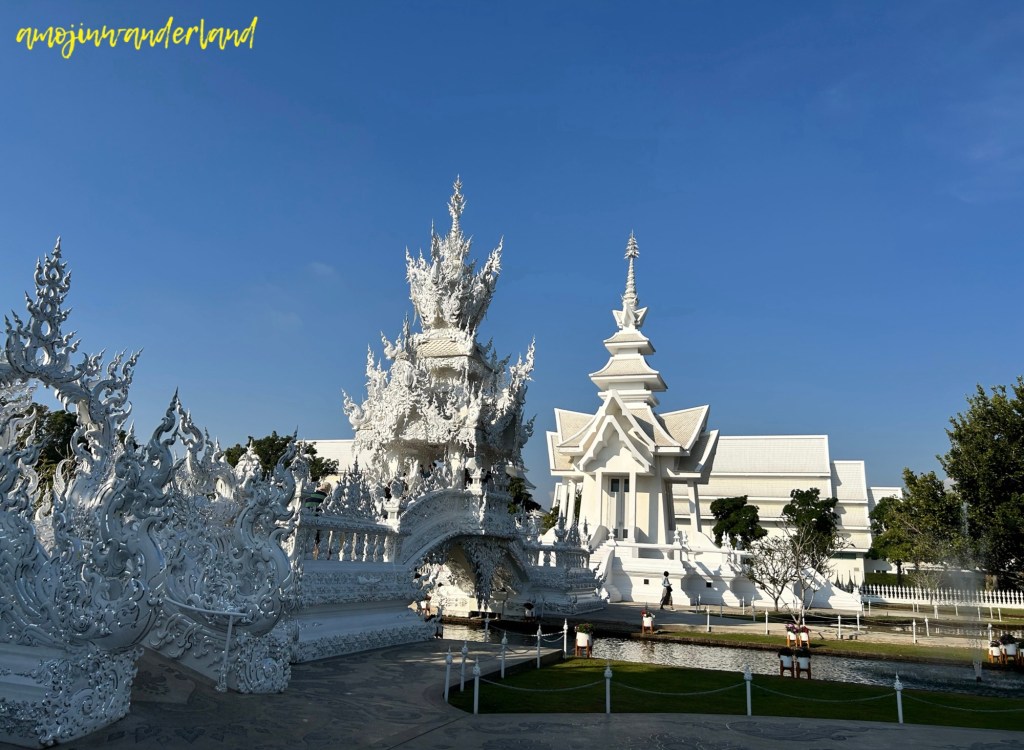
The ubosot itself follows elements of traditional Thai architecture, including a three-tiered roof and decorative Nāga serpents. Its exterior remains entirely white with embedded mirrored glass. Inside, the interior shifts away from the plain white exterior to murals that use strong colors and detailed imagery to convey Buddhist teachings, incorporating both traditional and modern themes.
 Amoj In Wanderland