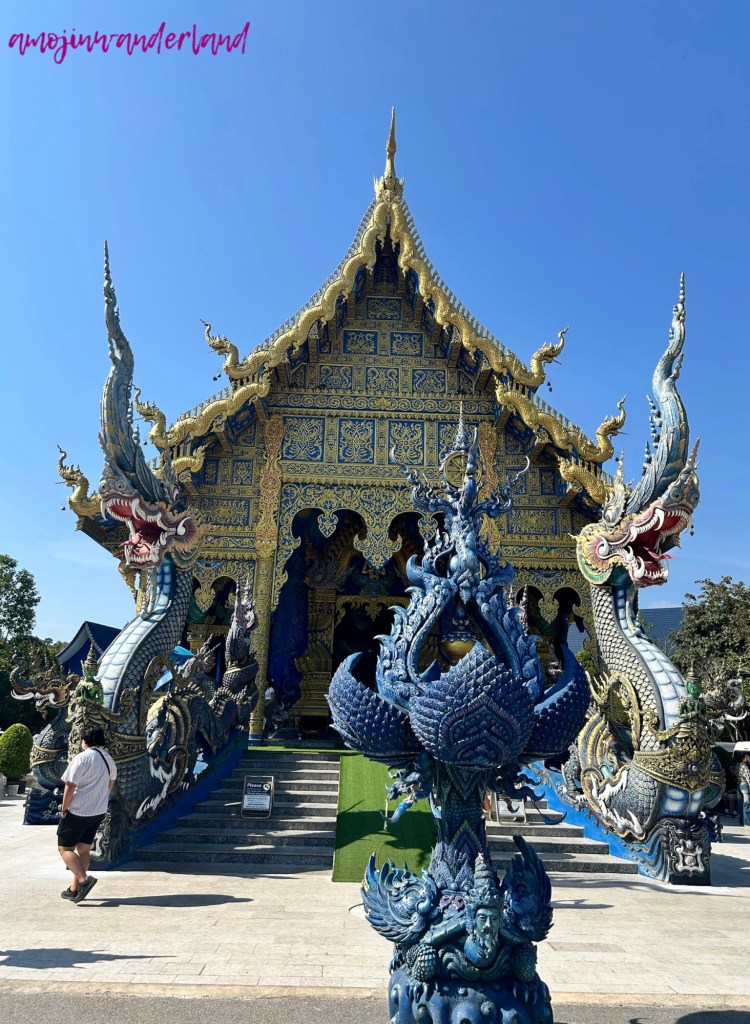
If Wat Rong Khun is known for its bright white surfaces and mirrored details, Wat Tong Suea Ten, better known as the Blue Temple, offers a contrasting experience through deep blue tones and gold accents. Both temples represent contemporary interpretations of Buddhist art in Chiang Rai, but while the White Temple emphasizes light and reflection, the Blue Temple creates a calmer, more enclosed visual atmosphere.
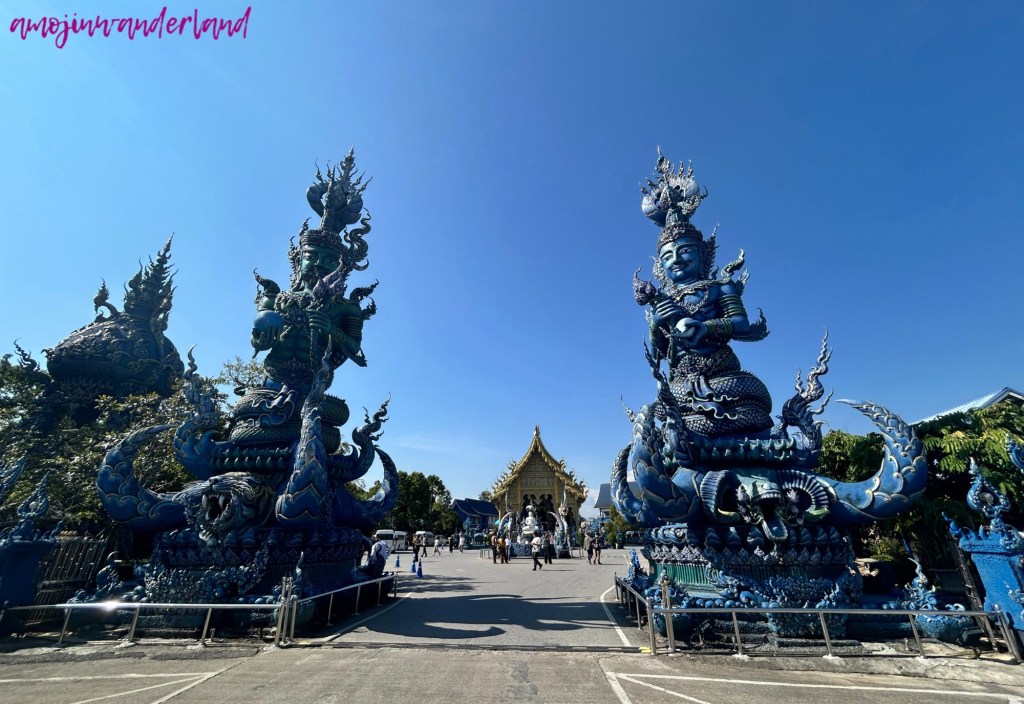
Before the present structure was built, the site of Wat Rong Suea Ten was occupied by an abandoned temple with old brick remains. In 1996, the local community initiated plans to rebuild the temple, although actual construction only began in 2005. The main building was completed in 2016, marking an eleven-year construction period.
The temple was designed by Chiang Rai folk artist Mr. Phuttha Kabkaew, also known as Sala Nok, a northern Thai title given to skilled artisans. He previously worked under Chalermchai Kositpipat during the construction of Wat Rong Khun, from whom he learned the foundations of what is now described as “neotraditional Thai Buddhist art.” This style combines traditional Buddhist forms with contemporary design, elaborate ornamentation, and strong color contrasts.
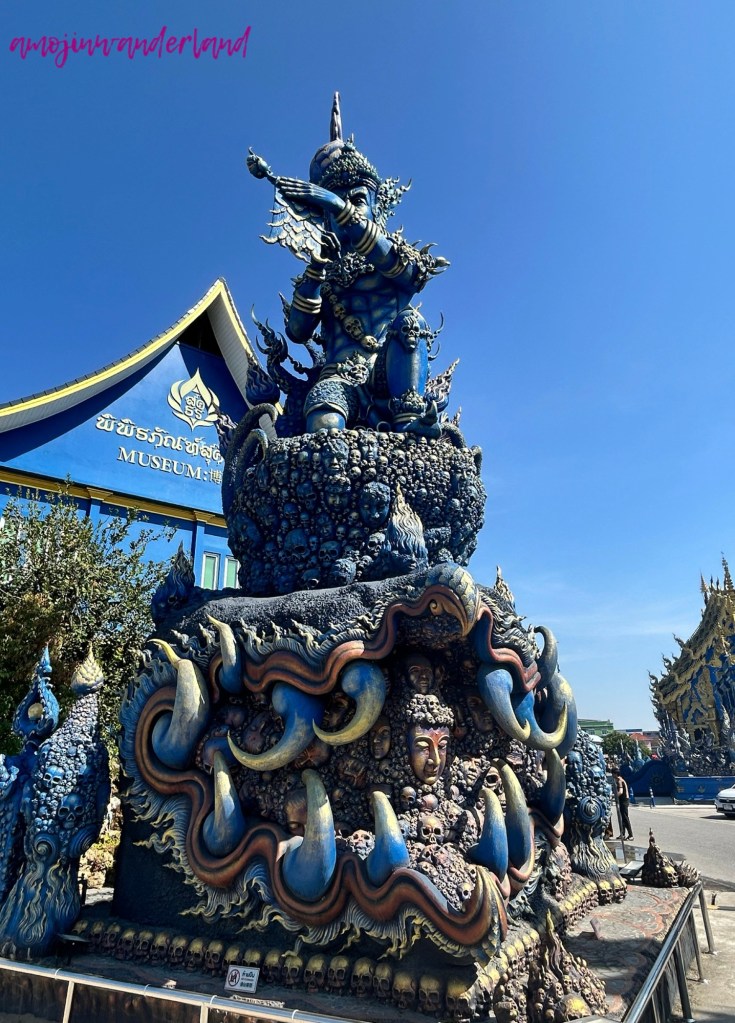
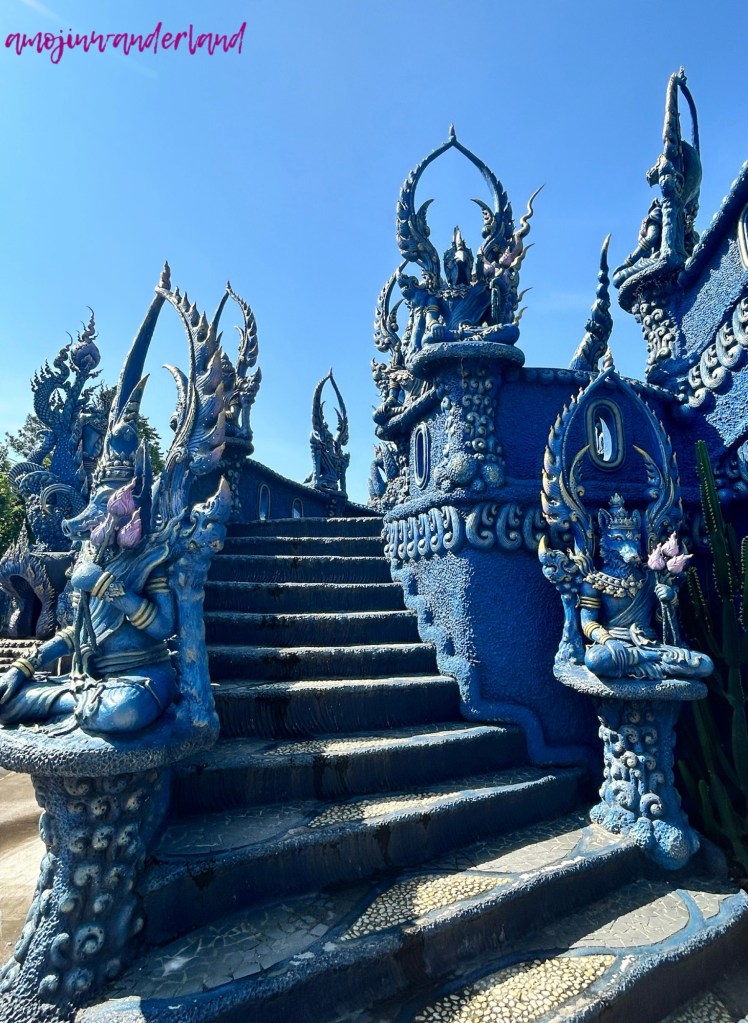
The main highlight of Wat Rong Suea Ten is its vihāra, designed and built by Sala Nok. The structure measures 13 meters wide and 48 meters long and is characterized by its blue exterior with gold trim. At the entrance, two large Nāga statues stand side by side.
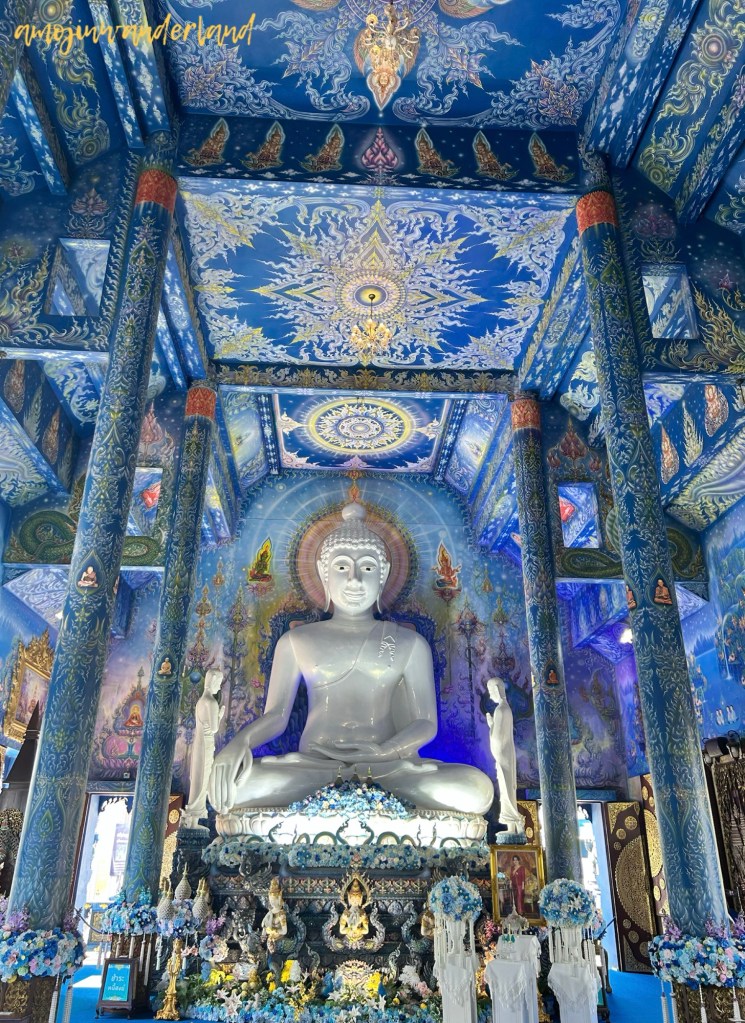
Inside the vihāra is a large white Buddha image known as Phra Buddha Ratchamongkol Bodi Trilokanat. The statue has a lap width of five meters and a height of 6.5 meters. Beneath the image are 88,000 Phra Rod Lamphun amulets, along with silver and gold rings placed as offerings. Relics of the Lord Buddha are also enshrined in the area around the head of the statue.
Behind the vihāra stands a large stupa, visually contrasting with the blue and gold of the main building. The temple also enshrines Buddha relics from the late Supreme Patriarch, Krom Luang Wachirayansangworn (Charoen Suwatthana), adding religious significance to the site.
 Amoj In Wanderland