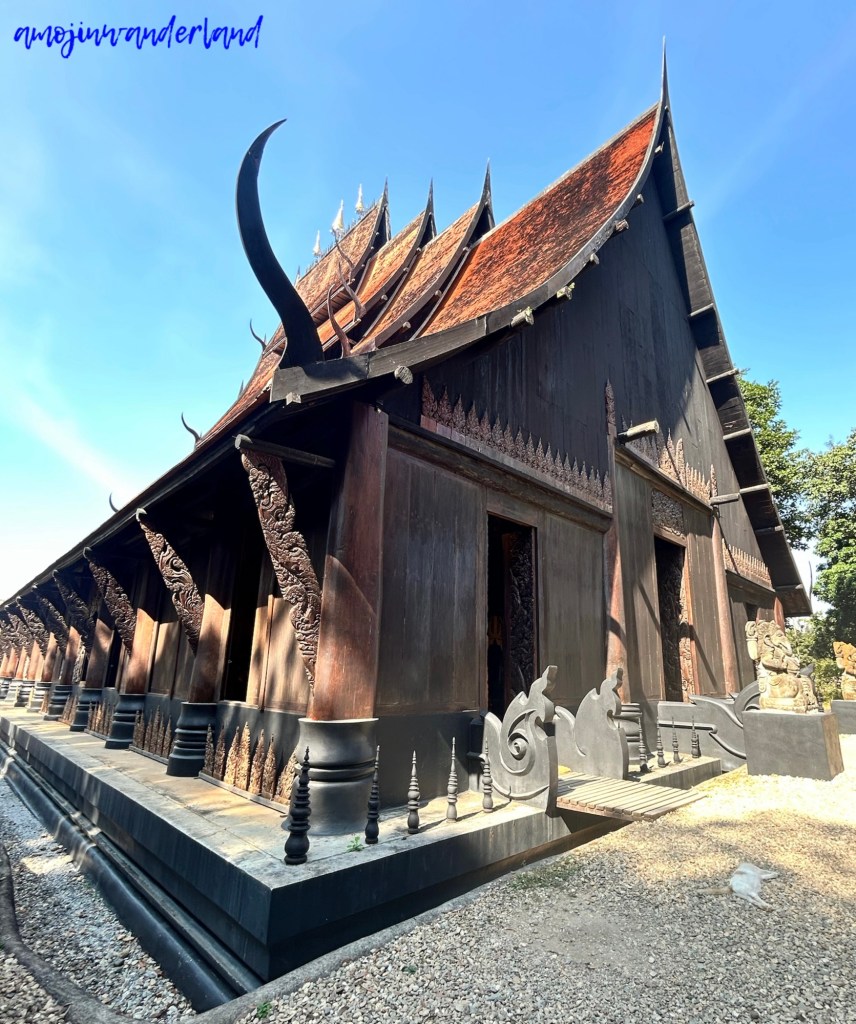
The Baan Dam Museum, more commonly known to foreign visitors as the Black House Museum, is one of Chiang Rai’s most striking and unconventional cultural spaces. Rather than a single building, it unfolds as a vast artistic landscape, about 160,000 square meters, filled with more than forty structures scattered among trees and open grounds. Each building stands as a distinct artistic statement, blending traditional northern Thai forms with bold, contemporary expressions that often feel dark, provocative, and deeply philosophical.
This extraordinary complex is the life’s work of Thawan Duchanee, a native of Chiang Rai celebrated as a painter, architect, and sculptor. His vision for Baan Dam was not to create a conventional museum, but to build an immersive environment where architecture itself becomes art. In 2001, his contributions to fine and visual arts were formally recognized when he was named a National Artist of Thailand, cementing his influence on modern Thai art.
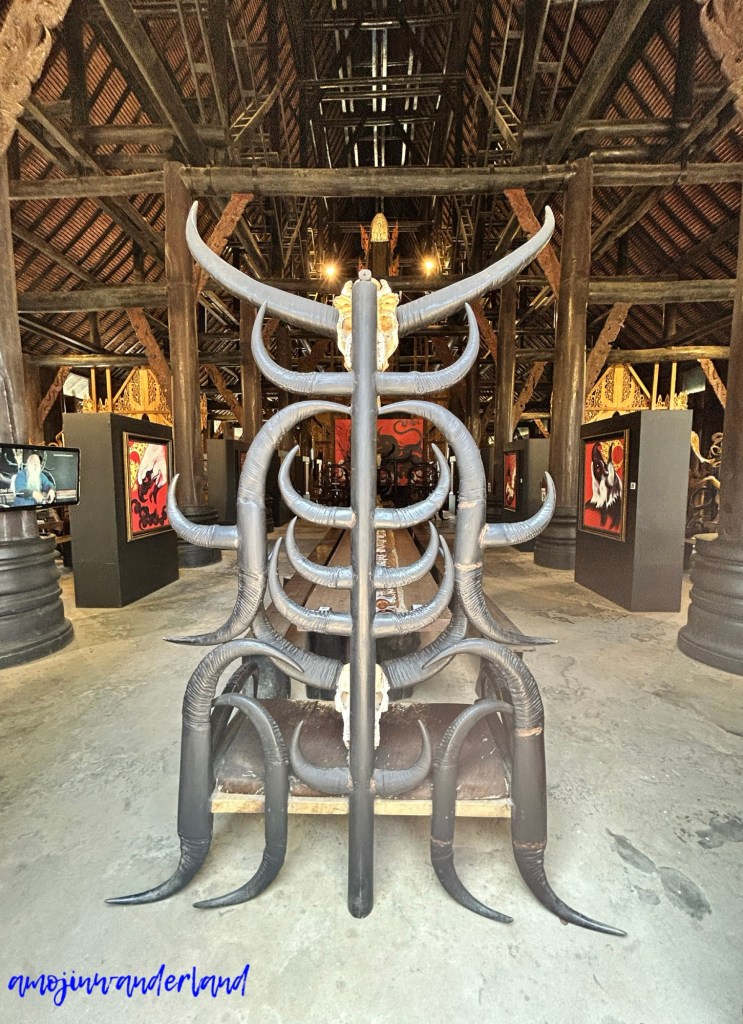
At the heart of the complex stands the Cathedral, the largest and most imposing structure on the grounds. Designed by Duchanee and constructed between 1999 and 2009, it took several years to complete and reflects a synthesis of wood-based cultural traditions, Buddhist philosophy, and modern architectural ideas. Raised high above the ground on massive wooden pillars, the Cathedral’s elongated rectangular form is aligned east to west, creating a sense of ritual movement as visitors approach and ascend its stairways. The steep, multi-tiered roof and intricate wooden details emphasize craftsmanship and monumentality, while the interior houses a powerful collection of Duchanee’s visual works, reinforcing the building’s role as both a creative studio and a contemplative space.
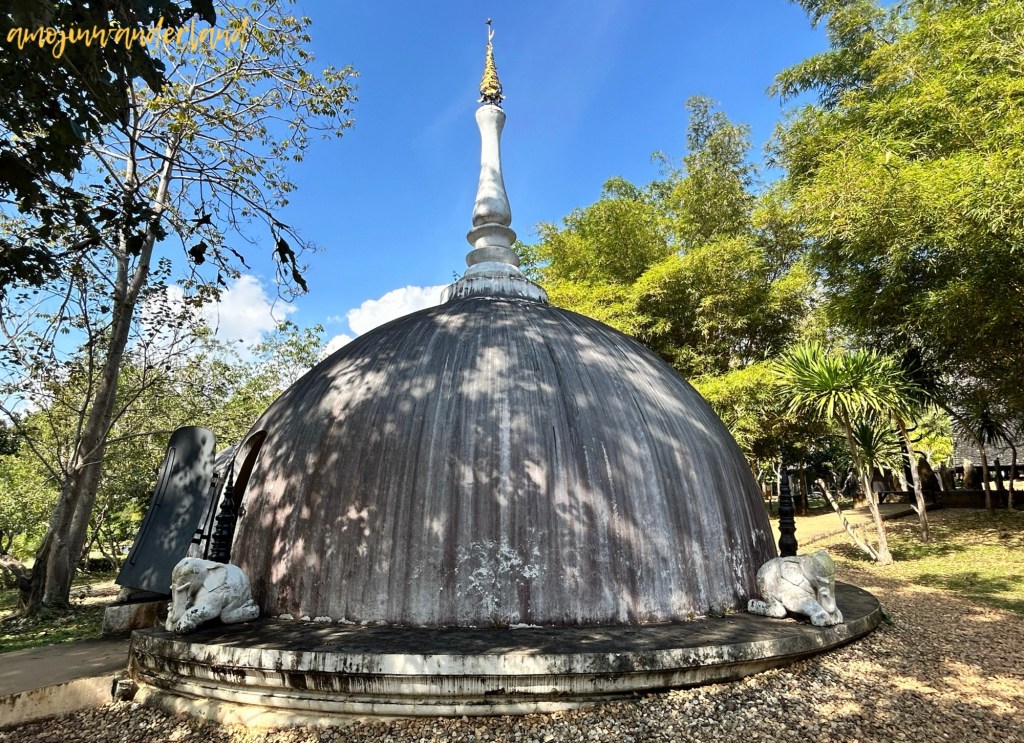
White Domes are modern interpretations of Thai stupas
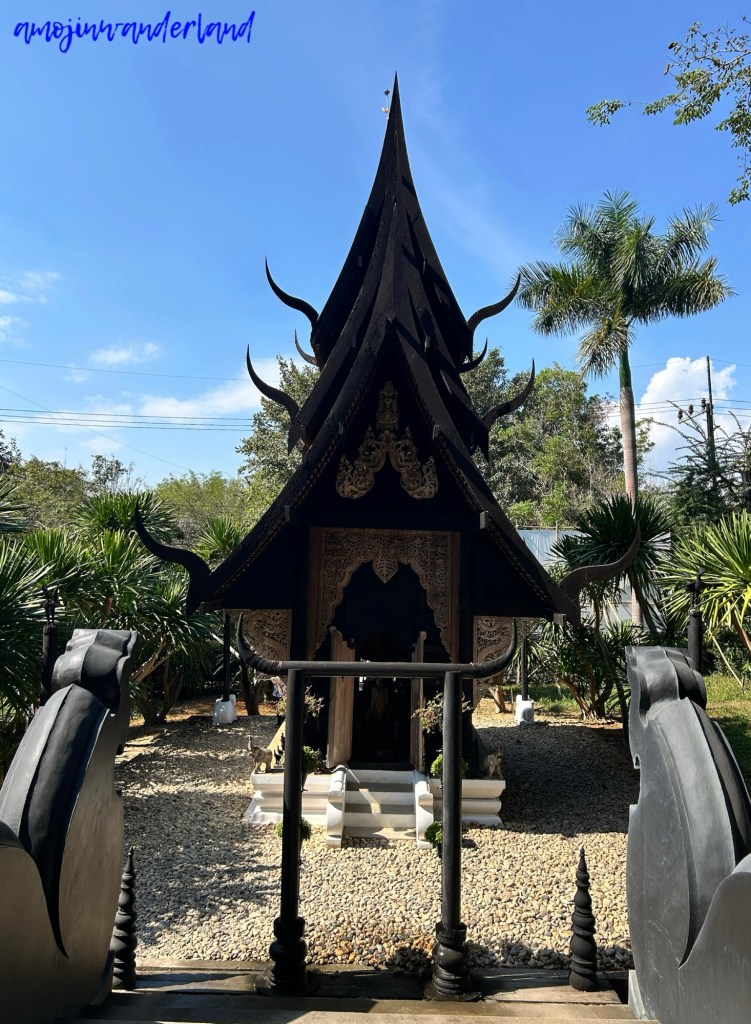
Approaching the Cathedral, visitors first encounter the Small Temple, an earlier structure completed in the early 1990s. More modest in scale, it serves as a visual and symbolic prelude to the larger building behind it. Elevated slightly above the ground, the Small Temple features finely carved wood, a layered roof, and a compact interior that houses a carved wooden Buddha. The space feels intimate and reflective, carefully positioned within the landscape to guide visitors gradually toward the Cathedral while setting a contemplative tone.
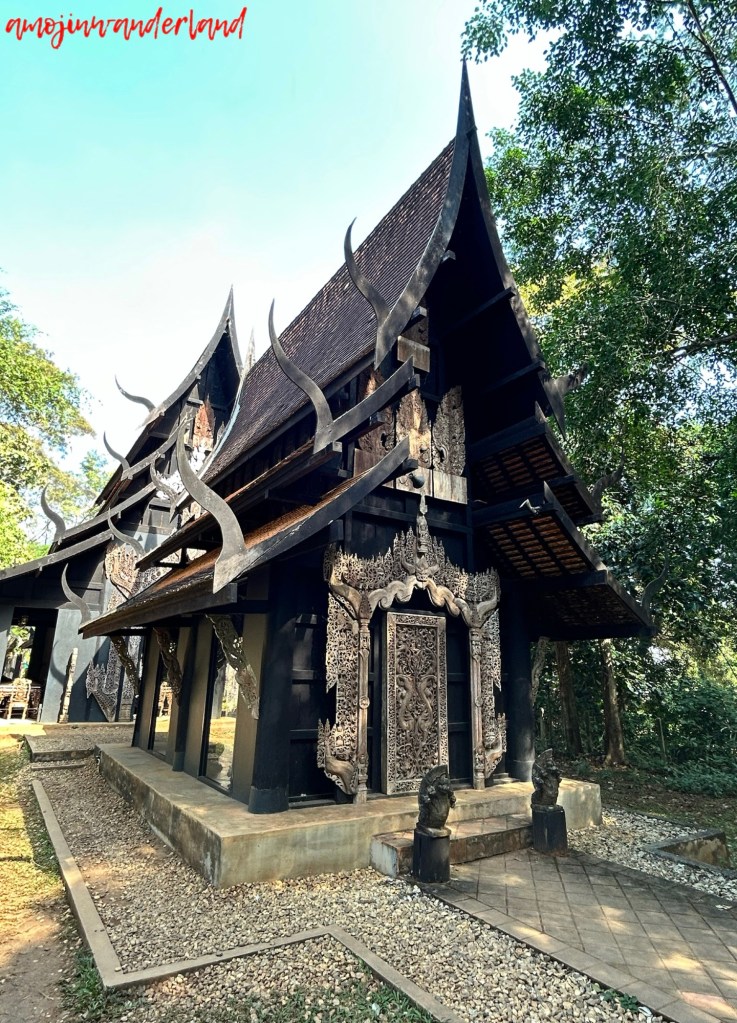
Nearby stands the East Pavilion, a versatile wooden structure completed in the mid-1990s. Designed with openness in mind, it uses glass in place of solid walls, allowing light and greenery to flow freely through the interior. Originally intended for multiple purposes, including as a guest space, the pavilion contains displays of indigenous art and traditional instruments. Its simple proportions and transparent design offer a pause from the heavier, darker mood of other buildings, balancing the overall experience of the museum.
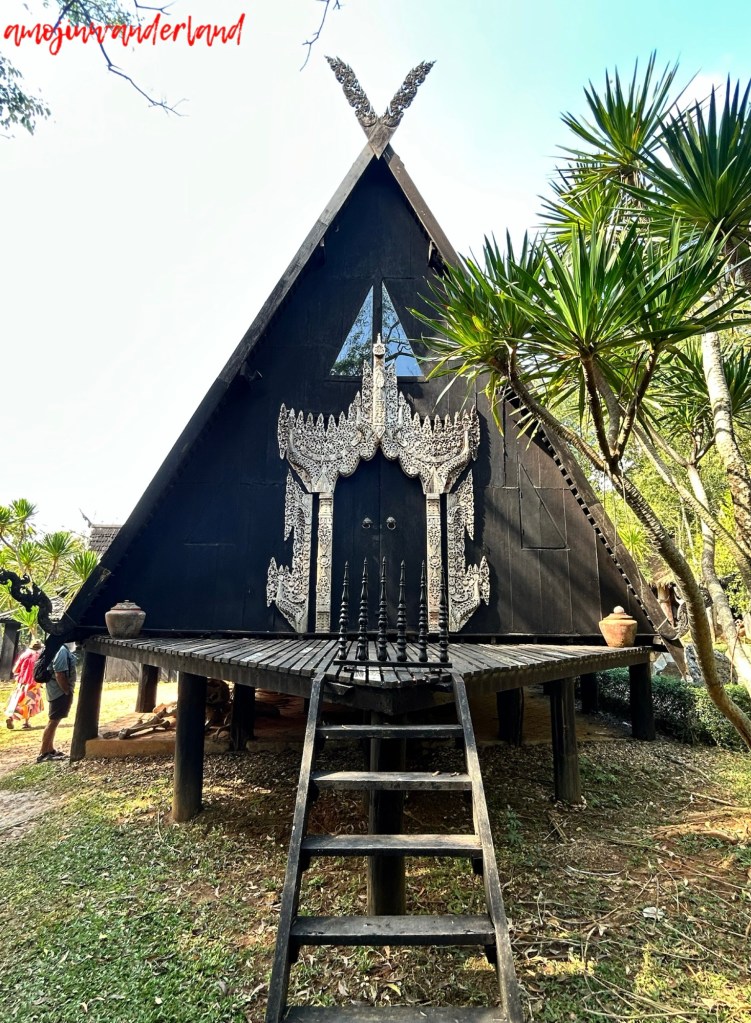
One of the most personal and historically significant structures in the complex is Tri Phum, also known as the Triangle House. Built in the late 1970s and reconstructed multiple times after storm damage, this triangular wooden building predates much of the rest of Baan Dam. Raised above the ground and supported by numerous wooden pillars, it served as both a living and working space for Duchanee. It is here that many of the ideas and artistic themes that later appeared in his internationally exhibited paintings were first conceived. Inside, the building is divided into simple functional spaces, reflecting its role as a residence, studio, and place of study.
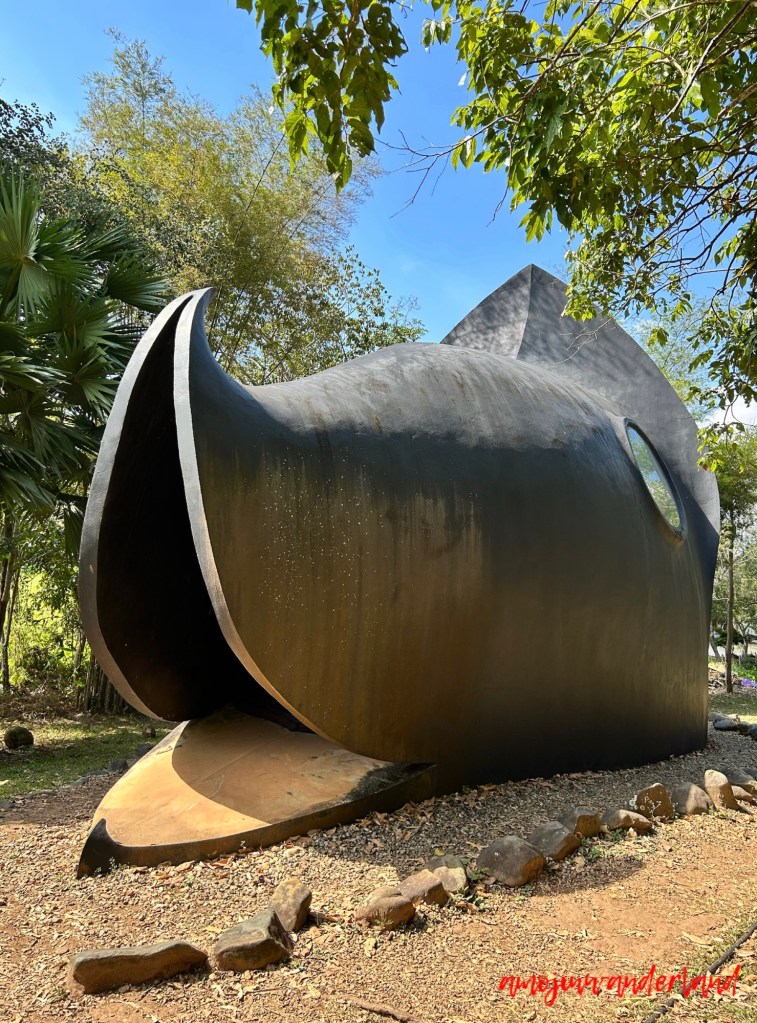
Hornbill House is a black, submarine-like dwelling with porthole windows, which served as the artist’s residence when on-site.
 Amoj In Wanderland