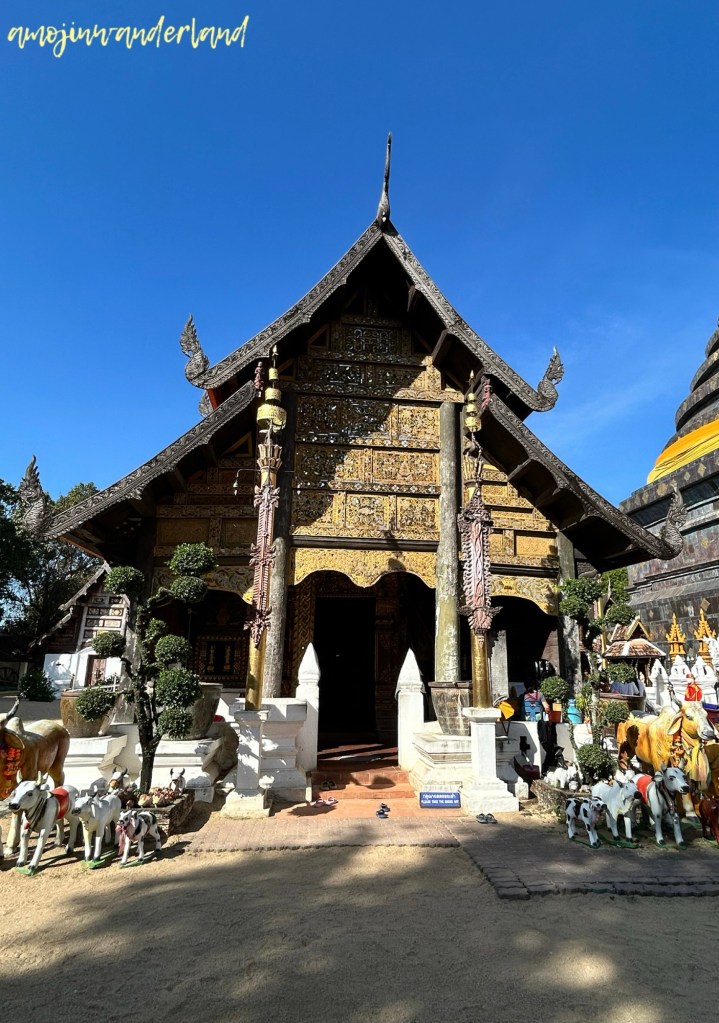
Wat Phra That Lampang Luang was our first stop in Lampang on the second day of our Northern Thailand tour, setting a calm and reflective tone for the day. Located about fifteen kilometers from the city center, this well-preserved Lanna Buddhist temple dates back to the 15th century and is believed to enshrine relics of the Buddha within its main chedi, a distinction shared by only a few important temples in the region. Local tradition also links the site to the earlier Hariphunchai Kingdom, underscoring its long-standing religious significance in northern Thailand.
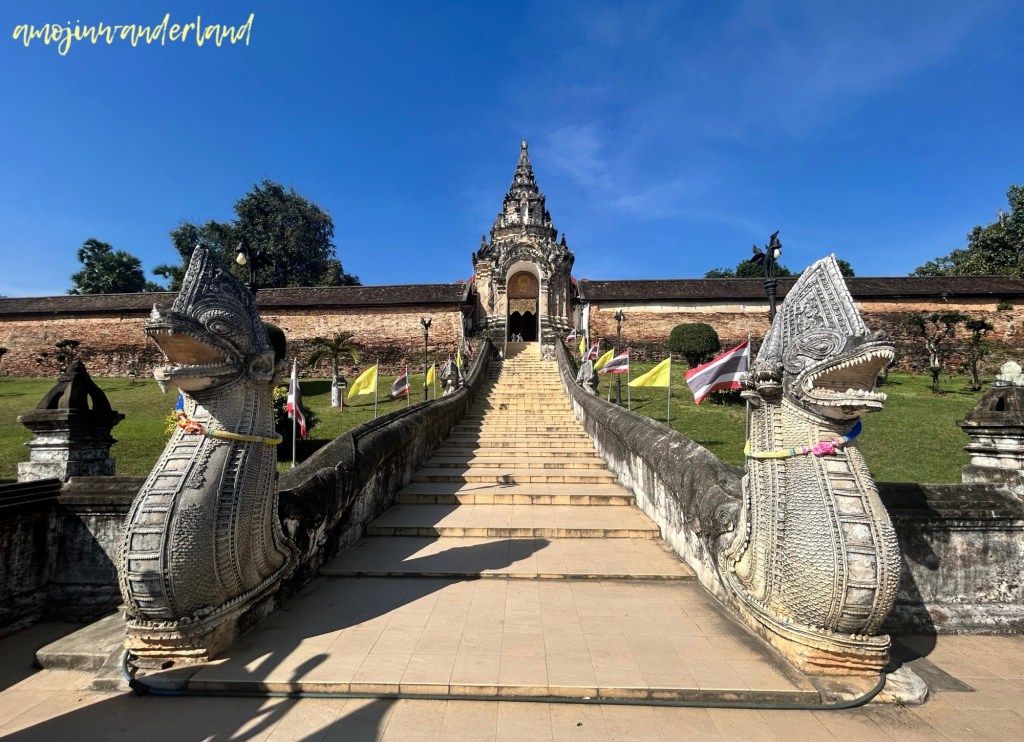
The temple complex is enclosed by white perimeter walls, giving it a clear and orderly layout. At its center stands the main chedi, a bell-shaped stupa resting on a lotus base and clad in bronze or copper sheets. Its subdued golden surface reflects the Lanna preference for balance and restraint rather than excessive ornamentation. As the spiritual focus of the compound, the chedi continues to draw worshippers and visitors alike.
Wat Phra That Lampang Luang is also associated with a notable episode in local history. In the early 18th century, during the Burmese occupation of Chiang Mai and Lamphun, Lampang was likewise taken, and the temple was used as a military camp. Thipchang, later known as Phraya Chaisongkhram, led a successful counterattack that resulted in the withdrawal of Burmese forces. He later became the ruler of Lampang and founded the Chet Ton dynasty. A statue of Thipchang within the temple grounds and visible bullet marks on the walls remain as quiet reminders of this period.
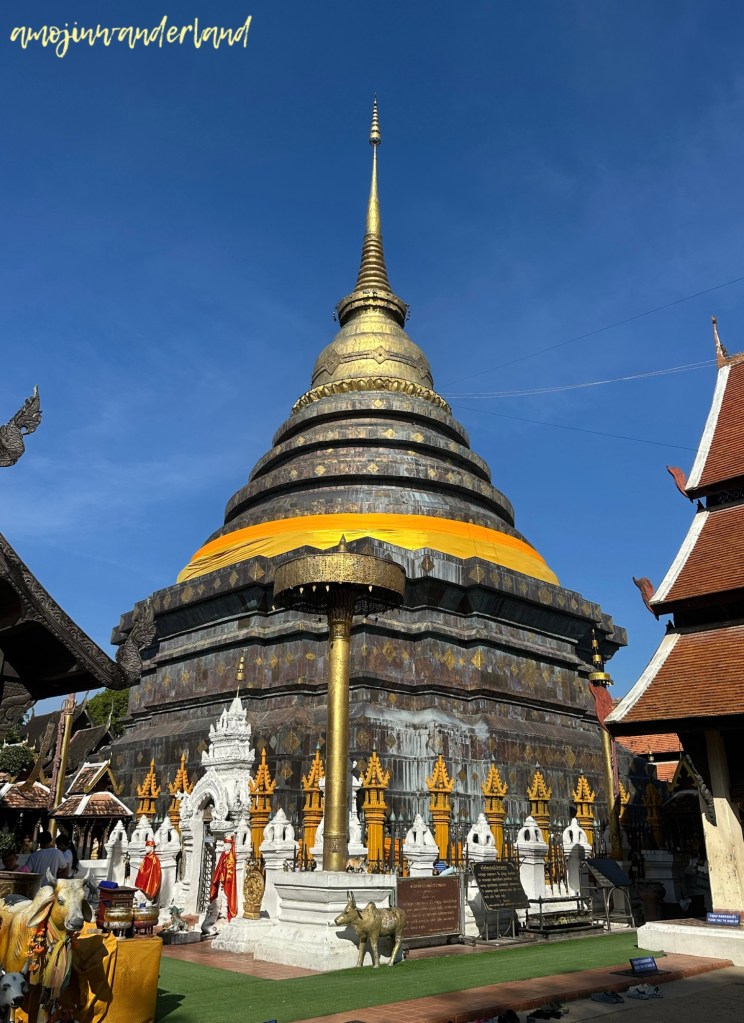
Architecturally, the temple is regarded as one of the most authentic surviving examples of Lanna design. Most structures are built from teak and local hardwood, highlighting the durability and skill of traditional craftsmanship. Tiered roofs, one of the defining features of Lanna architecture, create visual harmony while improving ventilation suited to the northern climate.
The Wiharn Luang, or main vihara, dates to the 15th century and follows the open-hall layout typical of Lanna temples. Supported by tall wooden columns and topped with three-tiered roofs covered in wooden shingles, the hall allows ceremonies to be shared by those inside and those gathered just outside, reinforcing a sense of communal worship.
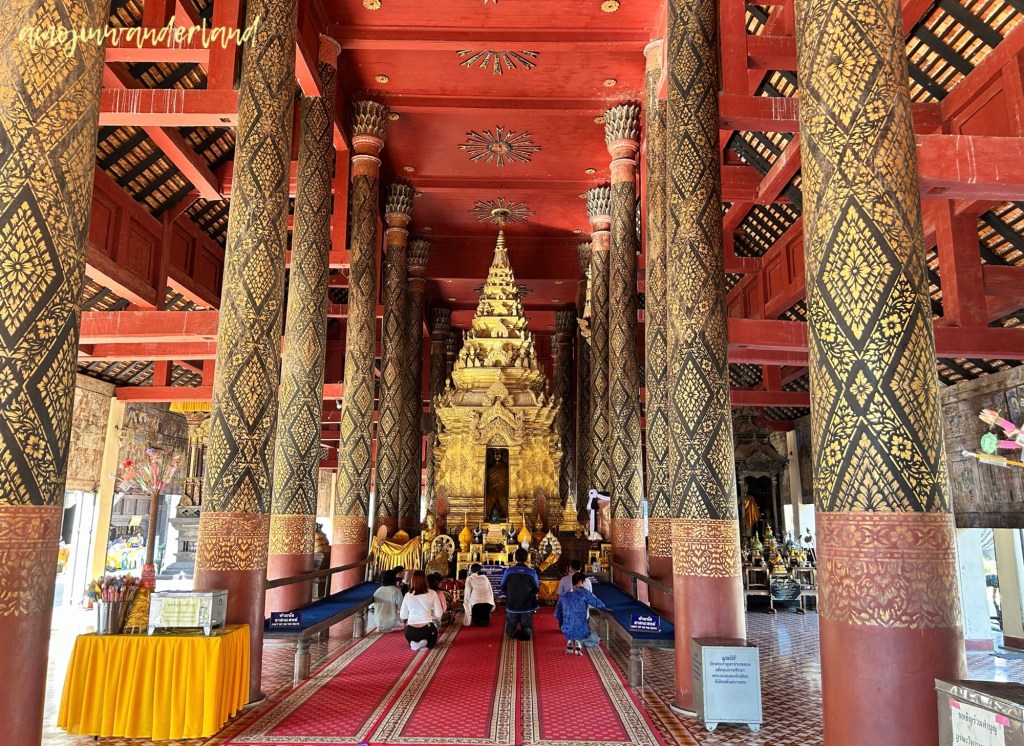
Throughout the complex, decorative elements remain carefully restrained. Wooden carvings on gables, doors, and windows depict lotus motifs, guardian figures, and Buddhist symbols, while gold-lacquered interior pillars add a subtle sense of reverence. Together, these features reflect the Lanna ideal of harmony between function, belief, and craftsmanship.
 Amoj In Wanderland