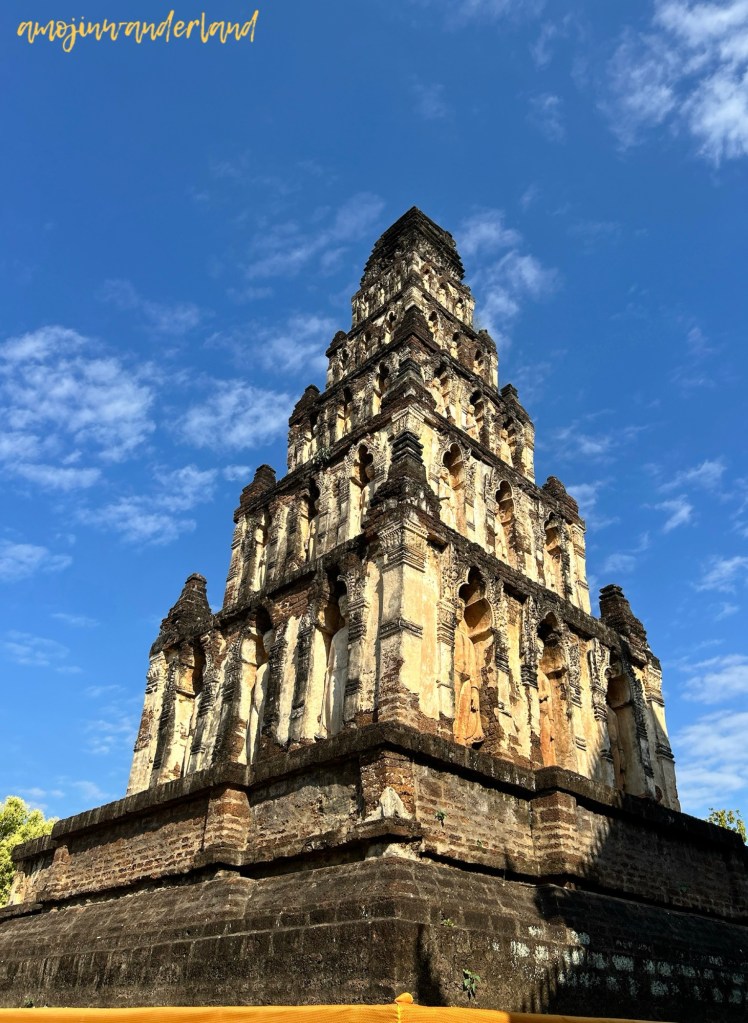
Walking through Lamphun today, it is easy to overlook that this serene town was once the political and spiritual heart of one of mainland Southeast Asia’s earliest and most influential kingdoms. Hariphunchai, also spelled Haribhuñjaya, was a Mon kingdom that flourished in northern Thailand from around the 7th or 8th century until the late 13th century. Its capital was Lamphun itself, known in the past by the same name as the kingdom, and long before the rise of Tai polities, it stood as a major center of Buddhism, culture, and governance.
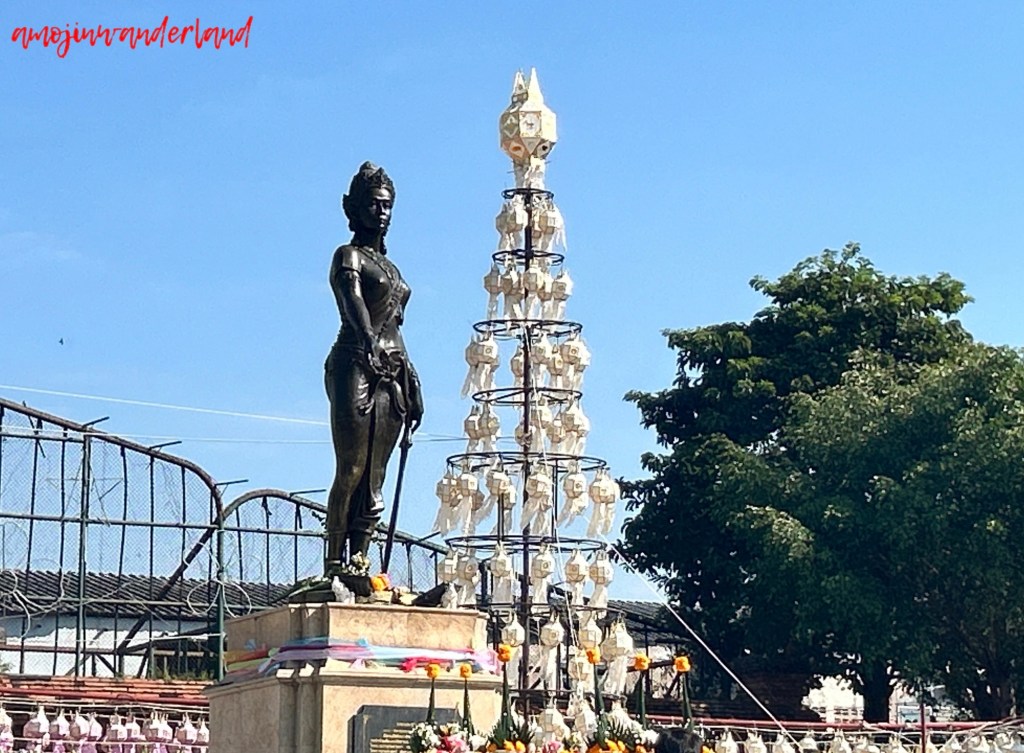
Local tradition traces the founding of the city to between 629 and 657 AD, when four hermits, Suthep, Sukatanata, Tapanana, and Chantasikatungka, established a sacred settlement in the Ping River valley. Hermit Sukatanata is said to have sought a ruler from the Mon Lavo Kingdom in present-day Lopburi, requesting the daughter of its king to govern the new city. This woman, Camadevi, became the first queen of Hariphunchai. While modern historians now place the more likely beginning of the kingdom around 750 AD, the legend of Camadevi remains central to Lamphun’s historical identity, blending myth, memory, and political history.
Queen Camadevi’s reign marked the emergence of Hariphunchai as a northern extension of the Mon cultural world associated with the Dvaravati sphere, which at the time dominated much of central Thailand. According to local legend, she defeated Khun Luang Wilangka of the Lawa dynasty of Raming Nakhon, an early polity associated with the Chiang Mai area. Yet the story does not end in conflict. Camadevi’s two sons later married the two daughters of King Wilangka, transforming former enemies into allies and stabilizing relations between Mon and Lawa polities. She gave birth to twin sons, with the elder succeeding her as ruler of Lamphun, while the younger governed nearby Lampang, extending Hariphunchai’s influence across the region.
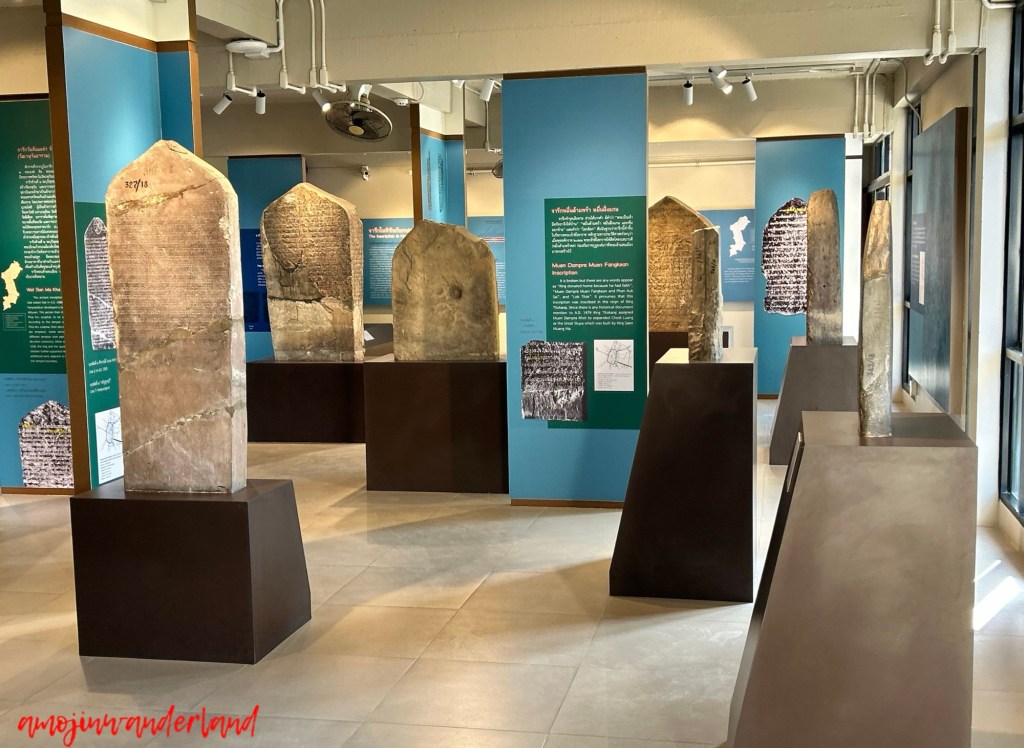
For centuries, Hariphunchai endured as a Buddhist kingdom known for its monasteries, inscriptions, and refined Mon art. That long chapter came to an end in 1292, when the city was besieged by Mangrai, ruler of the emerging Tai Yuan kingdom of Lan Na. Rather than relying solely on military force, Mangrai employed strategy and subterfuge. He sent an agent, Ai Fa, to sow discord among the people of Hariphunchai, weakening the kingdom from within. The plan succeeded. The last ruler, Phraya Yi Ba, fled south to Lampang, and Hariphunchai was absorbed into Lan Na, marking a decisive political and cultural transition in northern Thailand.
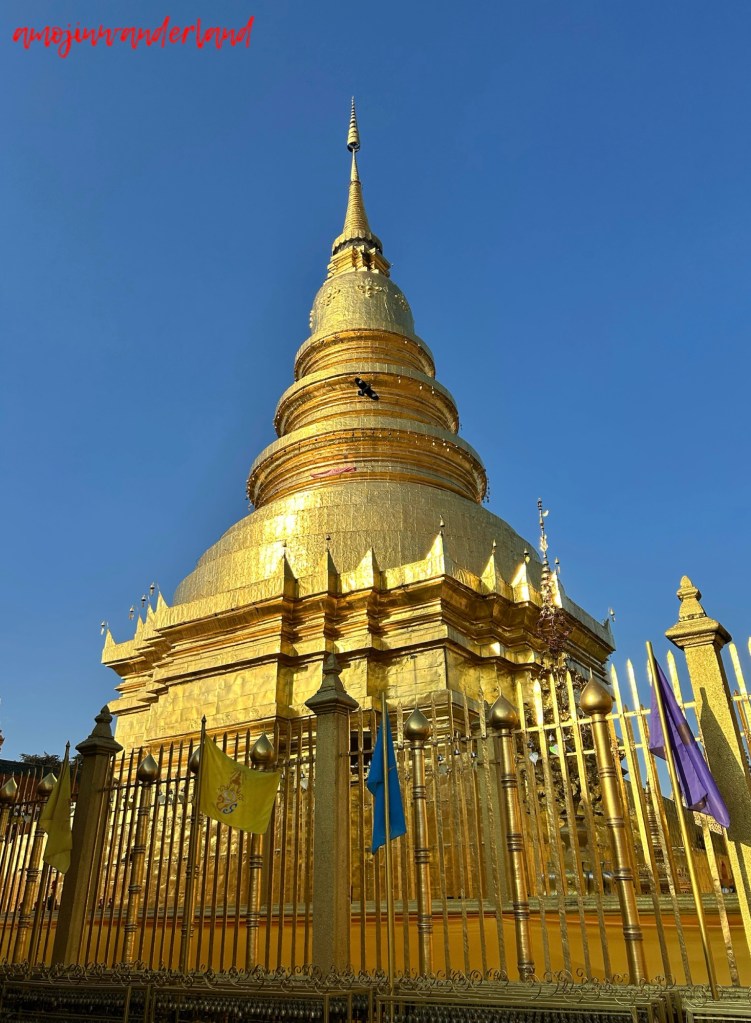
Our visit followed this layered history through places that remain inseparable from the Hariphunchai story. At Wat Phra That Haripunchai, the great golden stupa still dominates the town, embodying centuries of Mon devotion and royal patronage. Nearby, the Hariphunchai National Museum quietly reveals the kingdom’s sophistication through sculptures, inscriptions, and ritual objects that speak of a deeply rooted Buddhist culture. At Wat Camadevi, also known as Wat Kukut, the distinctive stepped chedi stands as a powerful architectural reminder of Queen Camadevi’s legacy. Just a short distance away, the Camadevi Monument anchors her memory firmly in Lamphun, affirming her role as founder, ruler, and enduring symbol of the city.
Together, these sites form a continuous narrative, of hermits and queens, Mon kingdoms and Tai conquest, legend tempered by history, and a town that quietly preserves its ancient soul.
 Amoj In Wanderland