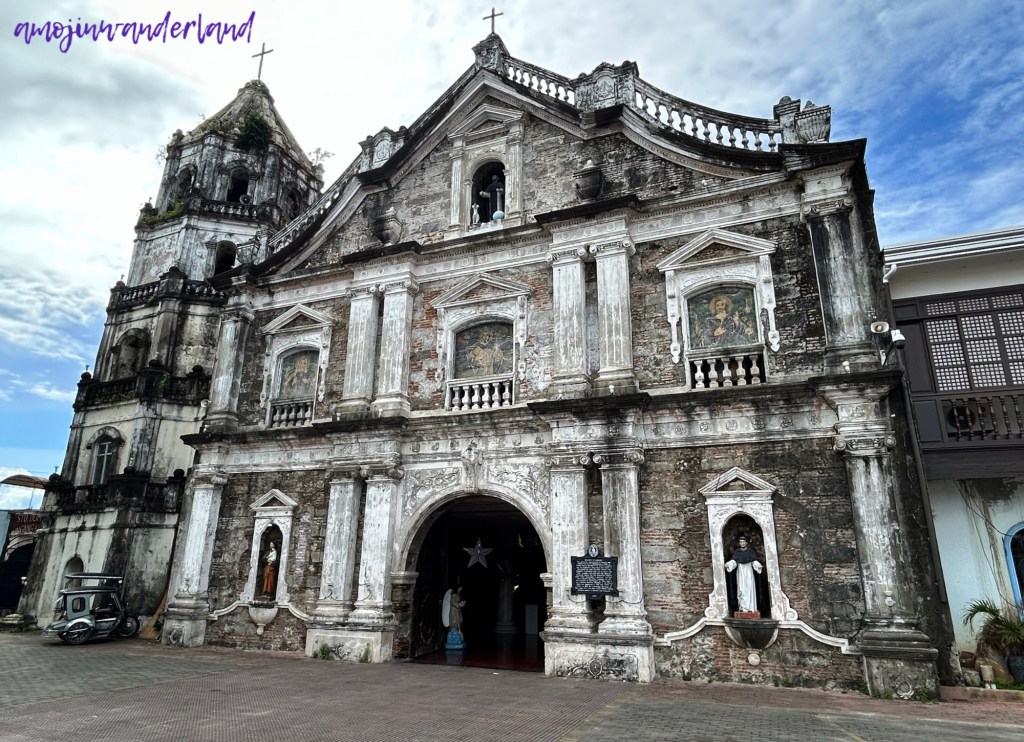
As the oldest church in Bataan and a cradle of early Philippine Christianity, Saint Dominic de Guzman Parish Church, more commonly known as Abucay Church, holds a place of exceptional historical importance in the country’s religious and cultural story. Established as a parish in 1587 and entrusted to the Dominican friars a year later, the church is not only one of the earliest centers of Catholic worship in the region; it is also directly linked to the beginnings of Christian education through print. It was here that the Dominicans established a pioneering press where the Doctrina Christiana, the earliest printed book in the Philippines, was produced, firmly anchoring Abucay Church to the spread of Christianity through both preaching and the written word.
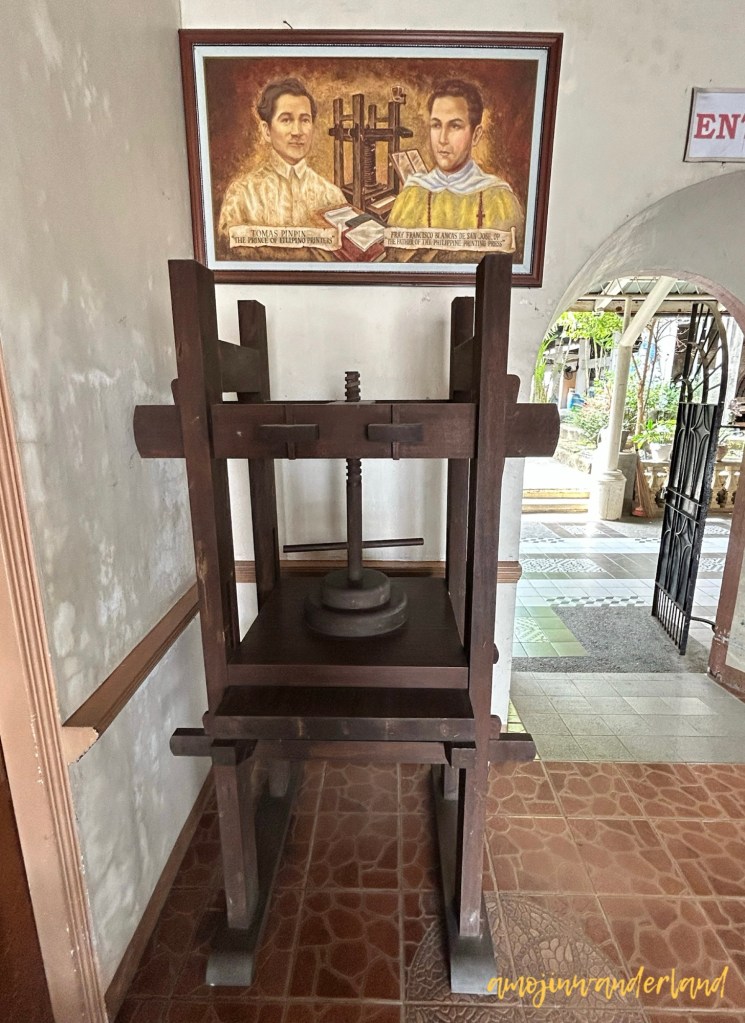
This remarkable chapter unfolded in 1608, when Father Francisco Blancas de San Jose, O.P., together with Tomas Pinpin, set up one of the earliest printing presses in the country within the church complex. From this modest but historic facility came religious texts in Spanish and Tagalog, including the Doctrina Christiana, which became the foundation of catechetical instruction for early Filipino Christians. In this way, Abucay Church was never just a place of worship; it was also a quiet center of learning, where faith was shaped and shared not only through sermons but through pages that traveled far beyond the town.
The church has also stood witness to the harsher turns of history. On June 23, 1647, during a Dutch invasion, the church complex became the scene of a tragic massacre of Filipinos and Spaniards, while others were taken away to Batavia, then a Dutch colony. These events, along with the church’s early milestones, were later commemorated in a historical marker installed in 1939 by the National Historical Committee. Reading it today adds a sobering dimension to any visit, reminding us that even sacred spaces have often stood at the center of conflict and upheaval.
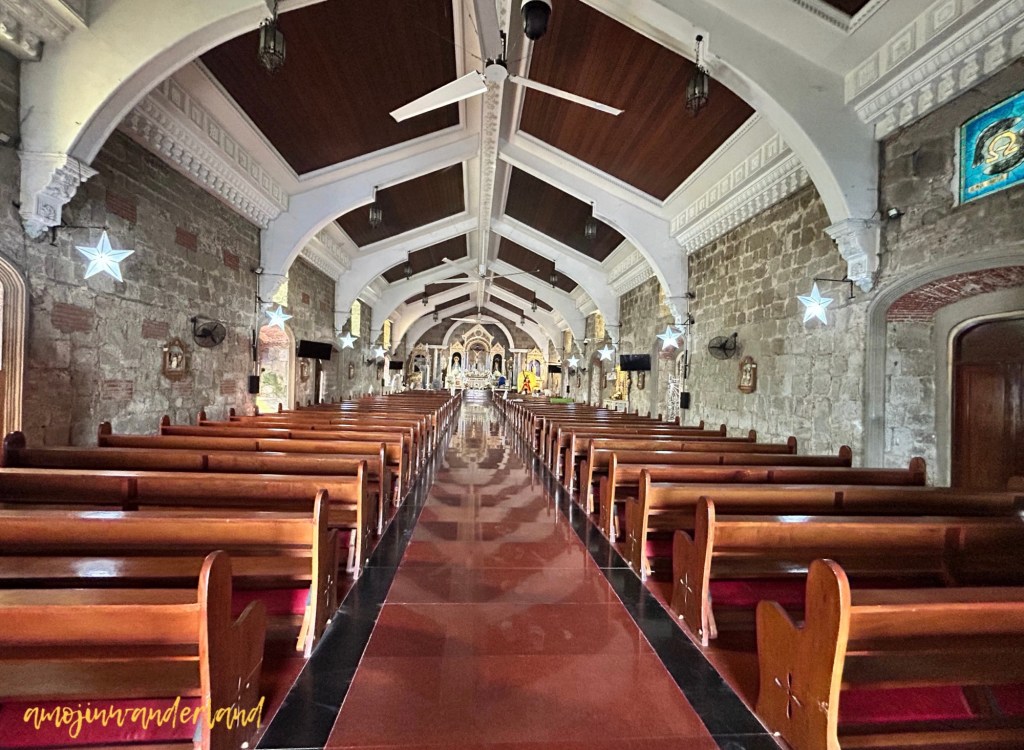
Time itself has tested the structure. Built in the early 1600s under Father Geronimo de Belen, the church suffered major damage in an earthquake in 1852. It was later repaired and modified, with significant changes completed in 1925, still marked by a medallion above the main portal. Each phase of rebuilding reflects the community’s steady commitment to preserve not only a church, but a shared heritage that spans generations.
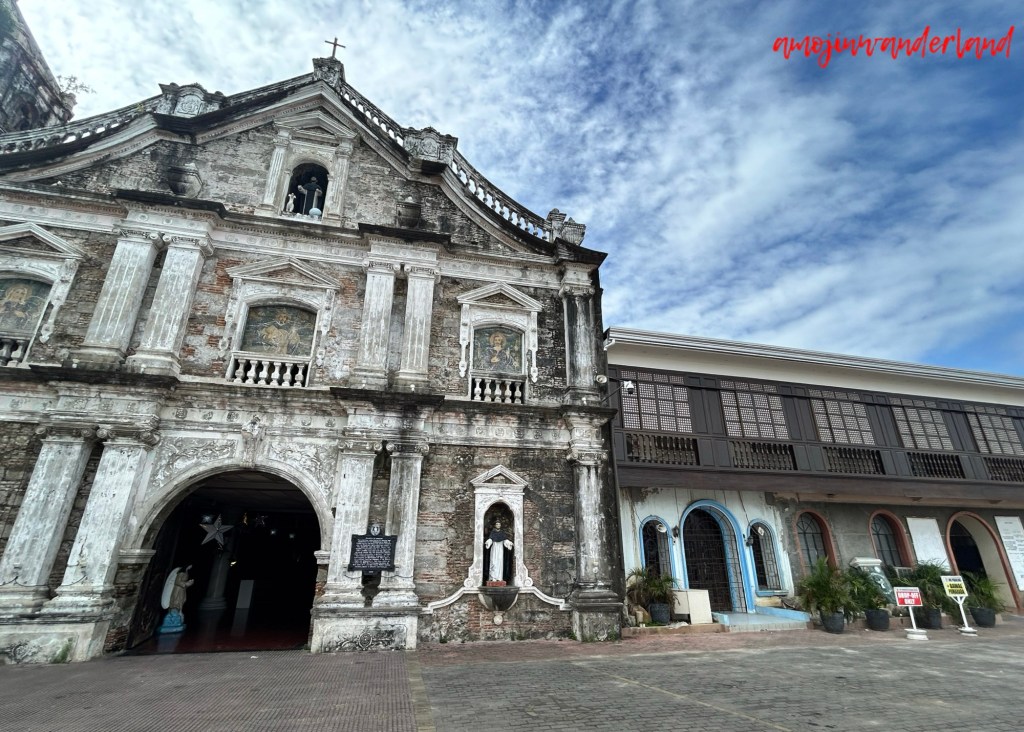
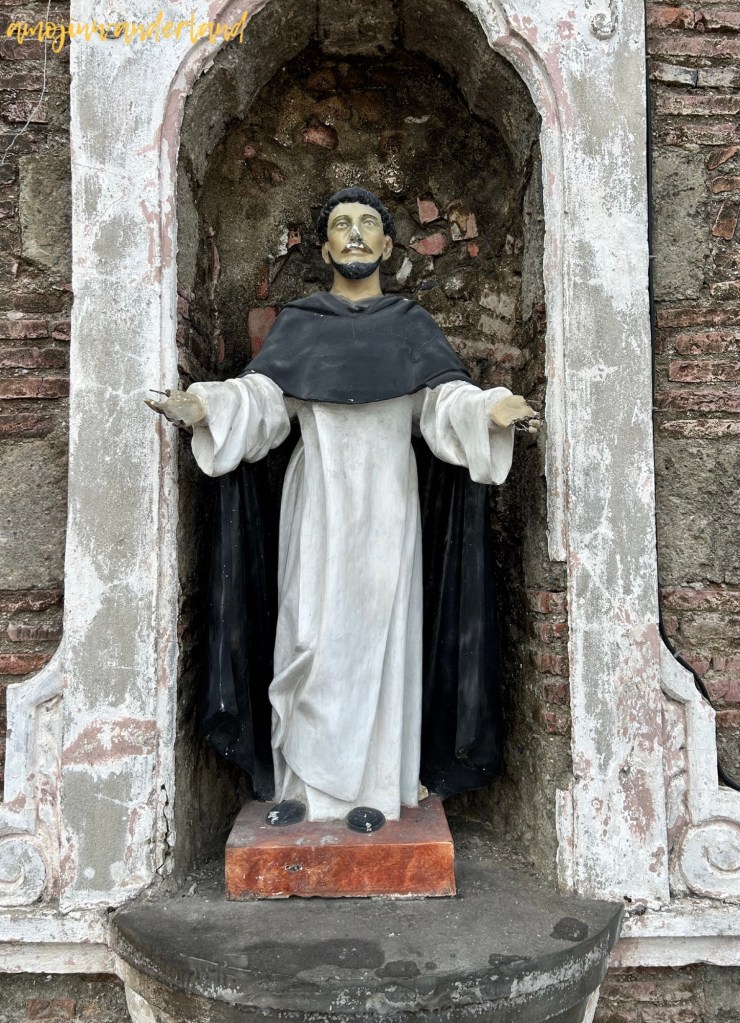
Architecturally, Abucay Church carries a quiet elegance that rewards careful observation. Its two-level façade, described as Renaissance in style, is divided by Doric columns that lend a sense of balance and dignity. Niches holding saints flank the main entrance, while additional niches and windows rise on the second level, each capped by small triangular pediments. Above them, urn-like finials line the cornice, and the main pediment curves gently, edged with balusters that soften the solid lines of stone. To the right, the five-tiered bell tower stands as a familiar landmark, each level defined by decorative balusters and semicircular arched windows that catch the light as the day unfolds.
 Amoj In Wanderland