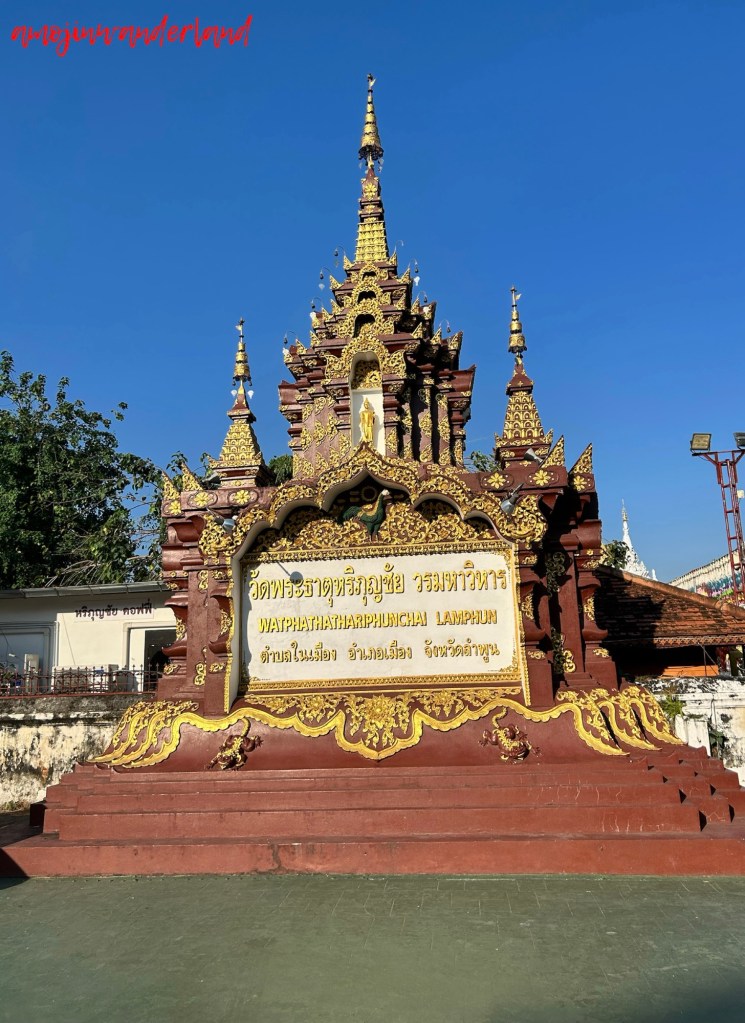
Wat Phra That Haripunchai’s sacred core was established as early as 897 CE, when a king of Hariphunchai ordered the construction of a stupa to enshrine a hair relic of the Buddha. This original structure is believed to survive today as the heart of the central stupa, whose origins may reach back even further to the 9th century. Long before Lamphun became a quiet provincial town, this site was already a focal point of spiritual authority and royal patronage.
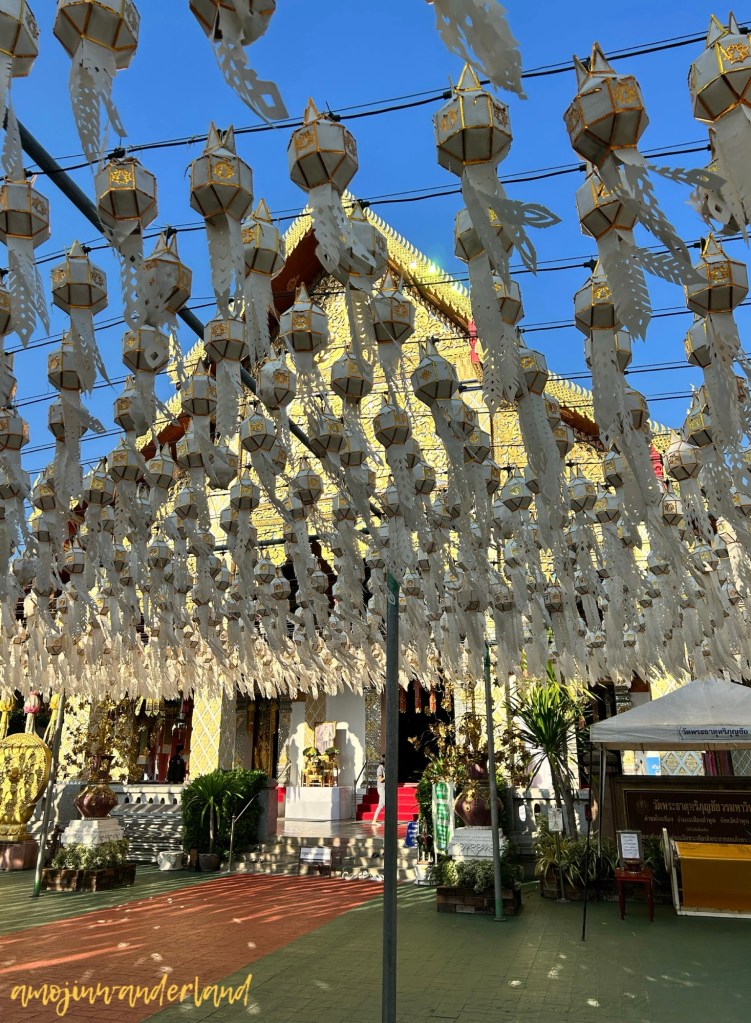
The temple complex as it now stands took clearer form in 1044, during the reign of King Athitayarat of Hariphunchai. Over time, Wat Phra That Hariphunchai evolved into a monumental expression of Mon Buddhist culture in northern Thailand, reflecting both local craftsmanship and wider religious influences. Its significance did not fade with the decline of Hariphunchai; instead, it was absorbed and renewed under successive kingdoms.
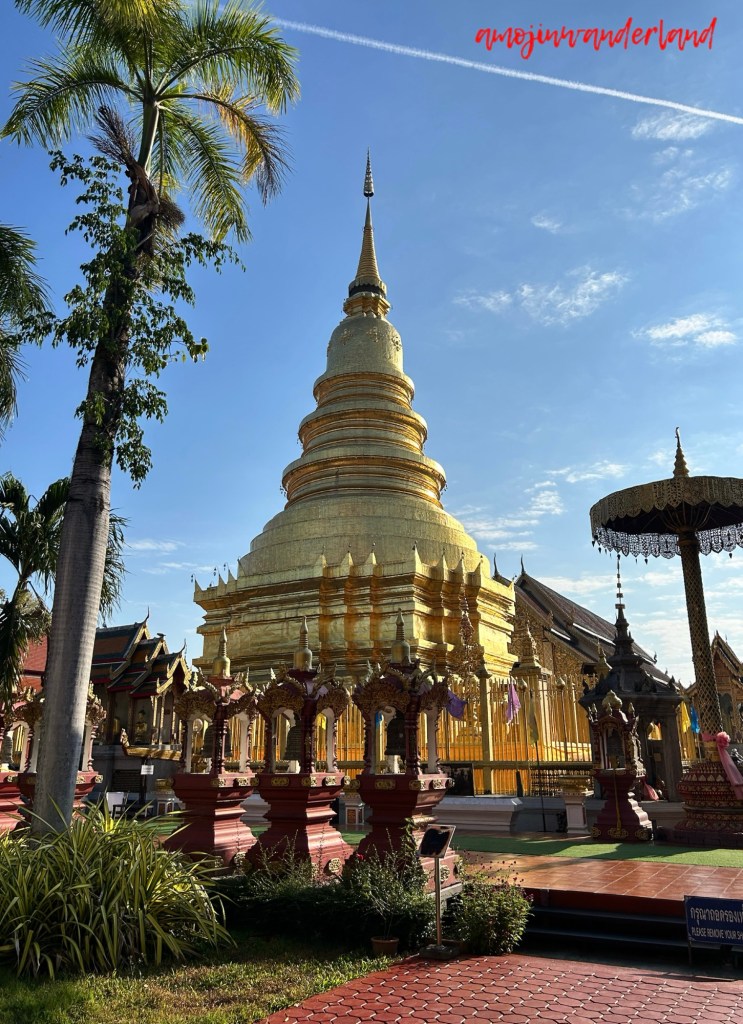
A major transformation came in the 15th century when the temple was rebuilt under the patronage of King Tilokaraja of the Lanna Kingdom, based in Chiang Mai. In 1443, the central stupa was enlarged and refined, its bell-shaped anda adorned with repoussé Buddha images hammered into bronze sheets. These serene figures, affixed directly to the stupa, are classic examples of early Lanna artistry, blending elegance with restrained spiritual symbolism.
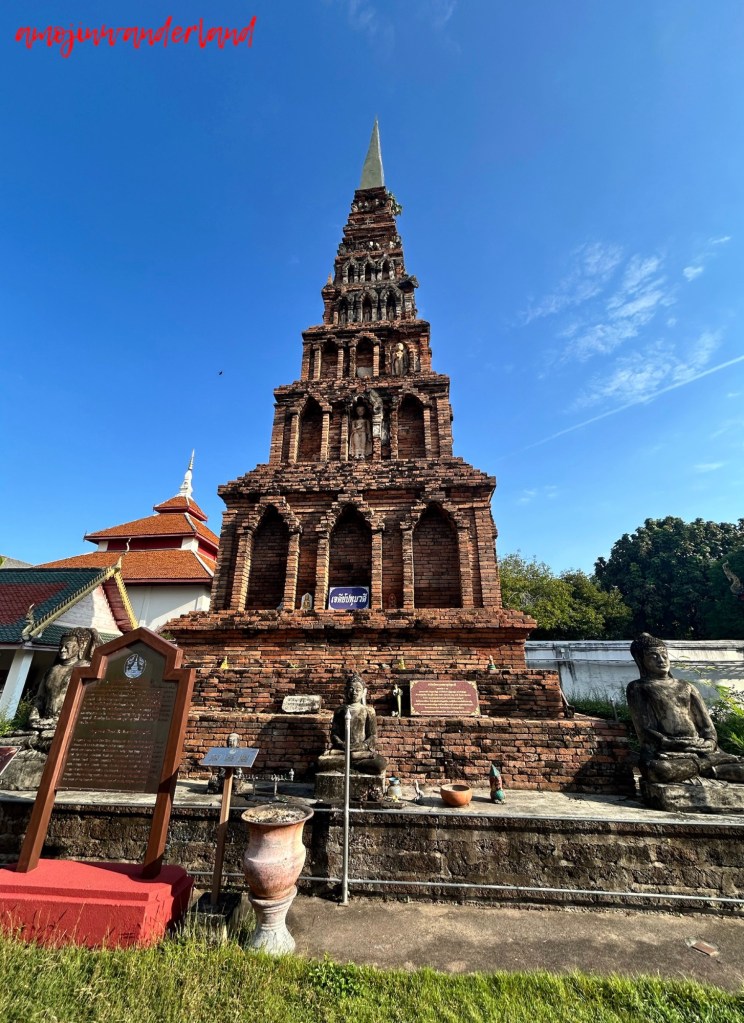
One of the temple’s most striking and unusual features stands slightly apart in the northwest corner of the compound: the 46-meter-high Chedi Suwanna. Built in 1418, its pyramid-like form recalls the Dvaravati style of the Hariphunchai period and is thought to have been inspired by similar stupas at nearby Wat Chama Thewi. Its stepped geometry sets it apart from the more familiar bell-shaped chedis of later Thai Buddhism, and its cultural importance is such that it once appeared on the reverse of Thailand’s one-satang coin.
The wihan of Wat Phra That Hariphunchai offers a quieter but equally compelling encounter. Inside sits a graceful 15th-century Lanna Buddha image, its calm expression embodying the aesthetic ideals of the period. Nearby stands a 19th-century library, its staircase guarded by sculpted naga figures that seem to coil protectively around the ascent, linking earthly learning with mythic guardianship.
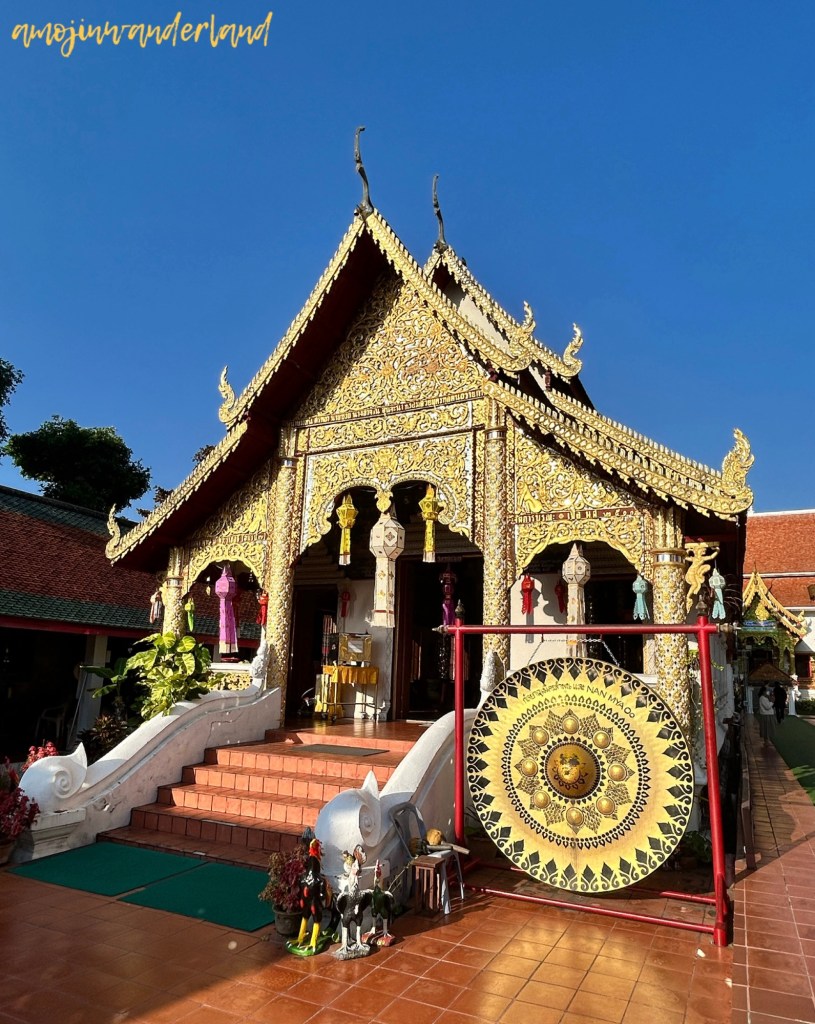
Not far from the wihan hangs an object that surprises many visitors by its sheer scale: a massive bronze gong cast in 1860 and often described as the largest of its kind in the world. More than a curiosity, it reflects the continued vitality of the temple well into the modern era, long after its medieval foundations were laid.
In the 1930s, the revered northern Thai monk Khru Ba Sriwichai led significant restoration efforts, ensuring that Wat Phra That Hariphunchai remained not just a relic of the past but a functioning spiritual center.
 Amoj In Wanderland