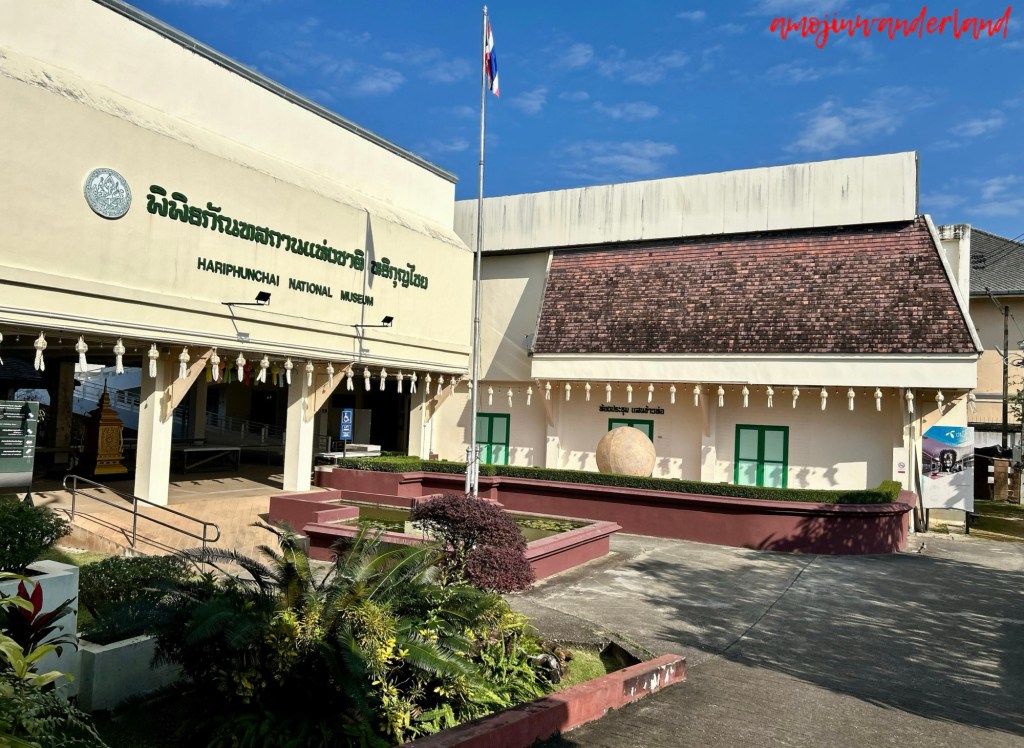
Hariphunchai National Museum in Lamphun Province, Northern Thailand is situated directly opposite Wat Phra That Hariphunchai. Established in 1927 and later expanded by Thailand’s Fine Arts Department in 1975, the museum is now managed by the Department of Fine Arts under the Ministry of Culture and serves as one of the principal repositories of northern Thai heritage. Within its galleries are more than 3,000 artifacts collected from important temples and archaeological sites across the province, tracing Lamphun’s long journey from prehistoric settlement through the Hariphunchai and Lanna kingdoms to the cultural foundations of modern Thailand.
The narrative begins deep in prehistory, where early human communities are revealed through striped cord pottery etched with snake-crossing designs, arrow cylinders for bows, tomahawk axes, ground stone tools, and polished rock axes dating back more than 4,000 years. A human skeleton discovered at Ban Wang Hai provides especially intimate insight into early belief systems. The burial practice of placing objects beside the dead reflects an understanding of the afterlife, while bracelets and beads made from sea shells, together with quartz and bronze items found in the grave, suggest settled agricultural life and early participation in trade networks that connected Lamphun with distant coastal and foreign communities.
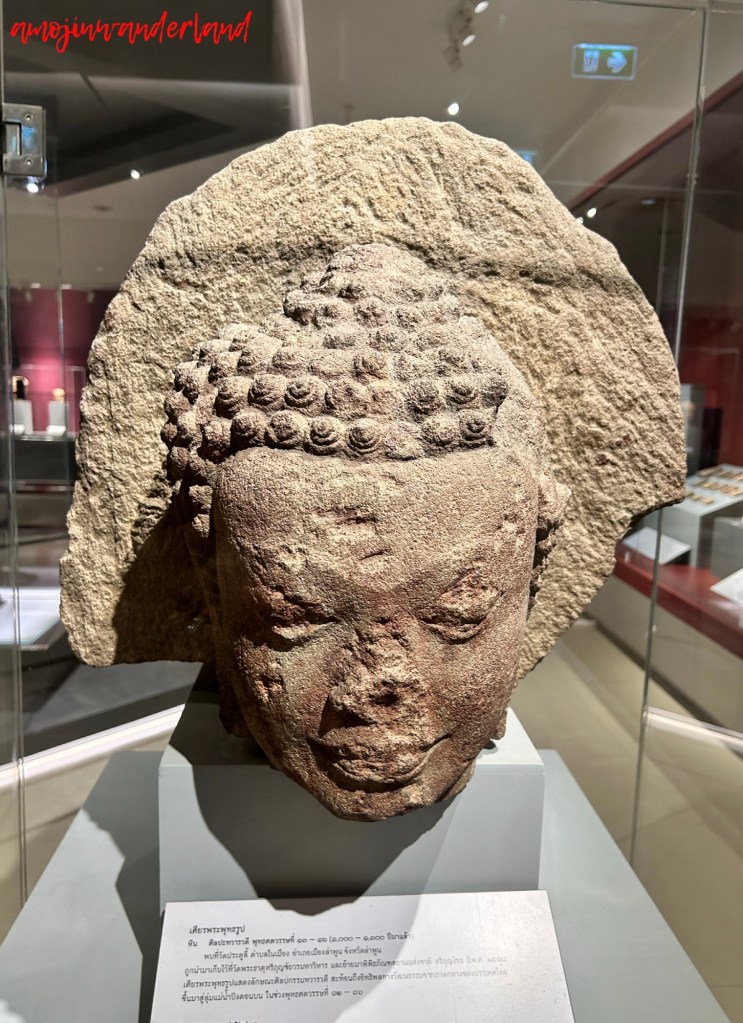
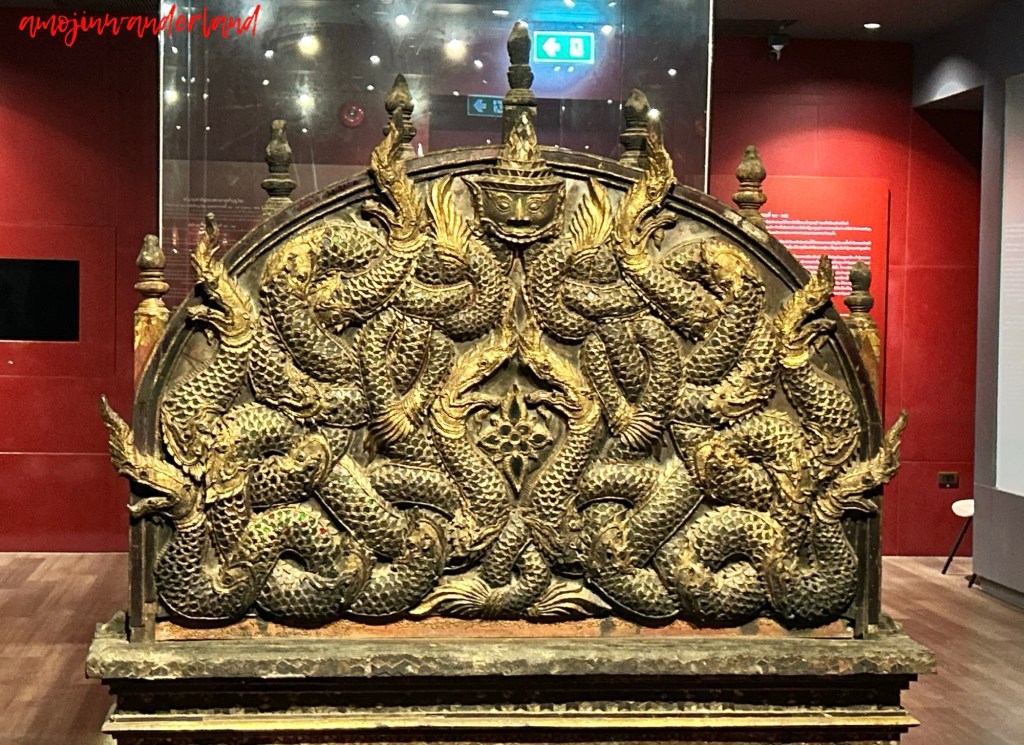
From these earliest foundations, the exhibition moves seamlessly into the Dvaravati–Hariphunchai period, when Lamphun emerged as a significant political and religious center. Tradition attributes the introduction of Dvaravati civilization to Queen Camadevi, who ruled Hariphunchai after arriving from Lavo. Stone sculptures, stucco reliefs, terracotta objects, and bronze works from this era reflect both artistic refinement and spiritual authority. The Buddha images are particularly striking, characterized by square faces, eyebrows joined in a single line, bulging downward-cast eyes, and tense, grimacing mouths. Often featuring whisker-like details and known as “Beard Buddha” images, these figures project power and intensity, expressing Mahayana Buddhist ideals rather than gentle serenity.
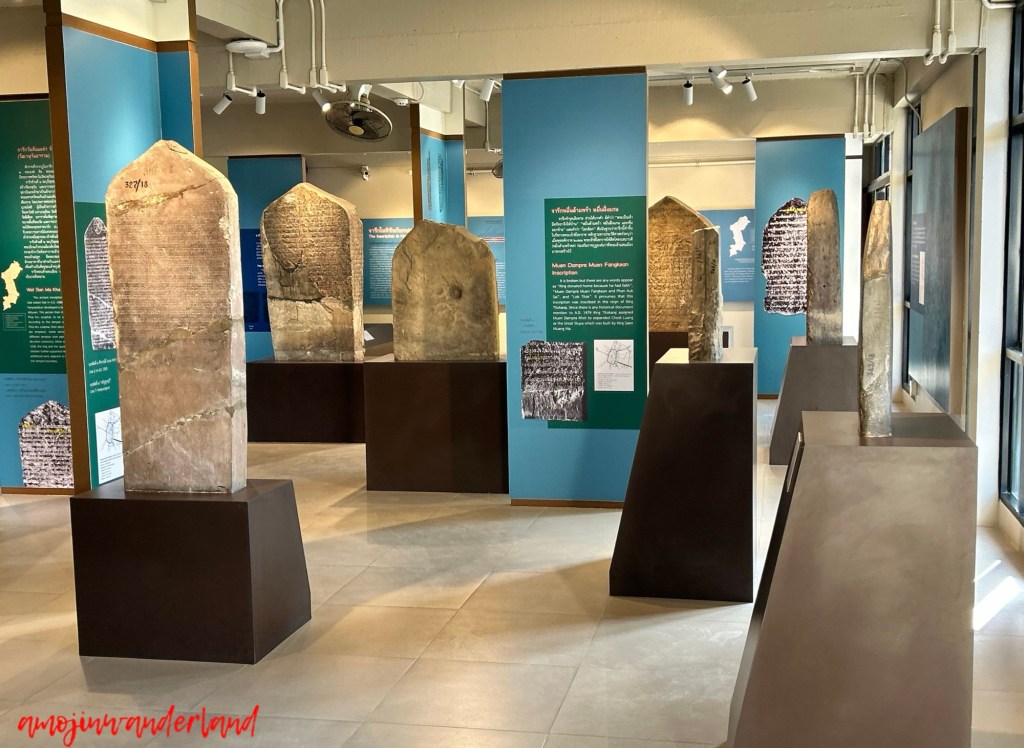
One of the most quietly compelling sections of the museum is the Stone Inscription Hall, where carved stone steles from the Hariphunchai Mon Kingdom and the later Lanna period are displayed. Located on the first floor of the main building, this hall preserves inscriptions written in Old Mon and early Lanna scripts, offering rare insight into the intellectual and administrative life of early northern Thailand. These stones record land deeds, legal rulings, religious donations, and official proclamations dating from roughly the 7th to the 13th centuries, revealing a society governed by structured law, strong Buddhist institutions, and a sophisticated bureaucracy. Seen together, the inscriptions trace the evolution of northern Thai writing systems, showing how Lanna script developed from earlier Mon forms. Many of these stones were recovered from nearby temples, including Wat Phra That Hariphunchai, while others were gathered from surrounding communities, collectively preserving the written memory of a powerful kingdom that predated Lanna.
As the galleries progress, the atmosphere softens with the arrival of the Lanna period, dating roughly from the mid-19th to the 25th Buddhist centuries. Thai artistic expression becomes more clearly defined, strongly influenced by the Phra Buddha Sihing tradition, commonly referred to as Chiang Saen Sing Neung. These images are distinguished by serene smiles, lotus-petal eyes, broad shoulders, slender waists, and diamond-cross-legged seated postures. Alongside these canonical forms are works that reflect local creativity, including Chang Phayao, Chang Lanna, and Eastern Lanna styles, underscoring the regional diversity that shaped Lanna art.
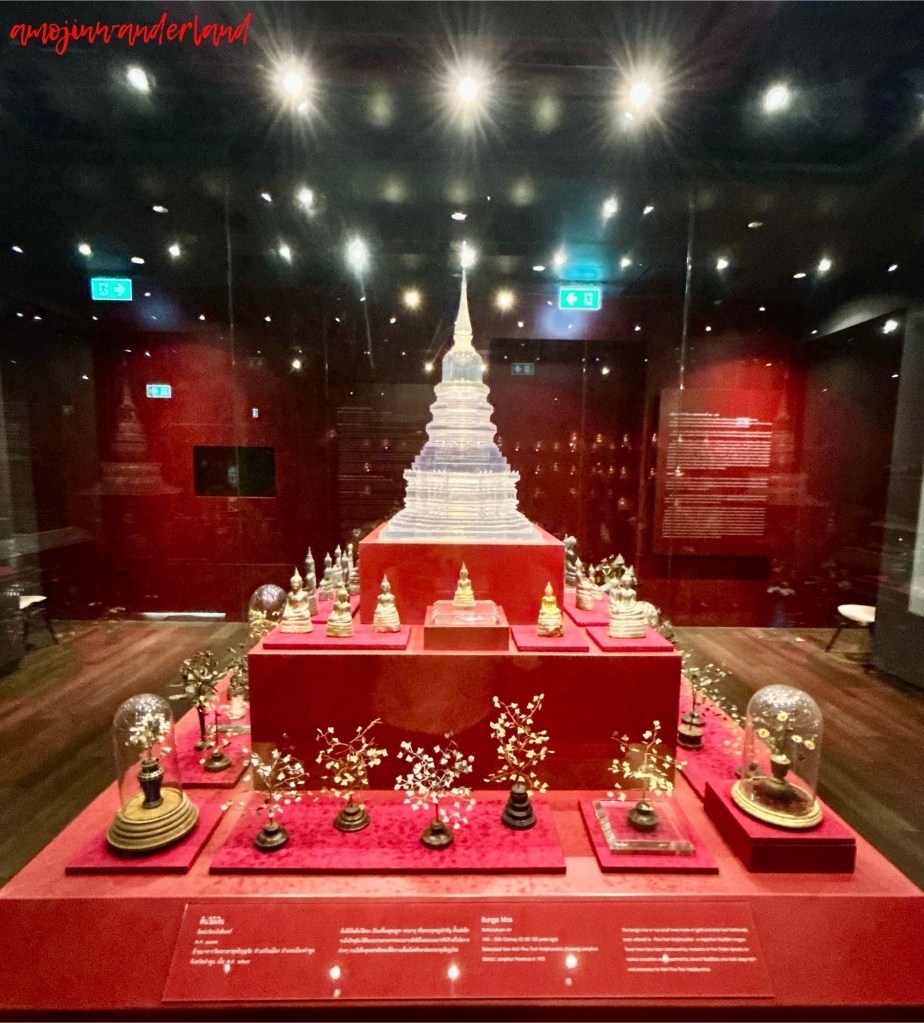
The final sequence of the museum focuses on the Lanna Restoration period, when political change and cultural revival encouraged the blending of multiple Thai artistic traditions. Many objects from this era are closely tied to Buddhist practice, including silver and gold floral offerings, elephant and horse models, and finely carved wooden ritual items. Everyday life is equally well represented through household tools, iron-forged implements, farming brackets, tung kradang banners, and carved wooden utensils. These works reflect the skills of Tai Lue and Tai Yong craftsmen, whose traditions merged naturally with influences from central Rattanakosin art to form a renewed Lanna cultural identity.
 Amoj In Wanderland