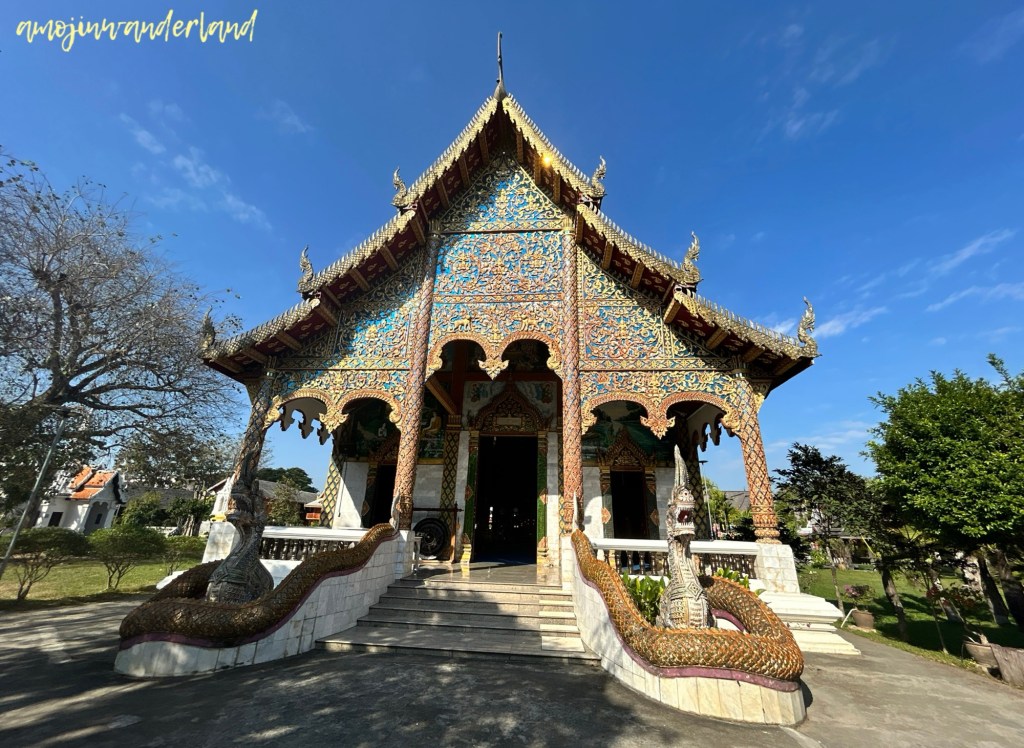
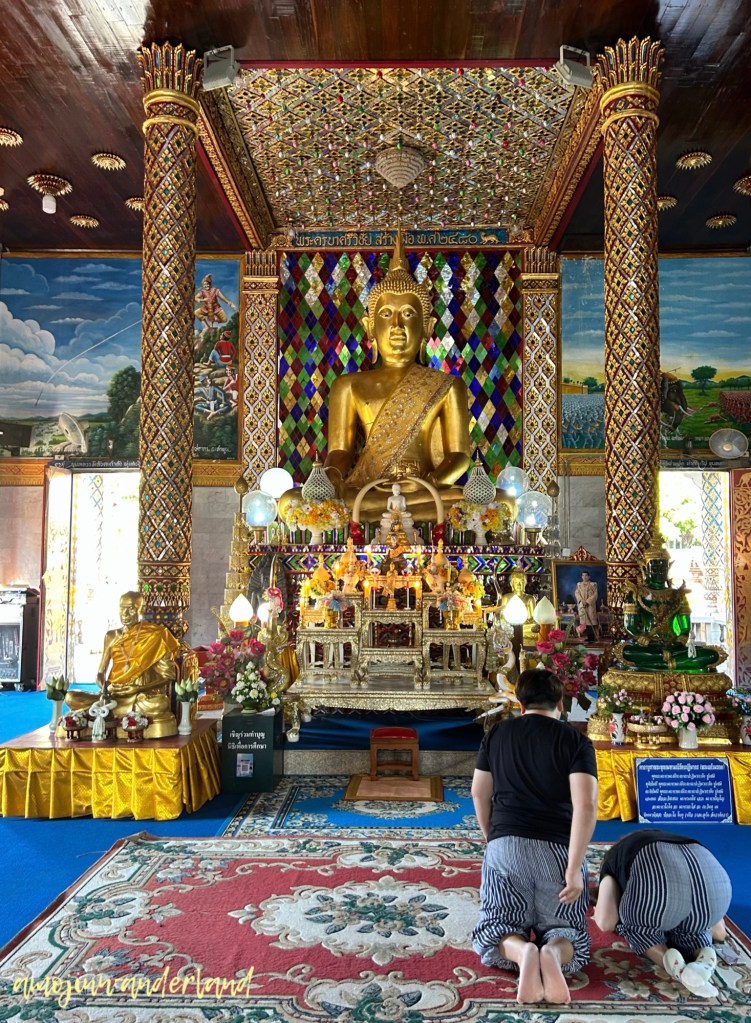
Wat Chamadevi, more commonly known as Wat Ku Kut, stands along Chamadevi Road in Tambon Nai Mueang, Lamphun, preserving a rare and tangible link to the Mon roots of northern Thailand. The temple is generally believed to have been founded around 1150, at a time when Lamphun was the capital of the Mon Dvaravati Kingdom of Hariphunchai. Local legend, however, places its origins much earlier, during the era of Queen Chama Thewi, who is credited with founding the town of Lamphun in the early 9th century. Reflecting this enduring association, the temple is also known as Wat Chama Thewi or Wat Chama Devi, named in her honor.
Wat Ku Kut is especially significant for housing one of the last surviving examples of Mon Dvaravati architecture in Thailand: the Mahabol chedi. This well-preserved stepped pyramid structure, also called the Suwan Chang Kot chedi or Suwannajangkot Chedi, forms the spiritual and visual focus of the temple. Its square, tiered form draws inspiration from Indian Buddhist architecture, particularly the Mahabodhi complex at Bodh Gaya, while expressing local Mon artistic traditions.
Historical tradition attributes the original construction of the chedi to King Athitayarat of the Hariphunchai Kingdom, who built it in the mid-12th century to commemorate a military victory over the Khmer. The structure seen today dates from 1218, when King Saphsit rebuilt the chedi after an earthquake damaged the earlier version. This rebuilding ensured the survival of the monument, allowing it to stand as a rare architectural witness to the Mon presence in the region.
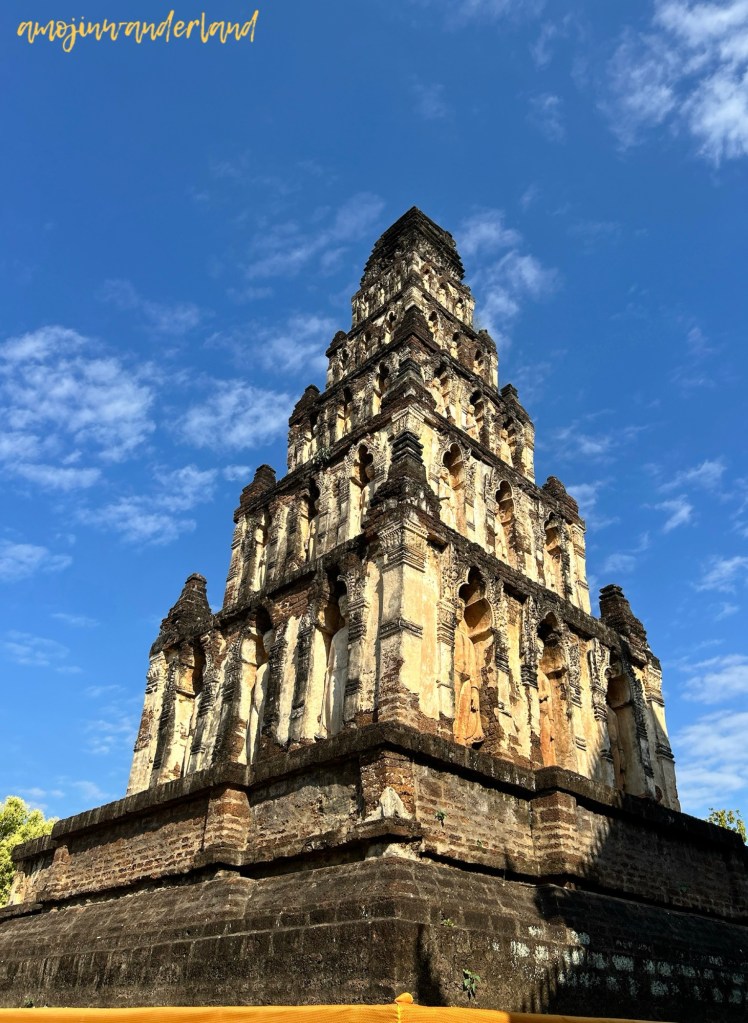
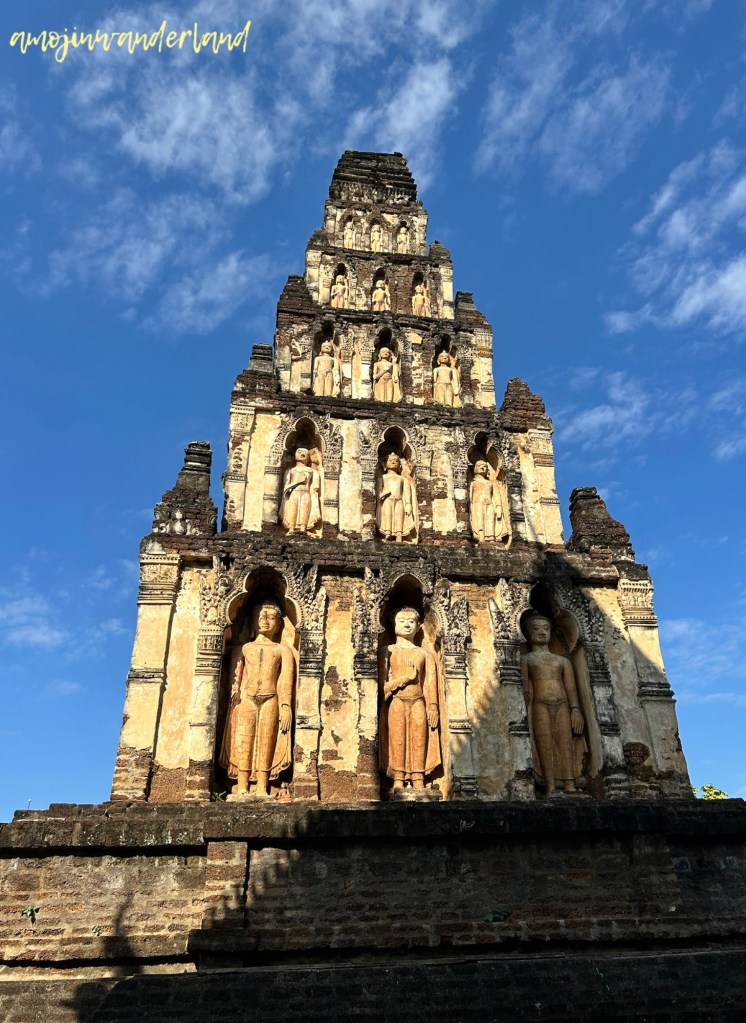
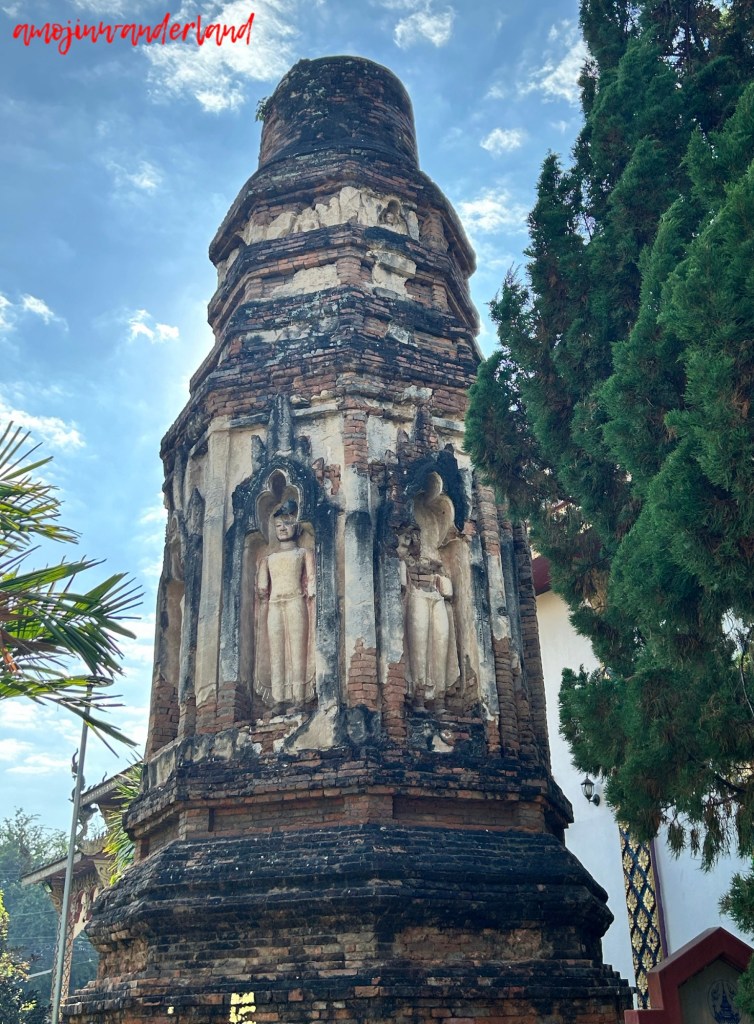
Rising to a height of about 21 meters, the brick chedi is coated in stucco and set on a square base. Above it rise five square tiers of gradually diminishing size. Each side of every tier contains three niches, enshrining standing Buddha images that become smaller toward the summit. These images, cast in molds during the 1218 reconstruction, are shown in the Abhaya mudra, with the right hand raised to dispel fear. Framing the niches are delicately executed stucco decorations, adding refinement to the otherwise austere geometry of the structure.
The chedi was once crowned with gold, symbolizing royal merit and devotion. Over time, the gilded summit disappeared, and the upper portion collapsed, leaving the structure with its now-familiar broken top. From this condition emerged the name “Ku Kut,” a reference to its truncated form. The weathered profile only deepens its sense of age, allowing the monument to speak quietly of centuries passed.
Elsewhere within the temple grounds stands the Rattana Chedi, positioned to the right of the main wihan. Built several centuries later, around the 17th Buddhist century, it reflects the continued religious importance of the site during the Lanna period, long after Hariphunchai had faded from political power.
 Amoj In Wanderland