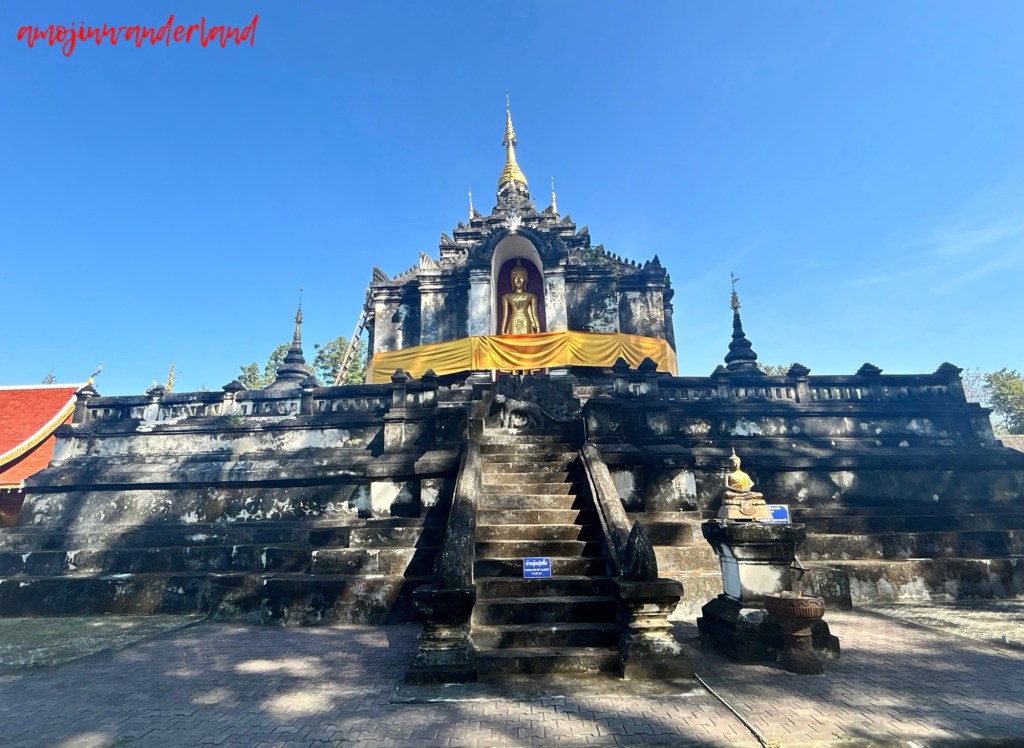
Wat Phra Yuen is a Theravāda temple located in Wiang Yong, on the eastern bank of the Kuang River in Lamphun. The monastery occupies about 29 rai of land and is recognized as one of the four corner temples of the ancient city of Hariphunchai. It traces its beginnings to the reign of Queen Chamadevi, the first ruler of the kingdom, who is believed to have founded the monastery in the seventh century. At that time, it was known as Araññikarama, reflecting its early role as a quiet monastic retreat.
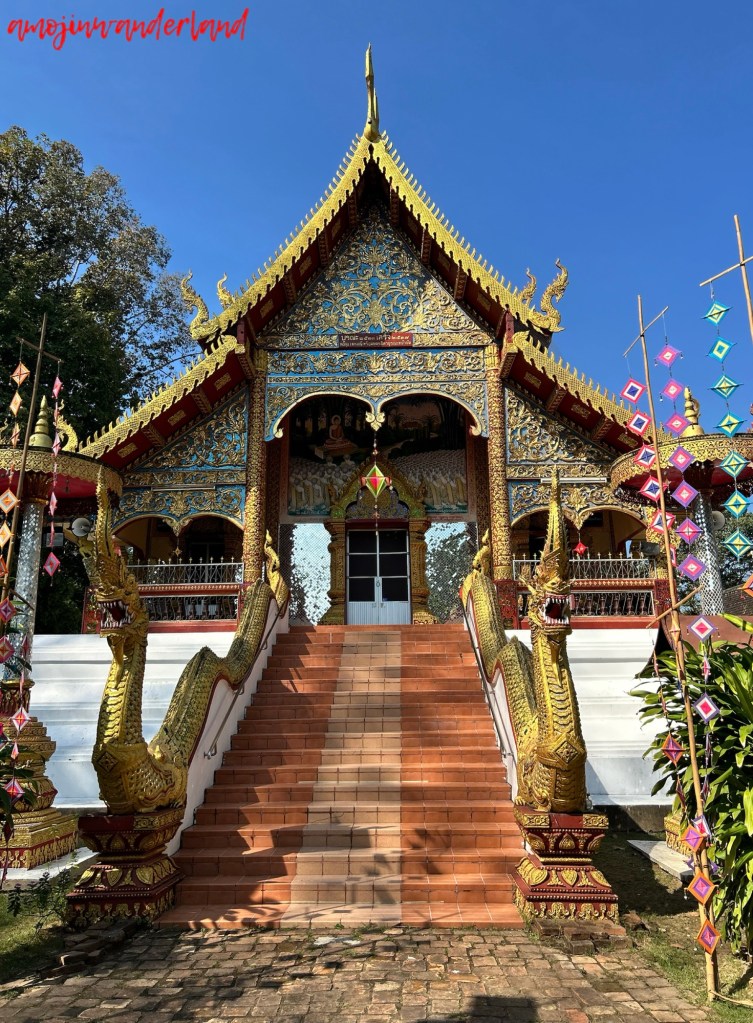
The temple later became known as Wat Phra Yuen after its principal standing Buddha image. According to temple records, this bronze figure was cast in the eleventh century during the reign of King Thammikarat. Standing about nine meters high, it was originally enshrined in a stupa behind the vihara, when the monastery was still called Wat Phuttharam. Over time, the prominence of this image shaped the identity of the temple and gave it its present name.
In the fourteenth century, during the rule of King Kue Na of Lanna, Wat Phra Yuen gained further importance. The king commissioned three additional standing Buddha images, bringing the total to four. Historical chronicles also note that Phra Sumanthera, a respected monk from Sukhothai, stayed at the temple after being invited to Chiang Mai, showing that Wat Phra Yuen had already become a significant religious center in the region.
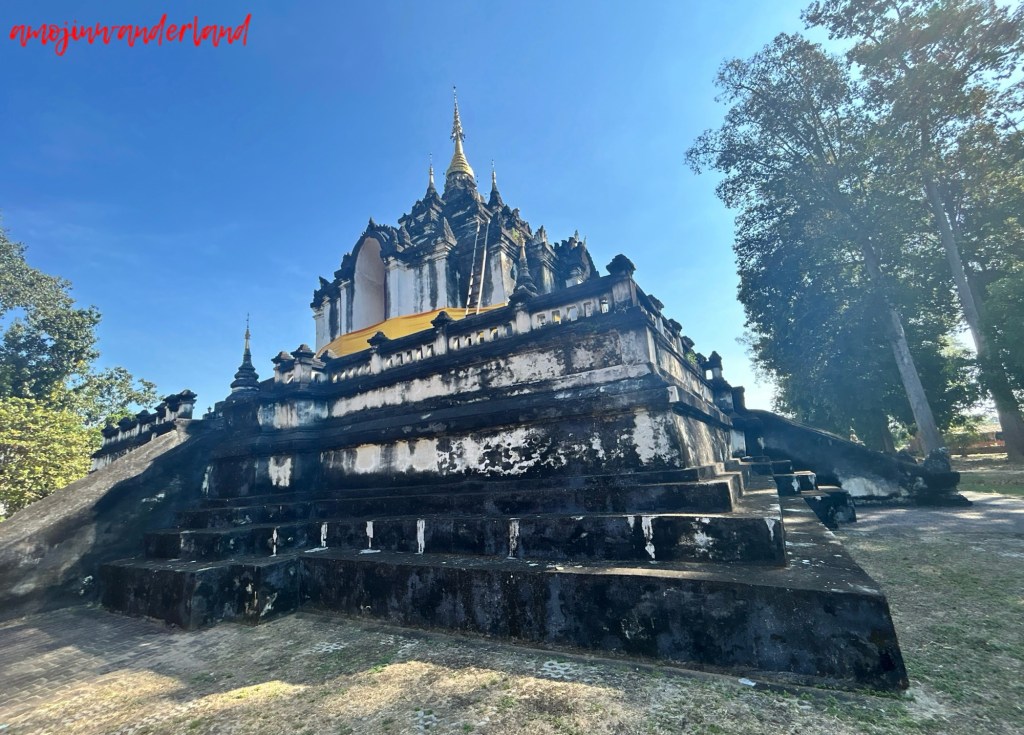
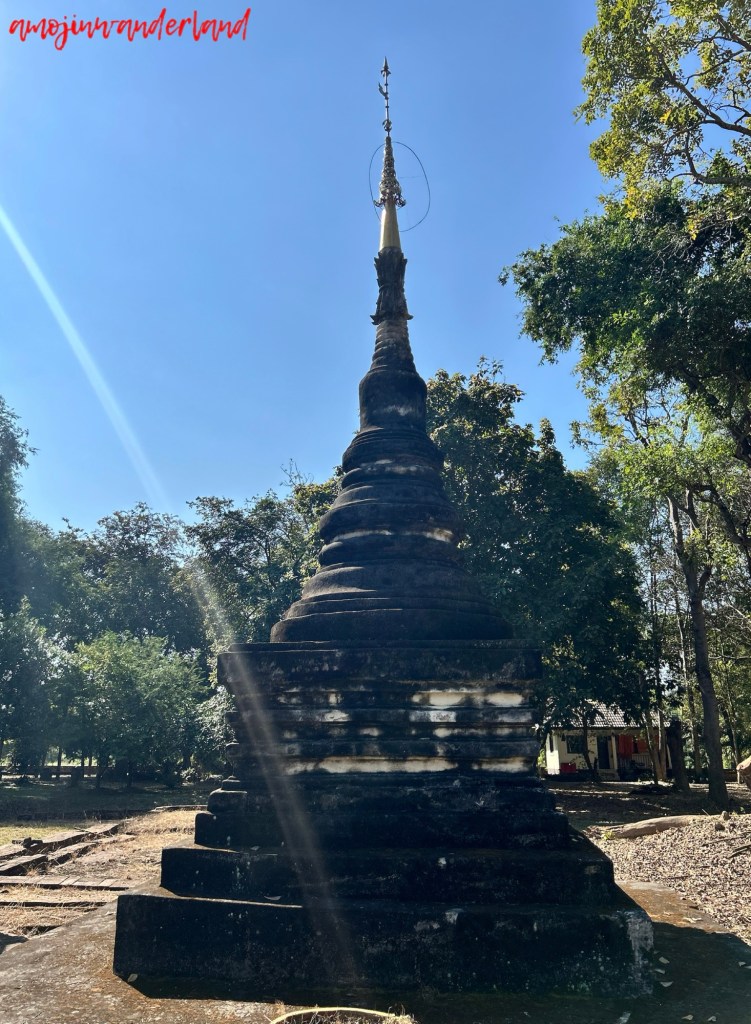
The main stupa remains the most distinctive structure in the complex. Built in the Bagan style, it stands on a tiered base with steps leading to an upper terrace used for circumambulation. Small satellite stupas mark the four corners, while niches on each side of the main structure hold the standing Buddha images. Above them rises a three-tiered ornamental crown topped with a gilded umbrella. A carved tiger relief on one stairway adds a simple decorative detail to the otherwise restrained design.
Restoration work has helped preserve the temple’s long history. In the early twentieth century, Phra Khru Sinwilat and Chao Inthayongyos oversaw the repair of the main stupa, enclosing the four standing Buddhas and adding smaller images around it. In 1928, the Fine Arts Department registered the stupa as a national monument. Later conservation efforts in 2005–2006 revealed important archaeological finds, including ancient brick foundations, an old paved road, monastic remains, and a Hariphunchai-style Buddha head dating from the twelfth or thirteenth century.
 Amoj In Wanderland