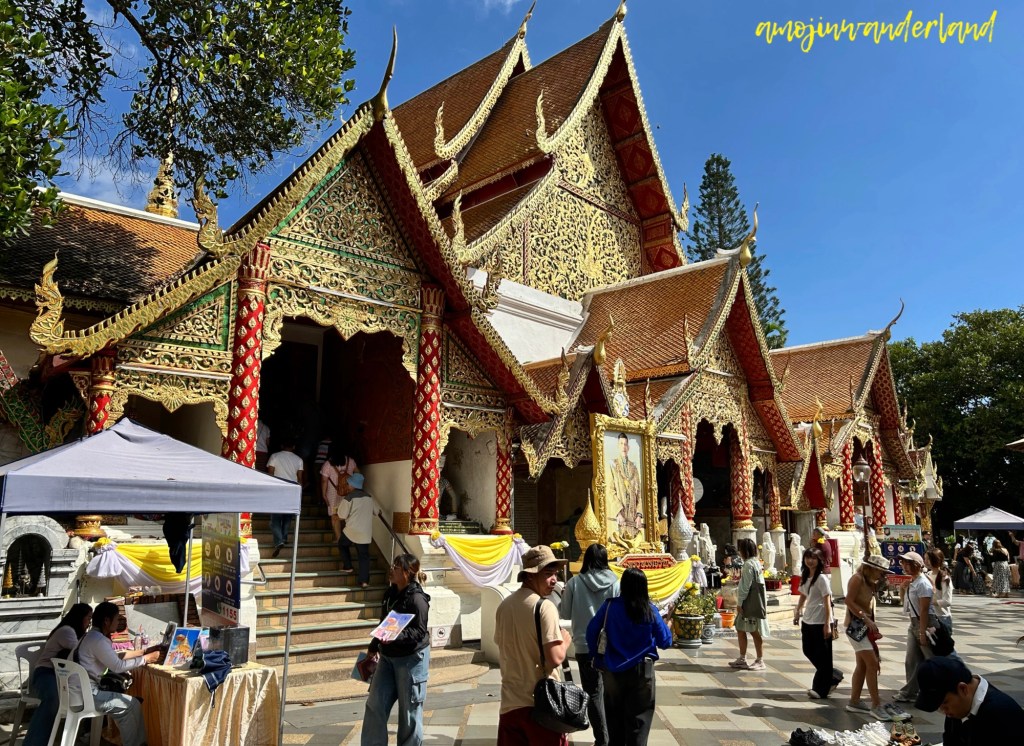
The origins of Wat Phra That Doi Suthep lie in a story that blends history and legend. In the fourteenth century, a monk named Sumanathera claimed to have discovered a sacred relic believed to be part of the Buddha’s shoulder bone. After being presented to rulers in Sukhothai and later in the Lan Na Kingdom, the relic eventually reached King Kue Na of Chiang Mai. Unsure where it should be permanently enshrined, the king placed it on the back of a white elephant and released the animal into the forest. According to tradition, the elephant climbed the mountain, stopped at the summit, trumpeted three times, and then died. Taking this as a sign, the king ordered a temple to be built on that spot, giving rise to what is now Wat Phra That Doi Suthep.
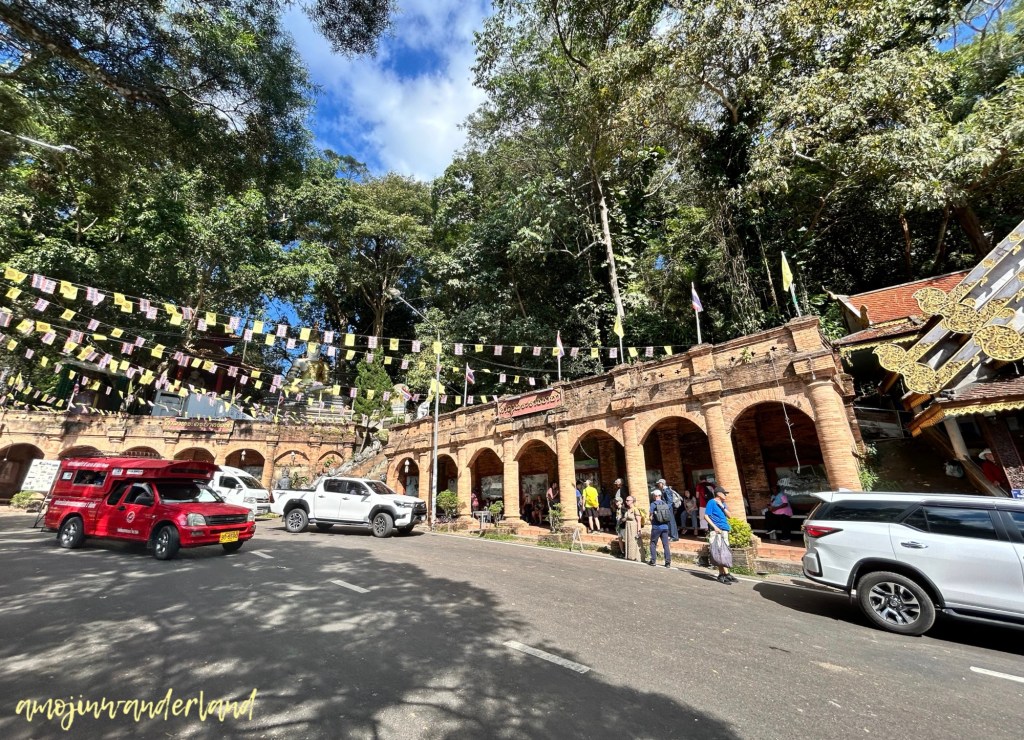
The temple stands on the forested slopes above Chiang Mai, more than a thousand meters above the city. Although many people simply call it “Doi Suthep,” the name properly refers to the mountain; the temple itself crowns the summit, overlooking the plains below. Its elevated setting has long made it both a physical and spiritual landmark for the region.
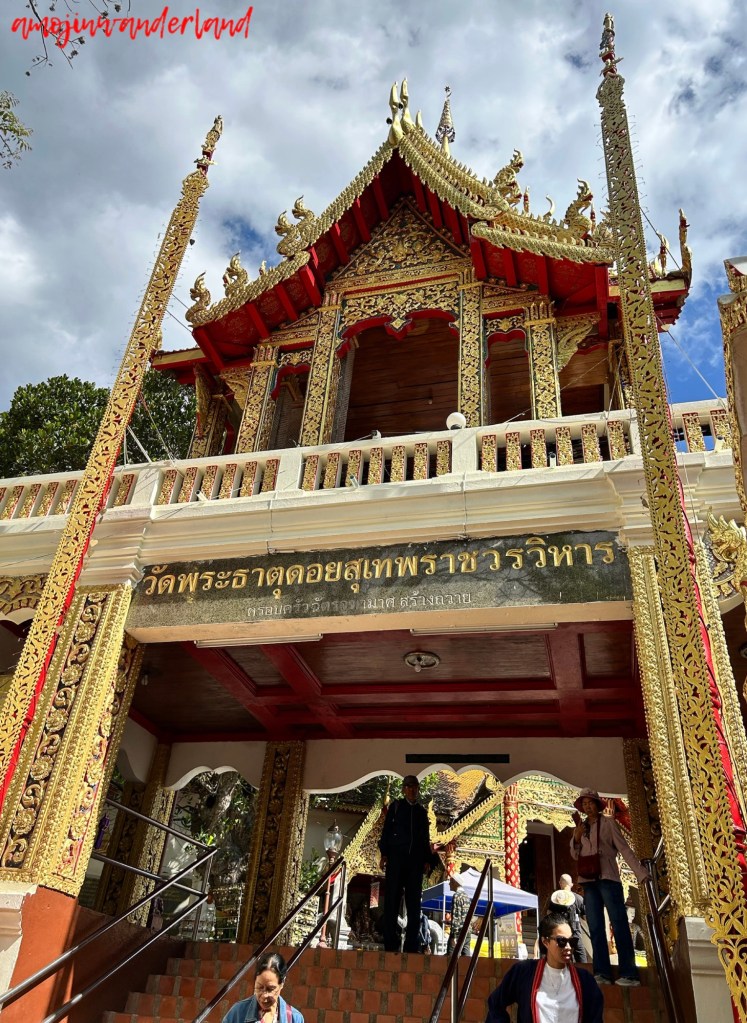
Reaching the wat is part of the experience. A winding road leads from the city up to the temple’s base, where visitors begin the final approach. From the car park, one can climb the well-known 309 steps to reach the pagodas or take a tram for a gentler ascent. A funicular railway and a series of steep ramps also make the site accessible to wheelchair users. For those who prefer to walk, the Monk’s Trail offers a shaded hike from the city, following a route once used by monks.
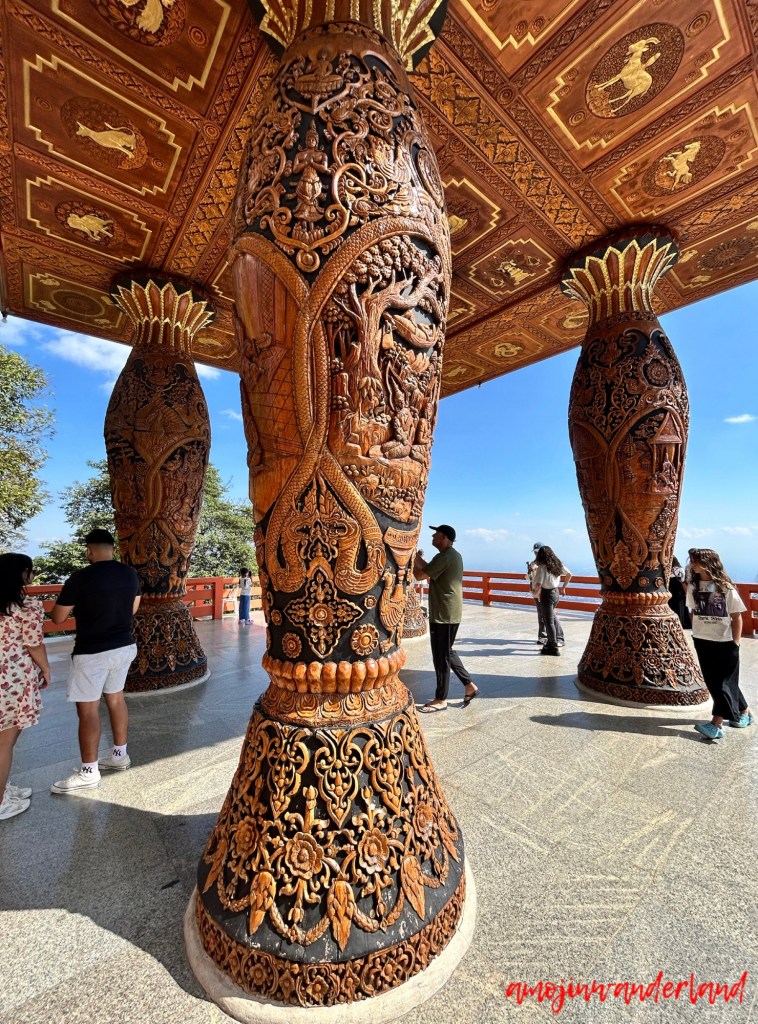
At the center stands the original gold-plated chedi, the most sacred part of the site, believed to house the revered relic. Around it are smaller pagodas, bells, statues, shrines, and a modest museum. While the temple is firmly rooted in Theravada Buddhism, traces of Hindu influence appear as well, including a statue of Ganesh and a model of the Emerald Buddha. On the far side of the grounds, a terrace opens to broad views of Chiang Mai.
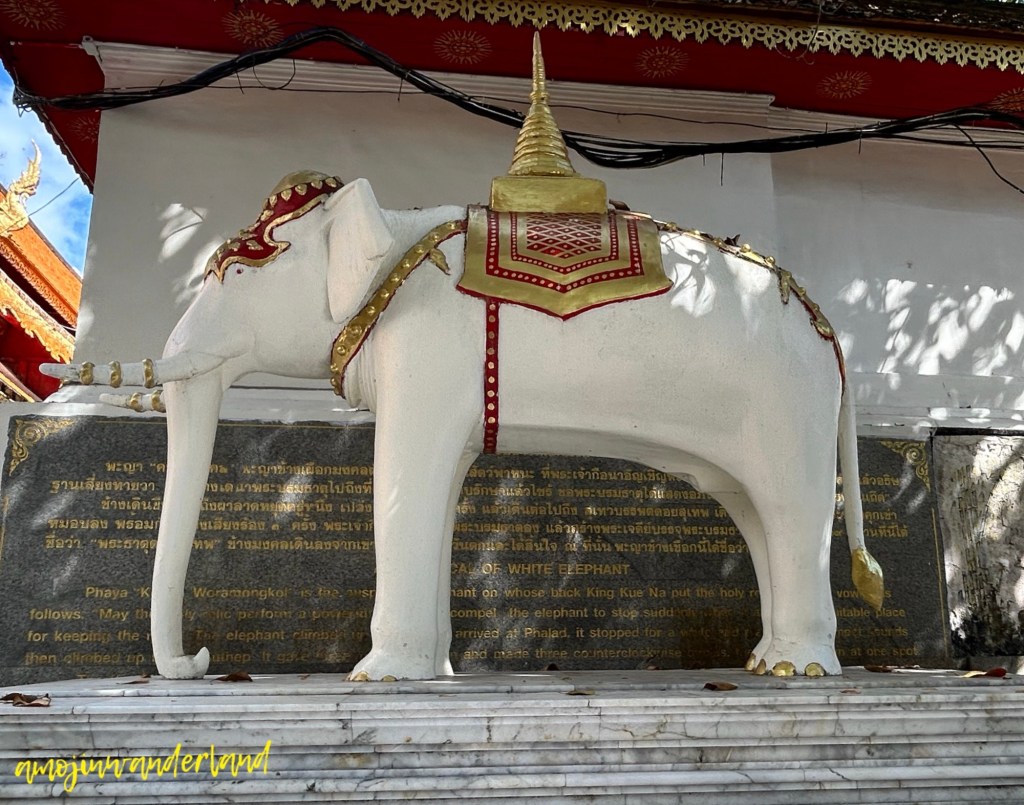
Near the entrance, a white elephant statue recalls the legend behind the temple’s founding. From there, the chedi becomes the clear focal point of the complex. Rising about twenty-four meters, its form reflects northern Thai architectural traditions, with a redented octagonal base and a tapering spire topped by a tiered chatra. The design shows strong Sukhothai influence, while the chatra reflects elements introduced during centuries of Burmese presence in the region. Beyond style, the structure carries meaning: its tiers represent the levels of heaven and the spiritual path toward Nirvana, while its softened angles and gold surface give it a sense of lightness rather than mass.
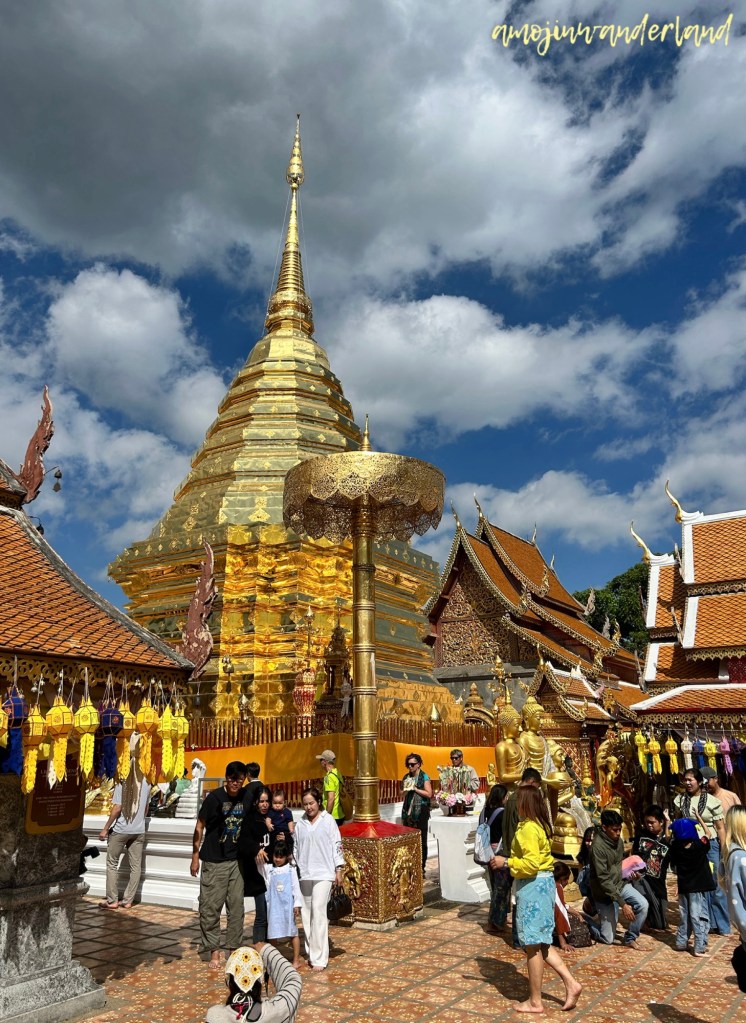
The surrounding buildings follow the same thoughtful design. The wihans, or assembly halls, are marked by layered roofs set at different angles. The lower tier appears more grounded, while the upper tier rises steeply, suggesting movement upward. This contrast reflects a central Buddhist idea—the gradual release from attachment. White stucco walls, decorated pediments, and roof ornaments such as nagas and chofas add character while maintaining the harmony of the site.
Inside the wihans, architecture and belief come together quietly. Walls and columns slope gently inward, supporting both the structure and the feeling that the space is subtly ascending. Murals line the interiors, depicting scenes from the Buddha’s life alongside Hindu elements, reflecting the region’s layered spiritual history. Light filters through narrow, trapezoidal windows, keeping the halls softly lit and drawing attention to the many Buddha images displayed in different styles and materials.
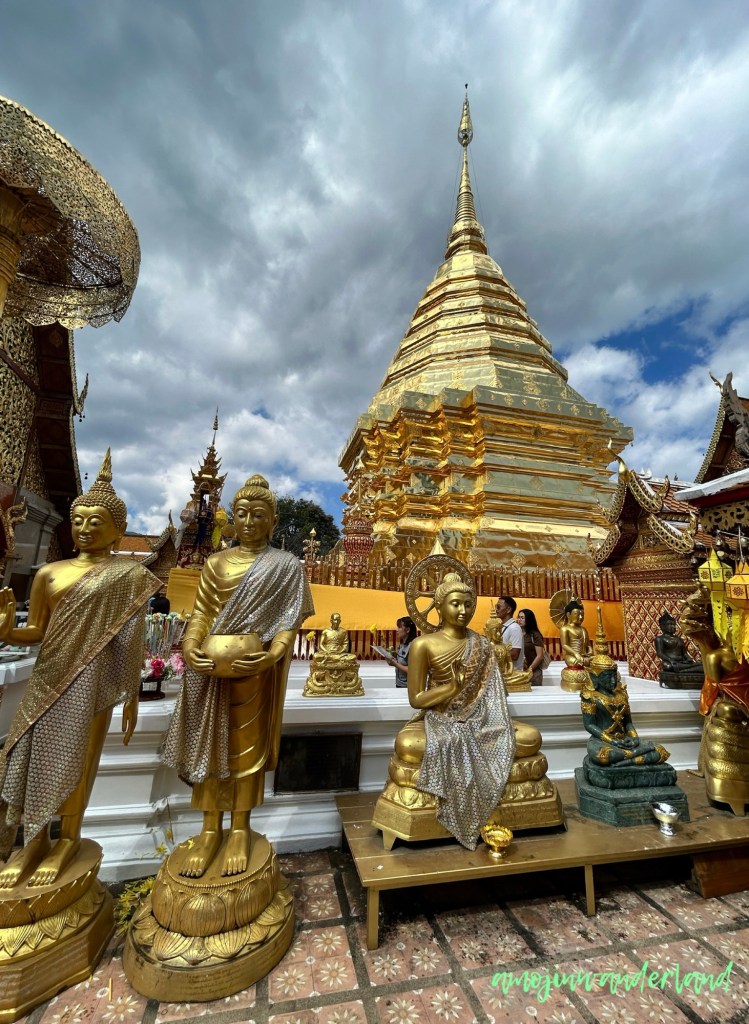
The layout of the complex is organized around the chedi, which remains its clear center. The main wihan faces west, toward the rising sun, following Buddhist tradition when no natural body of water determines orientation. Beyond the central courtyard, the placement of buildings follows the shape of the mountain. Viewing platforms, monks’ residences, and wooden halls all align toward the chedi, reinforcing its role as the spiritual heart of the temple.
 Amoj In Wanderland