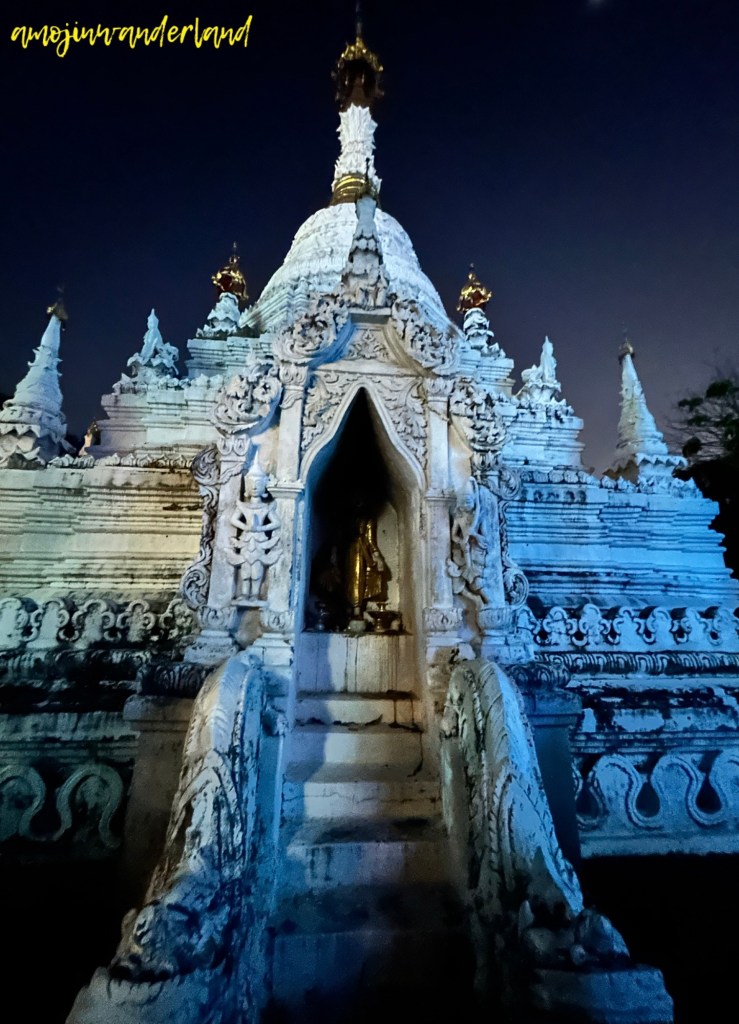
Wat Mahawan is a Buddhist temple along Thaphae Road, just outside the eastern edge of Chiang Mai’s old city. It was founded in the 17th century during the period of Burmese rule, established by Burmese traders involved in the teak industry, likely on the site of an earlier temple. While most of the structures standing today date from the 19th century or later, the temple still reflects its origins through a clear blend of Burmese and Lanna traditions.
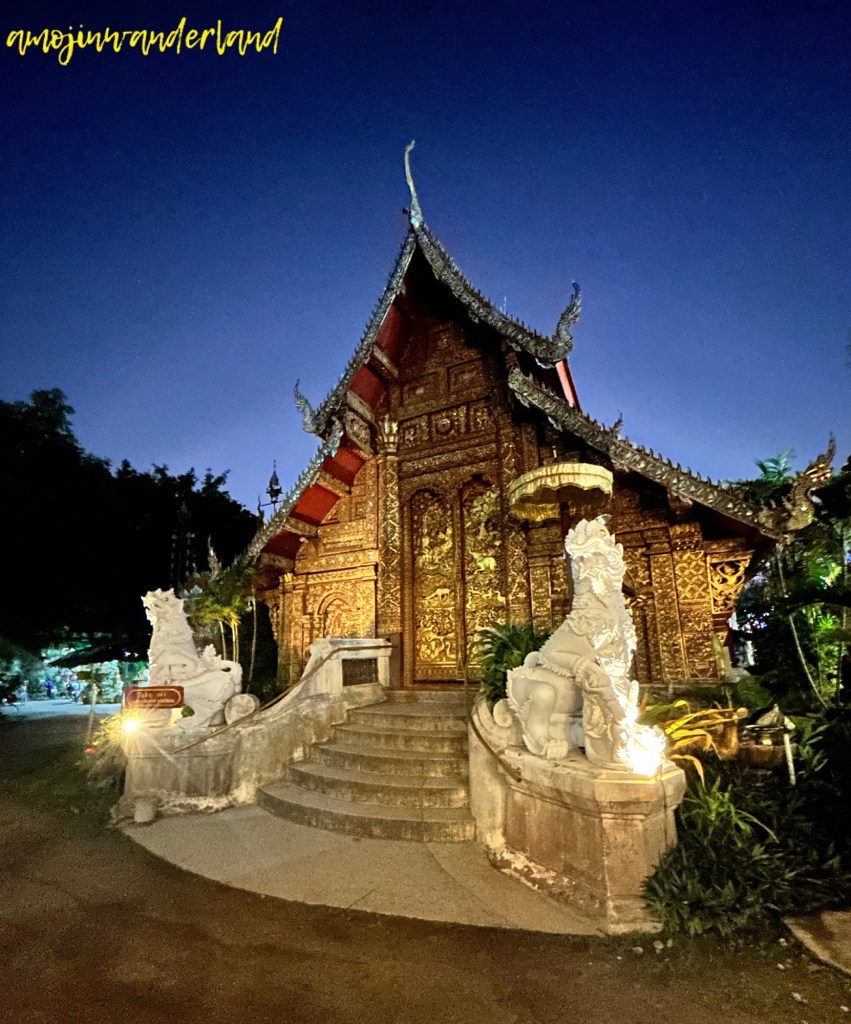
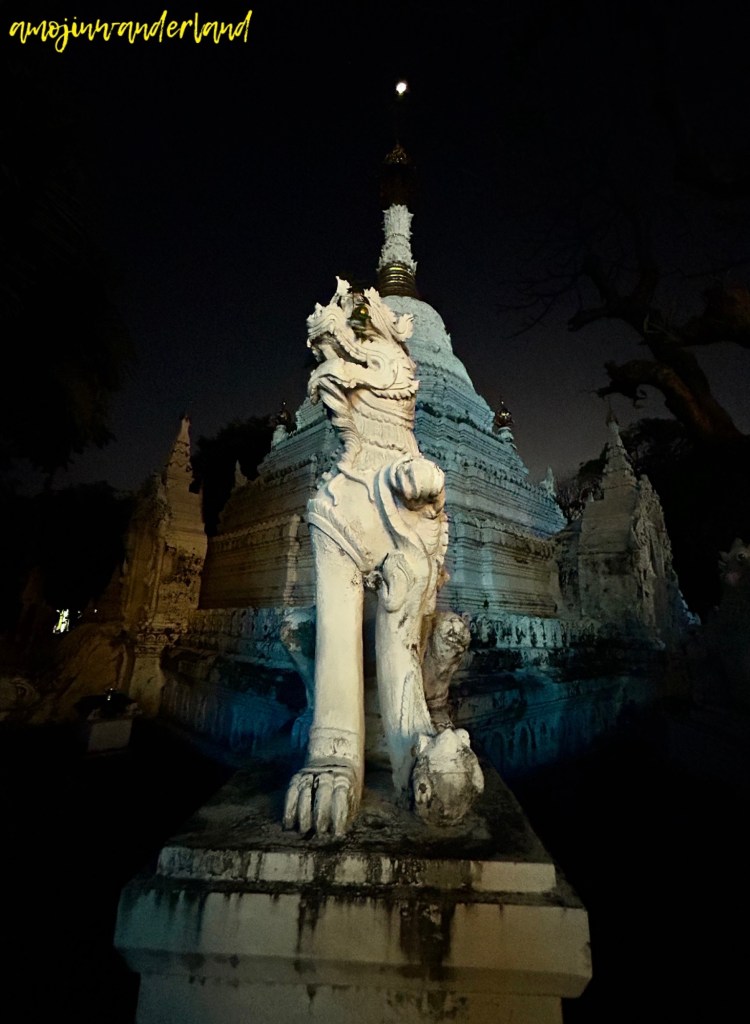
Several features of the compound show strong Burmese influence. The square, whitewashed pagoda, the wooden scripture repository that also serves as the abbot’s residence, and the archways with guardian lions are all typical of Burmese temple design. The older assembly hall near the west wall, built in the 19th century, further reflects this heritage, particularly through its principal Buddha image, Phra Chao To, which follows Burmese artistic style.
On the eastern side of the temple, the architecture shifts to a more distinctly Lanna character. The large assembly hall and the adjacent ordination hall were constructed around 1865 and later renovated in 1957. Their layout and details reflect northern Thai traditions, showing how the temple developed under local influence after the Burmese period.
We visited Wat Mahawan at night while walking from Tha Phae Gate. The temple was quiet and simply lit, making it easy to appreciate the mix of architectural styles without distraction.
 Amoj In Wanderland