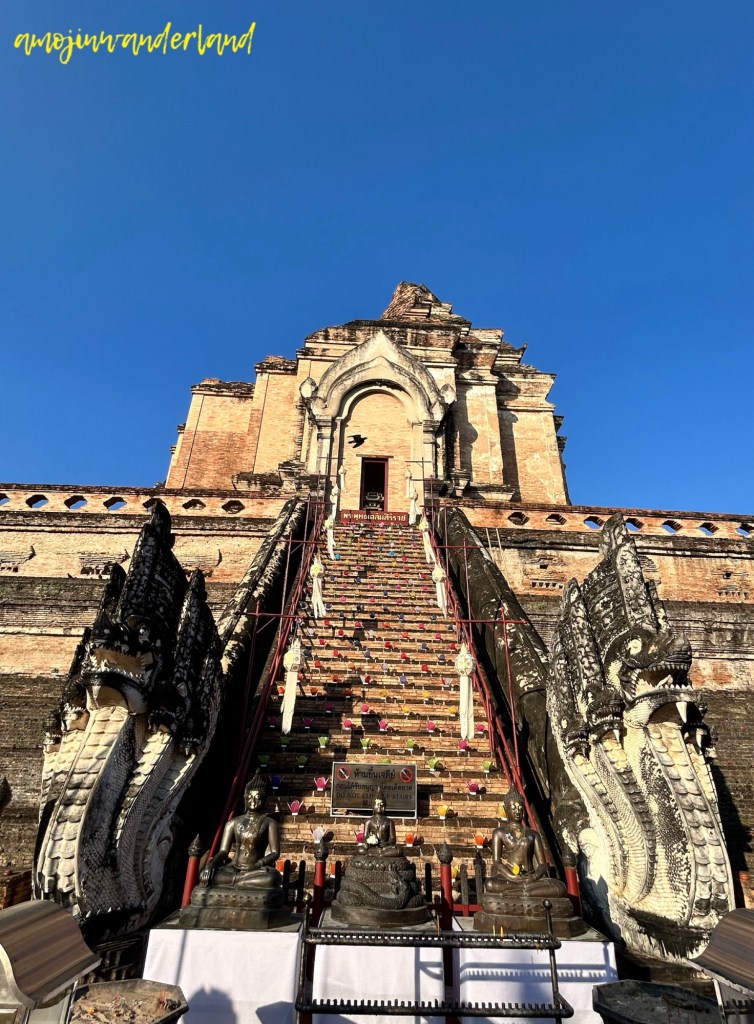
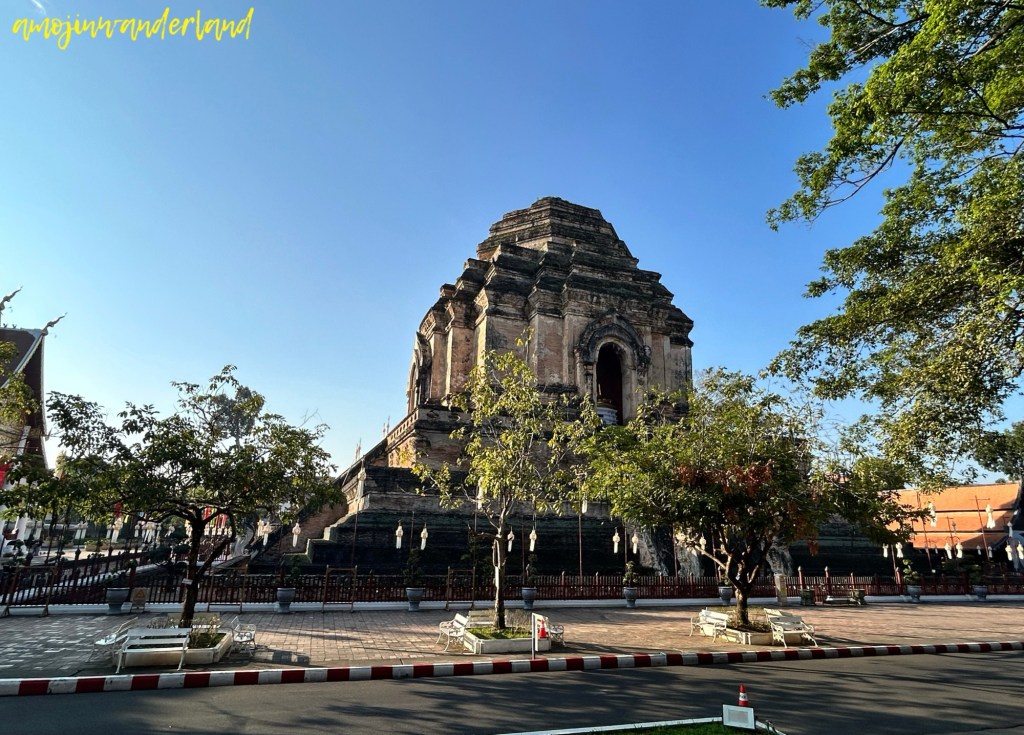
Wat Chedi Luang stands at the center of Chiang Mai’s old city, where the layers of the past remain clearly visible in both its architecture and daily life. Known as the “Temple of the Great Stupa,” the site brings together what were once three separate temples, Wat Chedi Luang, Wat Ho Tham, and Wat Sukmin, into a single complex that has served as a religious and civic landmark for more than six centuries.
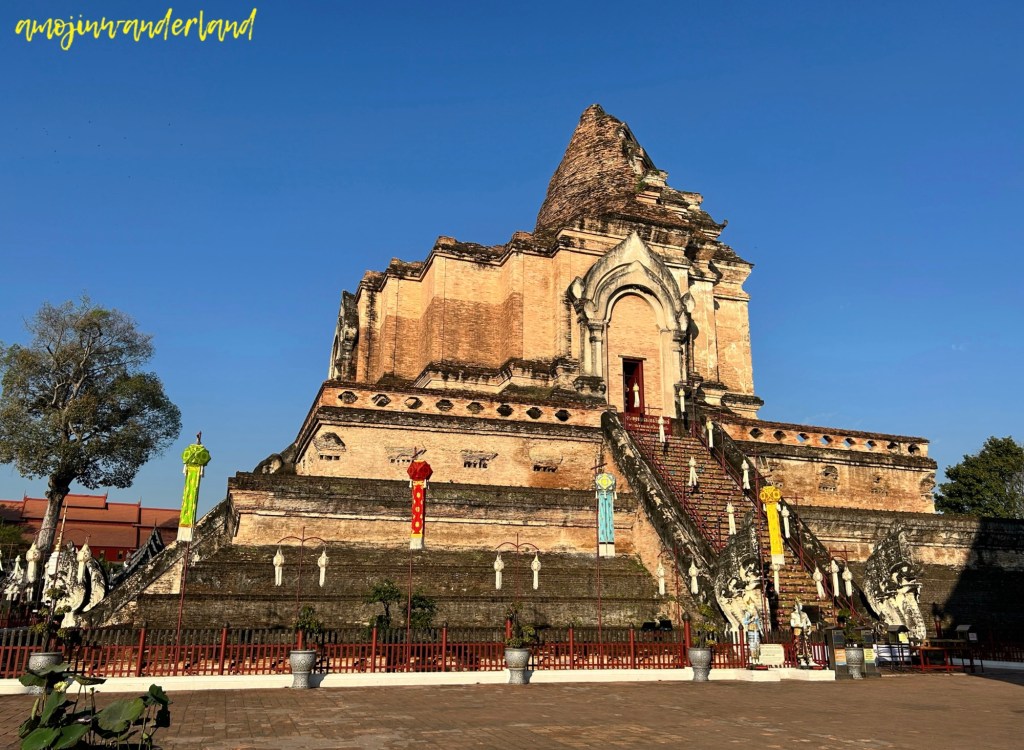
Construction of the massive chedi began in the late 14th century under King Saenmuangma, who intended it to enshrine the ashes of his father. Work continued across several reigns and was finally completed in the mid-15th century during the time of King Tilokaraj. When finished, the structure rose about 82 meters high with a base measuring 54 meters across, making it the largest building in the Lanna kingdom and a powerful symbol of royal devotion and political stability.
Wat Chedi Luang later became closely linked with one of Southeast Asia’s most revered religious icons. In 1468, the Emerald Buddha was installed in a niche on the eastern side of the chedi, elevating the temple’s status as a major center of worship. This period of prominence ended after a strong earthquake in 1545 caused the upper portion of the chedi to collapse. A few years later, in 1551, the Emerald Buddha was moved to Luang Prabang, beginning the journey that would eventually take it to Vientiane and then to Bangkok.
What stands today is a monument shaped by both loss and renewal. In the early 1990s, restoration efforts supported by UNESCO and the Japanese government stabilized the remaining structure. Although the project preserved the chedi for future generations, it also prompted discussion about style, as some of the new elements reflected Central Thai influences rather than traditional Lanna design. To commemorate the chedi’s 600th anniversary in 1995, a black jade replica of the Emerald Buddha, officially named Phra Phut Chaloem Sirirat and commonly known as Phra Yok, was placed in the restored eastern niche, symbolically reconnecting the temple with its historic role.
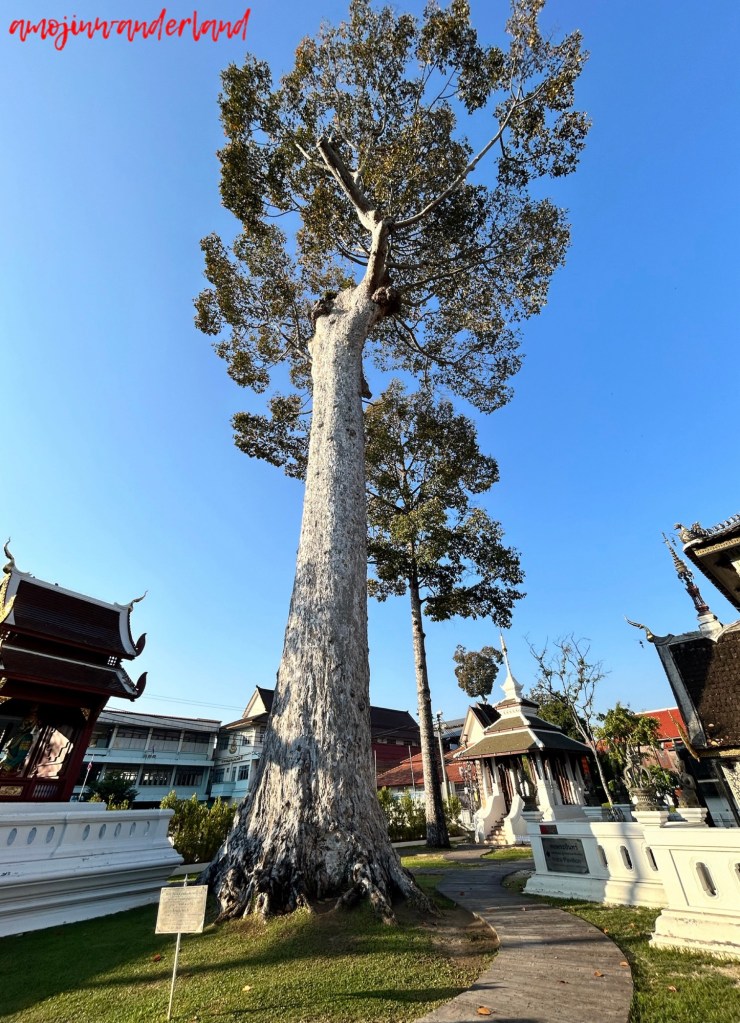
The importance of Wat Chedi Luang extends beyond its main stupa. Within the grounds stands Sao Inthakin, the city pillar of Chiang Mai, moved here in 1800 by King Kawila as part of efforts to revive the city after years of decline. Each May, a festival in honor of the city pillar brings residents together for several days of offerings and prayers, reinforcing the temple’s role not only as a religious center but also as a focal point of civic identity.
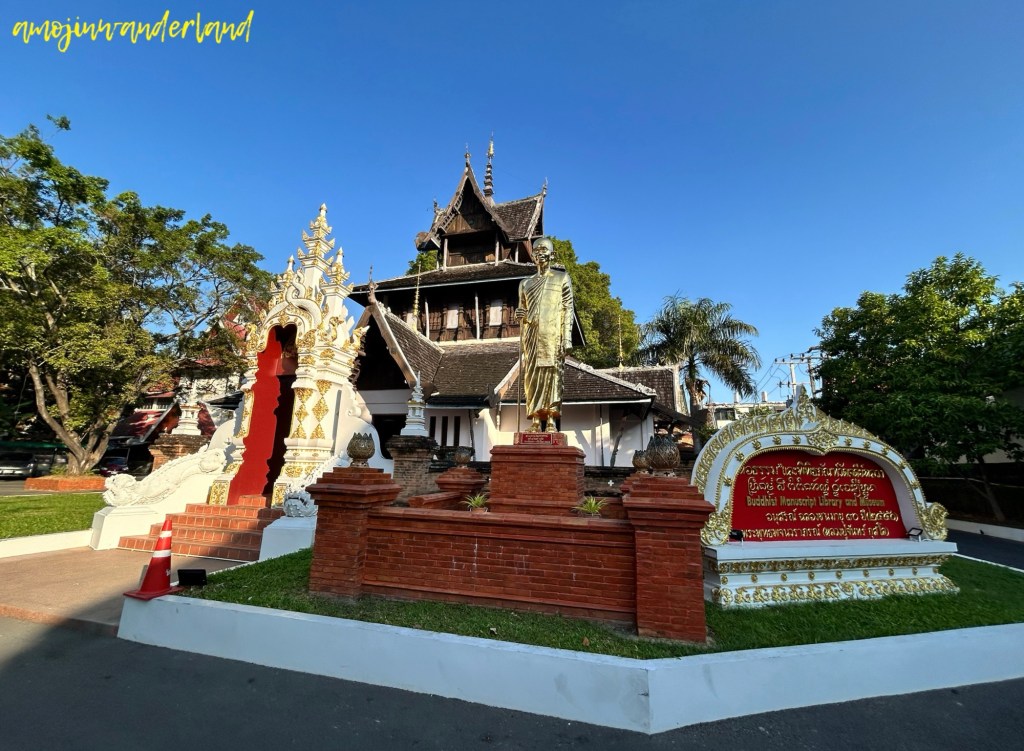
Visitors entering the complex encounter this continuity in more intimate spaces as well. Near the entrance is a wihan housing Phra Chao Attarot, a large standing Buddha cast in the late 14th century and named for its original height of eighteen cubits. On the opposite side of the chedi, another pavilion shelters a reclining Buddha, creating a balanced sequence of sacred images that guide visitors through the grounds.
 Amoj In Wanderland