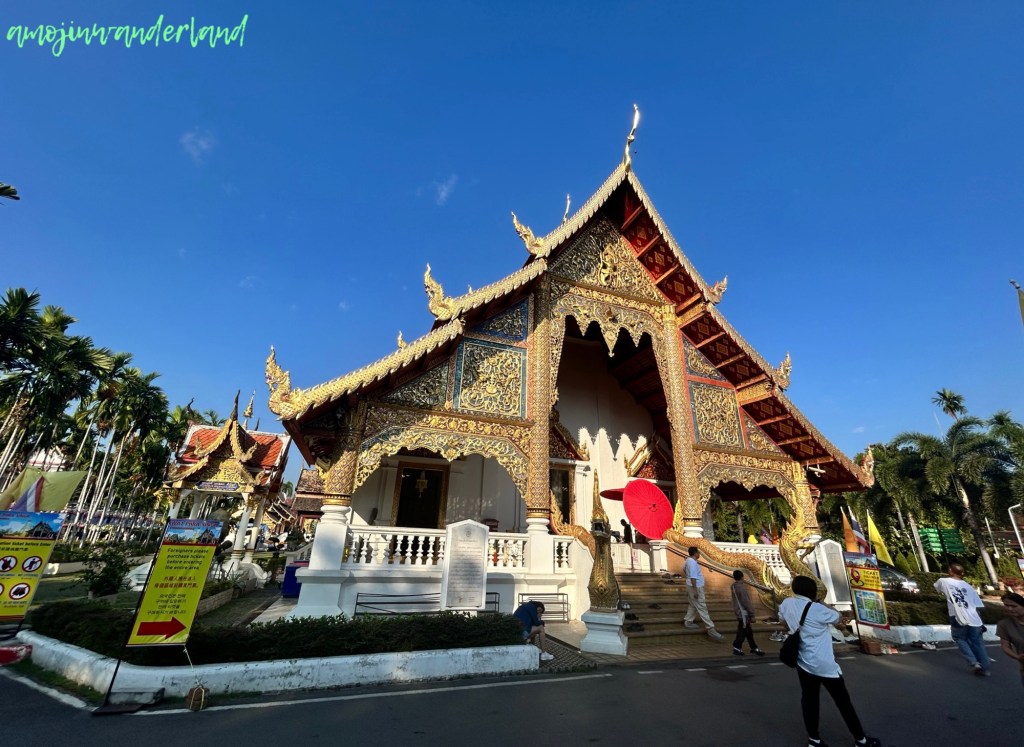
Wat Phra Singh Woramahaviharn is one of the most important Buddhist temples within the old walled city of Chiang Mai. Located on the western side of the historic center, it lies within the core zone of the Chiang Mai UNESCO World Heritage initiative and continues to function both as an active monastery and a major cultural landmark.
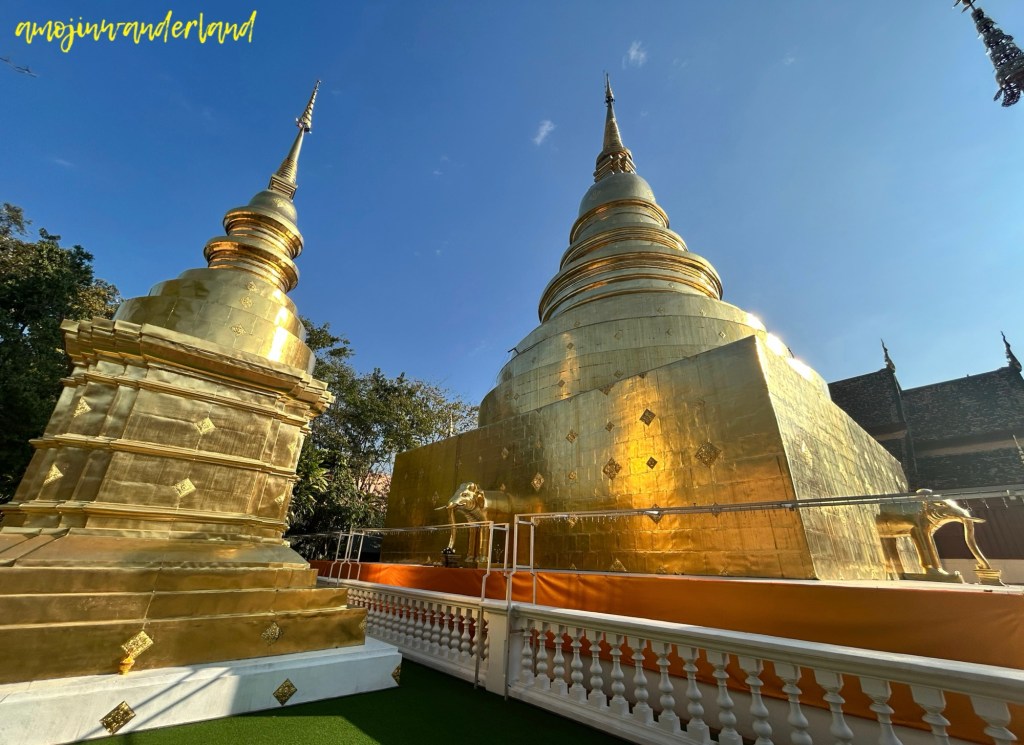
Construction of the temple began in 1345 during the reign of King Phayu of the Mangrai dynasty. It was originally established to enshrine the ashes of his father, King Kham Fu, and was first known as Wat Phra Chiang or Wat Li Chiang Phra, as recorded in the Chiang Mai Chronicle. In 1367, the installation of the revered Phra Buddha Sihing gave the temple its present name and firmly established its religious importance in northern Thailand.
The Phra Buddha Sihing is regarded as the second most important Buddha image in Thailand, next only to the Emerald Buddha enshrined at Wat Phra Kaew in Bangkok. There are at least three Buddha images known by this name. In addition to the image housed in the Viharn Lai Kham at Wat Phra Singh, another is kept at the National Museum in Bangkok, while a third is enshrined at Wat Phra Mahathat Woramahawihan in Nakhon Si Thammarat. Each image holds regional significance and reflects the long and complex history of devotion associated with the Phra Buddha Sihing tradition.
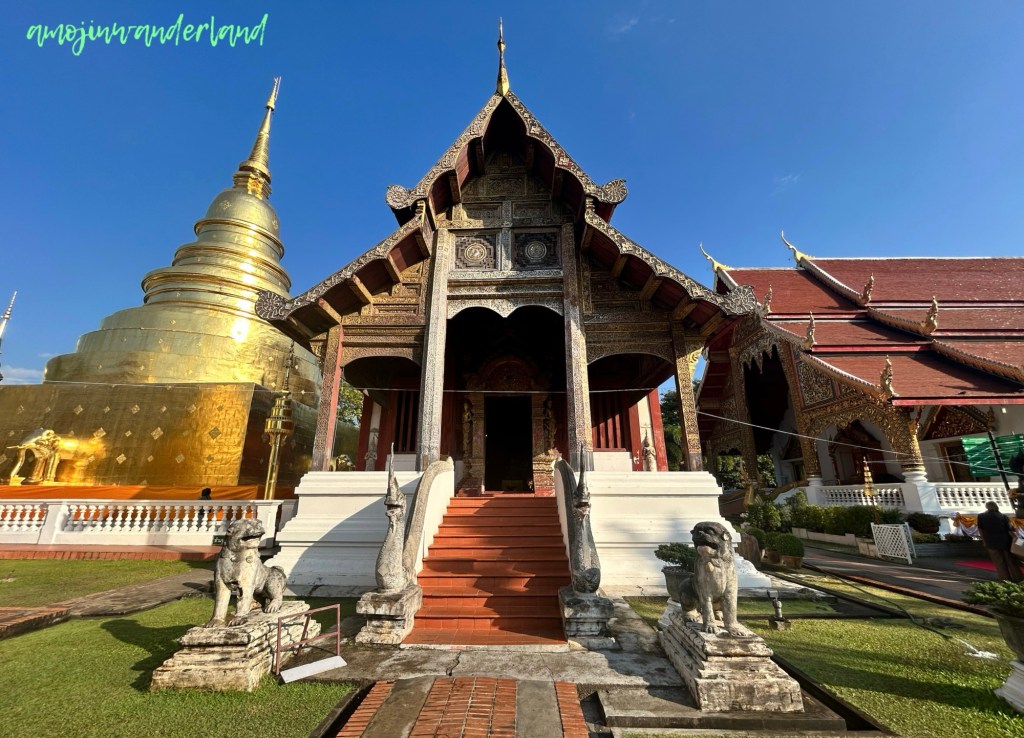
At Wat Phra Singh, the image is enshrined in the Viharn Lai Kham, the most recognized structure in the compound. Built in the mid-14th century, the viharn is a representative example of Lanna architectural style. Its interior murals, though partially damaged, remain historically important. The murals on the left side depict scenes from the Sangthong story, while those on the right illustrate the Suwanna Hong narrative, offering visual records of social life and customs in historical Chiang Mai.
Surrounding the main stupa on the south, north, and west are three smaller gilded chedis, two of which contain niches with Buddha images.
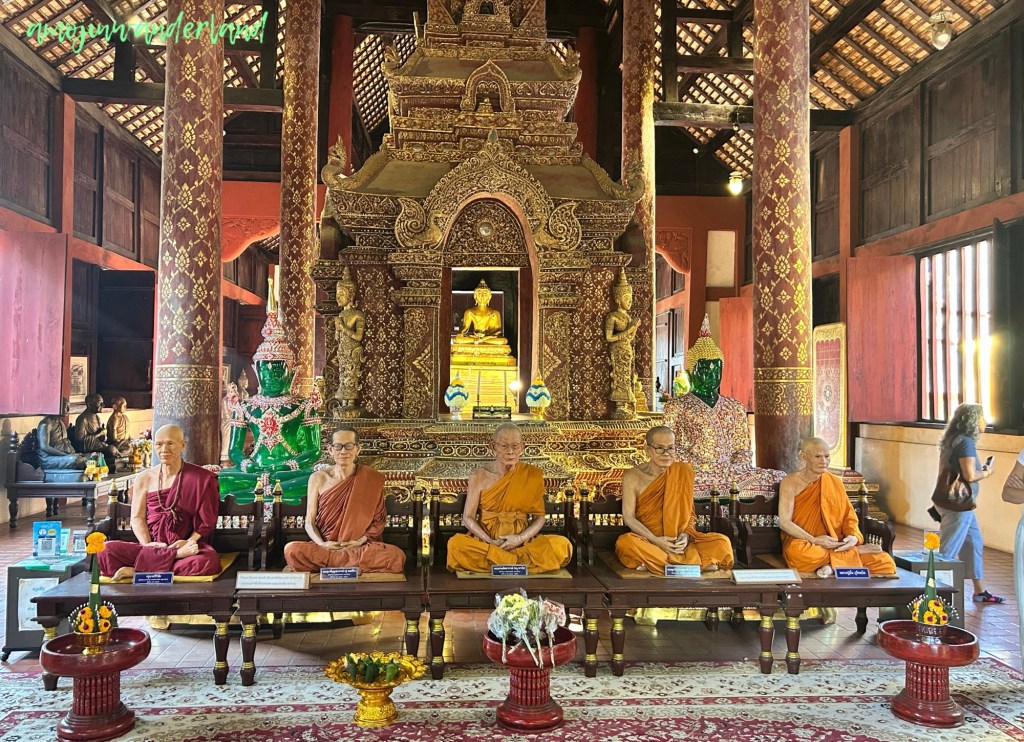
Wat Phra Singh has undergone several major restoration campaigns over the centuries. King Kawilorot Suriyawong restored the Viharn Lai Kham in 1863, followed by further work under King Inthawichayanon in 1886. Conservation efforts by the Fine Arts Department during the seven hundredth anniversary of Chiang Mai helped stabilize and preserve the temple’s key structures and murals.
In 1935, King Ananda Mahidol conferred upon Wat Phra Singh the status of a first-class royal temple.
 Amoj In Wanderland