Wat Chiang Man is regarded as the oldest temple in Chiang Mai and traces its origins to the founding of the city itself. It was established by King Mangrai in 1297 on the site of Wiang Nopburi, a fortified settlement of the Lawa people that he had used as a camp while planning and building his new capital. Local accounts at the temple add that Mangrai, together with Phaya Ramkamhaeng of Sukhothai and Phaya Ngam Mueang of Phayao, ordered the construction of a chedi at this location, which became Wat Chiang Man. Mangrai is said to have stayed nearby at a place known as Baan Chiang Man, from which the temple takes its name. Today, a monument to the three kings stands in front of the Chiang Mai Arts and Cultural Center, commemorating their role in founding the city.
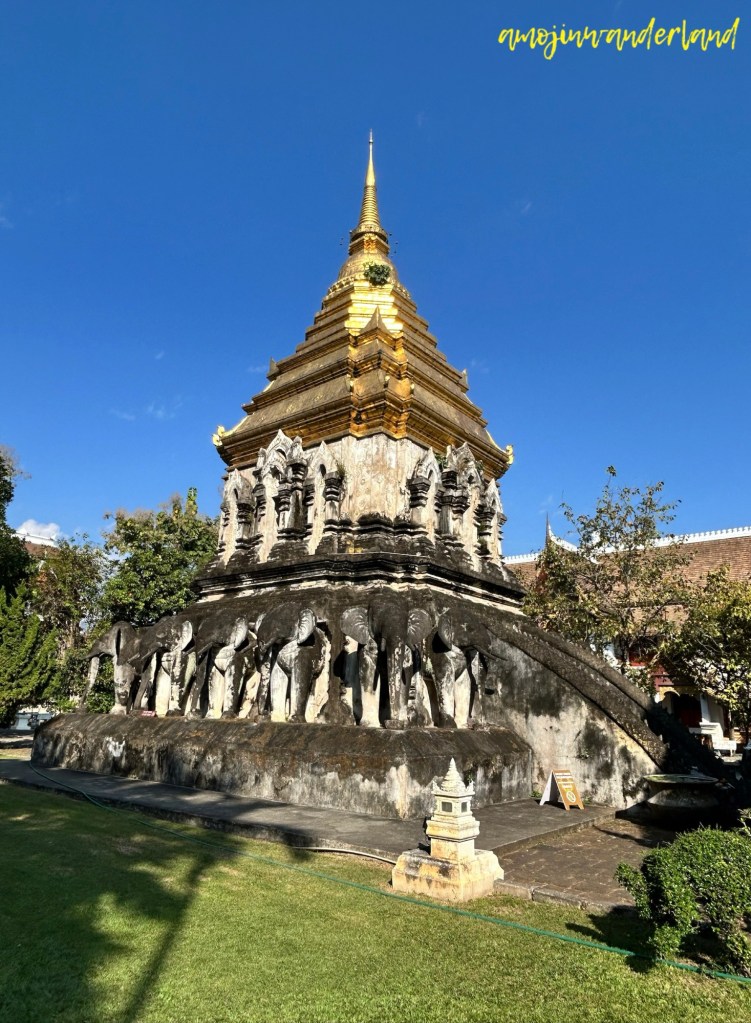
The most distinctive structure within the temple complex is the Chedi Chang Lom, often called the “Elephant Chedi,” which is also the oldest surviving construction on the site. Its square base supports a second tier from which fifteen life-sized brick-and-stucco elephants emerge, as if carrying the upper levels on their backs. Above them rises a gilded, bell-shaped relic chamber beneath the pinnacle, giving the chedi both architectural weight and symbolic presence.
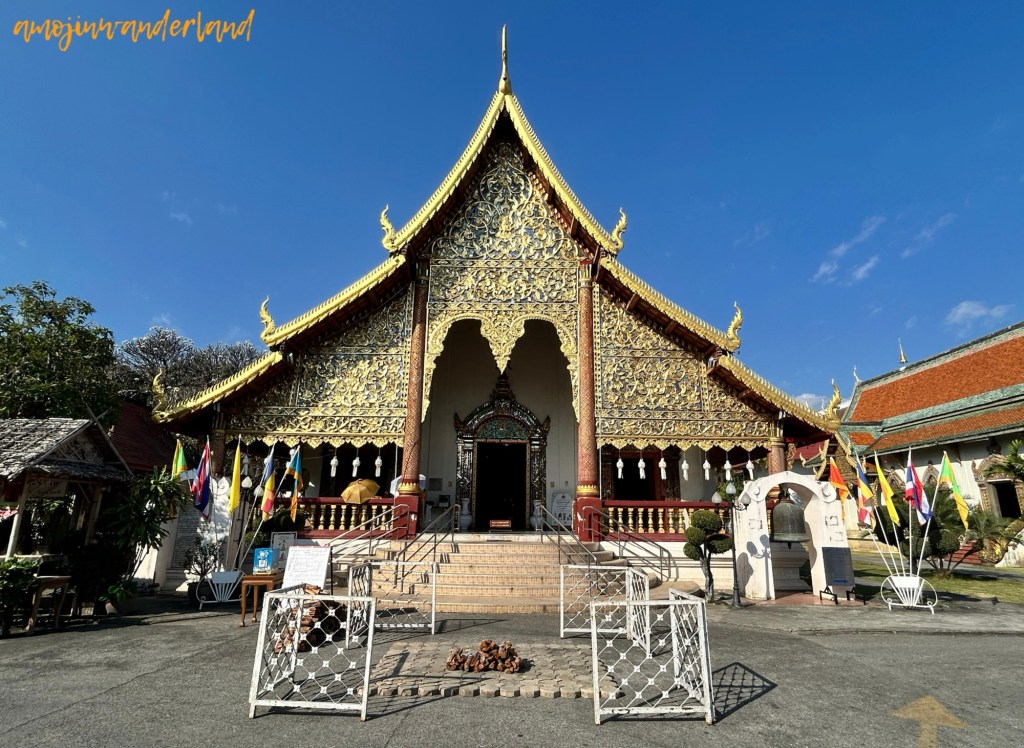
Wat Chiang Man has two main wihans. The larger Main Wihan was renovated in the 1920s by the revered monk Khru Ba Srivichai. Inside is a large mondop-style altar surrounded by Buddha images. Among them is a standing Buddha with the year 1465 engraved on its base, often identified as the oldest known statue from the Lanna Kingdom and the earliest Thai Buddha image depicted holding an alms bowl. The façade of the wihan is decorated with gilded carvings of Kirtimukha set among floral and plant motifs.
 Amoj In Wanderland