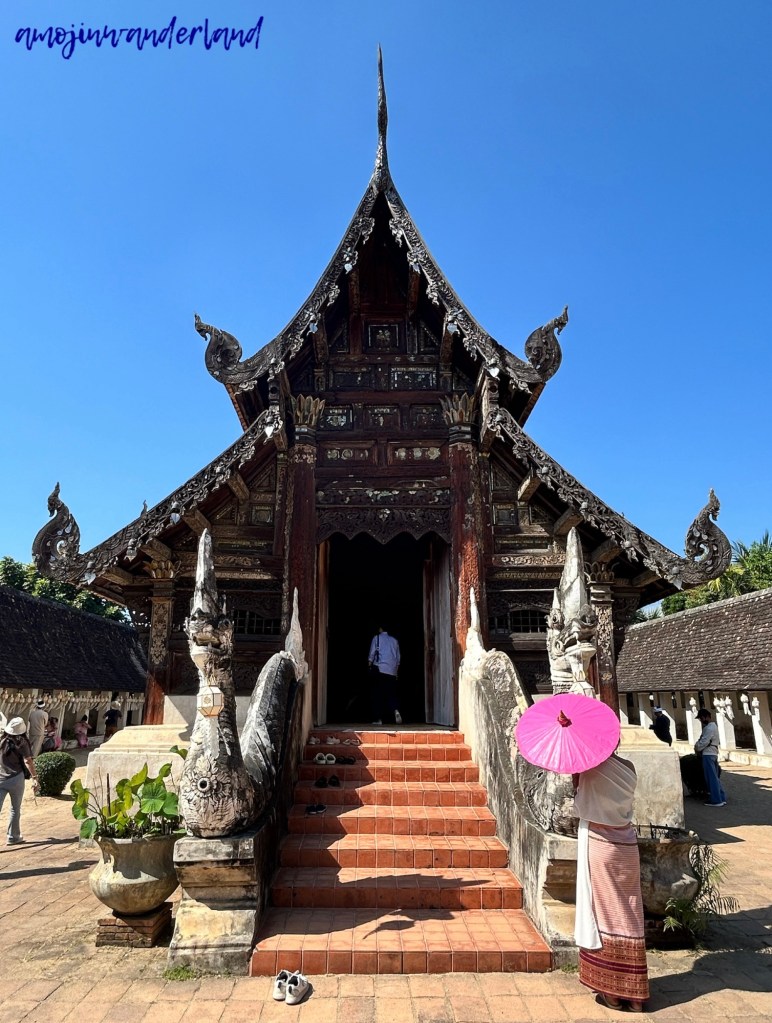
Wat Ton Kwen, also known as Wat Inthrawat, is a Buddhist temple in Nong Khwai, Hang Dong district, Chiang Mai, situated along Thanon Sai Khlong Chonlaphrathan. Approaching from Ton Phayom Market, the route passes Royal Park Rajapruek before reaching the temple, marking a gradual transition from the city’s busier areas to a quieter, more traditional setting.
The temple dates to around 1852, during the reign of King Kawilorot Suriyawong, the sixth ruler of Chiang Mai. It was established as a resting place for the procession of the Phra Borommathat Si Chom Thong relic during the Hae Phra Chao Khao Wiang ceremony, linking the site closely to local ritual life. The name “Ton Kwen” refers to the coffee plum tree (Muntingia calabura) associated with the area, while the alternative name, Wat Inthrawat, honors Kruba In, a master craftsman involved in the construction of the main hall.
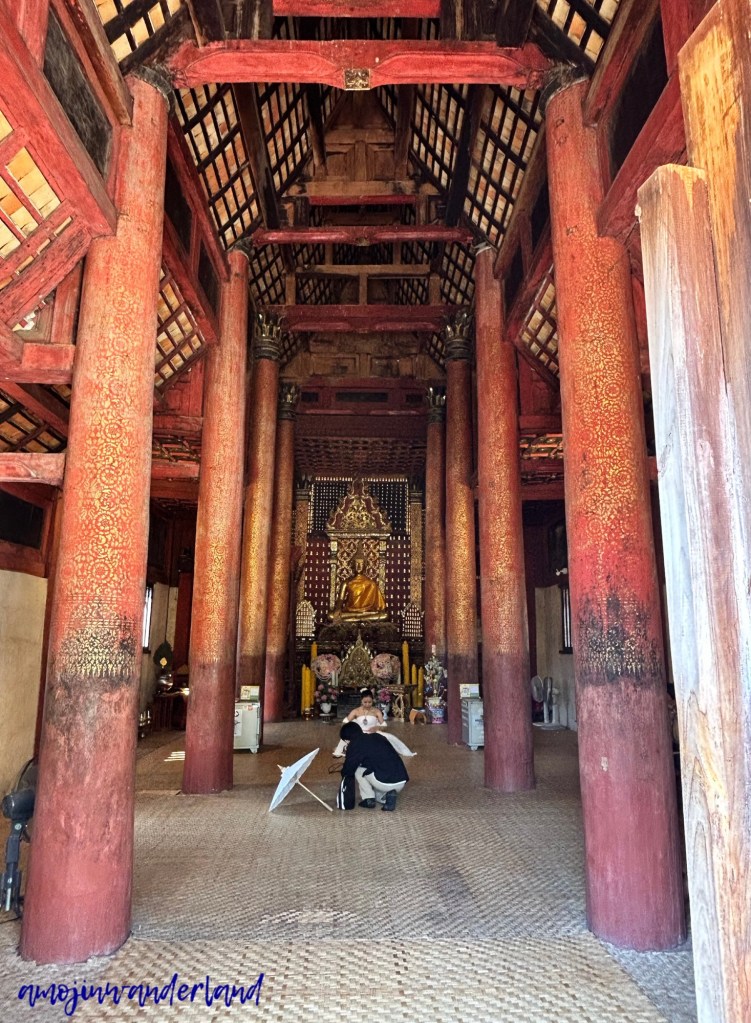
Despite its modest size, the temple is widely regarded as one of the most complete surviving examples of traditional Lanna architecture in Chiang Mai. The wooden viharn, completed in 1858, forms the heart of the compound. The structure combines a plaster-based body with large wooden columns and a well-proportioned roofline characteristic of the Lanna style. Inside, hand-woven bamboo matting and restrained wood carvings create a calm and dignified atmosphere. The principal stucco Buddha image in the Maravijaya posture stands against a wall with an arched niche adorned with metal votive tablets, while another Buddha image displayed on a glass base offers an additional point of quiet contemplation.
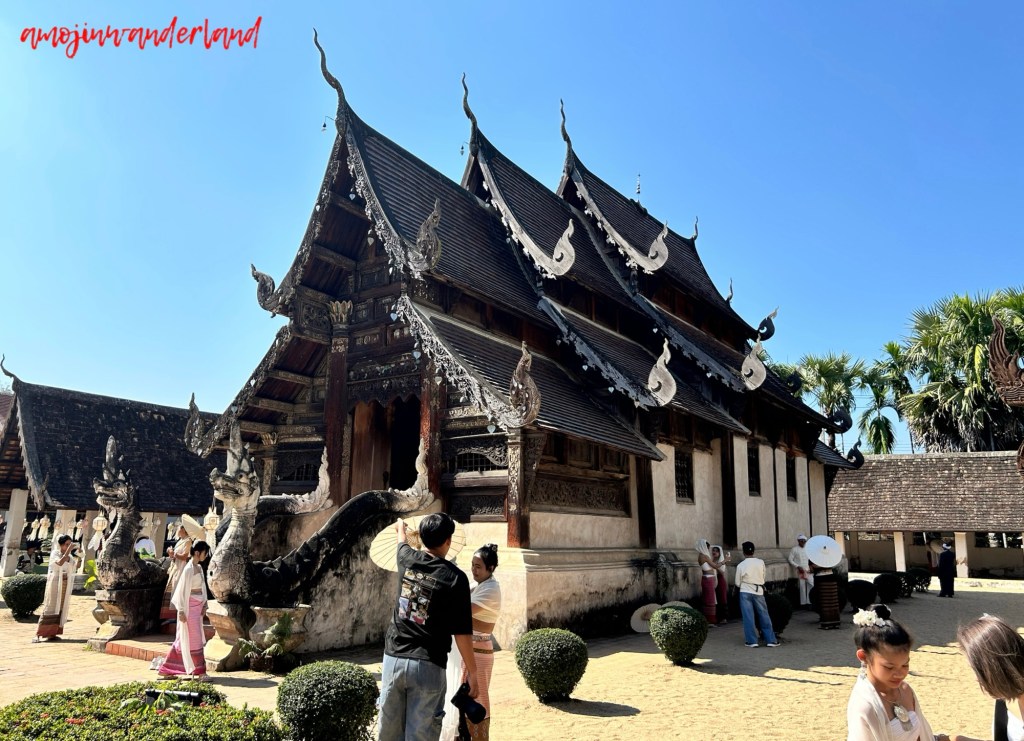
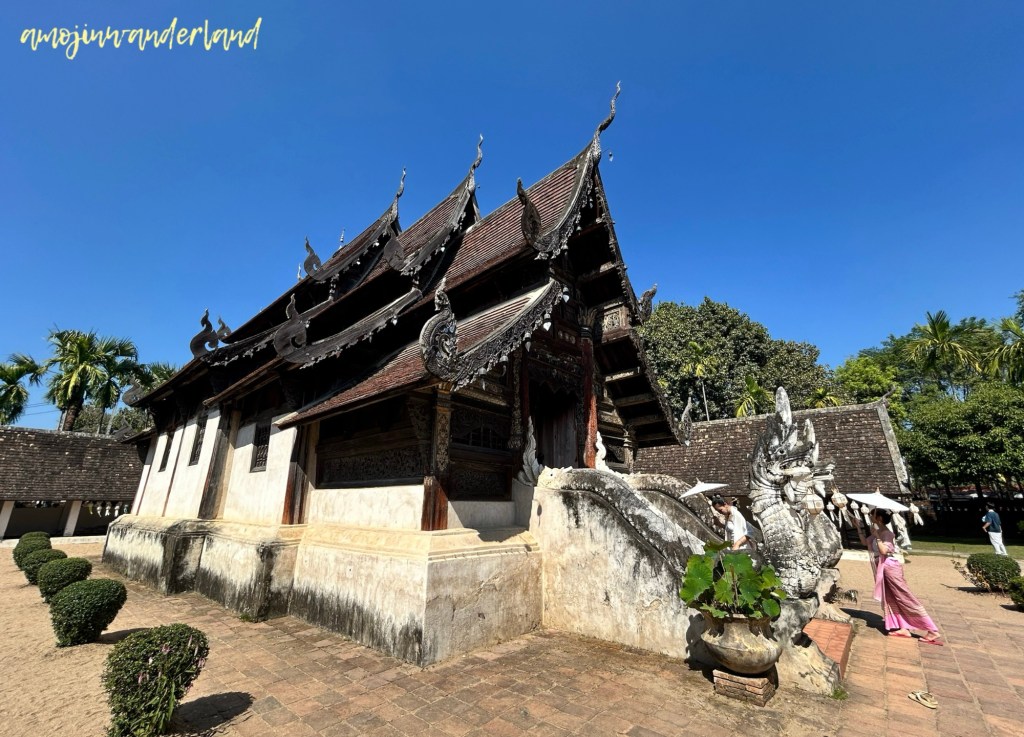
The exterior of the viharn displays refined decorative elements that highlight northern Thai craftsmanship. The tympanum follows the Ma-Tangmai tradition, traces of stained glass remain visible, and floral motifs appear along the cross-beams known as kong khio. The roof edges are finished with bairaka ornaments shaped like the mythical naga. Together, these features give the building a visual richness that more than compensates for its small scale.
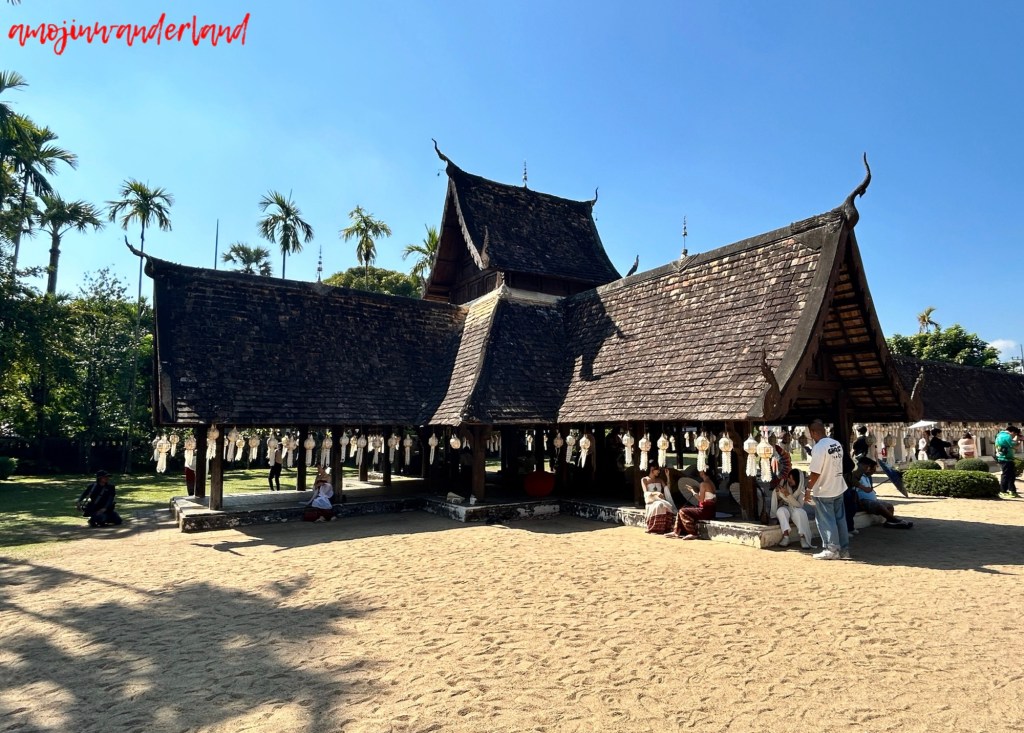
Surrounding the viharn are a multipurpose hall and an open sand-ground space that reinforce the temple’s role as a community setting. Near the entrance, close to the temple wall, stands a coffee plum tree beneath which incense, candles, and flowers are arranged for worship, reflecting the continuing everyday devotional life of the site.
Another architectural highlight is the sala chatummukh, a four-gabled pavilion built between about 1856 and 1869. Unique in northern Thailand, this structure further underscores the architectural value of the temple complex and illustrates the range of ceremonial spaces found in nineteenth-century Lanna temples.
During our visit, the temple grounds were especially lively, with many visitors dressed in traditional Thai clothing using Wat Ton Kwen as a backdrop for photo shoots. Their presence added a contemporary cultural layer to the historic setting, showing how the temple’s preserved architecture continues to resonate with people today.
Because Wat Ton Kwen has remained largely unchanged, it was registered as a historic site in 1983 and later received the designation of “Excellently Conserved Building” in 1989 from the Association of Siamese Architects under Royal Patronage. Its enduring beauty has influenced later architectural works, including Ho Kham Luang at Royal Park Rajapruek, and has inspired visual representations of Lanna culture in numerous television productions.
 Amoj In Wanderland