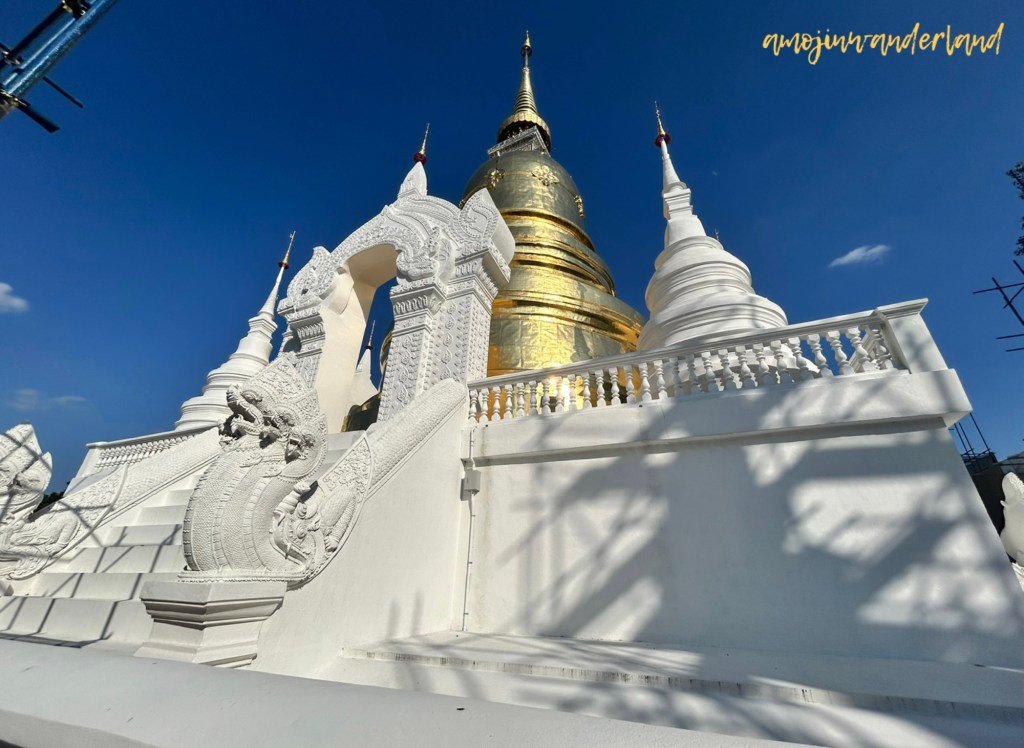
Wat Suan Dok is a Royal Temple of the Third Class in Chiang Mai and is located along Suthep Road, about one kilometre west of Suan Dok Gate on the western side of the old city moat. The Chiang Mai campus of Mahachulalongkornrajavidyalaya University is situated within the temple grounds, reinforcing the site’s long-standing association with Buddhist learning.
Interestingly, it is also called Wat Buppharam, which means Flower Garden Temple. On another evening, we also visited a different temple with the same name, Wat Buppharam, located along Tha Phae Road in a separate part of Chiang Mai.
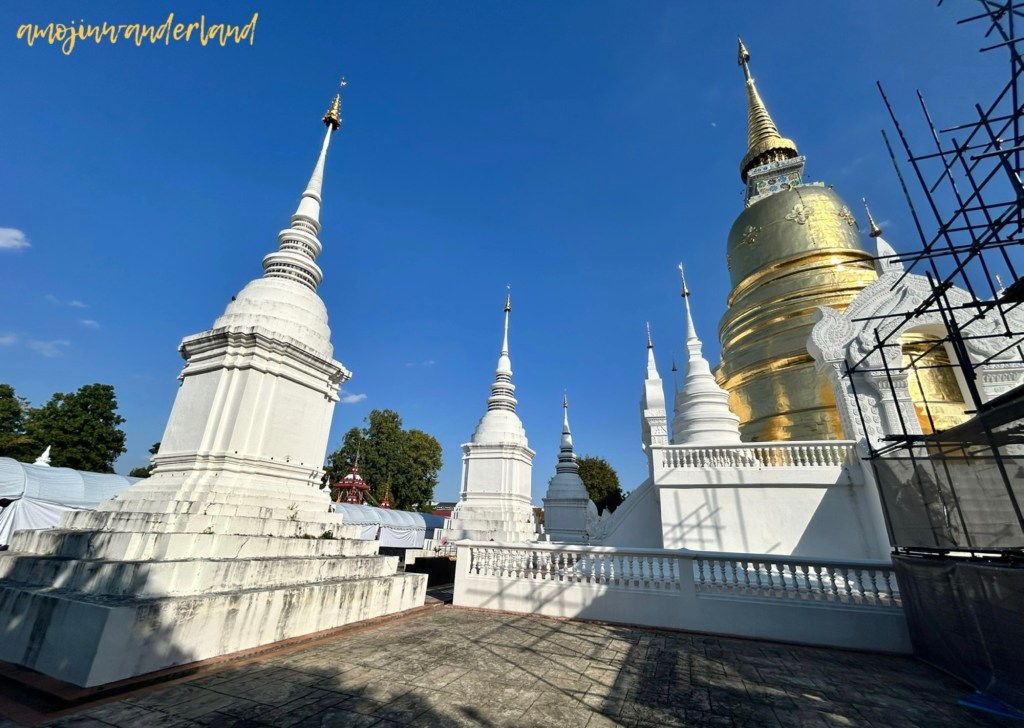
The temple was founded in 1370 CE by King Kue Na of the Lanna Kingdom for the monk Maha Sumana Thera. It was built at the centre of Wiang Suan Dok, a walled settlement of the Lawa people that predates the establishment of Chiang Mai itself. Traces of this earlier settlement are still visible today: the outlines of the fortifications can be identified on satellite images, and remnants of earthen walls remain north of Suthep Road. The area had once been King Kue Na’s flower garden (suan dok mai), from which the temple derived its original name, Wat Buppharam.
Local tradition links Wat Suan Dok closely with the founding of Wat Phra That Doi Suthep. According to legend, Maha Sumana Thera discovered a relic of the Buddha following a vision. While the temple at Suan Dok was being constructed, the monk stayed in Lamphun under the patronage of King Kue Na. When the time came to enshrine the relic, it was said to have miraculously duplicated itself. One relic was placed at Wat Suan Dok, while the other was carried on the back of a white elephant that climbed Doi Suthep, where it stopped and died. Wat Phra That Doi Suthep was later built on that site to house the second relic.
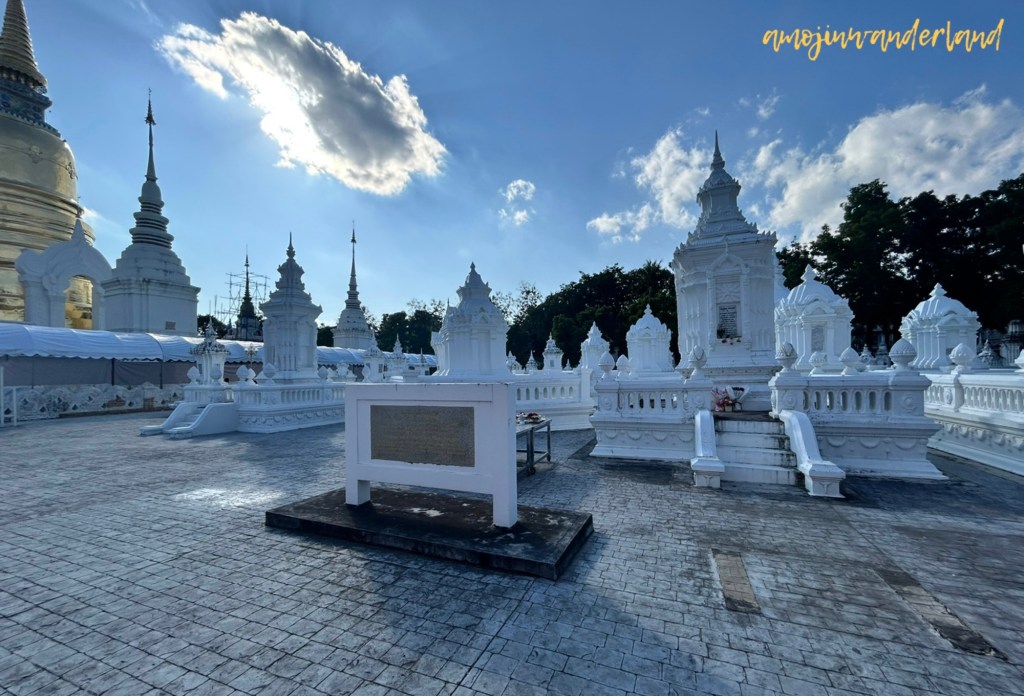
The most prominent structure within Wat Suan Dok is its large bell-shaped chedi, standing approximately 48 metres high and visible from a distance. Built in a Sri Lankan style, the chedi is believed to contain a relic of the Buddha. Ramps now lead to the upper terrace on all four sides, replacing the original stairways. The balustrades are decorated with seven-headed nāgas emerging from makaras, a motif characteristic of classic Lanna design.
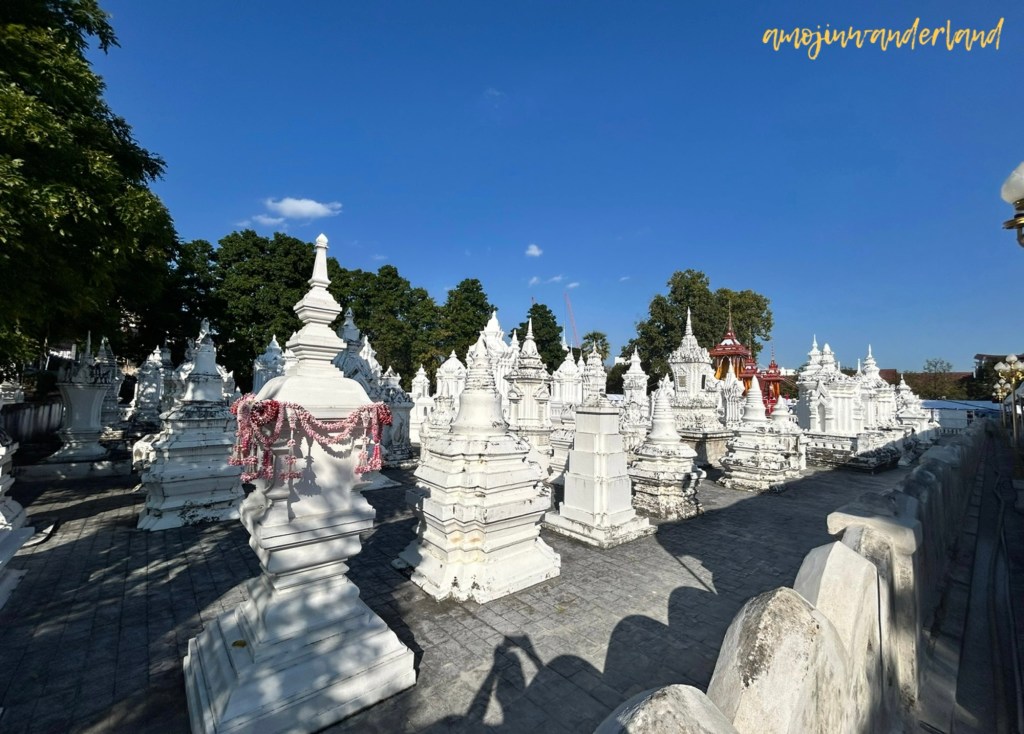
In the northwestern section of the compound is a group of whitewashed mausoleums that contain the cremation ashes of members of Chiang Mai’s former royal family. These were gathered and relocated to their present arrangement in the early 20th century under the direction of Princess Dara Rasmi, a daughter of King Inthawichayanon of Lanna and a consort of King Chulalongkorn (Rama V).
During our visit, a ceremony was taking place for the families of individuals who had donated their bodies for medical education. As a result, access to certain areas of the temple was limited, and it was not easy to enter the inner spaces at that time.
 Amoj In Wanderland