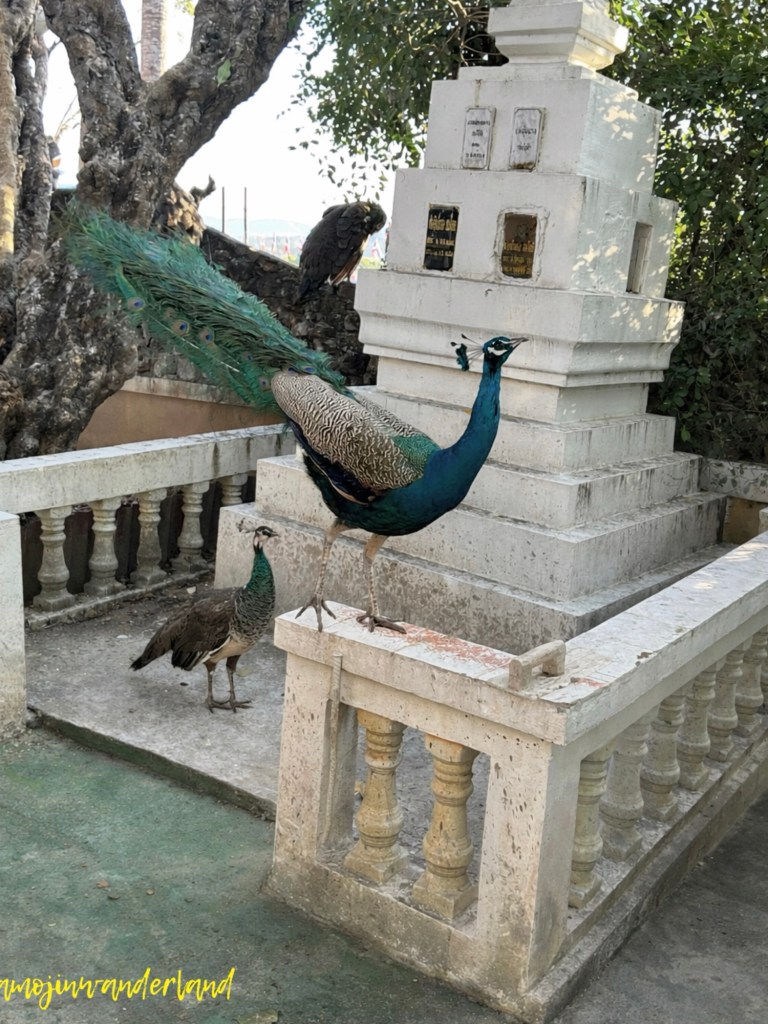
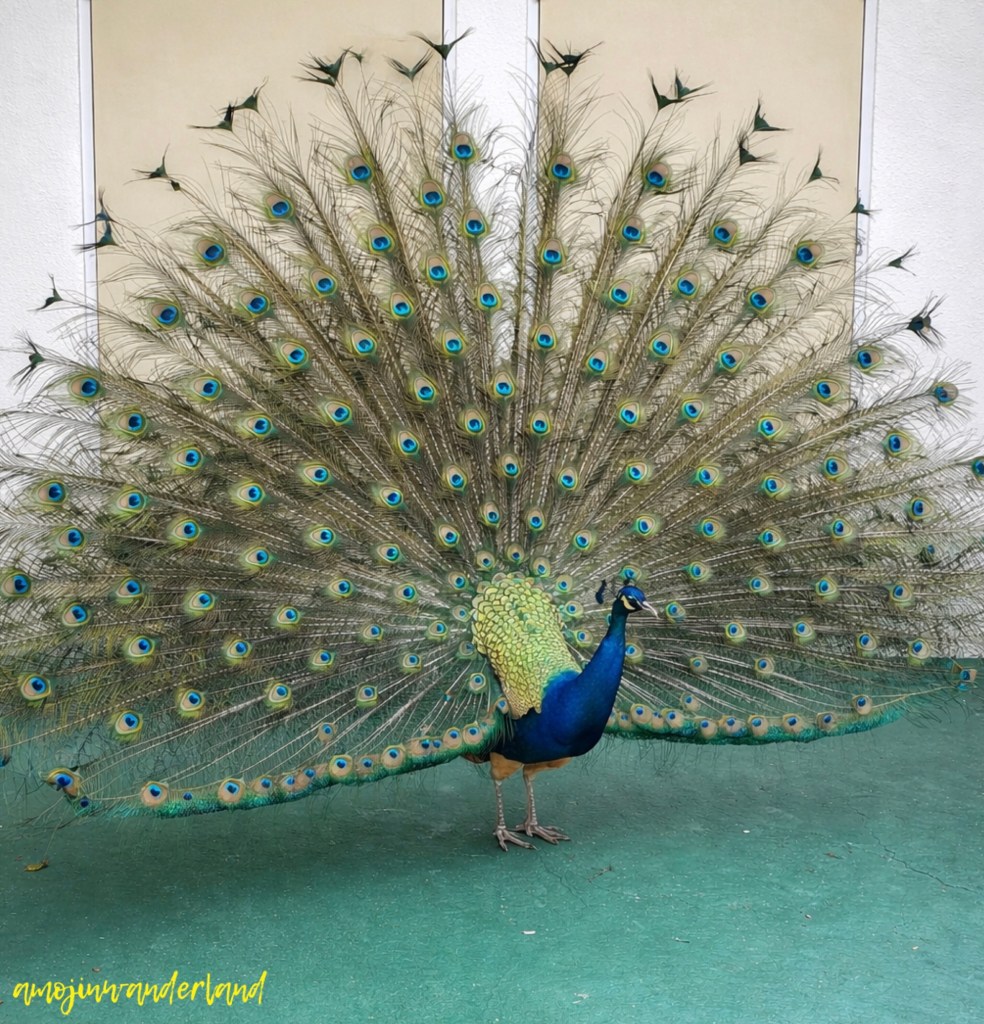
The peacocks and Guinea fowls we saw at Wat Doi Ti were one of those unexpected sights that instantly made the visit more memorable. I honestly had no idea why they were there, but they were undeniably beautiful. The birds we casually call “peacocks” are actually Indian peafowl (Pavo cristatus), and seeing them up close made it easy to understand why they are so admired. Their feathers shimmered with deep greens and blues, catching the light in a way that almost looked unreal. Even when they weren’t displaying their full tail, they carried themselves with a calm elegance, moving slowly and confidently as if they knew they were meant to be noticed.
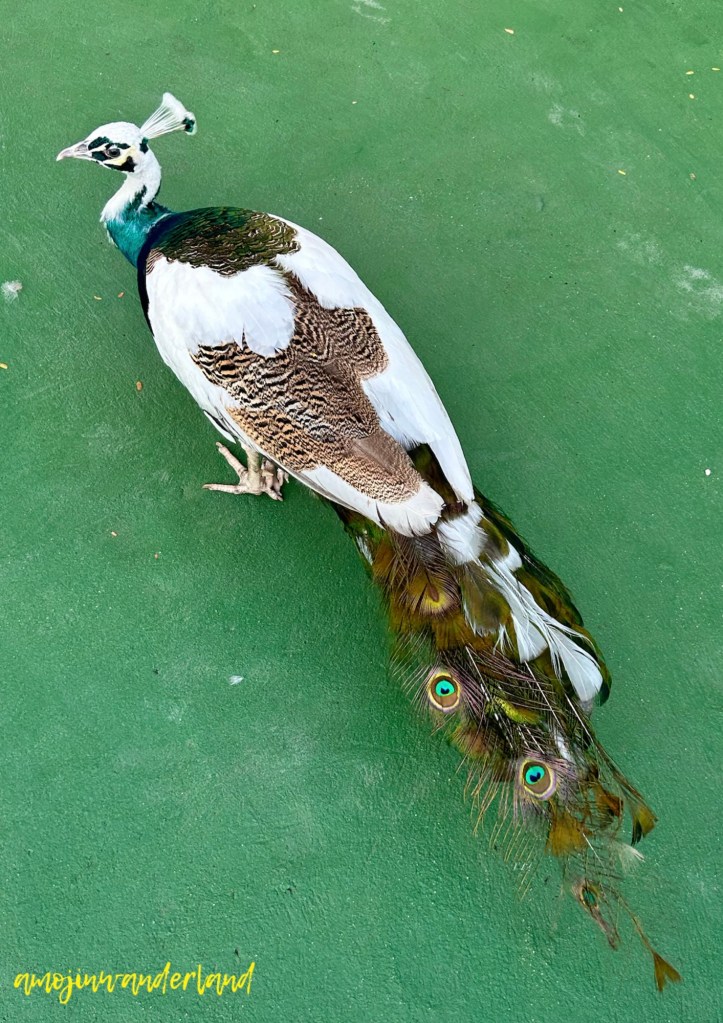
What made the sight even more special was that there was also a Pied Indian Peafowl. This peacock showcased a rare genetic mutation called leucism, which causes patches of white feathers mixed with the natural blue and green plumage. The result was striking, an almost artistic blend of colors that made the bird look even more unique and unforgettable.
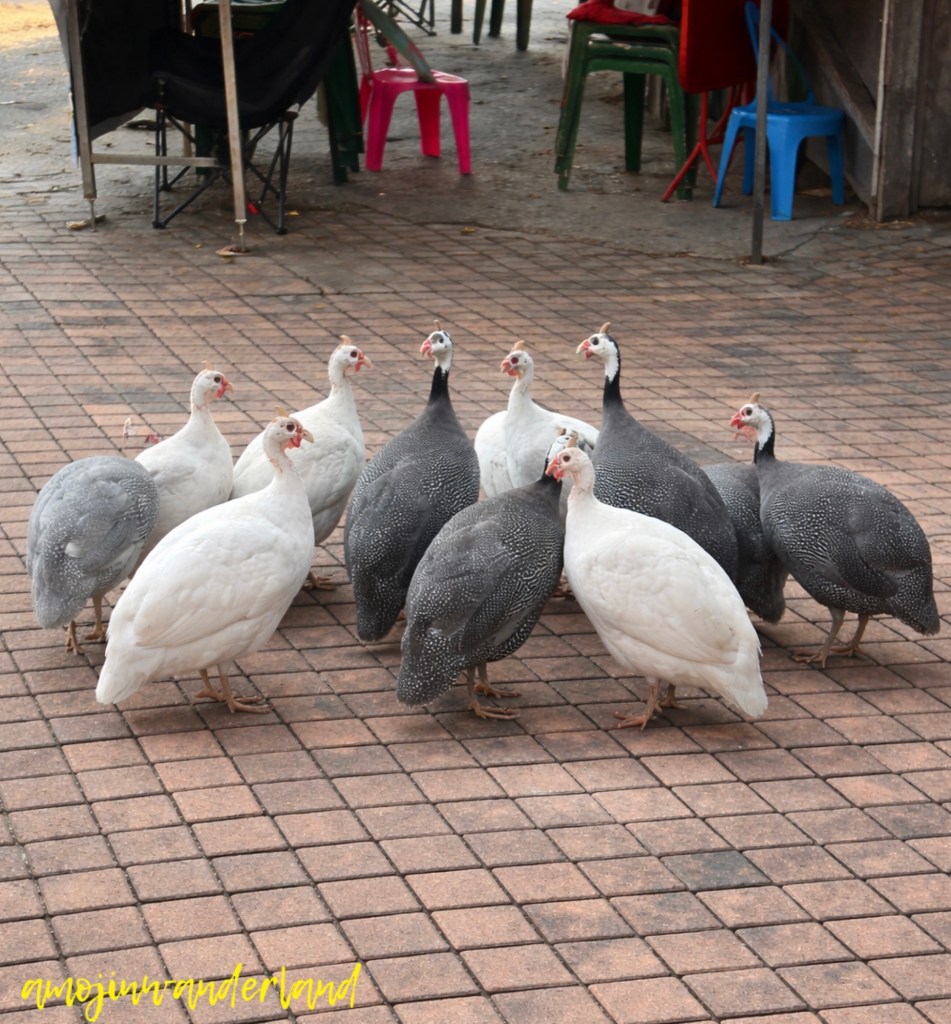
The other birds roaming around were not turkeys after all, but Domestic Guinea Fowl (Numida meleagris). They had a completely different kind of charm, smaller, speckled, and full of personality. Their dotted feathers and quick, busy movements made them stand out in their own way, adding a lively contrast to the graceful presence of the Indian peafowl. They seemed perfectly at ease, walking about as though they were part of the temple grounds’ everyday rhythm.
 Amoj In Wanderland